Hungary has joined Russia’s hybrid war against Europe
I know—it’s a bold claim. At first glance, the title might seem like cheap clickbait. But it isn’t. Whether we like it or not, Hungary—more precisely, its government—has entered the hybrid war Russia is waging against Europe.
It was a strange sort of entry: there was no declaration, no dramatic announcement. But it should be clear to any observer that Prime Minister Viktor Orbán has never exactly been hostile toward Vladimir Putin, a man widely considered a war criminal. So the fact that Hungary is now actively supporting Russian geopolitical and military aims should come as no surprise. A long series of vetoes, and the consistent obstruction of support for Ukraine across all platforms, has become the cornerstone of Hungarian foreign policy. When the government plastered billboards of President Zelensky across the country to stir fear and hostility toward Ukrainians, it was clear things wouldn’t stop there.
As I wrote in a previous article: just when we think we’ve hit moral rock bottom, Orbán points to the floor and tells his minions: "Dig deeper!" And they do.
The entire pro-government media ecosystem in Hungary is relentlessly pushing anti-Ukrainian sentiment. Even discussions about the next EU budget are reduced to complaining about how much money Ukraine might receive—while barely mentioning that Hungary would also receive a record amount of funding.
But this is business as usual under Orbán: a regime that claims to defend “national sovereignty” while in reality dragging Hungary into the orbit of Russian influence. We’ve seen this pattern so often that, like the proverbial frog in warming water, we’ve almost grown used to it. This time, however, something deeper is unfolding—something that could lock Hungary onto a path we might not escape from for generations.
Once Again, We’ve Chosen the Wrong Side of History
There’s a dangerous myth in Hungarian public memory: that our only mistake in World War II was choosing the losing side. The uncomfortable truth is that we sided not just with the defeated, but with the morally indefensible—with the perpetrators. That history is worth recalling today, as we see a new idea taking root in the intellectual swamp of government-backed online forums: that Russia might win the war—and this time, we’ll be on the “winning” side.
Why Orbán’s government has aligned itself with Russia’s hybrid war on Europe is still unclear. Is it ideological? Is it about clinging to power? A mix of both? We may never know the full answer. What we do need to ask, urgently, is what this means for us—and how it can be stopped, slowed, or reversed.
As UGAR Info recently reported, all signs point to a Kremlin strategy aimed at weakening Ukraine, with Hungary playing a helpful role. And help, it seems, is being delivered.
One early warning came with the tragic death of József Sebestyén, a Hungarian citizen whose case became an overnight media obsession. The government, led by Orbán himself, latched onto the story with astonishing speed and intensity—despite having almost no verified information about what had actually happened. This frenzy led to a wave of anti-Ukrainian propaganda not seen in Hungary since the darkest chapters of the 20th century. Even before the Ukrainian authorities could conclude an investigation, Orbán took unilateral action: banning Ukrainian military officials from entering Hungary, urging the EU to do the same, and demanding sanctions against Ukraine.
Just days later, a new "incident" occurred—suspiciously timed, as if on cue. In a village in western Ukraine with a sizable Hungarian minority, the door of a Greek Catholic church was set on fire, and anti-Hungarian graffiti—written in awkward, error-ridden Ukrainian—was scrawled on the wall. Again, UGAR Info warned: this was likely part of a plan to spark ethnic violence in the region, destabilizing Ukraine and casting doubt on Western unity.
This time, the government and media reacted even faster than before. Within hours, state channels were fanning the flames. One respected security analyst, András Rácz, posted compelling indirect evidence on Facebook that Orbán may have known about the attack in advance—even receiving photos of the graffiti before the Hungarian press got hold of them. The alleged arson happened at night. Border guards extinguished the fire quickly, firefighters arrived with record speed, and the graffiti was painted over by morning—no chance for new images to emerge.
All Signs Point to Deliberate Collusion
Taken together, the evidence suggests not just foreknowledge—but potential involvement by elements of the Hungarian state. This may sound like a conspiracy theory, but in context, it’s hard to ignore.
Russia’s war effort is struggling. While no one can confidently predict its defeat, it’s clear that Moscow is not achieving its goals. After four years, the Kremlin has failed to subdue a much smaller, weaker neighbor—even with Western aid to Ukraine being slow, piecemeal, and often limited in scope. That’s starting to change. Ukraine’s domestic drone production and intelligence capabilities have improved dramatically, enabling them to strike deep inside Russian territory.
Russia is also under serious economic pressure. The Kremlin had hoped the Israel–Iran conflict would spike oil prices, bringing a financial windfall—but that didn’t happen. With recession looming, the Russian government recently reclassified economic and demographic data as state secrets, barring media and independent bloggers from publishing analyses that could reveal the extent of the crisis. Yes, some sectors are booming—especially defense—but manufacturing missiles that get blown up over Kyiv doesn’t exactly stimulate long-term economic growth.
Given all this, it’s in Russia’s urgent interest to block further Western aid to Ukraine. At one point, it seemed that Donald Trump might help deliver this—if he returns to power, he still might. But for now, Europe remains united in its support (minus Orbán in Hungary and Fico in Slovakia), which has forced the Kremlin to escalate its hybrid warfare against the West.
And Hungary, tragically, has become a willing accomplice. On the international stage, it blocks aid. At home, it uses state security services to destabilize Ukraine—potentially even on Ukrainian territory, as recent Hungarian spy cases have suggested.
Looking at the timeline, it’s clear this is not spontaneous. It’s a coordinated plan. In late June, a strange video appeared online: young people speaking Ukrainian under a Hungarian flag called for attacks on Ukrainian state institutions. Oddly, there was no Hungarian spoken in the video, and no coverage in Hungary’s own media. Just a week later came the Sebestyén tragedy—likely not orchestrated by the government, but eagerly exploited by it. And another week after that, the church arson.
This is not coincidence. This is the start of something much larger. The Orbán government seems committed to stoking anti-Ukrainian hatred through next year’s elections. False-flag incidents that reinforce fear among voters are welcomed tools. The government has even started labeling some opposition leaders as "Ukrainian agents"—laying the groundwork to challenge the legitimacy of the vote if Fidesz loses, as polls suggest it might.
Let’s be clear: Russia is not helping Orbán out of brotherly love (though who knows?). Russia supports him because his government’s agenda undermines Ukraine. That’s what the Kremlin wants above all else.
And where Hungarian and Russian interests align, churches burn—and ethnic tensions flare.
This is where we are. And it does not look like they plan to stop.
The question is: what will we do about it?
Did you like this article?
Support our work with a small donation
Secure payment via Stripe • Min. 2 EUR
Gesta recommendations:
Grindeanu: territorial-administrative reform is coming!
Sorin Grindeanu is proposing the merger of smaller local administrations, a reduction in the number of government agencies, and the restructuring or dissolution of loss-making or unjustifiably maintained state companies. The PSD chairman announced on Monday, October 26, that he will ask Prime Minister Luca Niculescu for two separate reform packages to be adopted through the government's…
Trump: "Norway is a shithole"
Norway has gone through a severe civilizational decline: it didn't award the Nobel Peace Prize to Donald Trump. The American president therefore drew the necessary foreign policy conclusion on October 25, at his campaign rally in Port Huron, Michigan, and declared: "Norway has basically become a shithole country." In the speech delivered ahead of the midterm elections, he also said he doesn't…
The Balkan 0rbán has fallen: the Students' List can form a government alone in Serbia
Aleksandar Vučić admitted on Sunday evening that his party had lost Serbia's early parliamentary election. The Students' List (officially called "Students Win"), which grew out of nearly two years of student protests following the Novi Sad railway station tragedy, won a majority. According to an estimate by Ipsos and CeSID based on a 96 percent sample, the list won 52.9 percent of the vote and…
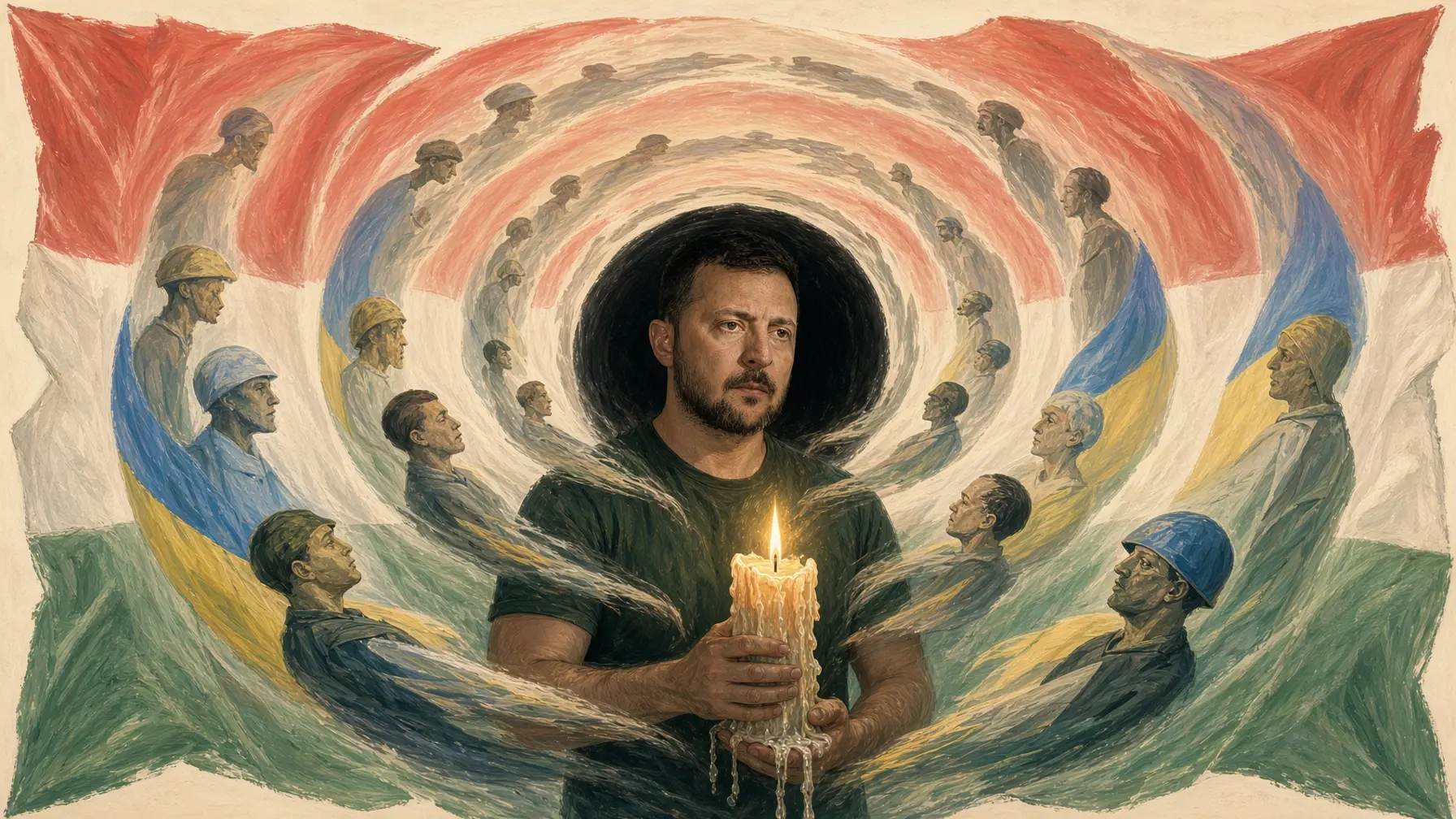
Zelensky also commemorated 1956
Seventy years ago, Europe and the entire world reached an extremely important, in many respects decisive crossroads, when the people of Hungary rose up for freedom, against the Soviet system. The courage and love of freedom of the Hungarians were shown with extraordinary force, and to this day they fill us with admiration throughout Europe.
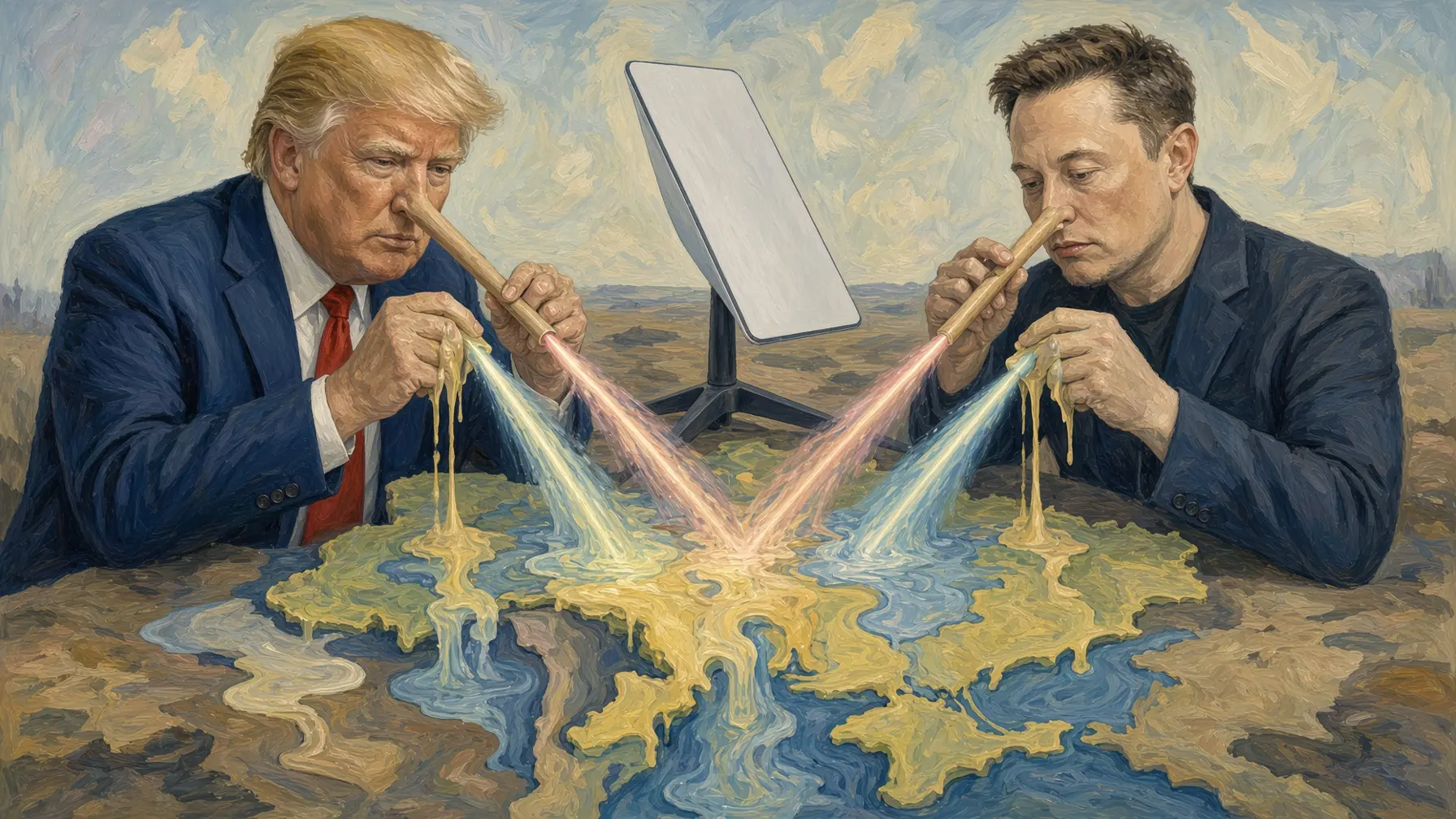
The Americans are lying, and they'll pay for it yet
On Saturday, October 24, Ukraine's Ministry of Defense announced that Starlink and the military-grade Starshield were once again operating at pre-restriction speeds. The connection is now stable even above 400 kilometers per hour, whereas during the restriction it had been cutting out at speeds as low as 160 kilometers per hour. The more than week-long throttling has ended, but the real dispute…