Orbán in Moscow, and the War Logic Behind the Visit
The still independent—though increasingly embattled—segment of the Hungarian press has extensively discussed Viktor Viktorovich Orbán’s visit to Moscow and its possible background. Now UGAR gesta is also entering the fray: we attempt to present a different perspective, or rather to assume our own distinctive picture by rearranging the currently known viewpoints. For our analysis, we also employed basic methods of vector-based information analysis that are rarely used even within OSINT communities.
What the broader public may know about the story of the Moscow visit is mostly tied to the interpreting error; memes related to it practically flooded Hungarian online platforms, and it seems that a significant portion of the analyses focuses on this accident as well. However, this has real relevance only in one case: if, among the possible answers to the question of WHY the interpreter mistranslated, we accept intentionality. In that case, the probability that the mistranslation occurred in the Russian interest, under Russian pressure, with the aim of putting the Hungarian prime minister in a comfortable position ahead of the closed-door talks following the press event, is quite high—over eighty percent.
This narrative, however, is weakened by the fact that it does not adequately explain why Orbán would have needed “softening” at all, given that his commitment to the Russian Federation’s war objectives is unquestionable; and if such softening was indeed necessary, why it would have taken this form. Why would Putin have needed to mildly scold the Hungarian prime minister at a public press event, and why would that have had to be mistranslated? There are plausible explanations for these nuances as well—for instance, Putin may have wanted to show the domestic audience how tough he is on the Hungarian prime minister, while at the same time not wishing to antagonize the Hungarian delegation, and therefore the Hungarian interpreter was carefully but firmly “guided.” All in all, however, the narrative of a deliberate mistranslation carried out in Russia’s interest has a rather low probability. In other words: if it was intentional, the only reasonable explanation would be the representation of some Russian interest; virtually no other variation is plausible—for example, that the interpreter mistranslated in order to protect the Hungarian prime minister’s interests. And although the Russians are light-years ahead of the world in the execution of maskirovka, the intentionality narrative still rests on weak foundations.
If we compare the explanations of accident, human error, and environmental factors with intentionality, then based on vector-based information gathering the former is far more likely: the interpreter simply did not hear properly; Russian diplomatic protocol is so rigid and strict that there was no opportunity to signal this; perhaps Putin’s answer was not heard clearly—and any or all of these could have occurred simultaneously. The intentionality narrative is further weakened by the fact that the Russian side also arrived with an interpreter, making the risk of exposure too high—indeed, unmistakable—which would cause more damage than benefit. The Russians are capable of committing blunders of this magnitude both at the front and in everyday life, but not in Putin’s immediate environment. After the press event, closed-door talks took place, and the Russian interpreter would certainly have flagged any serious mistranslations. In short, intentionality makes little sense; therefore, albeit with strict reservations, I suggest discarding it—and also not overemphasizing the interpreter’s mistake, because then we fail to discuss the essence. From this perspective, the interpreter’s slip actually suited both sides quite well.
The timeline:
The Trump administration announces that the United States is imposing sanctions on the Russian war-criminal companies Rosneft and Lukoil. In response, India and China also reduce their purchases of Russian crude oil; Serbia is left practically without supply, as is Bulgaria. This had been known for quite some time. (On October 22, it is officially published on the website of the U.S. Department of the Treasury.)
On October 30, the Swedish–Swiss conglomerate GUNVOR signals that it would purchase all of Lukoil’s European assets. One of GUNVOR’s founders is the Russian oligarch Timchenko, a close confidant of Putin, who formally stepped down from the company’s leadership but continues to play a decisive role informally and through offshore companies. GUNVOR’s activities include oil trading; according to estimates, the Swiss–Swedish firm handles 30 percent of Russian maritime oil shipments. (So much for why the vessels of the Russian shadow fleet can roam the Baltic Sea with such ease…) The U.S. administration signals that it considers GUNVOR a Russian puppet; citing this, GUNVOR withdraws from the purchase, drastically reducing the number of European actors who both want Russian assets and have sufficient capital and collateral to acquire them.
Orbán travels to Washington, where—through various concessions (which cost Hungary a significant sum)—he secures an exemption from sanctions. Viktor Viktorovich Orbán himself announces on the flight home, lecturing both the international and domestic press that doubted his words, that the sanctions exemption is granted for an indefinite period, i.e., without a time limit. Later, this narrative changes: it lasts as long as Orbán is prime minister and Trump is president. The U.S. state significantly intervenes in this narrative, with the Secretary of State stating that the exemption is valid for one year.
Orbán then urgently, without prior announcement, and in secrecy (Panyi Szabolcs leaked the fact of the trip just a few days beforehand—had he not obtained and made public this information, it is unclear to what extent this would have been disclosed at all, but certainly far less so) travels to Moscow.
The official justification contains lies so blatant that they are visible from the Moon—certainly from Brussels, Berlin, and Washington.
According to the government, the trip was about ensuring the continued supply of natural gas and crude oil. Given the above antecedents, such a statement is suspicious to begin with. But let us add: this same Orbán government only a few years ago (on September 27, 2021) proudly announced, chest puffed out, that it had signed a 10+5 year contract with the Russians for oil. Since Hungary supposedly received sanctions exemptions from Trump, no logic dictates that the pro-war Hungarian prime minister would need to travel to Moscow for supply-security reasons. Indeed! The Hungarian government can trust in the continued validity of the contract also because the Russians can sell oil to fewer and fewer market players; they would be foolish to implement any reductions toward Hungary, their sole EU partner.
Furthermore: if the pro-war Hungarian prime minister were genuinely concerned with supply security, he would also have to travel to Kyiv—to help Szijjártó “the-pipe-has-two-ends” Péter as well: a pipe has two ends, and between the two ends there is a cylindrical physical form called a pipeline. The ends are of course important, but the section between them is essential, because without it the ends would not exist—simple as that. Now, the Druzhba oil pipeline runs through Ukraine, and the Ukrainians are increasingly applying their own sanctions against Russian energy facilities. If there is supply uncertainty regarding Hungarian oil imports, it must be resolved through negotiations with Ukraine, not with the Russian Federation, which bends over backward for every bit of foreign currency revenue. In summary: based on the exclusion of Kyiv from our energy-security policy and the lies accompanying official government communication, we can state with virtually one hundred percent certainty that Orbán’s real objective was not securing Hungarian oil, but something entirely different. In fact, the issue of securing Hungarian oil likely did not even arise behind closed doors.
So what took Orbán to Moscow?
The independent press has already discussed the possible acquisition of Romanian and Bulgarian refineries owned by Lukoil and subject to sanctions, along with the associated Lukoil gas stations. The problem begins where a significant portion of the Hungarian press treats this as a simple business deal—indeed, as a deal that could elevate Hungary to the status of a regional middle power, or something similar. But this is anything but business: it is hard-core politics, the safeguarding/salvaging of the interests of a wartime aggressor.
The most likely scenario is the takeover of the Serbian refinery, which is majority-owned by Gazprom. This, however, is not a simple buy-sell transaction either, but the rescue of Russian soft power. Russian business interests in Serbia—like any Russian business interests anywhere in the world—operate according to the interests of the Russian state. The Serbian refinery acted accordingly, channeling part of its profits into altering conditions in Serbia and indirectly in the Balkans: funding friendly media, hybrid warfare operations, financing Moscow-favored politicians, etc. Hungarians are well acquainted with this method thanks to Viktor “Rosatom will buy it for me” Orbán and the Paks II project.
Thus, the Hungarian state, under the leadership of Viktor Viktorovich and with MOL sent to the front line, is actively participating in the rescue of Russian economic interests—and through them, Russian geopolitical objectives. That is what this is about, and nothing else; everything else—such as the benefits to the Hungarian state, or more precisely to Orbán’s circles—follows from this, not the other way around.
So what was discussed in Moscow?
Based on the above, it is more than likely that the following topics were on the agenda:
options for ensuring that the Russian Federation does not lose its Balkan interests, and the forms of Hungarian assistance in this regard;
guarantees that the Russian Federation will get these refineries and gas stations back once sanctions are lifted;
clarification of how long Hungary received an exemption from Trump—likely the most awkward part, as the FSB may also have had information about the Hungarian delegation’s talks in Washington;
clarification of Orbán’s domestic standing: whether he will win the election or not. If his power is indeed wavering, the Russian Federation will provide assistance—steps in this direction have already been observed from Russia’s Foreign Intelligence Service. We have written several times on UGAR gesta about the connections between Russian interests and the preservation of Viktor Orbán’s power;
negotiating the size of the commissions: to avoid making the story too transparent, Hungary must officially “win” the deal—via MOL. The unofficial part involves intermediary shell companies, so-called brokers, who will earn billions; part of this will go to Orbán, part to Putin, to help sustain his war machine. How the slices are divided is decided in these talks;
discussions on which Balkan geopolitical interests Moscow expects Orbán to advance if it hands over the Pančevo refinery, and what expectations it has if Russian interests in Romania and Bulgaria are also entrusted to Budapest.
To all this we should add that, as well documented and repeatedly written by UGAR gesta, these talks took place within the framework of the Hungarian–Russian alliance—meaning it can be excluded with near certainty that Putin’s war interests were not discussed (Orbán himself did not deny this in his accounts), and what Hungary can do to advance them. As an EU and NATO member, Hungary has already gone to the wall in pursuing policies that cause the greatest possible harm to Ukraine; thus, Russian requests are likely to push the Hungarian government toward steps even harsher than those currently known—steps which, let us be honest, the government will gladly implement due to its ideological commitment, moral and ethical decay, and selfish power interests. It is also clear that the Hungarian opposition opposing these moves will be neutralized with the narrative of Orbán as a brilliant dealmaker, since thanks to him MOL has acquired yet another oil refinery.
Karczag Anna
Tetszett a cikk?
Támogassa a munkánkat egy kis adománnyal
Biztonságos fizetés Stripe-on keresztül • Min. 2 EUR
Gesta-ajánló:
Az orosz dezinformáció már nem propaganda, hanem műveleti fegyver
A Defence24 elemzése szerint Oroszország 2025-ben már nem egyszerűen propagandaként vagy politikai kommunikációként használta a dezinformációt, hanem a katonai és hibrid műveletek részévé tette. A cél nem pusztán az, hogy a közönség elhiggyen egy hamis állítást, hanem az, hogy a döntéshozók késlekedjenek, a társadalmak bizalmatlanabbá váljanak, a szövetségesek egymásra gyanakodjanak, és a valós…
Szele Tamás: Lettország és az SZVR
Mint látható, az SZVR ugyan nagy mértékben próbálja befolyásolni a lett közpolitikát – de még kisebb összeget sem tennék az oroszbarát jelöltek győzelmére. Ezzel az emberanyaggal egyszerűen nem lehet nyerni. Jobb emberek viszont nem állnak szóba Moszkvával.

Szívatás orosz módra: a NATO légvédelmi gyakorlata alatt repkedett egy félórát légterünkben az orosz drón
Egy orosz, Shahed/Geran típusú, sugárhajtású drón szeptember 8-án Moldován keresztül berepült Románia légterébe, majd nagyjából félórás légi kirándulás után visszatért Moldova fölé, ahol Mihăileni Vechi közelében, egy mezőn lezuhant. A román védelmi minisztérium szerint a célpontot először Moldova fölött, Chișinăutól nyugatra észlelték, majd 16:37 körül Románia irányába haladt, Iași térsége felé.…
Putyin megint eladná Trumpnak, hogy Ukrajna mindjárt összeomlik
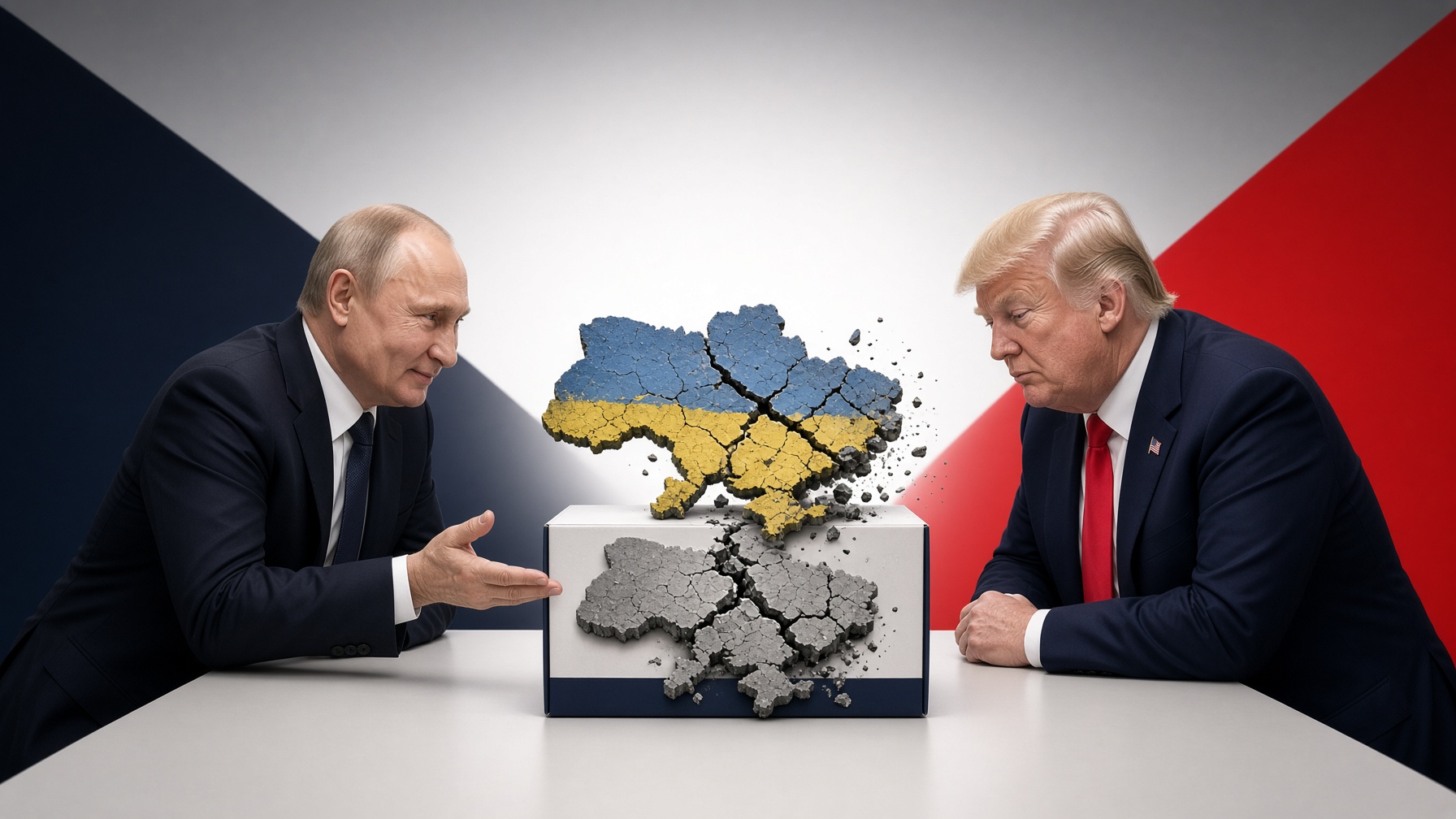
Az ISW szerint Putyin a Trumppal folytatott telefonbeszélgetést arra használhatta, hogy a fronthelyzetről egy szándékosan torzított képet adjon elő az amerikai elnöknek. A cél nem különösebben bonyolult: elhitetni Washingtonnal, hogy Ukrajna katonai helyzete gyorsan romlik, Oroszország úgyis nyer, ezért az Egyesült Államoknak most kellene rákényszerítenie Kijevet az orosz feltételek elfogadására.…

Iránból szeretettel: állásajánlatnak álcázott kódtesztekkel fertőztek fejlesztőket
A Kaspersky kutatói szerint az iráni kötődésű Nimbus Manticore, más néven Mirage Kitten hackercsoport hamis toborzóként keresett meg szoftverfejlesztőket LinkedInen és más álláskereső platformokon, majd technikai feladatnak álcázott fertőzött archívumokat küldött nekik. A cél az volt, hogy a jelöltek saját gépükön nyissák meg és futtassák a „coding challenge” fájljait, amelyek valójában távoli…