Abbot in the Crosshairs — Lawlessness and Eviction in Oradea
This document sets out to give as complete a picture as possible of the background to the eviction proceedings initiated against the Premonstratensian (Norbertine) Abbey of Oradea / Nagyvárad. The following is based on documents, court case files and interviews.
Topics covered:
the history and presentation of the Norbertine Order and the property, as relevant to this case
the history of ownership and the validity of the title to use the property
the dynamics of the eviction and arguments against its tenability
the inaction of DAHR (Democratic Alliance of Hungarians in Romania)
ecclesiastical, minority-rights and political context
The property from which the Oradea city hall intends to evict the Norbertine Abbey is located at 14–18 Roman Ciorogariu Street. This is a massive building complex occupying an entire city block. The Premonstratensian church is situated at the south-eastern corner of the complex. Most of the building is currently occupied by the "Mihai Eminescu" National College.
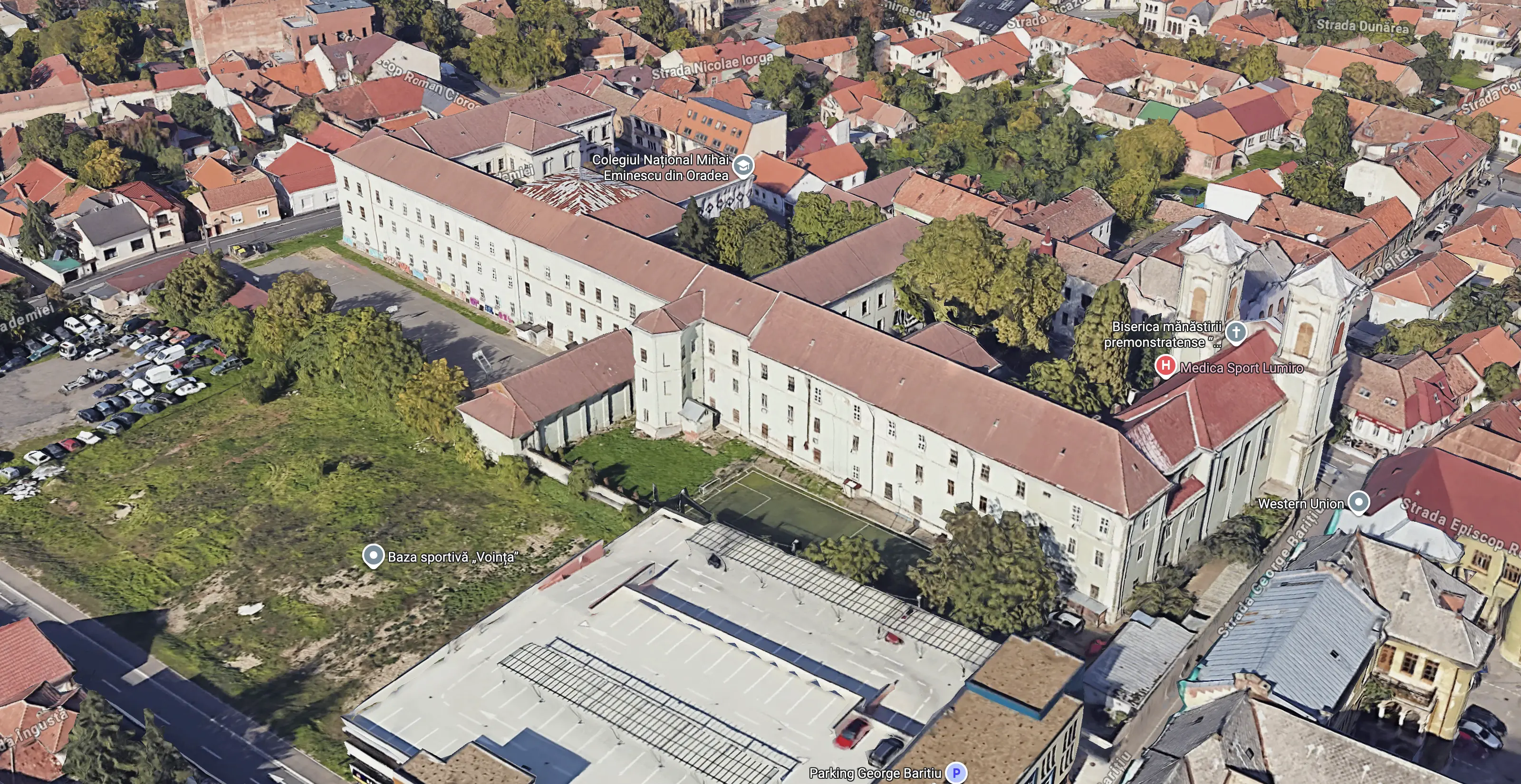
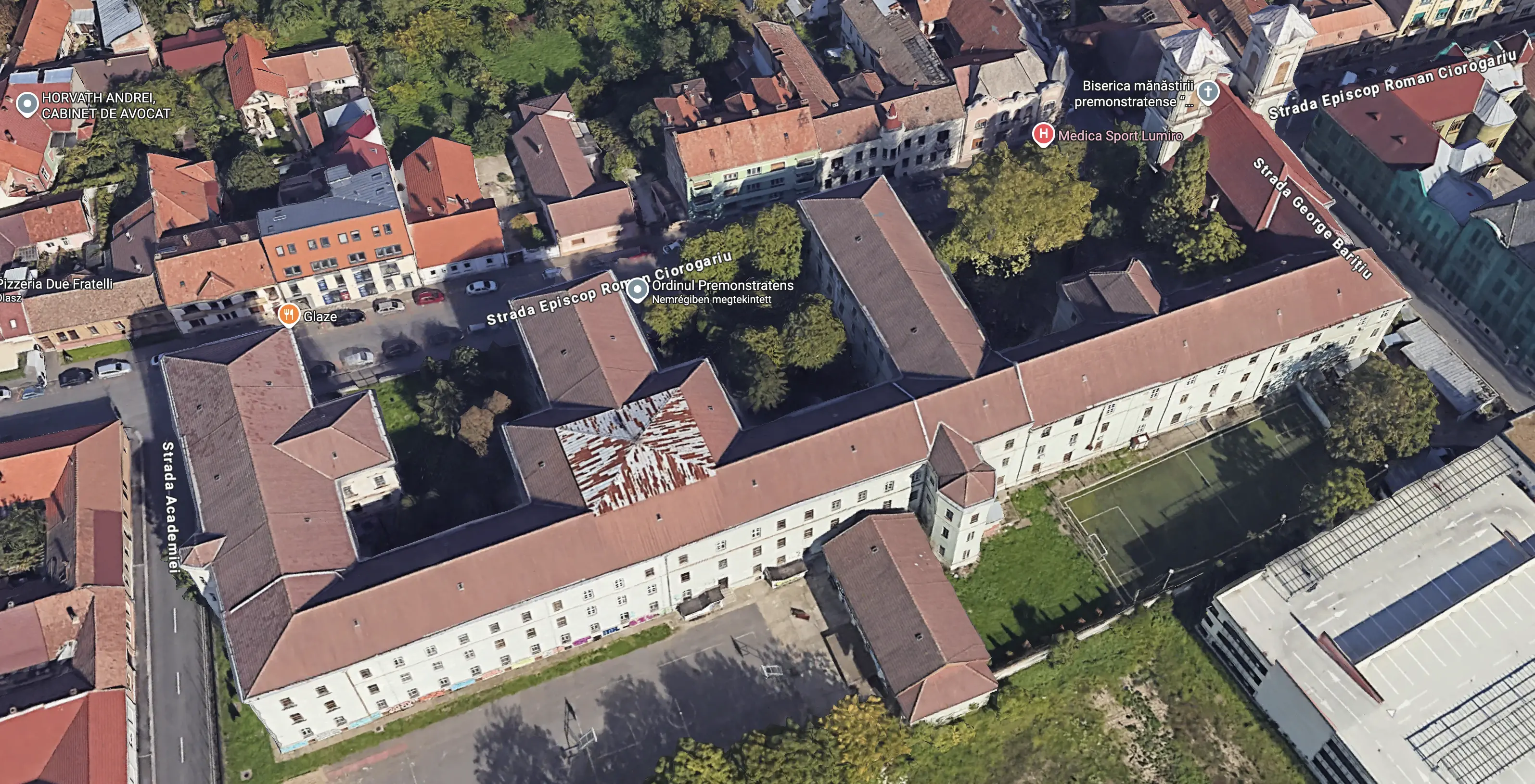
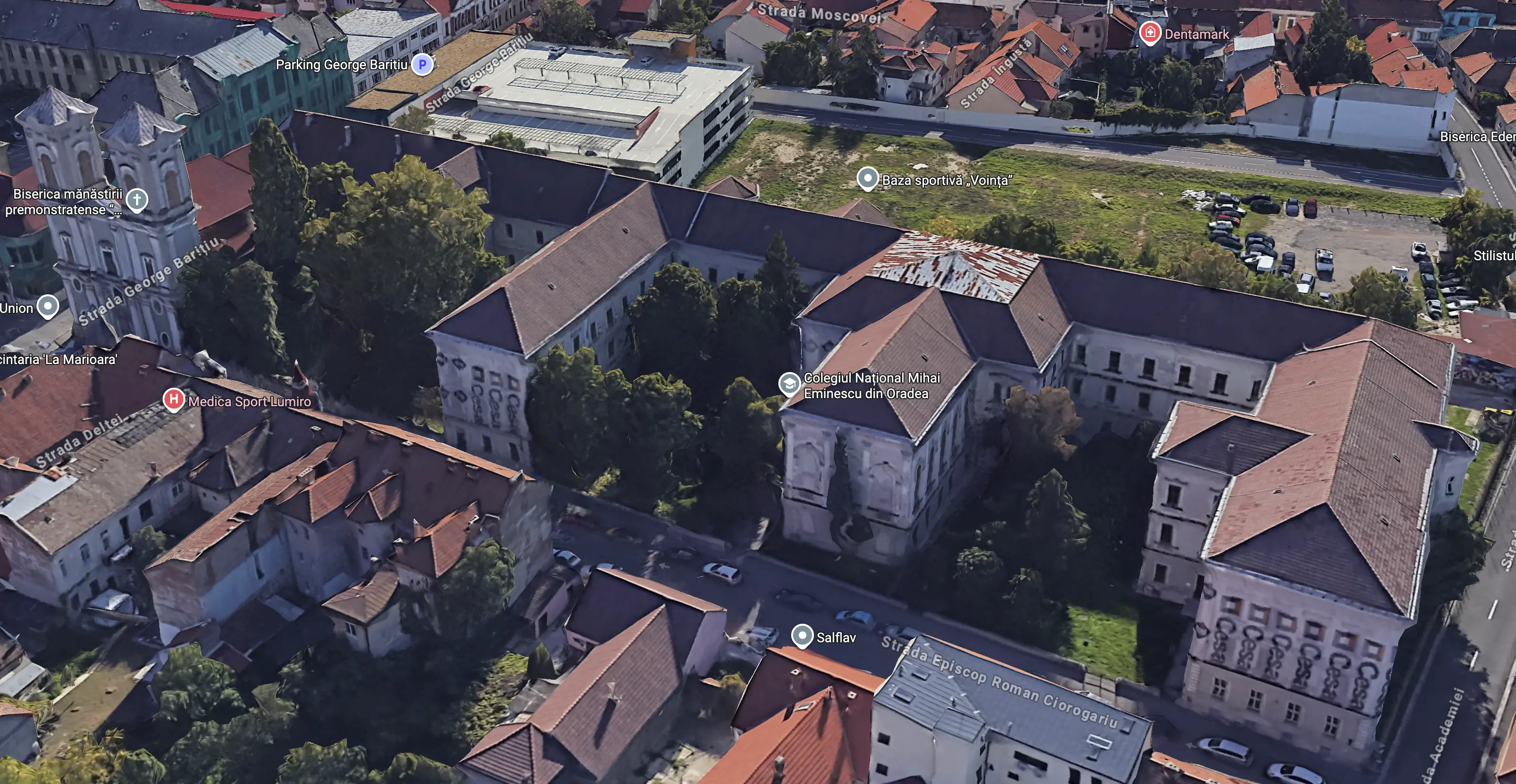
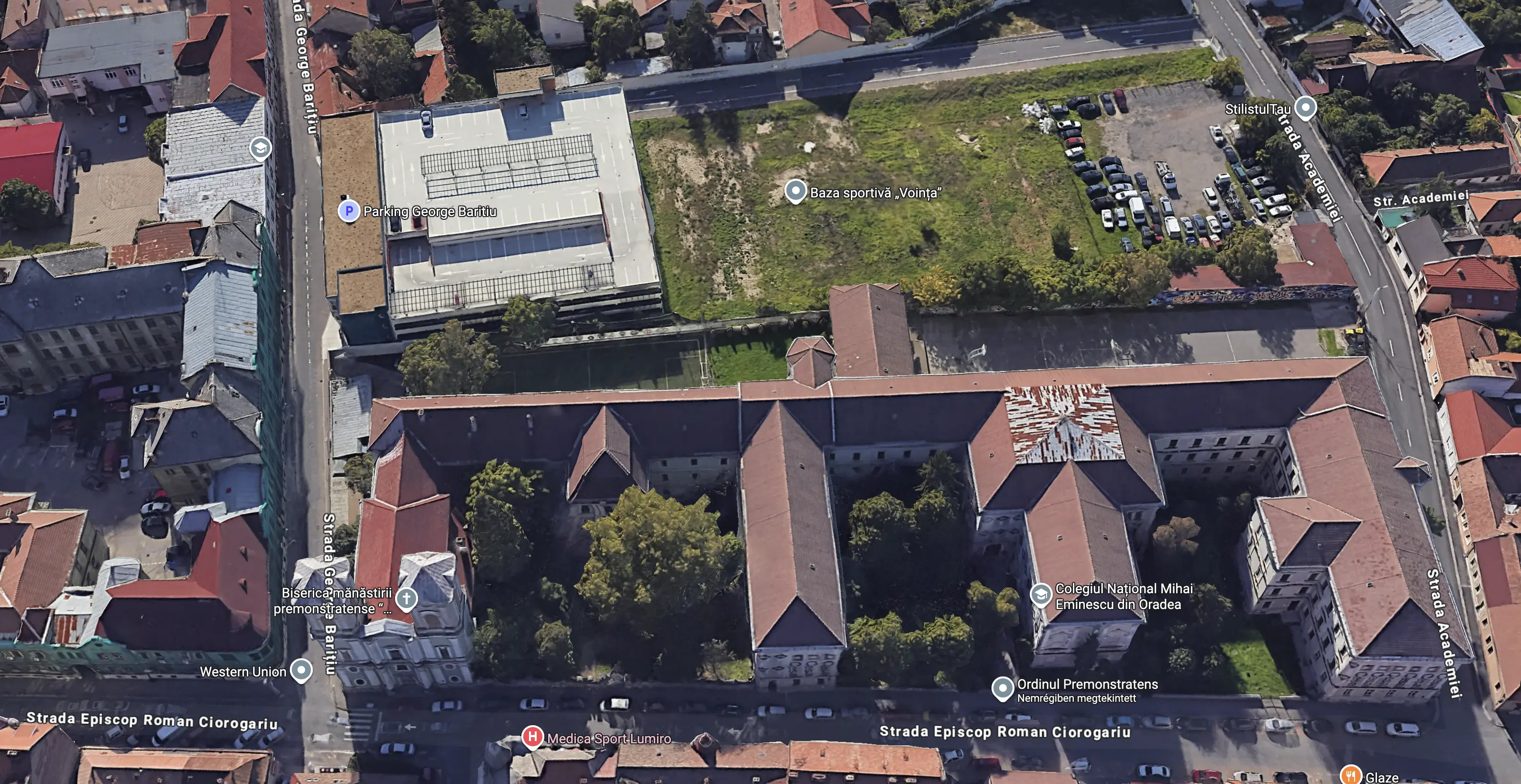
The ongoing eviction proceedings exclude only the church in the strictest sense (vestibule and nave):
the eviction, scheduled to be finalised on 14 May, would strip the order from the monastery and cloister on the first floor
after finalisation, it would no longer be possible to enter the church from the altar side, nor would there be passage through the small corridors adjacent to the narrow courtyard
The area used by the abbey has been continuously shrinking over the last hundred years. According to the most recent situation — or rather the situation as it stood just before the eviction assault of 14 April 2026 — the area used by the abbey comprises the church and certain rooms in the building behind the church, but and this difference is not merely a spatial matter: it also plays a prominent role in the dispute over house numbers that arose during the eviction proceedings.
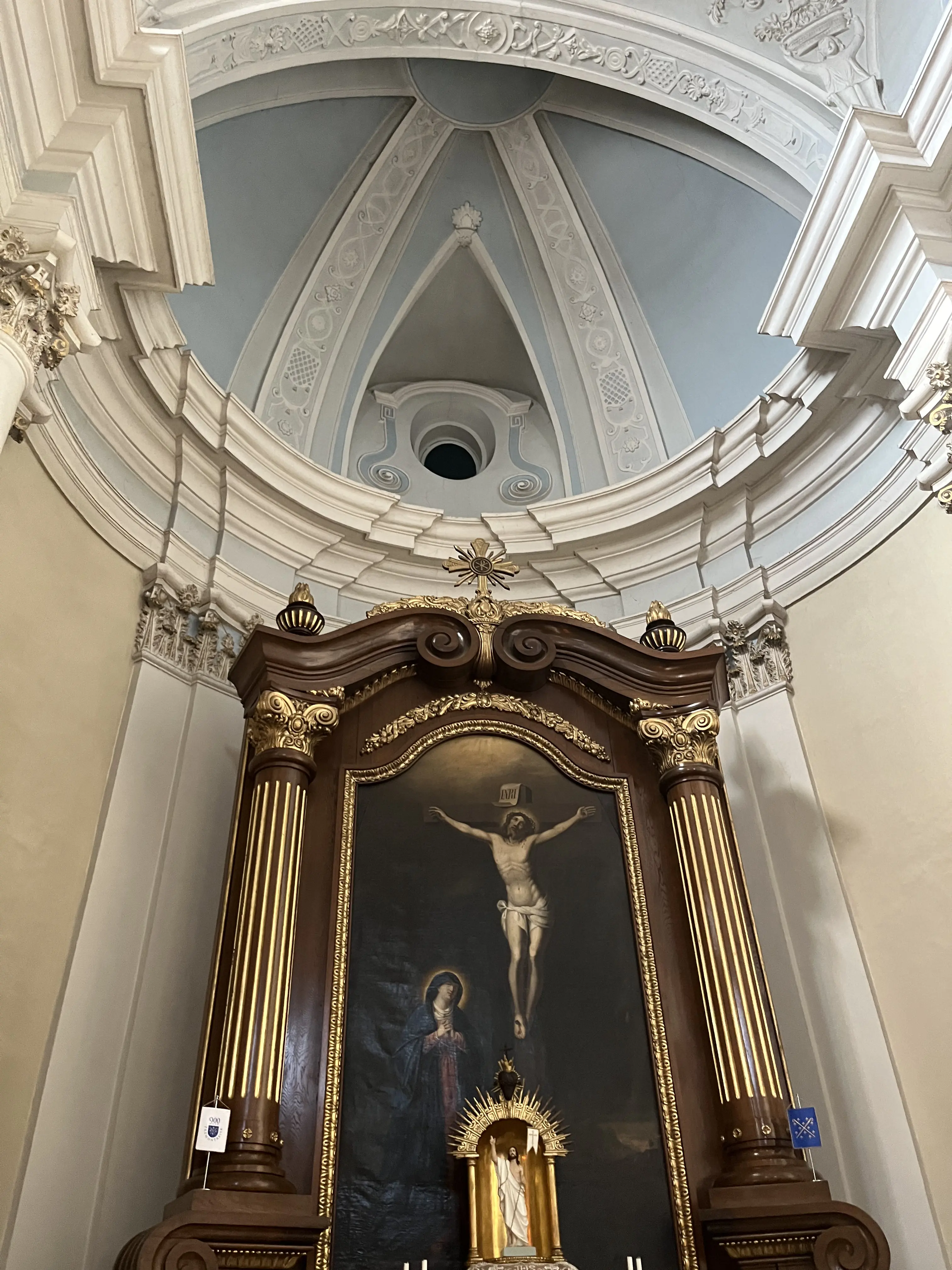
The building — from the monastic section through the nave and up to the second floor — forms a continuous structural unit. The nave itself extends to the second floor. The oratory, the classroom above the sacristy, and the corridors connected to the church are all derived from this continuous structure. There is no physical boundary along which the church could be separated from the rest of the building while leaving the church's function intact. This architectural fact is what the eviction proceedings have consistently disregarded.
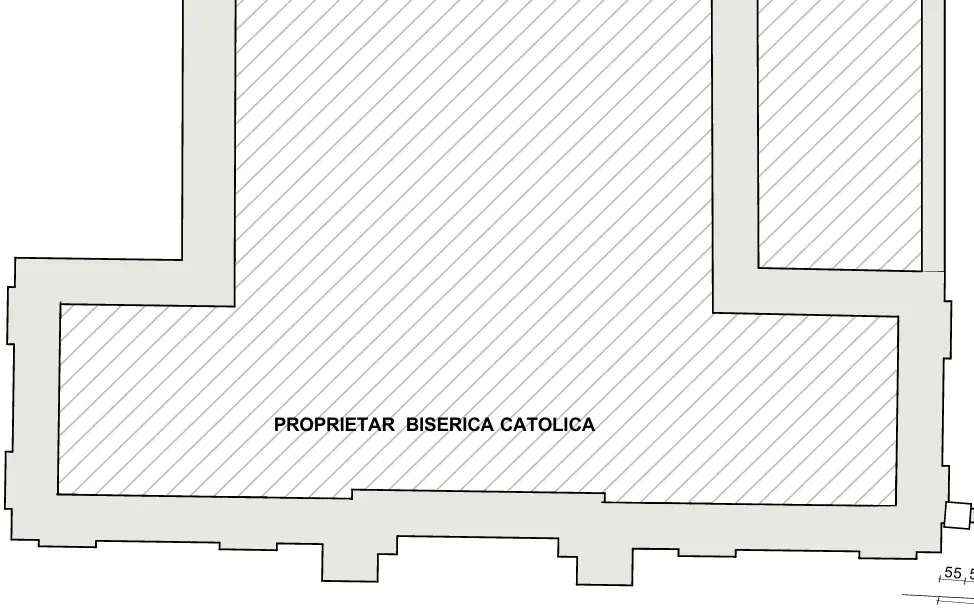
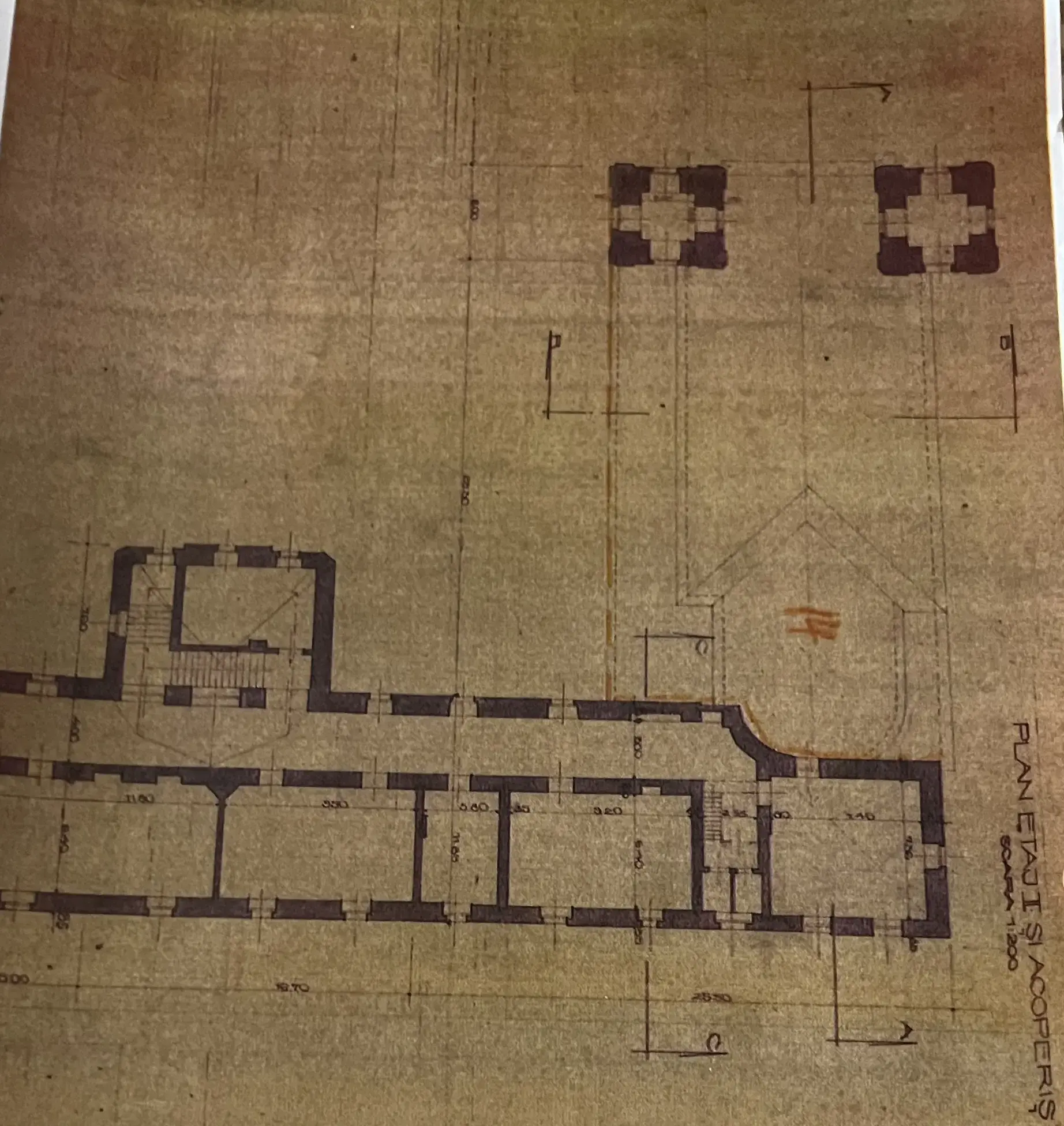
The current area used by the abbey is shown on floor plans taken from the EU-funded renovation project of the school. Since the project is inconsistent with the eviction intentions of the commissioning city hall, the rooms used by the abbey are marked in the project's drawings as excluded from the renovation; these areas are shown with cross-hatching at the right edge of the drawings. The partitions of the excluded spaces are only sketched in outline, but the overall size and boundaries of the space are accurate in the drawings that follow.
It can be seen that the parts in the abbey's use are, on the ground floor, roughly the space behind the church. This is where the liturgically indispensable "service" rooms of the church are located, including the sacristy.
On the first floor is the monastery, which was desecrated on 14 April by a violation of the monastic enclosure (cloister clausura). It can also be seen that the architect who prepared the plans writes "Biserica Catolică" ("Catholic Church") even on the room above the sacristy on the first floor — the very room that was also broken into and placed under sequestration on 14 April 2026.
The of the monastery is entirely occupied by the school. There are behind these differences in use.
Since the abbey's second floor was built in the nineteenth century — relatively modern compared to the first floor, which was originally built as a Pauline monastery — during the communist era, the abbey and the school exchanged rooms based on informal verbal agreements. The priority was not for the abbey and the school to occupy rooms directly above each other: the school did not take over the monastery's remaining rooms on the first floor, since the walls of the monks' cells there could not have been knocked through for structural reasons to create classrooms. Instead, the school favoured the second floor and took over all of the rooms there, including the second-floor chapel, which originally communicated directly with the nave through a rose window.
The legal position of the lawyers representing the Mayor's Office is that only house numbers 14 and 18 exist; there is no number 16. Furthermore, they contend that number 14 refers only to the nave itself, and that all rooms outside the narrowly defined church are under number 18, from which the abbot must vacate. This is contradicted by the city hall's own renovation documents, the electoral register, and the abbot's identity card. The house numbers are discussed in the following chapter.
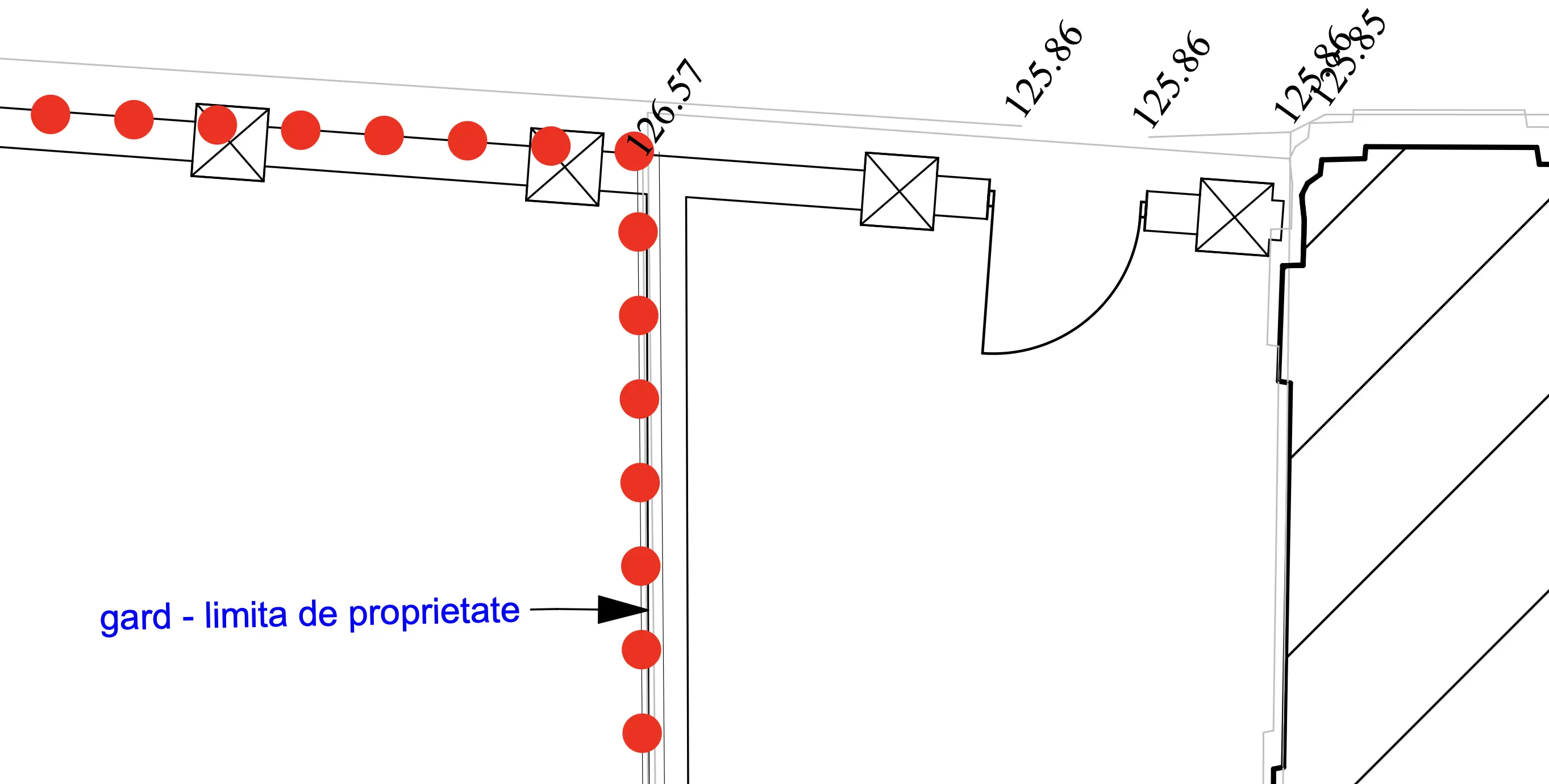
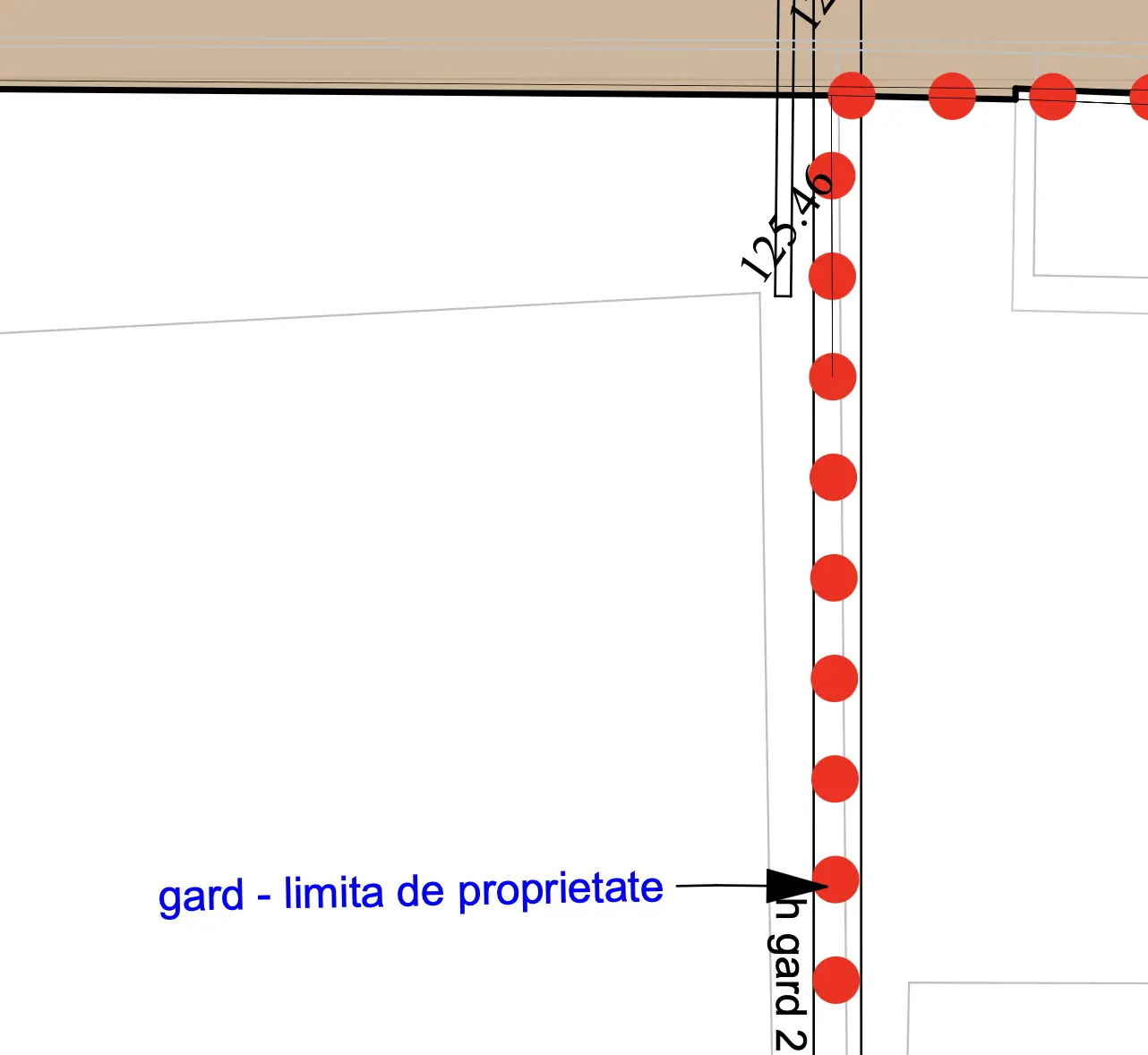
The abbey also uses two courtyards. These are presented with the help of a from the EU application. On the floor plan, the boundary of the area considered part of the project by the architect is marked in red. While the renovation project includes the external refurbishment of the part of the long building behind the abbey, the courtyards used by the abbey are similarly excluded from the renovation — just as the abbey's rooms are — and can be seen on the right side of the vertical boundary lines in the drawing. The plans provide for the concrete fences separating the courtyards used by the abbey from the larger courtyards to remain in place; zooming into the PDF makes the blue inscription readable beside each fence: "gard - limita de proprietate" (fence - property boundary). Other drawings also show that the architect did not plan for the spaces in the Church's use — treating them as church property.
Nevertheless, the enforcement officer also placed the rear courtyard under sequestration on 14 April.
The narrow courtyard to the left of the church is accessed through the red gate visible in the zoomed-in image next to the number 125.86, beside the main entrance to the church.
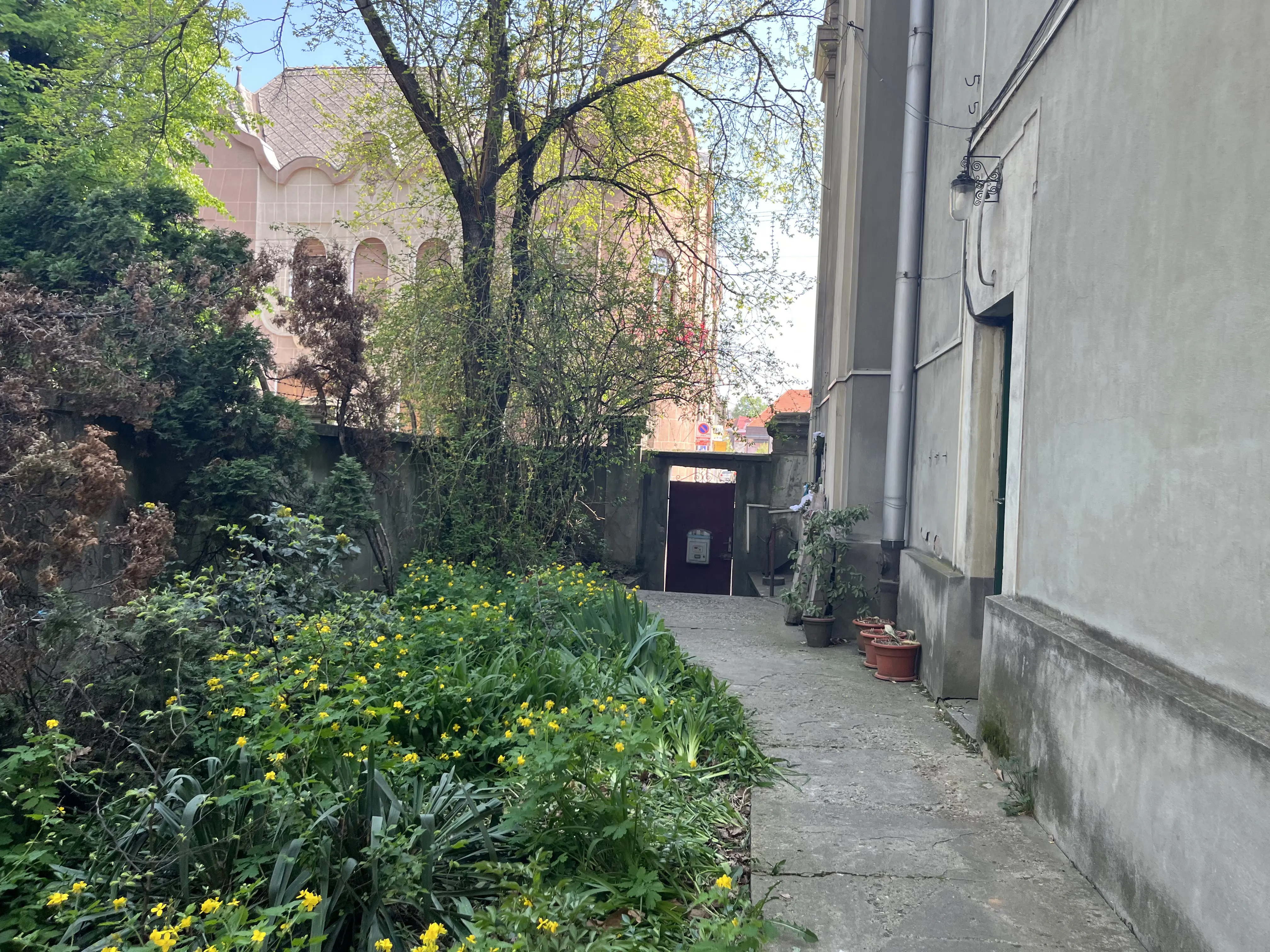
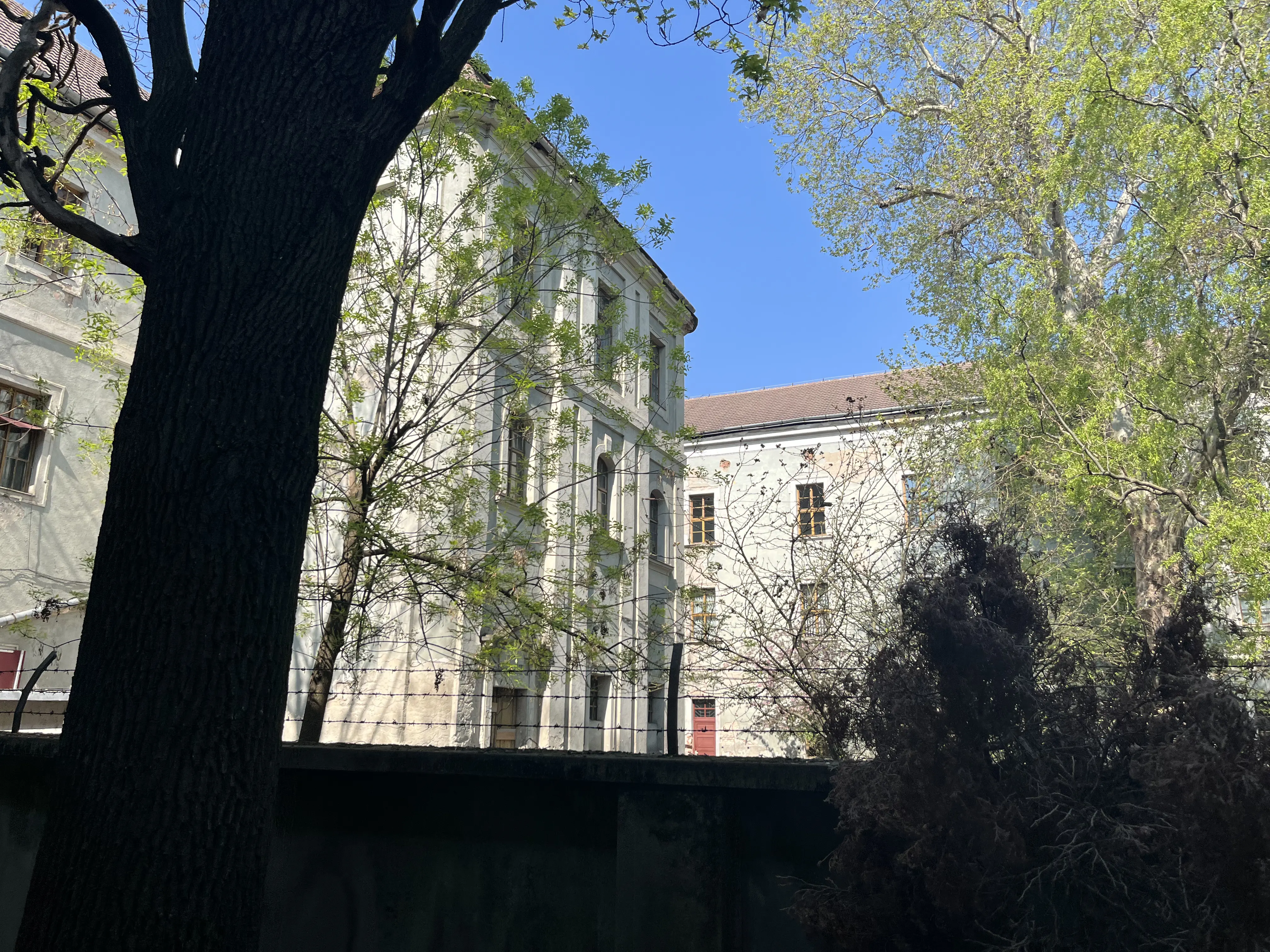
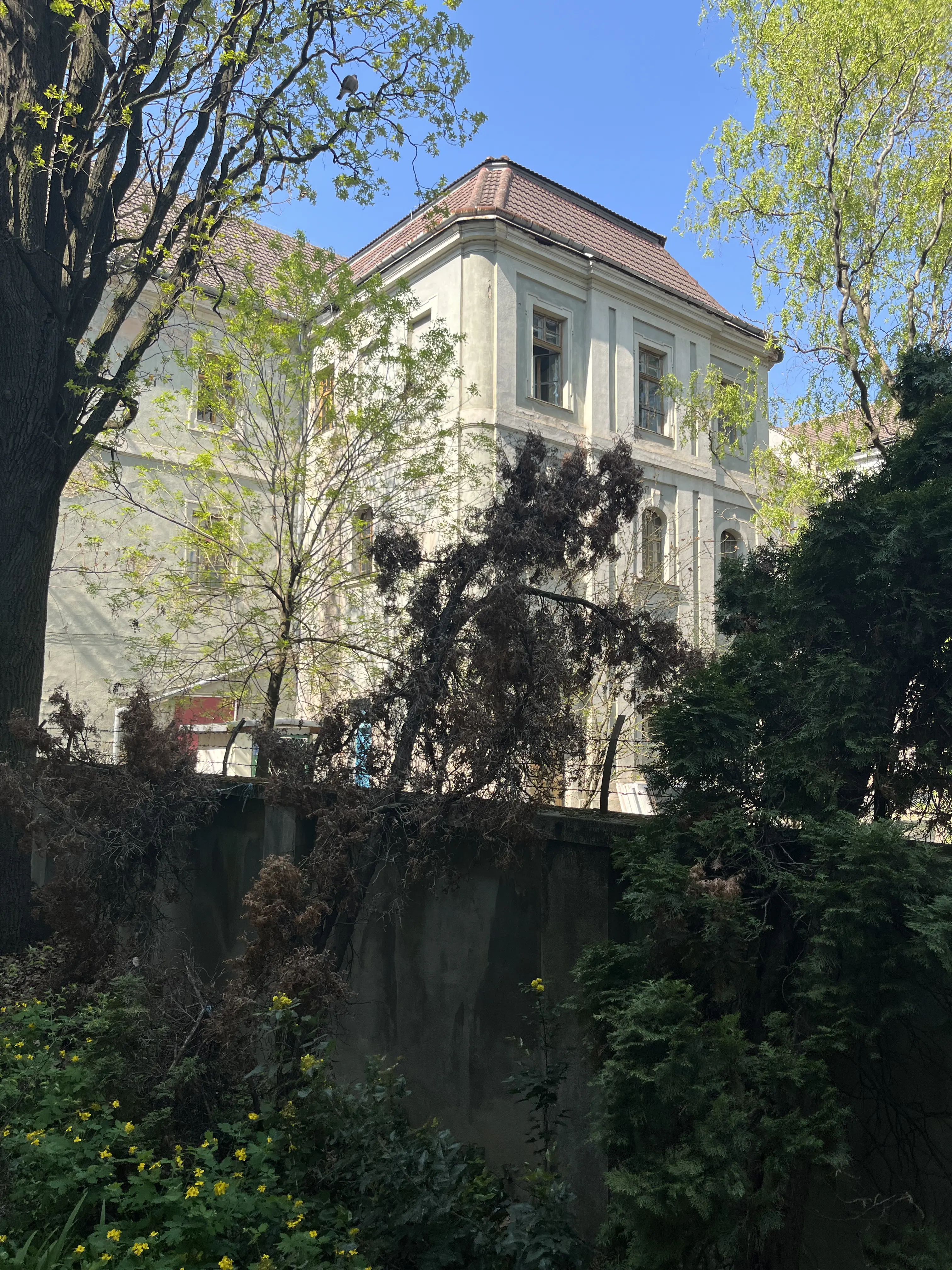
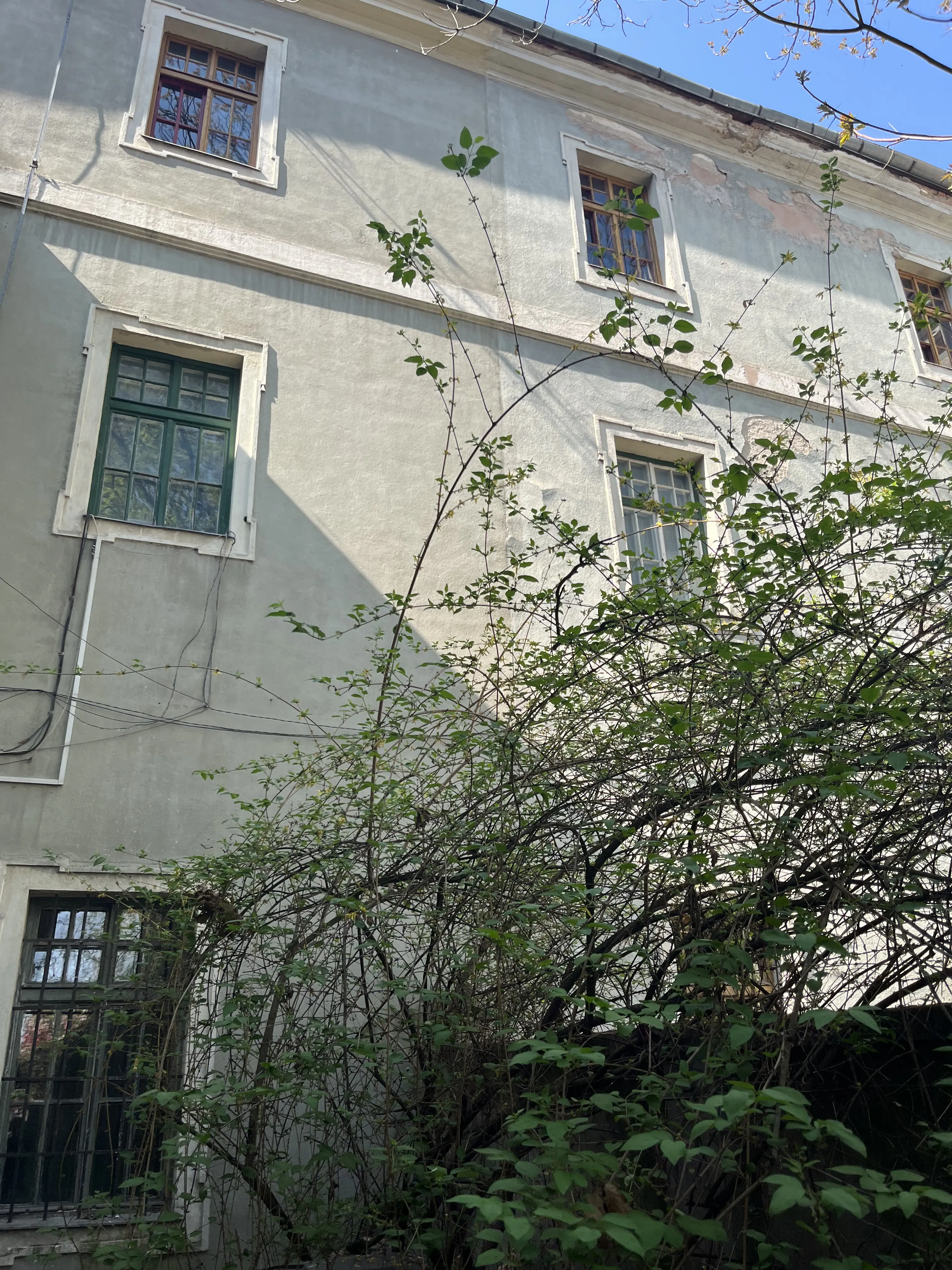
Beyond the rear courtyard and the other side of the monastery is the parking structure, itself constructed in an abusive manner.
The rear courtyard was used by the abbey mainly for practical purposes: chickens and rabbits were kept there to supply the abbey's kitchen, roof tiles were stored there for recent use in Asszonyvásár (Târgu Mureș area), and the abbot had also allowed a couple of neighbours to park their cars there. Since the abbot had known from the first-instance eviction order that the courtyard would in all likelihood also be seized, he devised a rather peculiar defensive plan that Romanian-Hungarian church and secular leaders tried to use against him — though it would not be legally relevant to the question of usage rights.
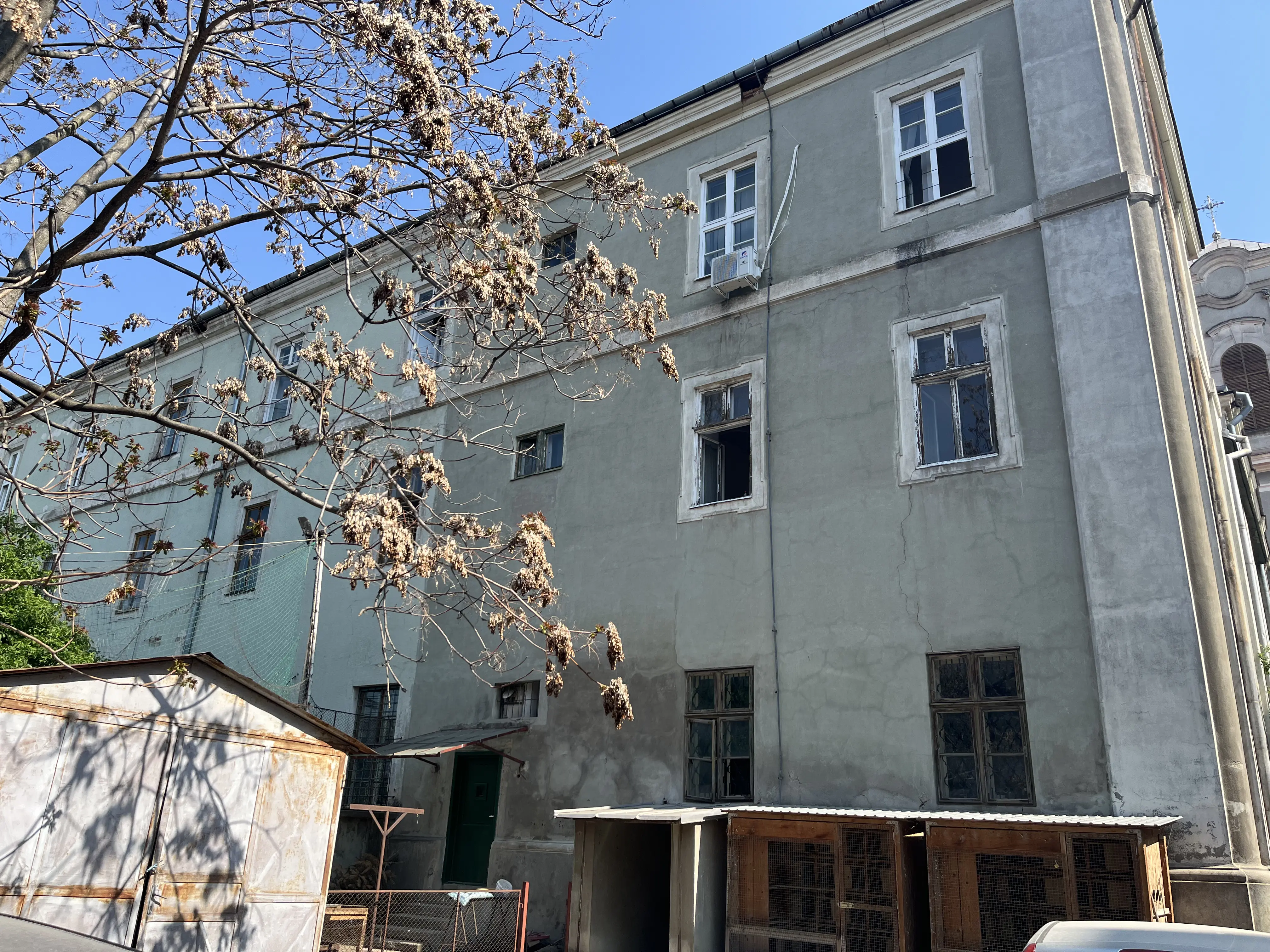
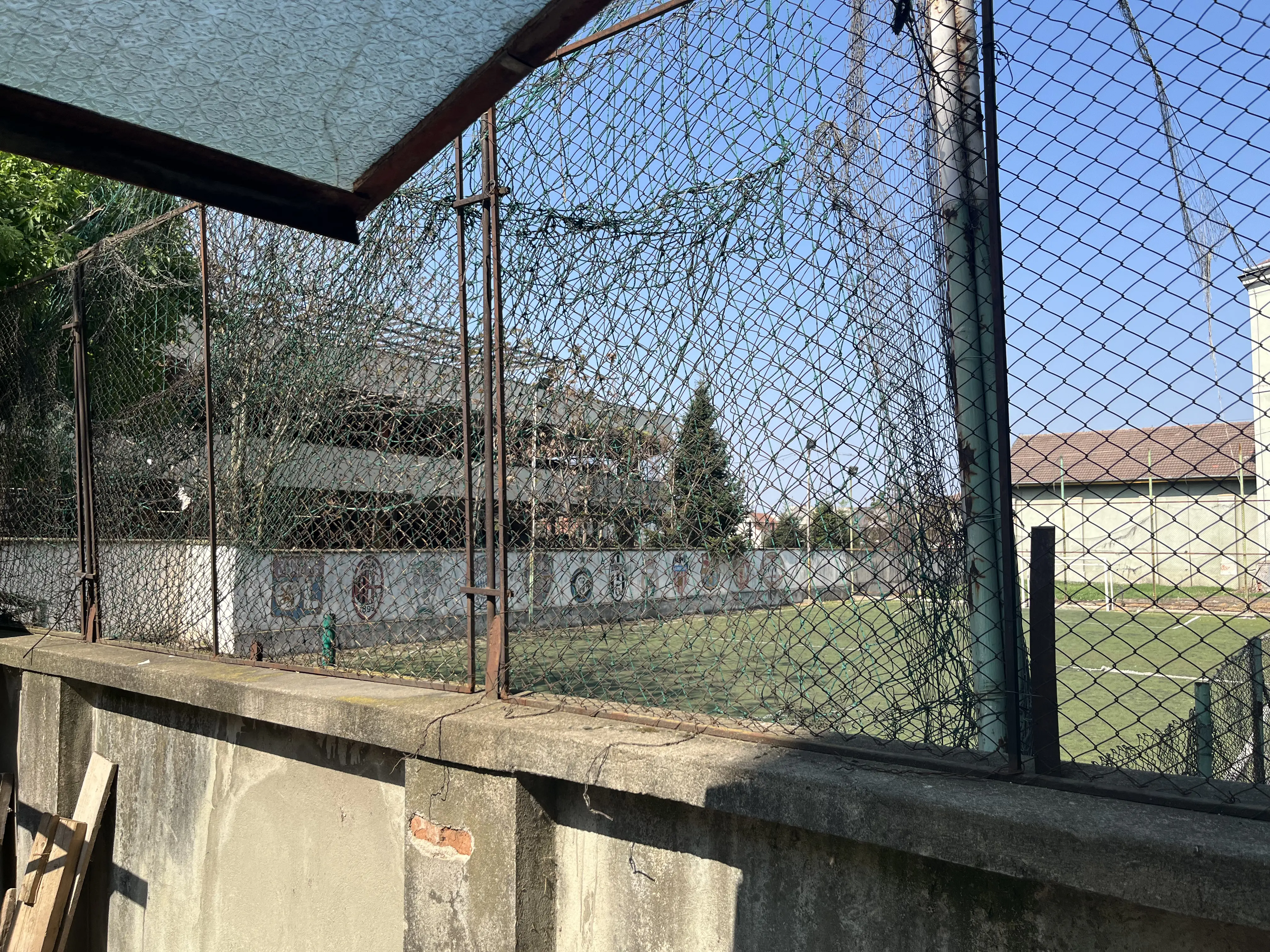
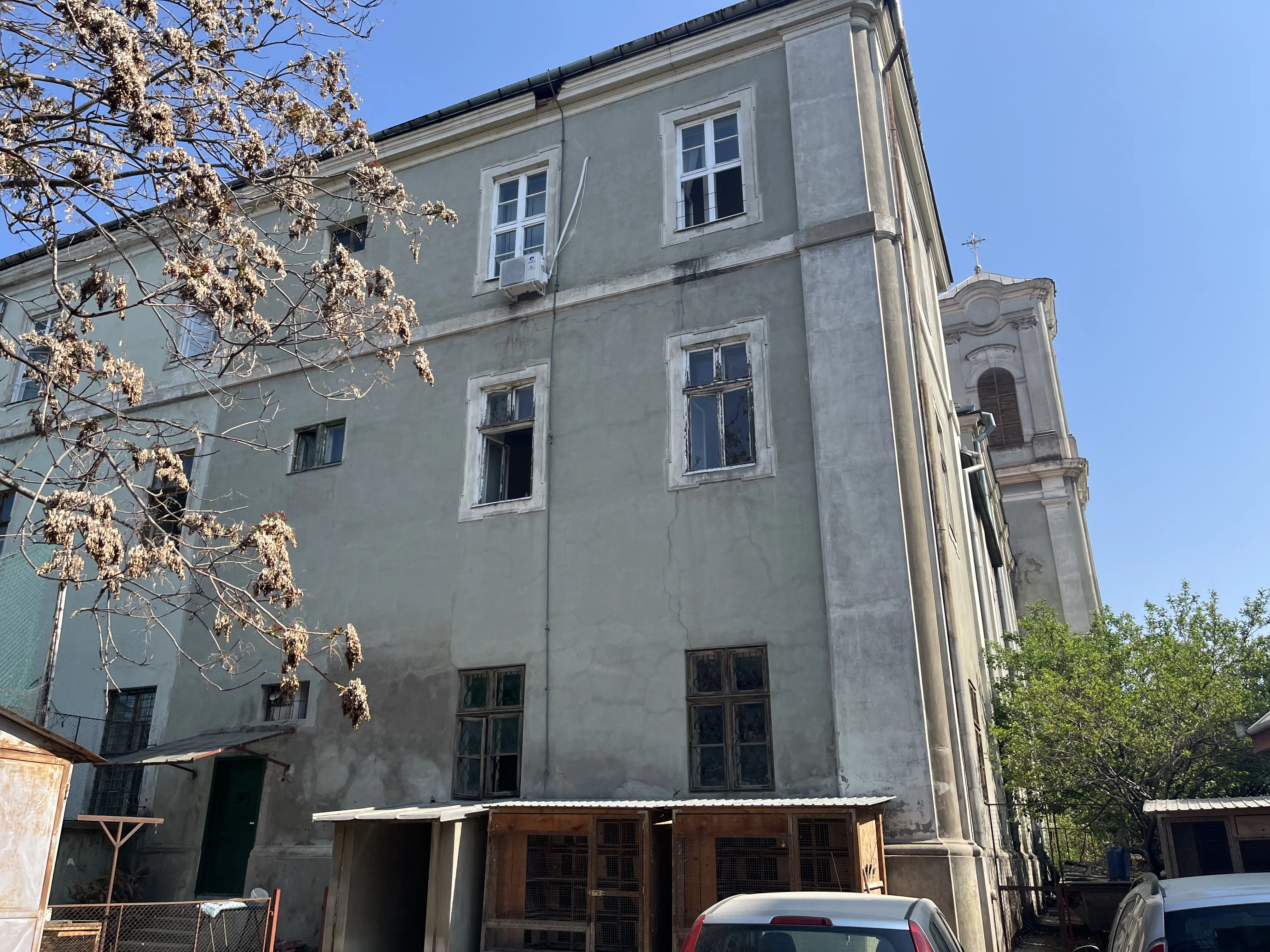
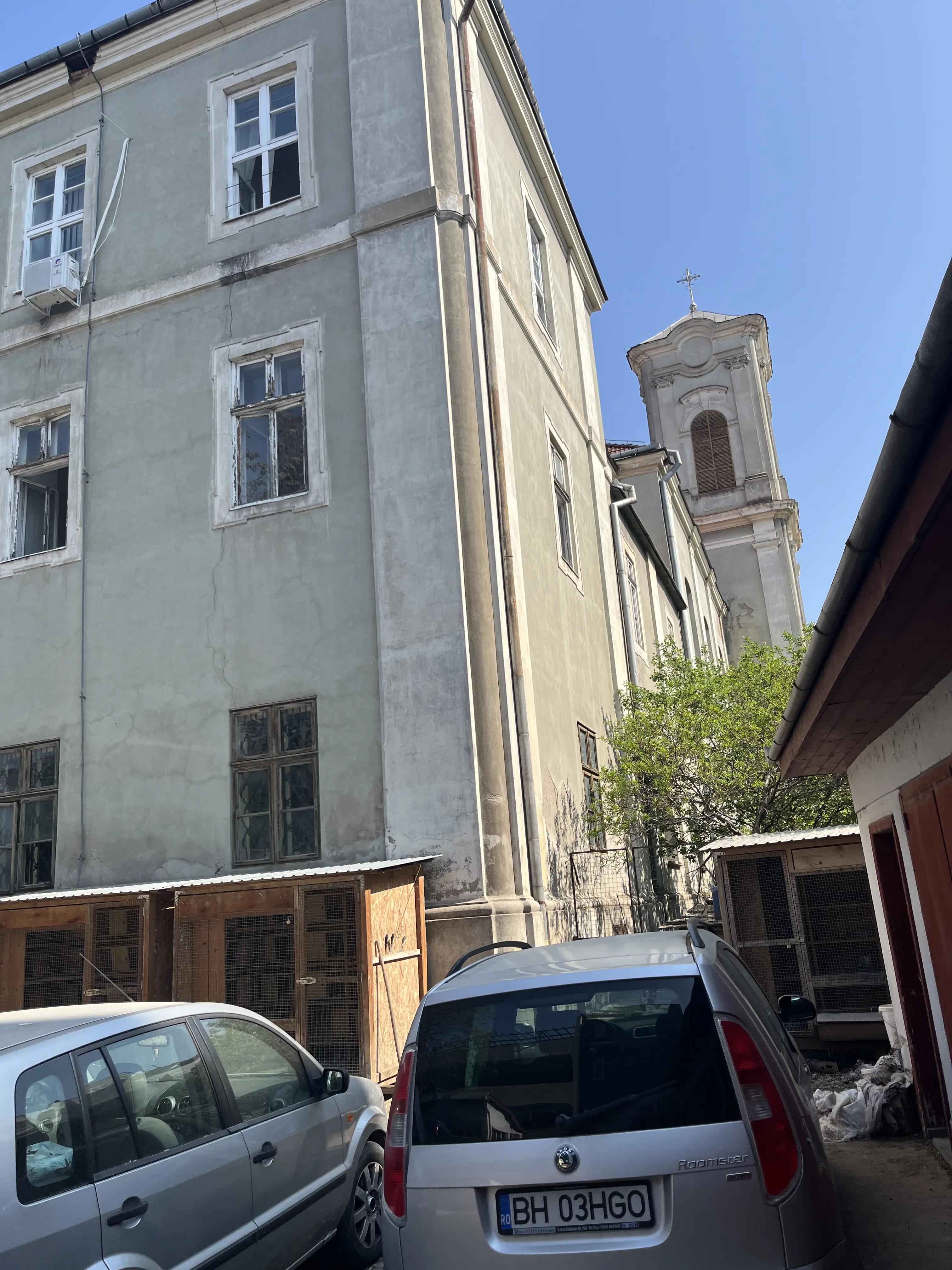
On both courtyards, a slight colour difference in the building's exterior plasterwork is visible (a vertical boundary line between slightly darker and lighter shades of green), and a difference in the roof tiles can also be seen in satellite images. This is a remnant of the fact that around 1986, when the church tower urgently needed to be reinforced, the abbey carried out renovations separately from the school's maintainer, not jointly.
The history of the building's use, as relevant to the eviction proceedings
The square-shaped block parcel — encompassing both the building complex and an equally large undeveloped area behind it — came into the abbey's ownership in 1802. The church and the abbey already existed before that date, as a church and and the Norbertine abbey further expanded the Pauline monastery, since the orders restored to their rights by the king were from that point obliged to carry out teaching duties. The property was therefore enlarged with a Premonstratensian grammar school and a law academy, and an additional second floor was added to the existing ground floor and first floor of the Pauline monastery building. The building was completed in its current form by 1874; before that, the school operated in the Roman Catholic episcopal palace located on Saint Ladislaus Square (where today's city hall building lies now). The building section of the Law Academy was not originally in the possession of the Premonstratensian Order; it was purchased by the Premonstratensians The land behind the building (along with other landholdings) served to finance the grammar school, as the upkeep of schools was also the responsibility of the monastic community.
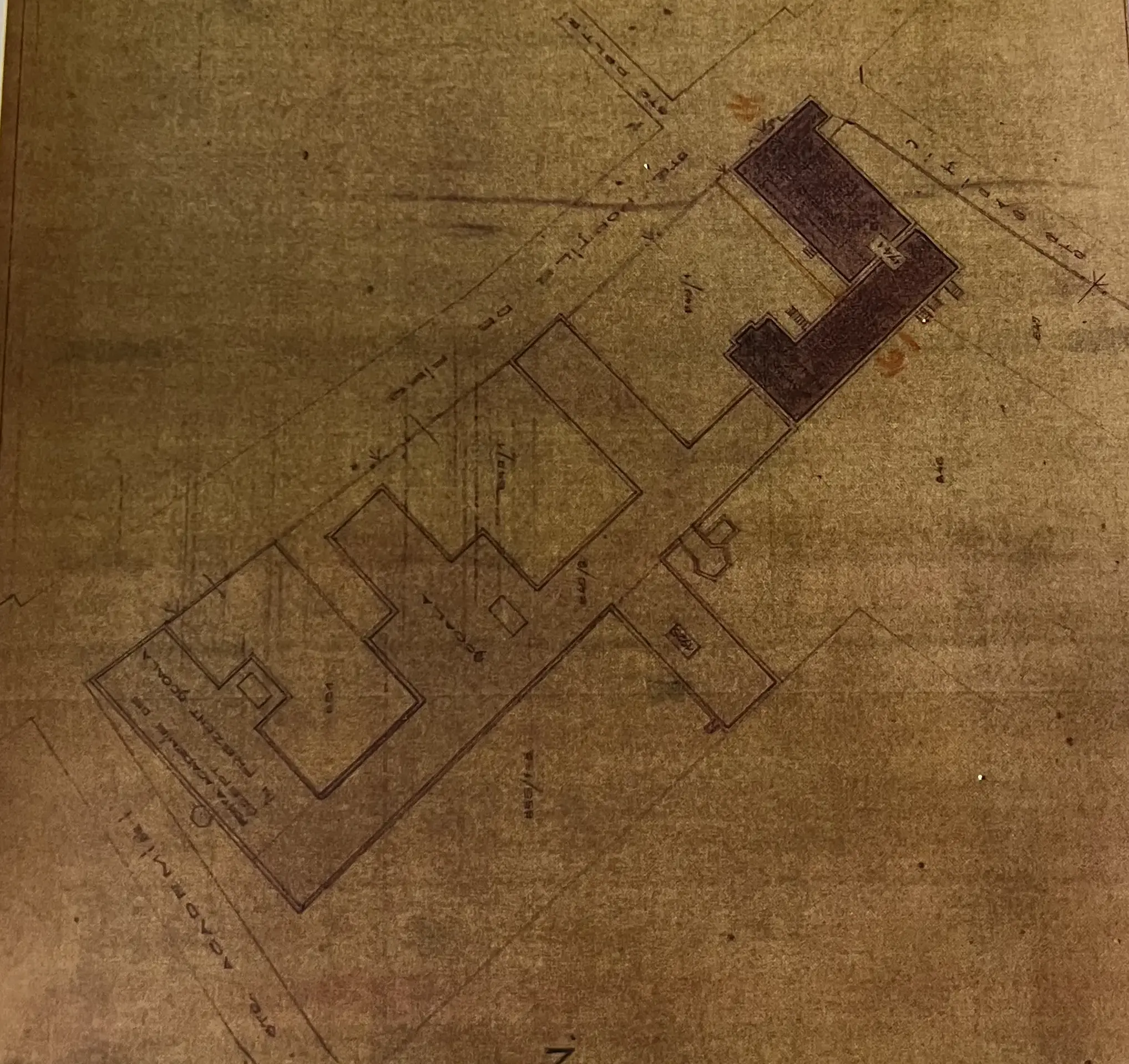
On the building complex's floor plan, the original Pauline monastery and church were located roughly within the area outlined in green; the Premonstratensians expanded this and added a second floor.
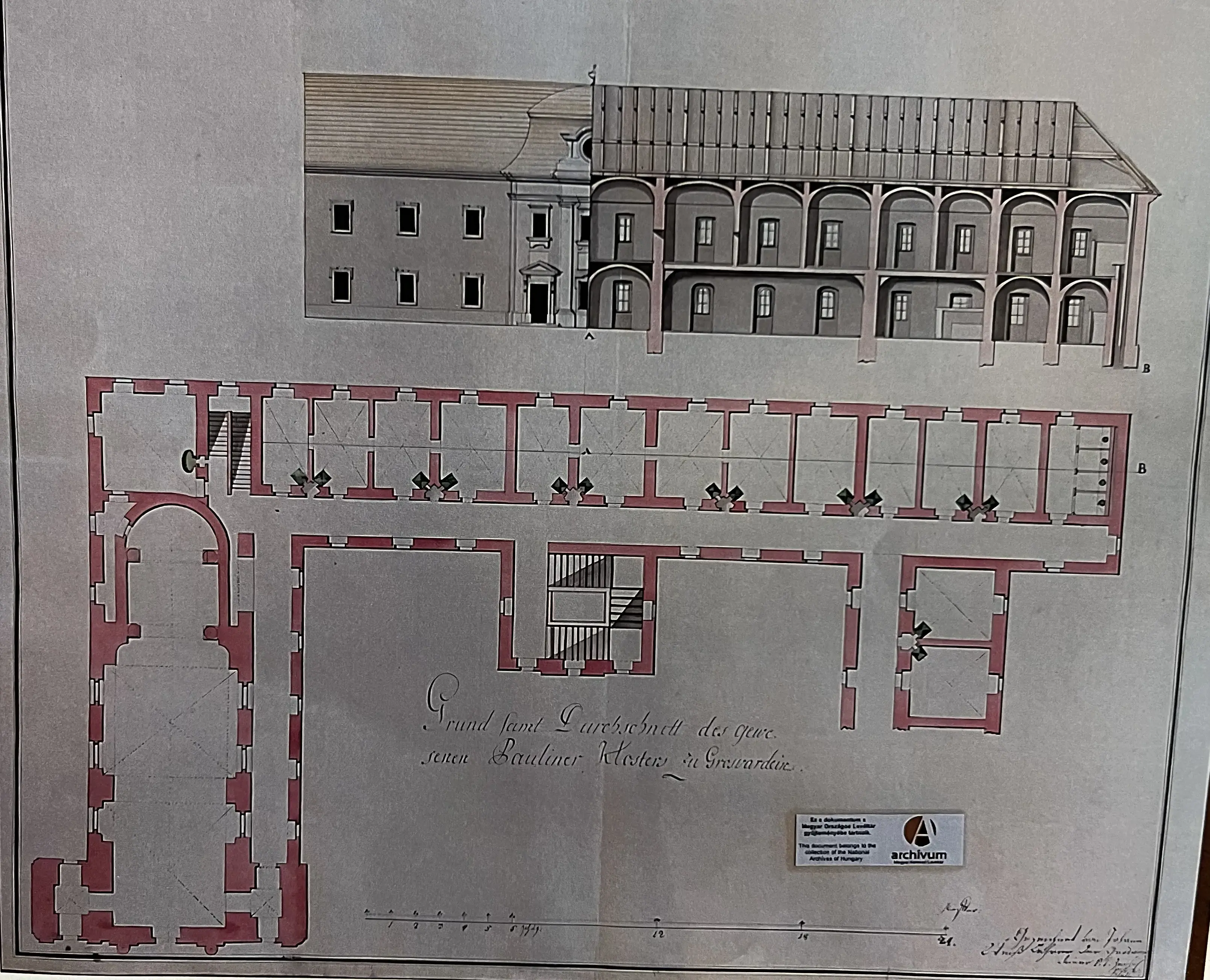
The second image shows the contemporary floor plan and lateral section of the old Pauline monastery. The drawing reveals what the Austrian engineers originally considered as the Pauline monastery, and the historical functions are also visible: it is clear that the sacristy served this function from the outset and which part constitutes the monastery itself.
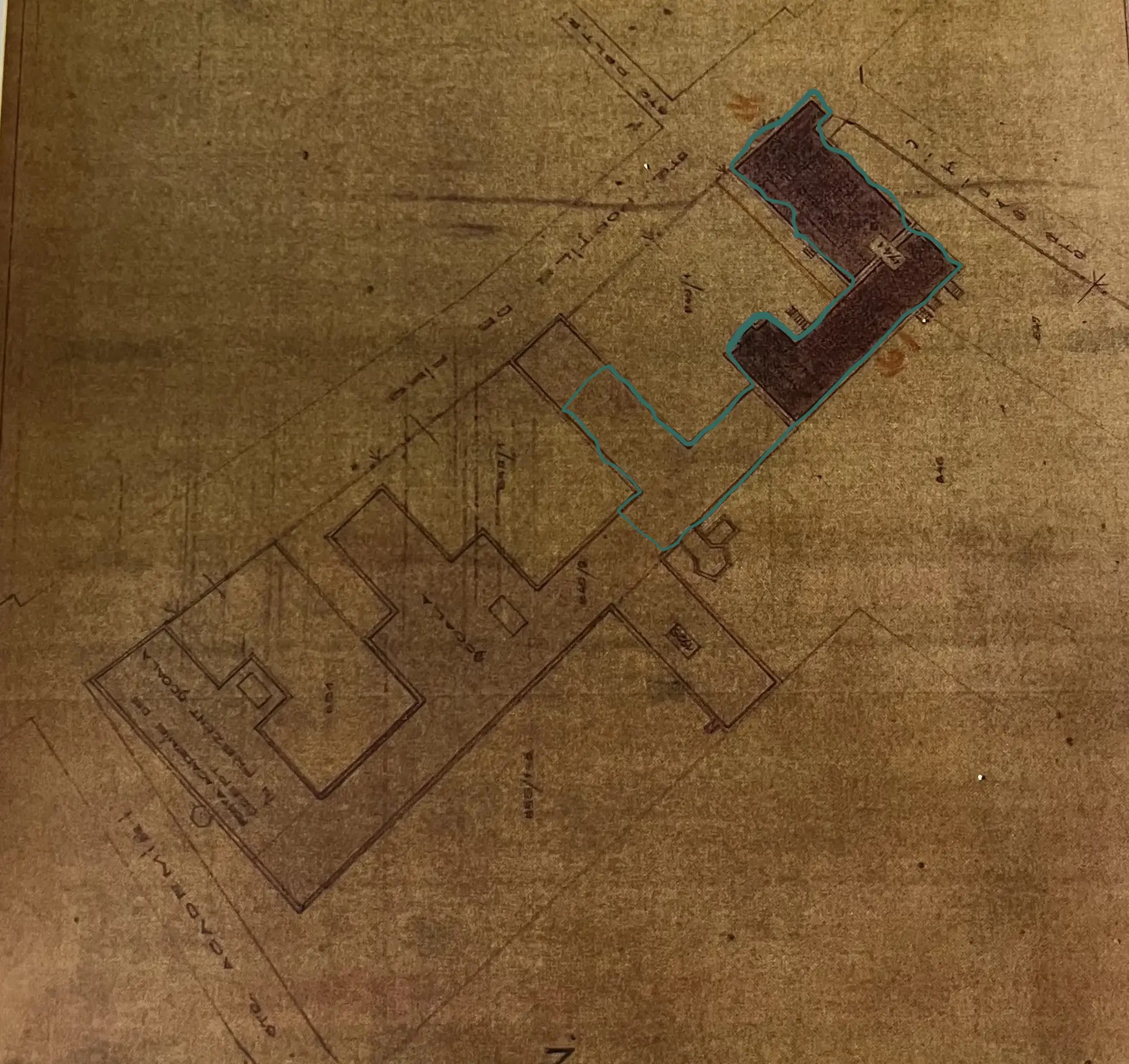
for 40,000 forints, according to entry B7 of land register number 3160:
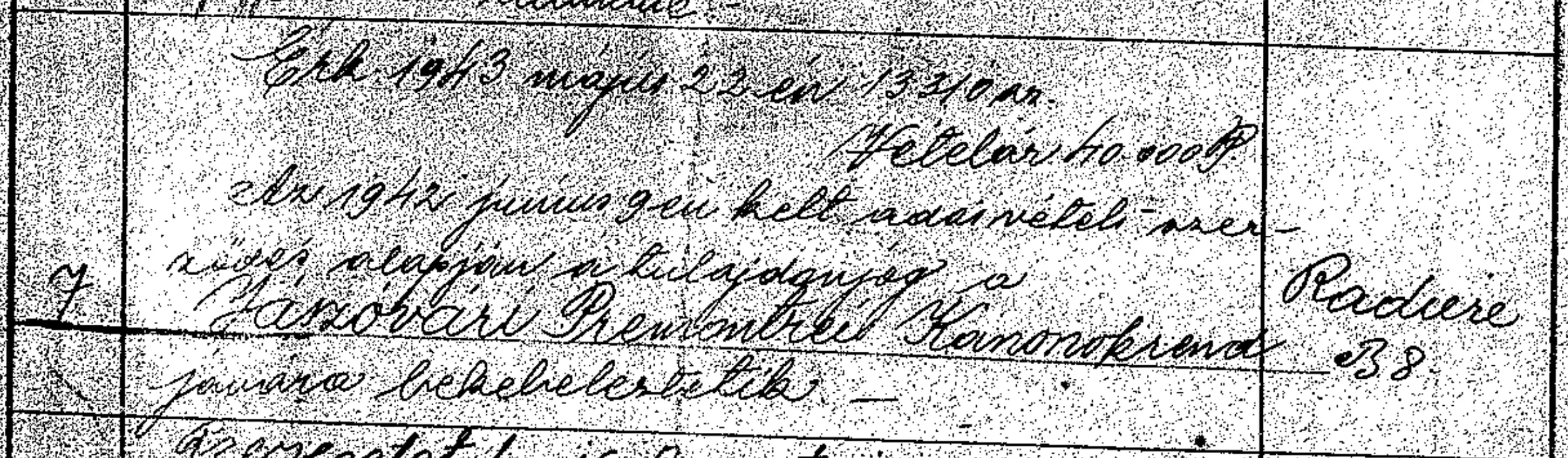
outlined in greenish colour at the lower left of the image:
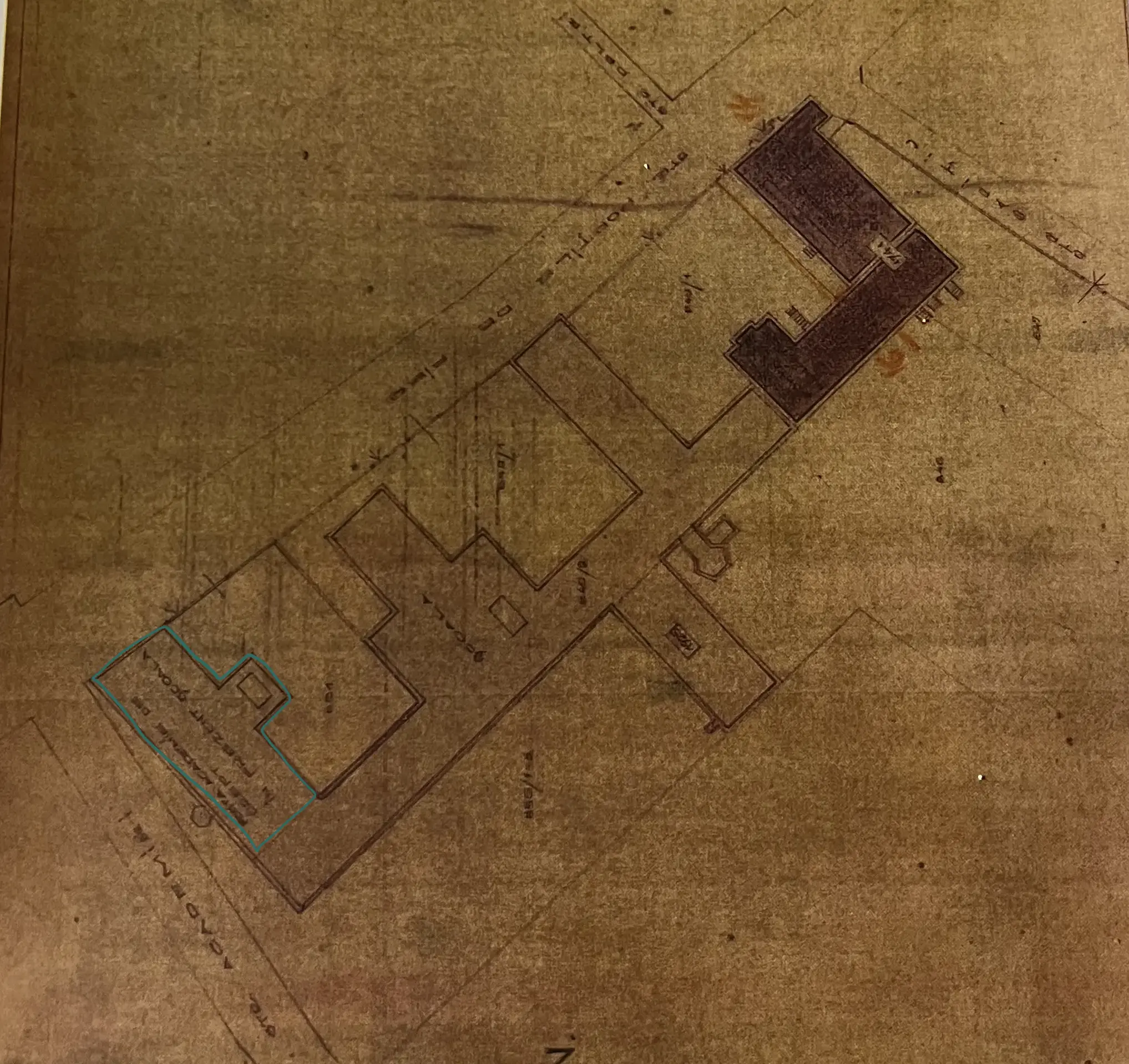
The EU-funded renovation project also includes a document recounting the history of the property. Since this is not important for the renovation project itself, it does not always distinguish between the Law Academy and the Premonstratensian grammar school, which indeed developed in parallel but as institutions with different ownership backgrounds.
In 1923, the Romanian administration dissolved the Premonstratensian grammar school. After this, some of the Premonstratensian teacher-monks continued to teach unofficially, while others continued their teaching in Gödöllő, Hungary. Between 1940 and 1948 the Premonstratensian grammar school operated again.
On the legal side: in 1936, ownership of the entire property was transferred to the Romanian state on a fictitious basis; in 1941 the Hungarian administration transferred the ownership back to the Premonstratensian Order; the Romanian administration then explicitly reversed this, re-registering the school's ownership in the name of the Romanian state — yet, for some reason, the school was still nationalised in 1949. More details are provided here.
In 1948, when church-run schools were abolished, a state school was established in place of the Premonstratensian grammar school.
The tanning school was then moved into the monastic section — that is, the use of the wing was allocated to this school — so the abbey vacated the wing of the abbey that extends to what was then József Attila Street (today: Ciorogariu Street). It appears that — communism notwithstanding — property rights were still taken into account at that time, as the tanning school as occupant and the Premonstratensian Order as owner signed a contract. The passage between the tanning school and the remaining parts of the abbey was walled up for obvious reasons. When the tanning school vacated the building just two years later, the neighbouring state school simply moved into the tanning school's former premises without any consultation.
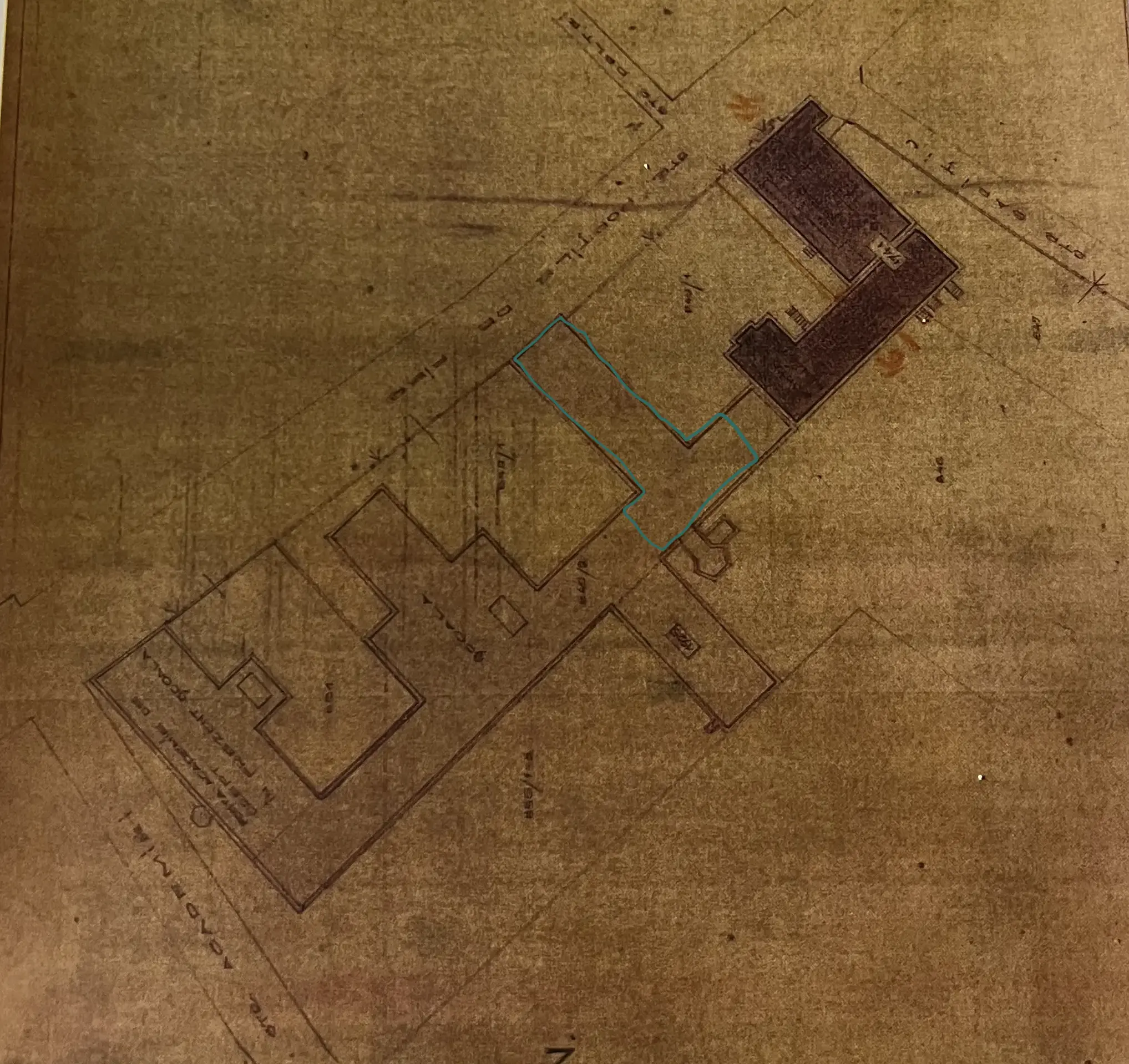
Although the order was not formally dissolved — the Romanian state did not explicitly ban it even during the communist era, and the Premonstratensians remained continuously in the monastery, since the communists too knew that monastic life takes place within the monastery — because the order was assimilated with the Orthodox Church, Decree No. 410/1959 also applied to them. This decree supplemented the Church Affairs Act No. 177 of 1948. The regulation imposed two conditions for entry into monastic life: theological qualifications, or an age above 55 for men and above 50 for women, with the additional condition that in neither case could one have family obligations. This effectively made the recruitment of new members impossible, and the order's numbers gradually dwindled. Whenever a Premonstratensian canon died, the since the Premonstratensians were teacher-monks, every monk also had a study cell; the abbot's suite comprised four cells were invariably taken over by the school. The image used for illustration before reflects the situation around 1972, when the provostship still used the main entrance of the Premonstratensian monastery building. Also marked in red in the image are the boundaries of house numbers 16 and 14: the abbey's original building section bore house number 16, while the church and the parts belonging to it behind the nave bore number 14.
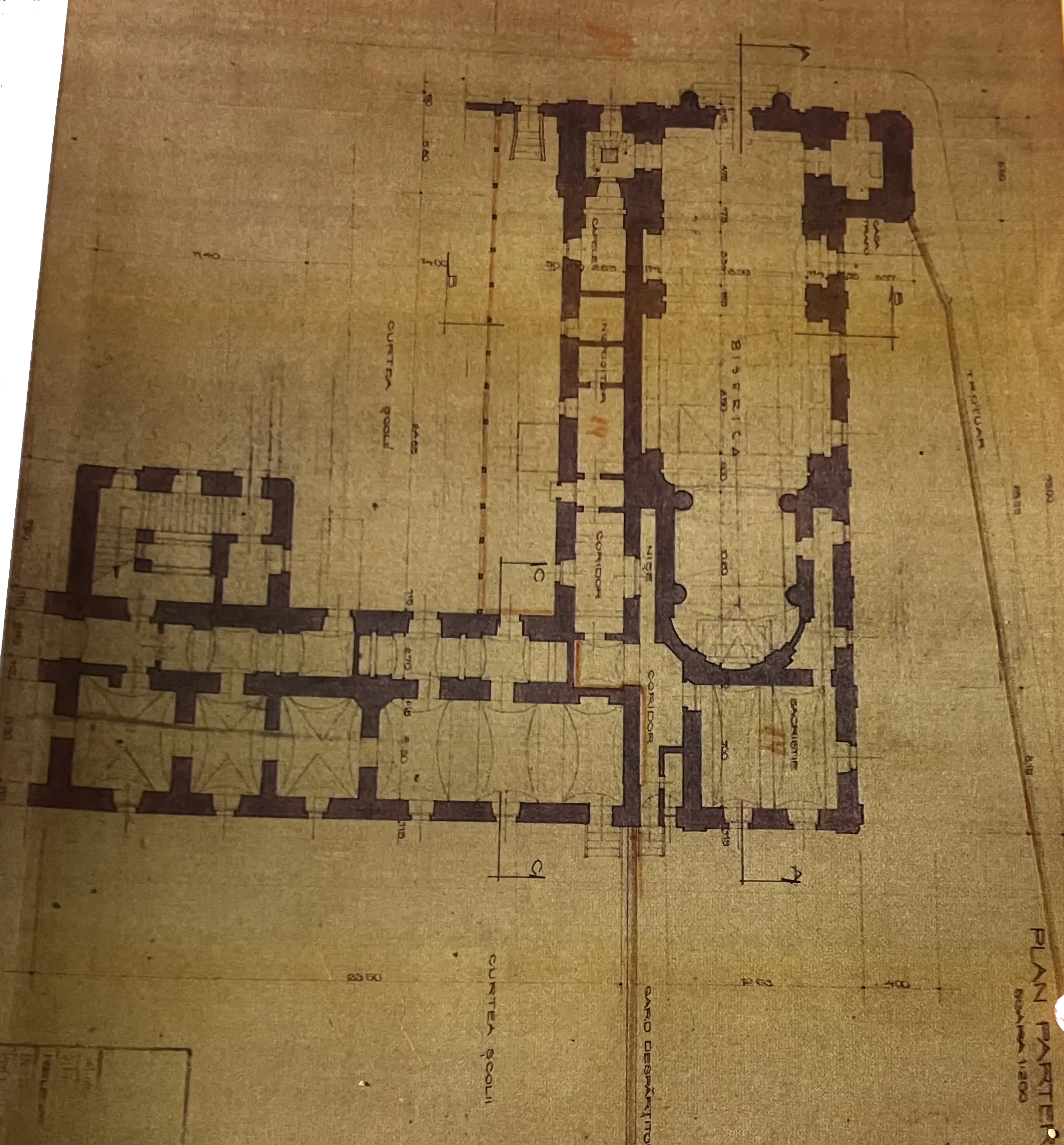
Detailed floor plans are available for the situation prevailing around 1986. From these too we learn which rooms fall under which house number, and the rooms used by the abbey are also precisely Shortly after this period the communist dictatorship came to an end, and the area used by the abbey did not shrink further thereafter. In the post-transition period, the maximum number of monks and novices at the provostship was six, in addition to the support staff. Over the past twenty years, the number of monks has begun to decline again — and to understand why, one must ask a question that is rarely posed. Who is capable of enduring the situation into which the Váradhegyfok Premonstratensian Provostship has been gradually forced over decades? Who can bear to live and serve in an institution from which nothing has been taken lawfully — whose lawsuits have not been concluded, but nor has what should have been returned been returned — and which now finds that what the Tatars did not take, what the Ottomans could not take for good, what Habsburg rule did not take altogether, what the Holocaust did not reach, what even communism did not take entirely — is now being taken, in a democratic state under the rule of law, through a municipal enforcement procedure, moreover one organically connected to a European Union renovation project, effectively by armed force — without legal basis, without a final and binding judgment, turning out into the street the one person who, despite all of this, stayed.
By this time, not a single room on the ground floor bore number 16 — i.e., belonged to the abbey; only the parts more closely connected to the church, situated behind the church, remained in Premonstratensian use. On the floor plan, the boundaries of number 14 are drawn in red, with the number 14 marked in red at three locations. In an unusual arrangement, number 14 thus also includes the small courtyard that was by this time partitioned off from the rest by a fence on the side of number 16, since access to the rooms behind the church — the abbey's "service" entrance — now came from this side, as the abbey had by then lost the main entrance to the abbey building. The sacristy behind the church, the ancillary rooms, the corridor on the side of the church, and the small kitchen tucked in the corner all fall under number 14:
The question arises as to why the red gate beside the church bears house number 16. The first-floor plan will provide the answer: since the abbey's traditional house number was 16, it is natural that the canons — and thus Abbot Anzelm's official registered address — are registered at the Premonstratensian monastery. Accordingly, mail addressed to him must be delivered there; but since the original entrance of number 16, the main entrance, is by this time occupied, and only a few rooms on the first floor remain from it.
The first-floor plan shows, through its red lines and numbers, that by this time only two cells and the corridor serving them remain in the abbey's use from the monastery at number 16. The door marked as sealed on the plan is the one the authorities down when they desecrated the abbey's enclosure. The remaining rooms fall under number 14, since they are aligned with the church and communicate with it. The passageway to the pulpit has since been closed off; only windows overlooking the nave remain.
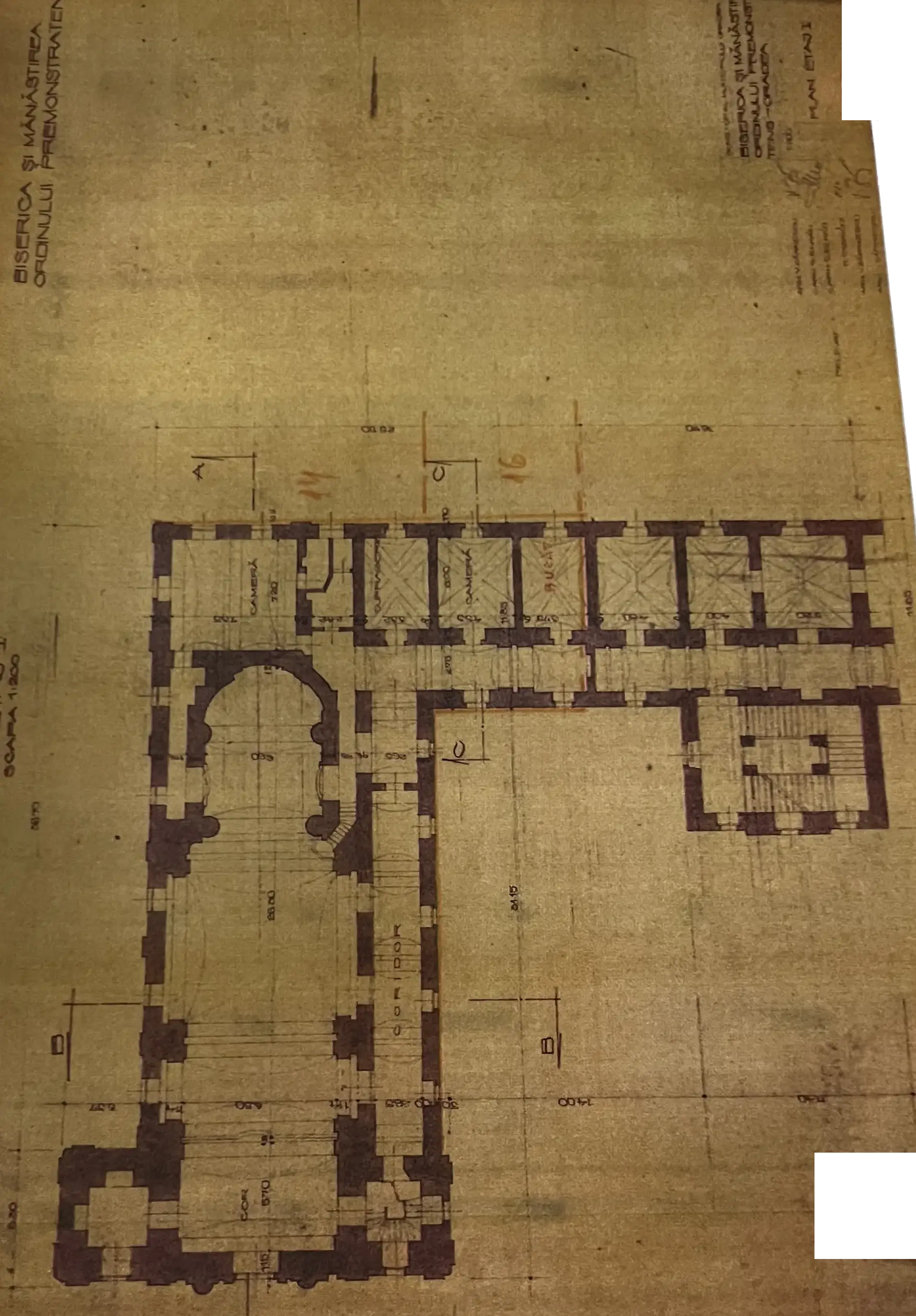
On the second floor, number 16 is not marked at all, since the second floor was entirely taken over by the school and those rooms have since borne number 18; the nave, meanwhile, is delineated in the air on all sides between the two towers, as it falls under number 14. The rose window between the part of the nave above the altar and the second floor was probably already bricked up by this time, and the floor plan incorrectly still shows it as open.
The eviction proceedings
The eviction proceedings were launched on 19 May 2025 — the day after the presidential election. On Monday, a notice was posted on the gate of the property complex giving the abbot five days to vacate the building. The procedure was repeated shortly thereafter: on 24 June 2025, the Oradea municipality again nailed the notice to every gate of the property complex — including the school gate. The timing was not coincidental; the content was unchanged: five days, and he must leave.
In the court application — filed on 2 July 2025 — the Oradea municipality asked the court to order the immediate eviction of Fejes Rudolf Anzelm, along with all his movable property, from the premises at 18 Roman Ciorogariu Street, on grounds of lack of title:
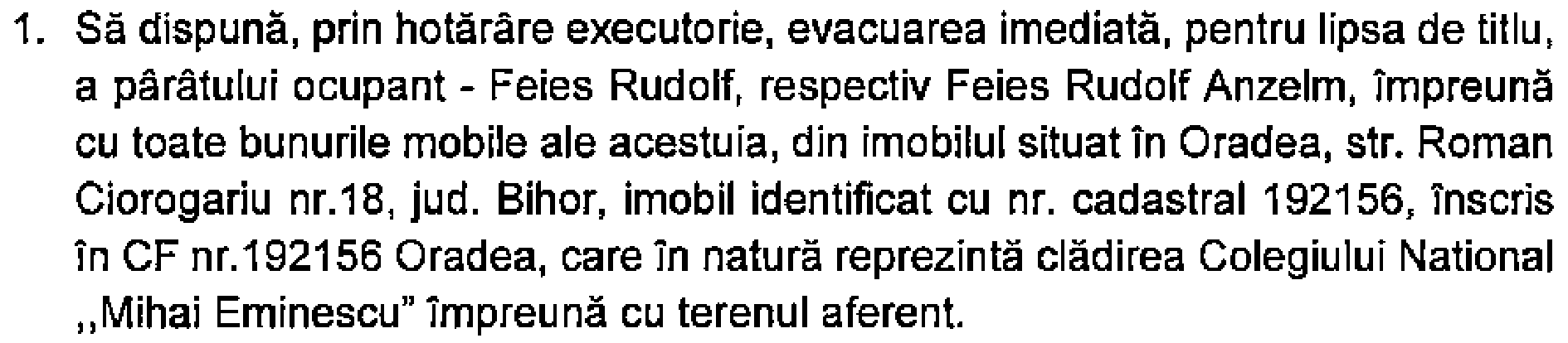
Order, through an immediately enforceable judgment, the immediate eviction of the defendant occupant without title — Fejes Rudolf, or Fejes Rudolf Anzelm — along with all his movable property, from the property located at 18 Roman Ciorogariu Street (Oradea, Bihor County), registered under cadastral number 192156 in the Oradea Land Registry under sheet 192156, which in physical terms represents the building of the 'Mihai Eminescu' National College and its appurtenant land.
The full content of the application can be reviewed
The application treats Abbot Fejes Rudolf Anzelm as a private individual without title. This characterisation is not merely legally untenable — it is outright absurd. Fejes Rudolf Anzelm is a life-tenured monastic superior, the Abbot of the Váradhegyfok Premonstratensian Provostship, and a state-recognised ecclesiastical dignitary. His presence in the institution is not primarily based on a tenancy relationship. It is based on his monastic vows, his canonical appointment, and the property rights of the institution he leads. A religious superior is not in the monastery because he has nowhere else to go; he is the Premonstratensian Abbot of Oradea, serving in Oradea. He is there because that institution is simultaneously his home, his place of service, and his obligation arising from his vows. To characterise this as unauthorised occupation is like evicting a hospital director as an occupant without title from the hospital of which he is the lawful head — and this is, moreover, an ecclesiastical institution, not a state one. The proceedings amount to a denial of the very existence of the state-recognised institution.
The abbot's registered address is number 16, as is also visible in the application; but the eviction is sought from number 18, and the court ordered the evacuation of number 14 as well — and even of Barițiu Street 16 — even though the application did not include these.
Several months later, on 9 September, the mayor issued a retroactively changing the address of the renovation project from Ciorogariu 16–18 to contain only the number 18, and documents from several years earlier were back-dated and re-issued as if they had originally been produced in that form. The purpose of this disposition can only be to deny the existence of house number 16 and to assign the entire building block registered under cadastral number 192156 the sole address of number 18 — with the abbot to be evicted from the entire block, including the monastery, the sacristy, and numerous indispensable ancillary rooms such as the toilet, kitchen, and the corridors between them — since number 18 is well known to be the school's postal address. As shown above, the part of the building complex behind the church formerly bore number 14, and the monastic section bore number 16; nor does it matter that these numbers were themselves abolished abusively by the municpality.
As noted, the number of rooms under number 16 gradually shrank during the communist era. The 1972 map still shows the monastery including the former main entrance; by the time of the church tower renovation around 1986, this had shrunk to just two cells. The two rooms under address 16 formed part of the monastery's enclosure together with the abbot's suite until 14 April, when the intruding authorities and gendarmerie desecrated it — which, from the perspective of canon law, constitutes a gravely serious violation of canonical boundaries. The violation of the enclosure and the seizure of the monastery from the abbey gravely infringes the right to freedom of religion of members of minority religious communities, and at the social level humiliates and effectively turns out into the street an abbot of episcopal rank.
This is also a hostile and intimidating message directed at the Hungarian minority in Romania.
Through the cadastral manipulations carried out in recent times, the part of the building block behind the church — transferred onto cadastral number 192156 — has from the outset been treated, both functionally and in terms of interior architecture, as an integral part of the church, even though it is physically a continuation of the rear, elongated building block. We saw in the eighteenth-century Austrian floor plan that this connection already existed when the unexpanded monastery still belonged to the Paulines, and it persisted after the Premonstratensian expansion: the second-floor oratory, for example, communicated directly with the church through a rose window, and the long corridors on the first floor still overlook the nave — and these corridors, just as the parts behind the church that are functionally connected to it, appeared under house number 14 in the 1972 and 1986 maps and still do so today. This is why the sacristy, although physically located in the monastic building, naturally and directly communicates with the church — because this is the building's original, intended structure, not a later arrangement; this classification reflected reality. And it remained so until the present eviction proceedings — through cadastral re-registrations and enforcement measures — changed it. In the course of that re-registration, these church-related spaces — the sacristy, the liturgical corridors, the spaces functionally belonging to the church — were merged, together with the monastery, into the cadastral number 192156 property, even though they had never functionally formed part of the school, had never served educational purposes, and had never legally ceased to be part of the lăcaș de cult (place of worship). Independently of the cadastral re-registration, in 2016 the Special Restitution Commission that these spaces are part of a place of worship — regardless of which cadastral number or house number they had been transferred to.
Should the authorities not withdraw from enforcement, the abbot and anyone wishing to celebrate Mass will no longer be able to enter the church from the altar side. Under the Roman Catholic liturgical order, the priest enters from the Gospel side of the altar — this is not a custom but an integral part of the liturgical rite. The sacristy is where the preparation takes place: the servers and the priest vest there, and there the chalice, paten, vestments, altar cloths, and thurible are prepared — everything without which Mass physically cannot begin. The bathroom facilities attached to the church will also be lost. If all of this is removed, the liturgy will be impaired in essential elements — not formally, but physically and irreversibly.
This is not only the provostship's assertion. The Bishop of the Roman Catholic Diocese of Oradea, in No. 467/03.03.2026, confirmed that the place of worship necessarily and inseparably includes the sacristy and all spaces in direct functional connection with the sanctuary, without which the valid celebration of the Eucharist is impossible under the norms of the Codex Iuris Canonici. The Apostolic Nuncio in Romania, in No. 4010/XII.P/25.06.2020, attested that any alienation of the stable property of the provostship requires the authorisation of the Holy See, under pain of canonical nullity. This authorisation has never been granted by the Holy See. The State Secretariat for Religious Affairs of Romania, in RG-1842/10.10.2024 and RG-1103/11.09.2025 — forwarded by the Secretariat to the Premonstratensian Provostship on 9 April 2026 and addressed to the Oradea municipality — confirmed that the sacred property of the provostship is inalienable and imprescriptible under Article 27(2) of Law No. 489/2006. The Oradea municipality disregarded all three.
the letter's content is examined in the paragraph below Position of the ministry
The illegality is also demonstrated by the municipality's own documents. On the of Project PR. NR. 620/2023 — signed by engineer Moldovan Radu and cadastral supervisor Zoltan Iuhasz in April 2023 — the investment boundary line marked in red crosses the fence that the same plan designates as the property boundary between the building labelled "BISERICA ROMANO-CATOLICĂ" and the school's plot: it clips one of the small rooms currently in use on the ground floor, disregards the current first-floor boundaries, but accurately reflects the second-floor situation.
The error was noted by the municipality itself. In the BCPI No. 333/11.04.2023, cadastral supervisor Zoltan Iuhasz himself recorded that property TR-293-1 — supposedly designating the church — overlaps with cadastral plot 192156, which falls within a zone regulated by Law L17/2014. He noted this as a "warning," declared the work "accepted," and did not verify whether the absolute prohibition under Article 7(1) of OUG 94/2000 was in force — which means that the restitution of the building had already been requested, but since the relevant law has been delayed for 26 years, it must be protected. If one considers not the currently occupied area but the monastery's claimed-for-restitution status, then the investment boundary line of the renovation significantly exceeded the legal limits — although this is less directly relevant to the eviction itself. What is material, however, is that the cadastral authority accepted documentation with known and declared overlaps — treating them as a mere "warning" — without investigating whether the overlap affected a place of worship that has enjoyed absolute statutory protection for twenty-six years.
Article 1(2) of OUG 94/2000 provides that the conditions for the restitution of places of worship — churches, monasteries, religious houses, and all that is necessary for the practice of religion — are to be regulated by a separate law. This law has not been enacted in twenty-six years. Until it is, Article 7(1) of OUG 94/2000 imposes an absolute prohibition: these properties may not be alienated, their purpose may not be changed, they may not be seized, they may not be encumbered in any form. The prohibition is not subject to a time limit. It does not prescribe. It does not lapse. The longer the law is delayed, the more strictly the prohibition must be respected — because the prohibition fills precisely the vacuum left by the absence of the law. In simpler terms: for as long as the Romanian state does not enact a law on the return of places of worship, these places must be preserved intact — no one may touch them.
The provostship has been waiting since 2003 for such a law, having submitted its restitution claim on 28 February 2003. In 2016, the Restitution Commission that the property is a place of worship and therefore cannot yet be returned. The restitution law concerning church property has still not been enacted. Therefore the property cannot even be taken from its occupant — because the prohibition precludes it. Despite this, the municipality has used the absence of the law not to observe the prohibition but to circumvent it. For twenty-six years the law was not enacted, and during those twenty-six years the municipality gradually re-registered the spaces, incorporated them into the school's premises, and has now — with the assistance of enforcement officers, by force, under arms — taken what the law expressly prohibited from being taken. And the cadastral authority, by treating known overlaps as a mere "warning" and declaring the work accepted, provided institutional assistance to this process — without examining whether the overlap concerned a place of worship enjoying absolute statutory protection for twenty-six years.
The renovation plans, moreover, as shown above, make no provision whatsoever for the eviction of the abbey.
The rear courtyard does not appear in the application at all, nor was it included within the red investment boundary line by the office of the project's architect, Pafka Ernest. The EU application documentation previously listed both Roman Ciorogariu 18 and Roman Ciorogariu 16 as the project address. It is unclear whether, if the provostship's spaces are included in the renovation scope, they would be returned after the eviction — though this is unlikely, since the eviction is being carried out on the grounds that, according to the municipality, the abbot has no title whatsoever to use the building. Throughout the proceedings, the abbot is consistently treated as a private individual, as if the Váradhegyfok Premonstratensian Provostship as a legal entity did not exist.
The renovation plans themselves are revealing. On the drawings of Project PR. NR. 620/2023, the parts of the building used by the provostship are excluded from the renovation scope. At the fences of the front and rear courtyards, the plans mark a property boundary. The small courtyard behind the red gate — which bears house number Roman Ciorogariu 16 — is likewise excluded. On some drawings, the church is even referred to outright as "proprietar," that is, owner. All of this means that the office of architect Pafka Ernest — the municipality's own appointee — did not expect the abbot to be evicted. The plans account for the provostship's presence, not its absence.
The EU-funded renovation project cannot serve as justification for the abbey's eviction. On the contrary: the eviction of the abbey places the project itself in the greatest jeopardy. Under EU rules, Union funds may not finance projects that are abusive, exclusionary, or discriminatory against members of religious and national minorities, or that violate the EU Charter of Fundamental Rights. The eviction also violates the Framework Convention for the Protection of National Minorities and Romania's own Constitution and laws — of which canon law forms an integral part. The approximately 27.5 million lei in public and EU funds being drawn down under Project PR. NR. 620/2023 are being used in the implementation of legally void acts — acts of which the municipality was fully aware, and the nullity of which is evidenced by documents signed by its own surveyors. This is not merely a moral question. This is a question of the legality of EU funding, which creates Union-level competence and may result in the recovery of funds and potentially infringement proceedings against Romania.
The concept of a "place of worship" — under the implementing guidance of OUG 94/2000 — does not refer merely to the nave. A place of worship includes monasteries, religious houses, and all spaces necessary for the practice of religion and monastic life. This is not a matter of interpretation but a definition provided by the applicable law — and it means that the absolute prohibition applies not to the nave alone but to the entire complex.
Beyond the abuse of power, the seizure of the sacristy, the church-related rooms, and the remaining monastic section is unjustifiable from the perspective of the common good — and this is not only the provostship's assertion.
The same is confirmed by the — the architectural heritage study commissioned by the municipality itself — which states something that the municipality is reluctant to emphasise: it clearly describes that the part of the complex from which the abbot is to be evicted — "Tronson A" and the associated church spaces — was not built as a school. It was not designed as a school. It was created as monastic and ecclesiastical architecture: the monastery was built in 1760, raised in 1810, and the studiu istoric treats this as a separate construction phase, as a building section with its own distinct function, distinguishing it from the school building erected between 1872 and 1874. The study itself describes how the ground floor and first floor form a monastic corridor system of Bohemian vault construction with double transverse arches — a system designed for monastic life, not for education. The thickness of the walls, the size of the rooms, and the logic of the layout all point to monastic function.
From this follows what the study does not state explicitly but what the plans and the building together reveal: the abbot is to be expelled from the part of the building that the municipality's own heritage study identifies as monastery and church. Not from a school wing. From a monastery and a church. This building section does not appear in the renovation plans by coincidence; it does not appear because it was never part of the school, and the architectural firm knew this. The purpose of the seizure is not the development of education, since the monastic sections currently in the school's use are not even fully utilised.
But then what might the reason be?
Possible reasons and objectives include:
Making an example — by the interconnected state organs — in retaliation for the Premonstratensians' attempts to reclaim through litigation the properties unlawfully re-registered in the state's name. This is a wholly legitimate and humanly understandable endeavour: in many countries the Catholic Church holds substantial historical property, and this case would not be considered exceptional from that perspective. Making an example in this manner would constitute an abuse of power.
Fear that the reclamation of the property since the municipality is itself aware that the transfer of the building into state ownership was carried out abusively and rested on false premises in 1936
Political retribution and example-setting by Hungarian leaders within the Hungarian minority inside Romania who do not hesitate to humiliate the abbot and commission defamatory articles from newspapers under their influence.
Because those in power feel they can do it. The Hungarian-speaking population of Romania has become extraordinarily passive, despondent, and demobilised over the past thirty-six years, thanks to its political and appallingly dysfunctional intellectual elites.
Because this issue falls into a blind spot of the nominally pro-European forces both in Romania and in Hungary. At most, the Putinists engage with the topic on the public opinion influencers' level — which is a failure and a strategic error on multiple levels, since what is being threatened here are, from several perspectives, European values: freedom of religion, freedom from discrimination, property rights, and the rights of religious and national minorities.
Because the Holy See is faint, and the domestic historic churches are corrupt, susceptible to blackmail, and excessively enmeshed with politics.
Or perhaps simply because the not-sufficiently-famous Oradea real estate mafia's practised hand The remarkably beautiful and rich built heritage of Oradea's city centre appears to be something that local elites wish to preserve for their own circles; an extraordinarily large number of official abuses in this connection are reported in the city. One example: residents of publicly-funded and restored palaces are being driven out through various schemes, leaving only a handful of tenants lingering in a few flats. There are also many "public interest" expropriations. According to local residents, this has no ethnic dimension — it affects everyone equally. Few people know, incidentally, that the emphatically Hungarian character of Oradea's built heritage was primarily owing to the city's Jewish community, deported in 1944.
All of these reasons probably play a role, but the precise cause because in Transylvania, the press of every political colour is, in one way or another, connected to the system, drawn from it, beholden to it, counter-selectively recruited, biased, ideologically systematically blind, cliquish, cowardly, and susceptible to blackmail. For this reason, minority problems that are uncomfortable for the RMDSZ are generally not exposed, and their causes least of all. The formula of convenience: the "professional" press, with few exceptions, deals with matters that have a direct or indirect connection to Fidesz; the "old-nationalist" press deals with nothing at all.
Beyond the institutional and personal drama and social crisis, the eviction creates a precedent: in democratic Europe, a minority denomination present for centuries is being driven out, under arms, from property used one hundred per cent legitimately, without interruption, exclusively for sacred purposes.
Furthermore, the eviction intimidates a Hungarian minority that already exercises its political rights at a level comparable to a one-party state, in whose circles the North Korean mentality regarding political participation has taken hold — which is convenient solely for the Hungarian political class in Romania, and harmful to all others. We also know that Romanian Hungarians do not trust Romanian institutions, which plays into the hands of fraudsters who point the finger at the Romanian state even when they themselves are the ones committing irregularities. Taken together, the very low level of trust in institutions marginalises Romanian Hungarians, making them second-class citizens — and the eviction does this on two levels: directly, and through its effect on mentality, making the next deprivation of rights far more probable and likely to be accepted with even greater passivity than this one. It also reinforces the distorted convictions that have formed over the past thirty years: Romania is corrupt, there is nothing more to be done here, one cannot have an opinion, one must stick together with the corrupt no matter what, one must stay silent — since only the word of the leaders counts.
What is the Democratic Alliance of Hungarians in Romania (DAHR) doing?
Nothing. The matter has not entered mainstream public discourse, and the DAHR is systematically silent.
Earlier, Ödön Szabó, DAHR Member of Parliament for Oradea and the Alliance's national-level religious affairs coordinator, initiated negotiations between the parties in a manner that presented the city hall's otherwise unacceptable, illogical, humiliating, and unworkable "offer" (beyond prayer) as the only option to the abbey — and has continued to regard it as the only option ever since. Meanwhile, the city hall is not at all aware of this proposed solution, so it is not certain that the proposal originated from the city hall.
Ödön Szabó, instead of making it unambiguously clear at every forum that the eviction of the abbey is a red line, does not do so at all. Instead, he blames the abbey and, in a tone of offended indignation, raises the fact that the abbey did not accept the lawyers supposedly offered by the DAHR — even though the DAHR's legal, "expert," and intellectual arsenal previously lost the building of the Székely Mikó Gymnasium in Sfântu Gheorghe, and the school building returned to the ownership of the Reformed Church was re-nationalised. The DAHR cannot frame this as a legal matter by pointing to the fact that there were indeed lawsuits concerning the restitution of the property's ownership between the abbey and various state actors — because the eviction of the abbot is, in every respect, a political matter.
The DAHR did nothing even during this critical period, even after Péter Magyar publicly called on Hunor Kelemen to resolve this problem with their coalition partners. The Hungarian-language media in Romania — including independent outlets — did not cover the fact that the DAHR gave no response whatsoever to Ugar's open letters, in contrast to the Romanian Prime Minister, who does not ordinarily campaign on the grounds that he is obliged to be permanently present in Bucharest for the sake of Hungarian interests — yet who in this instance responded positively and provided arguments on the legal dispute.
At the meeting of the standing committee of the Forum of Hungarian Representatives of the Carpathian Basin, held to prepare the next day's plenary session, Ödön Szabó became indignant merely because the agenda included addressing the Premonstratensian case and offering verbal and written support to the abbot.
In the wake of the eviction days, Ödön Szabó issued offended statements on social media that dealt exclusively with his own image — even though he had hardly been criticised, since the entire publicity machinery is in his hands.
He has since launched an intensive about how well the DAHR gets along with the churches, under the slogan of "unity" — which, in this decades-old minority one-party system, means: "those who do not march in step will get no strudel for supper." In these advertising spots, naturally, Ödön Szabó says not a word about the abbey in crisis. (We would note that it is not actually his job to complain in advertising spots about, in essence, his own inactivity; but it would be his job to remedy this manifest abuse, and Ödön Szabó has more than sufficient power to do so.)
The campaign reels:
April 27 https://www.facebook.com/reel/2418540842005581
April 29: https://www.facebook.com/reel/1614871243073646
Ápril 30 https://www.facebook.com/reel/1679719273447967
May 2 https://www.facebook.com/reel/1291176179107117
May 5 https://www.facebook.com/reel/944487361551849
May 7 https://www.facebook.com/reel/981430684664424
Szabó commissioned articles in media outlets under his influence — for example, that one of the Oradea councillors awoke from a deep sleep on the day after the second eviction assault and supposedly "questioned" the mayor, who "defended himself." The commissioned character of the article is also evident from the fact that no one is surprised that, for some reason, the councillor did not first ask Ödön Szabó — to whom the local councillor is a close relative — even though it has already been publicly reported that Ödön Szabó has been implicated in the affair on the city hall's side. Nor does the article address the fact that the council resolutions affecting the Premonstratensian monastery were previously also voted for by DAHR councillors. Other articles linked to the case dwell on aspects that weaken the abbot's position. The local Catholic diocesan bishop also assists in this — a bishop whom Szabó presumably keeps under his influence with public funds, since the bishop had earlier in defence of the abbey.
Szabó and other DAHR leaders met just days ago with the rapporteurs delegated by the Council of Europe, who were inquiring how Romania applies the Framework Convention for the Protection of National Minorities, which Romania ratified thirty-one years ago. The DAHR did not so much as mention this case, important as it is for its precedential value. Before the first eviction, the DAHR had proclaimed the "Áron Márton Memorial Year" and received the bishops' conference — which is dependent on it — in Parliament; even there the problem of the Premonstratensian abbey was not raised. On 17 February, just a few days before the by-then long-announced first eviction attempt, Szabó met with Christophe Kamp, the OSCE High Commissioner on National Minorities; even on that occasion he did not raise the impending eviction of the Premonstratensian abbey.
To the pages supporting the abbey, he sends his relatives to comment in a hostile manner — for example, his son-in-law Áron Tőtős, placed in a senior position at the MCC and even DAHR.
In the offices that issue building permits, or where the church's name has long since been re-registered as the "former Norbertine church," DAHR members also sit.
The earlier council resolutions concerning the cadastral around the Premonstratensian property were voted for, the DAHR, by the Oradea municipality. Each was passed "unanimitate de voturi" — that is, unanimously — including with the votes of the six DAHR local councillors of the time, one of whom was József Szabó. Moreover, the DAHR's cadastral "officer" is Hajnalka Ildikó Víg, who for a time also headed the county and national cadastral offices and is likewise from Oradea.
Hunor Kelemen does not require Ödön Szabó to step down despite his unacceptable conduct, and continues to remain silent on the matter, formulating no position.
The and specifically Bálint Puskás drafted the relevant government decree on restitution badly twenty-six years ago, since, as the present case also shows, abusive transfers of ownership occurred before 1945 as well, in the inter-war period. In addition, the government decree drafted by the DAHR on the restitution of denominational property has, for twenty-six years now, owed the supplementation promised in the namely, to settle the legal status of nationalised places of worship (lăcaș de cult). As is clear from the implementing provisions, this concept also includes
Implementing rules
2. Places of worship — namely churches, monasteries, synagogues, mosques, prayer houses, or any other buildings designated for the celebration of religious ceremonies — may not be the object of restitution until their legal status is regulated by a separate law in accordance with Article 1(2) of Emergency Ordinance No. 94/2000 (republished). The classification as a place of worship is established by the Special Restitution Commission following an examination of each individual case.
It is suspected that the legislators have been delaying the legal settlement on account of the Greek Catholics, since the state does not wish to return to them the churches taken from them. None of this reflects well on the RMDSZ, which has been branding itself for twenty-six years as a minority-interest representative.
Government Emergency Ordinance No. 94/2000 on the restitution of certain immovable properties belonging to religious denominations in Romania
Article 1
(1) Immovable properties that formerly belonged to religious denominations in Romania and were unlawfully taken — with or without title — between 6 March 1945 and 22 December 1989 by the Romanian state, by cooperative organisations, or by any other legal person, and which are held by the state, by a public-law legal person, or by the legal persons specified in Article 2 — with the exception of places of worship — shall be restituted to the former owners under the conditions of this emergency ordinance.
…
(2) The legal status of immovable properties used as places of worship shall be regulated by a separate law.
The role of other parties
On the part of the EMSZ (Hungarian People's Party of Transylvania): some of its prominent figures and anonymous everyday EMSZ heroes are present at the eviction attempts; however, it is evident that they have no real mass base. The EMSZ's responsibility is undeniable, as it holds political positions in the municipality — positions that would require confrontation, but which is precisely as absent there as it is in the case of the DAHR.
From Fidesz, only Zsolt Németh paid his respects, and then quickly departed. This conduct follows directly from post-2010 Fidesz politics: everything is more important than ethnic Hungarians beyond the borders — the prospect of Black Sea oil, dancing to Russia's tune (while Transcarpathia falls apart in the meantime), schmoozing with Fico, hunting, and campaigning for the DAHR as Fidesz's strategic partner.
Zsuzsanna Borvendég took up the Premonstratensian case not in order to resolve it but to deploy it as ammunition in her struggle against the "deviants." Political capital-seeking of this kind drives more people away from standing with the abbot than it draws in. It would not hurt if Mi Hazánk (Our Homeland) were to consider, more emphatically and responsibly, the criteria of genuine patriotism.
The leader of the Tisza Party, Péter Magyar, emphatically requested Hunor Kelemen's intervention.
Position of the ministry
The abbey's freedom-of-information requests addressed to the State Secretariat for Religious Affairs reveal that the city hall has corresponded with the ministry several times in recent years. The ministry's position has consistently been in line with the legal requirements — requirements which the Oradea city hall ignores.
The ministry applies the relevant statutory provision to the Premonstratensian Order of Oradea by name, stating that the order's property may not be seized and may not be encumbered by the abusively imposed levy:
Pursuant to Article 27(2) of Law No. 489/2006, sacred property — that is, property serving the direct and exclusive purpose of worship, determined under the denominations' own statutes in accordance with the traditions and practices of each denomination, and acquired under valid title (which includes the property located at 16 Roman Ciorogariu Street, Oradea) — is not subject to seizure, is imprescriptible, and may be alienated only under the conditions specified in the statutes of each denomination.
To date, the Premonstratensian Order of Oradea has not received any public funds through grant procedures:
The Premonstratensian Canonry of Oradea, with its provostship under the title of "Saint Stephen Protomartyr," has not received financial support from the State Secretariat for Religious Affairs under the provisions of Article 3(1) of Government Ordinance No. 82/2001 on the establishment of certain forms of financial support for cult units belonging to religious denominations recognised in Romania, for the purposes of renovation, construction, or other activities carried out by the ecclesiastical entity.
The city hall is not entitled to appoint the Premonstratensian abbot:
Cults select, appoint, employ, or recall their personnel in accordance with their own statutes, codes of canon law, or internal regulations.
Neither the Oradea municipality nor any other actor is entitled to withhold the salary of the monastic abbot:
The state financial support provided to religious denominations for the remuneration of ecclesiastical personnel is exempt from enforcement by means of attachment of receivables.
Under the law, the abbey may not be taxed either (specifically named):
No building tax/levy arises in respect of: d) buildings classified as places of worship by virtue of their function, belonging to officially recognised religious denominations and religious associations and to their local units, with the exception of premises used for economic activity.
Given that the Premonstratensian Canonry of Oradea, with its provostship under the title of "Saint Stephen Protomartyr," conducts religious activity through the use of the property located at 16 Roman Ciorogariu Street, Oradea, and that the property does not serve any economic activity, the property falls within the category of buildings in respect of which no tax arises.
-----
On 14 April 2026, the enforcement officer — perhaps precisely in order thereby to demonstrate the impermissibility of the eviction — entered the church during the consecration, accompanied by a large number of gendarmes. The disruption of the Mass is a readily mediatisable image of the harder-to-mediatise humiliating procedure to which the abbot is being subjected.
The Oradea city hall plans to definitively complete the eviction ordered on the basis of the first-instance court ruling on 14 May 2026.
Will we let it happen?
Did you like this article?
Support our work with a small donation
Secure payment via Stripe • Min. 2 EUR
Gesta recommendations:

Rubio backs Guilfoyle: a green light for toppling governments in Europe?
U.S. Secretary of State Marco Rubio has publicly voiced his support for Kimberly Guilfoyle, the United States ambassador to Greece, after senior Democratic lawmakers called for an investigation into the diplomat's activities. According to a report by G4Media, the objections relate to the promotion of U.S. liquefied natural gas sales in Southeast Europe and to the ambassador's dealings with…

Albanian PM: Ukraine's EU membership is a lie
Albanian Prime Minister Edi Rama, in an interview with Die Welt, called the EU accession promises made to Ukraine a lie, because in his view, under the current conditions and following the usual procedure, the country will never be admitted. According to him, everyone knows this, and European officials even admit in private that the standard accession process is unsuitable for handling the…

Putin wants Kyiv evacuated so he can bomb it in peace
Russia has once again called on foreigners and diplomats in Kyiv to leave the Ukrainian capital, warning that the Russian army will continue its mass attacks. Saturday's statement from the foreign ministry even added that anyone who ignores the warning bears full responsibility for the consequences. What considerate killers: they warn in advance that they're going to shoot, and then it's the…

Axios: Trump's team held closed-door talks on next steps against Iran
Several senior officials of the U.S. administration held a meeting lasting several hours at Camp David on Friday on the next steps regarding the war with Iran and the Houthi rebels in Yemen, Axios reported, citing three American officials. The administration did not announce the meeting and provided no details about the military or diplomatic options discussed there.

Here is the US-Russian deal that stabs Ukraine in the back
The American-Russian negotiations on ending the war in Ukraine also extend to a multibillion-dollar oil deal, among whose potential beneficiaries are Donald Trump's supporters as well as Middle Eastern investors linked to the business networks of the two chief American negotiators, Jared Kushner and Steve Witkoff. This was revealed by Anton Troianovski and Eric Lipton, two journalists at The New…