
Dan Tanasă, the AUR's Hungarian-hating MP, to stand trial
The Prosecutor General's Office is putting Dan Tanasă, a member of parliament for the far-right Alliance for the Union of Romanians (AUR), on trial, charging him with incitement to violence, hatred or discrimination. According to the indictment, on 19 August 2025 Tanasă wrote on social media: “Refuse the delivery if it's not brought by a Romanian. Stop supporting the importation of unskilled workers from Asia and Africa. Wake up! Dictatorship never builds itself, it is built on the applause of the feeble-minded. The West is sinking under the Islamist wave, and Europeans are crying into their hands because they paid no attention to mass immigration. I don't want that in Romania!” Prosecutors say that with this post, the MP incited the public to hatred and discrimination on racial, national, ethnic and religious grounds against Asian and African workers employed in Romania.
The indictment also stresses that discrimination can seriously disrupt relations among citizens, since social relations must be based on mutual respect. According to the indictment, parliamentary immunity does not protect Tanasă either, since it covers only votes cast and political opinions expressed while exercising his mandate, and lawmakers can be prosecuted for any act unrelated to these. The case will be heard at first instance by the High Court of Cassation and Justice; under Article 369 of the Romanian Criminal Code, incitement to hatred carries a prison sentence of six months to three years, or a fine.
Tanasă's post last August was not taken seriously only by commenters. Seven days later, on the evening of 26 August, a young man from Bucharest, Cosmin Tudoran, punched a Bangladeshi food delivery rider in the face in the capital's 2nd District, called him an “intruder,” ordered him to go back to his own country, and even filmed the attack. A police officer who happened to be on his way home from duty witnessed the incident and, after a brief chase, apprehended the attacker, who was brought before the court for assault motivated by racism and xenophobia. During the summer, Tudoran had also posted a video compilation on social media that included the symbol of the Legionary Movement and footage of Hitler standing in front of swastika flags.
Tanasă, however, did not apologize; instead he claimed that the footage was a “staged from beginning to end” fabrication, arguing that street violence was not a consequence of his posts but of governments' failed policies, and that he does not attack anyone because of their origin. AUR's position is similar: when Tanasă was questioned at the Prosecutor General's Office on 17 July this year, the party called the proceedings an “obvious abuse” and stated that it “categorically rejects any equivalence between criticizing a public policy and incitement to hatred.”
The name Dan Tanasă is no stranger to Transylvanian Hungarians. For years he has consistently gone after everything Hungarian: together with the Civic Media association, he has filed dozens of lawsuits against the Szekler flag, Hungarian and bilingual signs, Hungarian-language plaques at mayor's offices, and almost anything in public space that recalls the presence of the Hungarian community — and he has often won these cases in court. Yet he has never been held accountable for his anti-Hungarian campaign, since in Romanian public life, railing against Hungarians has for decades not counted as a crime but rather as a patriotic virtue. Now, however, it seems that the Filipino, Nepali, Sri Lankan and Bangladeshi guest workers — without whom Romania's construction industry, hospitality sector and food delivery services could no longer function — may achieve something the Szekler flag never managed: Tanasă could get his wrist slapped. Whether the High Court of Cassation and Justice will ultimately convict him remains to be seen; given the practice of Romanian courts, the case could easily drag on for years and end up time-barred. But it is already clear that AUR's politics of hatred does not stop at Hungarians. Whoever is bothered today by a bilingual place-name sign will tomorrow take issue with a delivery rider's skin color, and after a while someone will turn those words into a fist and strike with it.
Ugar
Did you like this article?
Support our work with a small donation
Secure payment via Stripe • Min. 2 EUR
Gesta recommendations:

Renate Weber Would Deserve a Putin Award: Are We Losing the SAFE Program?
On Thursday, Romania's Constitutional Court (CCR) ruled by a vote of five to four that a constitutional legal conflict exists between parliament and the government, because the already-ousted cabinet of Ilie Bolojan had adopted an emergency government ordinance on the SAFE program. SAFE is the EU loan program through which Romania can access several billion euros, to be spent not only on weapons…

Google Cleared 500 Hectares of Forest for Its New Data Center
Google's Finnish deforestation scandal has taken a new turn, as the Finnish licensing and supervisory authority (LVV) announced on October 22 that it has launched a police investigation into the data center planned for Muhos, and that changes indicating acidification have been detected in the area's waters. At the company's two sites in northern Finland, forest was cleared on a total of more than…

This is how the PSD lies: deliberately misrepresenting Eurostat data
In a statement issued Thursday evening, the National Liberal Party (PNL) accused the Social Democratic Party (PSD) of launching a disinformation campaign around Eurostat data on Romania's budget deficit, saying it is "shamelessly lying" by suggesting that the deficit grew under the Bolojan government.

CSAT meets: tougher action against Russian drones?
Romania wants to speed up the development of maritime surveillance, mine clearance and anti-drone defense, as incidents in the Black Sea have multiplied in recent weeks; this was discussed on Thursday by members of the Supreme Defense Council (CSAT) at the Cotroceni Palace in Bucharest.
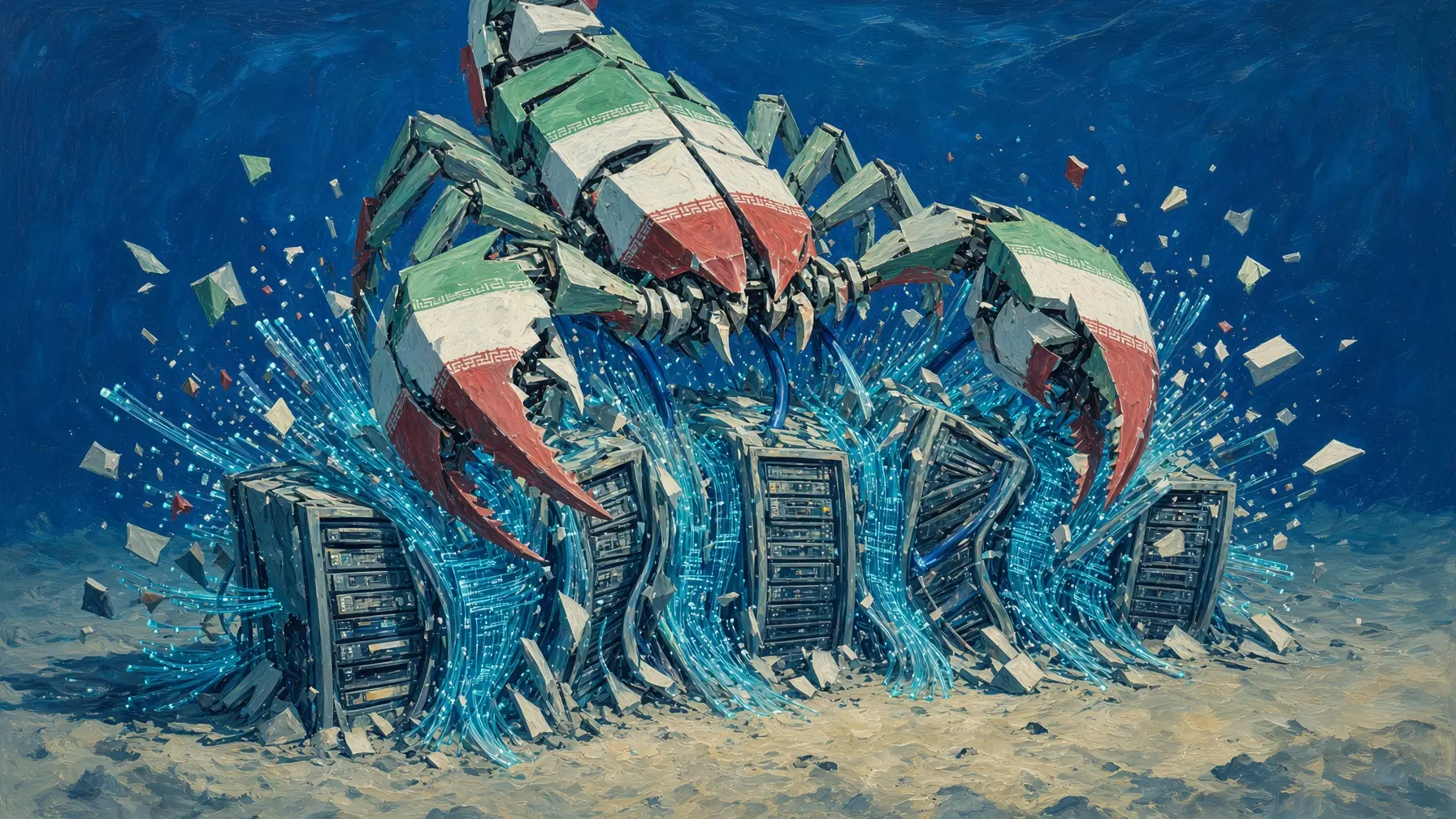
Iran Will Target Undersea Cables and Data Centers
Iran is threatening to attack energy facilities, undersea telecommunications cables, and data centers and artificial intelligence infrastructure in the Persian Gulf region if the United States and Israel resume their bombing campaign. Mohsen Rezaei, secretary of Iran's Supreme National Security Council, said that Tehran could strike targets in as many as seven regional countries, and that if Iran…