
Putin wants Eastern Europe back: his maximalist list of demands leaked
Vladimir Putin wants not only to force Ukraine to its knees but also to redraw the security map of Eastern Europe to match the way it looked in the early 1990s — this emerges from an unofficial Russian document (a so-called non-paper) obtained by The New York Times, the contents of which were also published by Germany's Bild and Russia's independent Echo. The list was summarized by Meduza.
The Kremlin's demands became public after the Russian–Ukrainian talks held with American mediation in Abu Dhabi on November 10–11, and after Steve Witkoff and Jared Kushner's visit to Moscow on Thursday. According to Meduza, the demands largely repeat the ultimatum Moscow sent to NATO and Europe in December 2021, two months before the full-scale invasion of Ukraine. According to The New York Times, the list would divide Europe into spheres of influence reminiscent of the Cold War, and the focus of the talks has now shifted from Ukraine to the postwar European security order.
Ukraine: territory, disarmament, the Russian language
According to the list published by Bild and Echo, Moscow is demanding the whole of Donbas from Ukraine, including the parts of Donetsk and Luhansk regions still under Ukrainian control. Ukrainian troops would have to withdraw entirely from the region, and Russia would keep all the other occupied territories as well. Ukraine could not become a NATO member and would be given non-aligned status; the West would have to halt all deliveries of weapons, military equipment and matériel to Kyiv, and NATO would have to stop all military activity in Ukraine. The ports of Odesa and Mykolaiv would have to be demilitarized so that Ukraine could not use them as naval bases. The Russian language would receive special status in Ukraine — a point that also appeared in the Russian Foreign Ministry's 2025 memorandum. Moscow would accept Ukraine's EU membership only if Kyiv stayed out of the bloc's common defense policy, meaning Ukraine would join the EU but remain defenseless.
NATO pushed back to 1997
The most serious part of the list does not even concern Ukraine. According to the document obtained by The New York Times, Moscow is demanding that NATO stop expanding altogether and return to its 1997 borders — that is, to its state before the countries of Central and Eastern Europe joined. This would affect Poland, the Czech Republic and Hungary, Romania, Bulgaria, Slovakia, Slovenia and the Baltic states, as well as the countries that joined later. NATO would have to halt its military activity in Eastern Europe, the South Caucasus and Central Asia, and give up the “shared use” of nuclear weapons, under which American nuclear arms are stored on the territory of European allies. A new element is that France and the United Kingdom would have to pledge not to use their nuclear weapons to defend other European states. This would effectively dismantle Europe's nuclear deterrent and leave defenseless exactly those countries that Moscow is threatening.
According to the list published by Bild and Echo, Moscow is also demanding that NATO maintain no military bases in Estonia, Latvia, Lithuania and Finland, and that Finland leave the alliance altogether — although Kremlin spokesman Dmitry Peskov later denied this particular demand. A “club” of NATO member states would have to prevent Ukraine, Moldova, Georgia or Armenia from ever joining the alliance. Agreements on the Black Sea and the Baltic Sea would have to guarantee freedom of navigation, which in practice would mean free movement for the Russian fleet off the coasts of NATO states.
Moldova and Belarus
The points concerning Moldova directly affect Romania. According to the list, Moldova would be turned into a federal republic that would include the breakaway Transnistria region and Gagauzia, and if Moldova joined the EU, the two regions could hold a referendum on independence. In exchange, Russian troops would withdraw from Transnistria, and Moldova would receive non-aligned status. Moscow already tried to force the same federalization solution on Moldova back in 2003, in the so-called Kozak memorandum, unsuccessfully at the time. What appears on the list as a commitment from Moscow is barely more than a gesture: it would withdraw its nuclear weapons from Belarus and refrain from deploying intermediate-range missiles there — in other words, it would be withdrawing weapons that it itself deployed there in recent years.
Achievable, or just a bluff?
According to press reports citing Russian sources, Putin may show “flexibility” on some points; the parties are not disclosing the details of the talks publicly, and there has been no official Ukrainian reaction so far. The list, however, shows the same thing as the Abu Dhabi talks: Moscow is not negotiating an end to the war but is seeking a European order in which Ukraine, Moldova and Romania — which joined NATO in 2004 — would once again live in Russia's shadow, and NATO would be unable to defend the countries Russia might strike. NATO Secretary General Mark Rutte said in Dublin that the United States, Europe and Ukraine largely agree on the security guarantees. What will come of this will become clear at the next round, in which Poland will also take part as a member of the European negotiating group — we can only hope that Sikorski will be the one representing it.
Fallow
Did you like this article?
Support our work with a small donation
Secure payment via Stripe • Min. 2 EUR
Gesta recommendations:
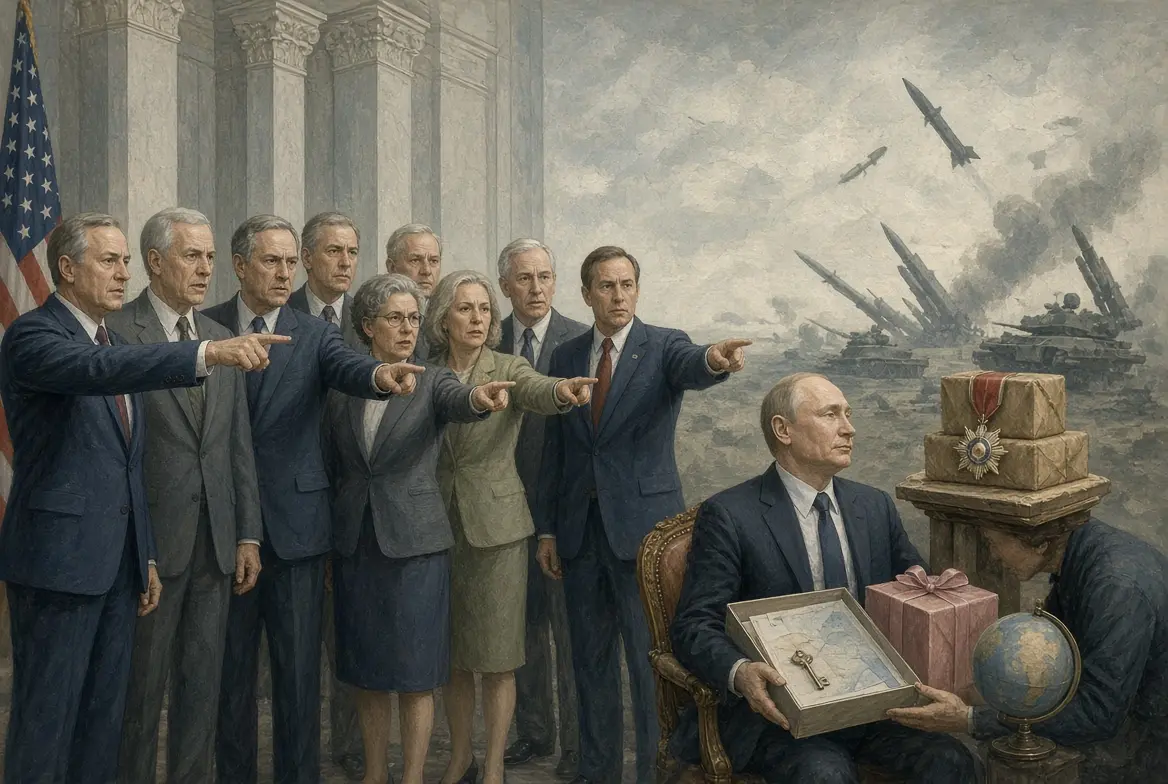
Eight former U.S. ambassadors warn: whoever rewards Putin is preparing the next war
Lasting peace cannot be bought from Putin through territorial concessions and the easing of sanctions, warn eight former U.S. ambassadors, including four former heads of mission in Bucharest. According to them, rewarding aggression would weaken NATO and increase the risk of a broader European war.
Alaska too turns away from the Republicans: not even three of them could stop the Democrat
For the first time in twenty-eight years, Alaska has elected a Democratic politician as governor: the 37-year-old Jonathan Kreiss-Tomkins defeated three Republican rivals, including one backed by Donald Trump. The youngest governor in the state's history campaigned on lowering the cost of living, fixing the funding of public schools, and a promise of cooperation across party lines, and won the…
Administrative reform: Maramureș is already rebelling
The PSD has not even agreed on how it would reorganize Romania's counties, yet one of its MPs is already hinting at leaving the party. Lucian Morar refuses to even hear about Maramureș being merged into an administrative unit centered on Cluj-Napoca, and is ready to turn against his own party in defense of his homeland. Whether he has actually already quit over this, or is merely threatening to…
The spy who boasted about bringing down a chancellor – while Europe kept dozing
Jan Marsalek, the fugitive former operations chief of Wirecard, boasted from Moscow that “we successfully brought down” Austrian Chancellor Sebastian Kurz. The network uncovered around him funneled phones belonging to the Interior Ministry to Russia, gathered data on refugees and journalists (it even obtained the home address of Christo Grozev, founder of the renowned investigative outlet…
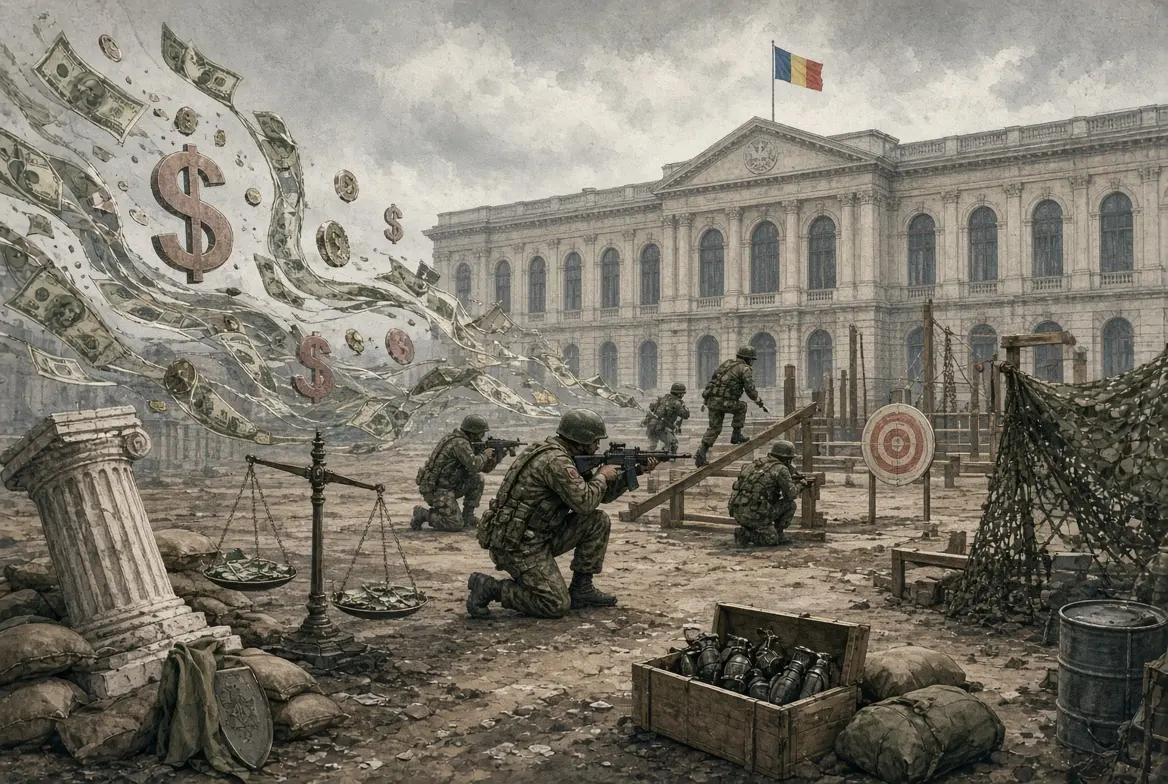
A good idea from Romania: paid military training
Voluntary basic military training could be joined by Romanian citizens — men and women over 18 who have not yet turned 35 by the start of the program and who have not previously served in the military, either as professionals or as reservists. At the end of the training, which would last up to four months, participants would be placed in the army's operational reserve, though those who wished to…