Moscow's next move in Europe could already cost mass casualties
Russia is resorting to increasingly dangerous methods in its sabotage campaign against European countries, while the continent's response still falls short of what might deter Moscow from continuing - this is the warning of the London-based International Institute for Strategic Studies (IISS) in its November report, which states that the possibility of attacks causing mass casualties must now be taken into account.
In the twelve months ending in September 2026, the number of sabotage operations linked to Russia rose by 16 percent, and the increasing frequency of arson attacks and attacks using explosive devices shows that it is not simply a matter of more incidents, but of incidents capable of causing ever greater destruction. According to the IISS, while the total number of recorded Russian operations has actually fallen, physical destruction has gained importance in Moscow's toolkit, especially against military, industrial and transport facilities.
The attacks come in short, intense waves and mainly affect Germany, Poland and the Baltic region, where paralyzing railway lines, airports and energy supplies can disrupt both aid to Ukraine and the everyday lives of civilians. Although many of those carrying out the attacks are still untrained, casual operatives, the institute has already detected the emergence of actors using more sophisticated, timed or remotely operated explosive devices. The emergence of this method was already described by Charlie Edwards and Nate Seidenstein in the IISS's analysis last August: after European countries expelled around four hundred Russian intelligence officers in 2022, Moscow partly outsourced the dirty work and started recruiting cheap operatives via Telegram. In this system, arson or vandalism becomes just another casual job, like parcel delivery elsewhere - except that the client is a state waging war, and the package to be delivered is sometimes an explosive device. Such people are often poorly prepared, which is why the authorities manage to uncover many operations in time; for Moscow, however, even failure doesn't necessarily mean a serious loss, since a captured operative can relatively easily be replaced by another. For Europe, by contrast, even a single successful attack can have severe consequences, especially in places where, due to years of neglected infrastructure, the loss of one key node drags down other systems with it.
At the same time, the IISS notes that the campaign has so far failed to achieve Moscow's most important strategic goal, since support for Ukraine continues and European rearmament has not stopped either. That, however, does not mean deterrence has become effective: catching individual perpetrators is not the same as creating consequences for the Russian state that would make it reconsider its next assignment. The term "gray zone" will remain a convenient label as long as its consequences can be tallied up in reports and diplomatic notes - but it is unlikely to offer much comfort to the relatives of the victims of a derailed passenger train or a burned-down factory that Europe is still working out the legal and political classification of the attack.
Ugar
Did you like this article?
Support our work with a small donation
Secure payment via Stripe • Min. 2 EUR
Gesta recommendations:

Petition to Keep Szeklerland United
Ahead of Romania's administrative reorganization, the Szekler National Council and the Szeklerland Regional Council of Local Authorities of the Democratic Alliance of Hungarians in Romania (RMDSZ) are submitting a joint petition to the parliament and government, requesting that the 149 municipalities making up Szeklerland be placed into a single administrative region. The initiative was agreed on…

PSD wants to put a price on curiosity: anyone who wants to know where public money goes should pay
Access to information would remain free for up to five pages of paper, but beyond that citizens could be billed, and in certain cases they would also have to pay for electronic documents or for inspecting files on the spot, if a proposal by thirty-two PSD lawmakers is adopted. According to its initiators, the aim is to protect the purpose of access to public-interest data — a rather peculiar…

Trough Zsótika Asked Little Viktor Orbán Whether, After All…
Today, the Transylvanian-Szekler darling and influencer of the autonomous, sovereign, Hazaffy-ish and patriotic political camp that decides and acts only on its own gave her followers a weather report from which anyone can learn which way is which – in other words, that Zsótika, who was not too lazy to run around with a trough after Péter Magyar between Sovata (Szováta) and Praid (Parajd),…

Western components found in Russian drones
Freshly manufactured American and European components have been found in a Russian drone shot down near Kyiv, which means the Kremlin's war industry is still obtaining technology that, in theory, should never have ended up in Russia. This does not prove that sanctions are pointless; rather, it shows that the networks profiting from circumventing them need to be dismantled with at least as much…
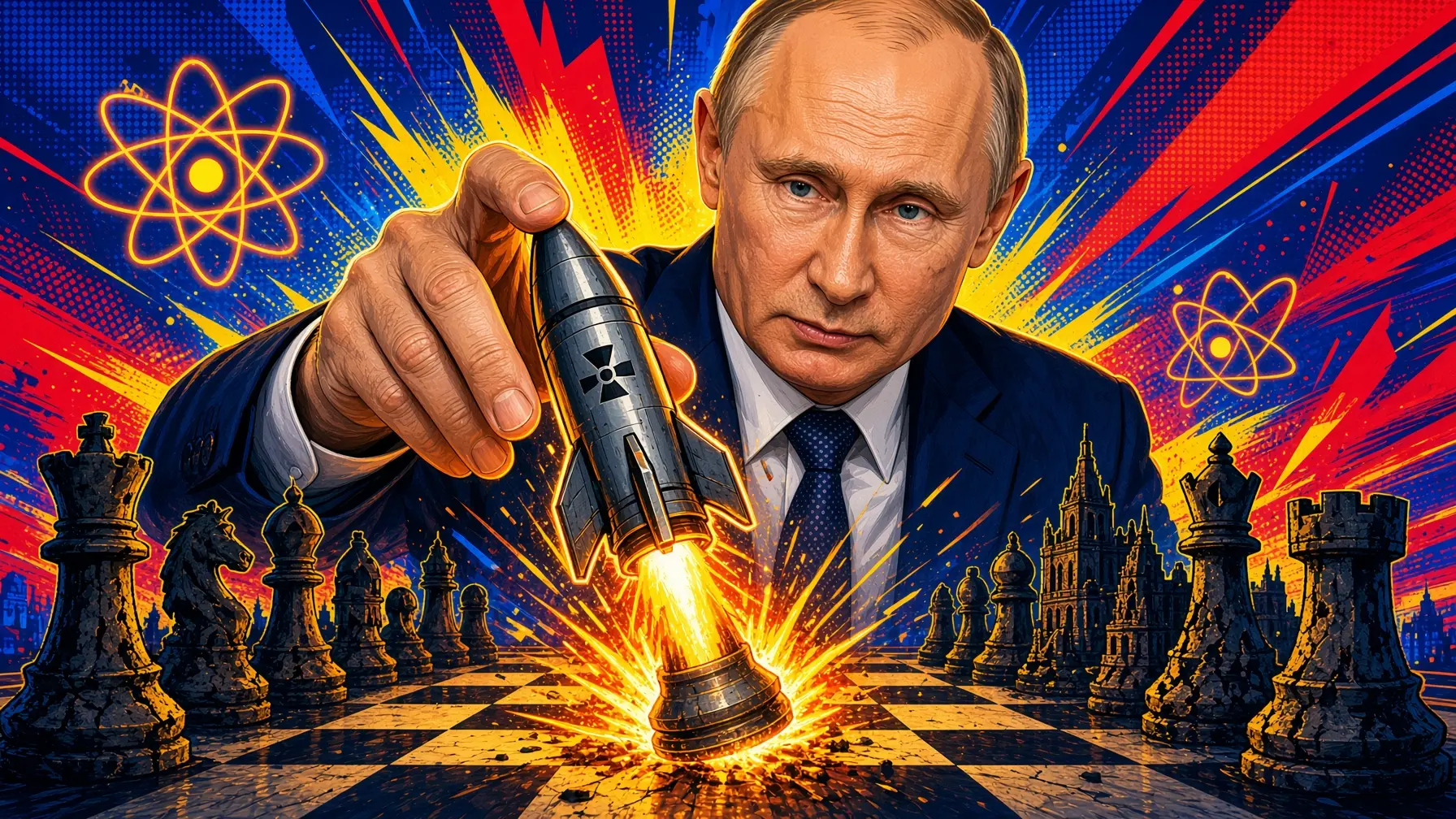
Moscow is blackmailing with nukes again: don't let the Ukrainians win, or it will blow up the chessboard
According to unconfirmed reports, Moscow has warned Washington that it may resort to nuclear weapons if the Americans support a Ukrainian ground operation in Crimea next spring. The authenticity of the specific message still needs to be clarified, but the demand it contains is perfectly clear: Russia wants the West to help preserve what the Russian army stole by force.