Putin would even take the sky hostage: Russia preparing satellite carrying nuclear weapon
The Kremlin is apparently running out of room even on the Earth's surface to find an arena for blackmail large enough for its purposes: according to German press reports, Western intelligence services are warning their allies that Russia could put a satellite carrying a nuclear warhead into orbit as early as this year. The device, named Sputnik-S, has reportedly already been completed and is waiting near Moscow, while Russian diplomacy, naturally, continues to speak exclusively of peaceful intentions.
According to a joint investigation by WDR, NDR and Süddeutsche Zeitung published on November 23, Germany's Federal Intelligence Service (BND), the Bundeswehr and other Western organizations have shared assessments suggesting that the launch could take place within weeks. The warning issued in early November mentioned a sixty-day window, and German military experts are also reckoning with a launch in December; Defense Minister Boris Pistorius and other members of the government have been briefed on the threat.
According to an October assessment by the U.S. Defense Intelligence Agency, Russia is developing a satellite capable of carrying a nuclear weapon, and the public threat assessment of the U.S. Space Force also mentions this program. Washington had already warned its allies in February 2024 about the development of such a Russian capability, whose purpose would not be to take out a single enemy satellite, but to disrupt or destroy the operation of entire satellite networks. In connection with the program, the name of Kosmos-2553, launched in February 2022, has long come up as well; Moscow presented it as a platform for radiation-hardness testing, while American assessments link it to the development of a nuclear anti-satellite capability. This does not mean that Russia has already carried out a nuclear explosion in space, or that this satellite has been proven to carry a nuclear warhead; moreover, Reuters reported in April 2025 that the device had likely become uncontrollable. The danger of a nuclear detonation in space would stem from radiation, damage to electronic systems and a lastingly altered radiation environment, which could continue to endanger devices moving in the affected orbits even after the explosion. American military warnings anticipate the mass failure of satellites, which could affect numerous services from communications to military reconnaissance, though the exact consequences would depend on the altitude and strength of the explosion and the vulnerability of individual systems. The destruction of satellites would harm Russia as well as other countries, but the Kremlin's calculation may be precisely that the more advanced, more densely interconnected Western systems would suffer greater losses. The old Soviet legacy returns here in a particularly oppressive form: if we cannot catch up with the other side in something, let's make sure they are left with nothing of it either.
All this would constitute an open violation of the 1967 Outer Space Treaty, which prohibits placing nuclear weapons in orbit around Earth. In 2024, Putin still categorically opposed the deployment of such weapons in space, yet that same year Russia vetoed a UN Security Council resolution reaffirming the ban; now its embassy in Berlin is talking about a propaganda campaign, while Kremlin spokesman Dmitry Peskov mocks the anonymous sources and the conditional wording. Russian denial is not in itself a refutation, just as an intelligence warning does not substitute for public evidence, but the danger cannot once again be dismissed with the assumption that Moscow is surely just negotiating loudly. The question is how long the threat that, unless it gets what it demands, it will destroy others' living conditions too, can remain a normal tool of international influence for a power organized around imperial war.
Breaking the Kremlin's war capabilities, economic room for maneuver and political blackmail power therefore goes far beyond the defense of Ukraine, because it concerns the entire international order — whether we accept that readiness for destruction automatically grants great-power privileges. If the Russian leadership were indeed to extend its blackmail to the sky as well, the answer can hardly be yet another polite question about what concession would finally make it feel secure.
Ugar
Did you like this article?
Support our work with a small donation
Secure payment via Stripe • Min. 2 EUR
Gesta recommendations:
Brexit's former architects now ask that no one disturb the ruins
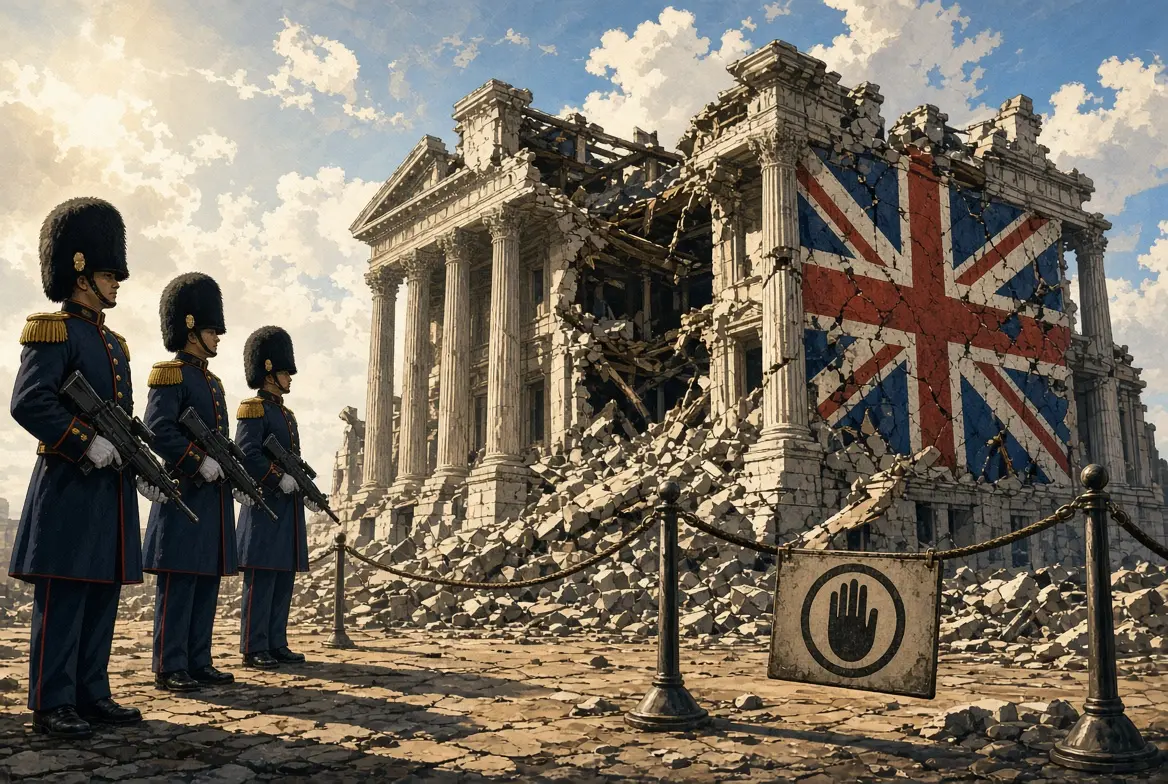
Five former British prime ministers warn Andy Burnham against reopening the question of returning to the European Union if at all possible — a particularly touching concern coming from people, several of whom personally worked to ensure that the United Kingdom would have anything to return from in the first place. David Cameron called the referendum, Boris Johnson campaigned relentlessly for…

Grindeanu would lower the language-use threshold! Do we seize the opportunity or let it slip away?
Sorin Grindeanu has just raised a possibility that we should seize on immediately: according to the leader of the PSD, after the merger of localities, the population threshold linked to minority language-use rights should be lowered. This is not yet a finished piece of legislation — we don't even know what percentage he has in mind — but opportunities rarely arise in Romanian politics for a…

The planet is warming, the oil business remains: the climate agreement failed in Antalya
After two weeks of negotiations and almost two days of extension, delegates from nearly two hundred countries at the Antalya climate summit reached the point of failing to adopt the conference's most important agreement, because its final draft left out precisely the shift away from fossil fuels - the talks on the climate crisis thus foundered on the fact that some of the participants were…
NATO 3.0: Europe should pay, and Washington will decide what we can expect
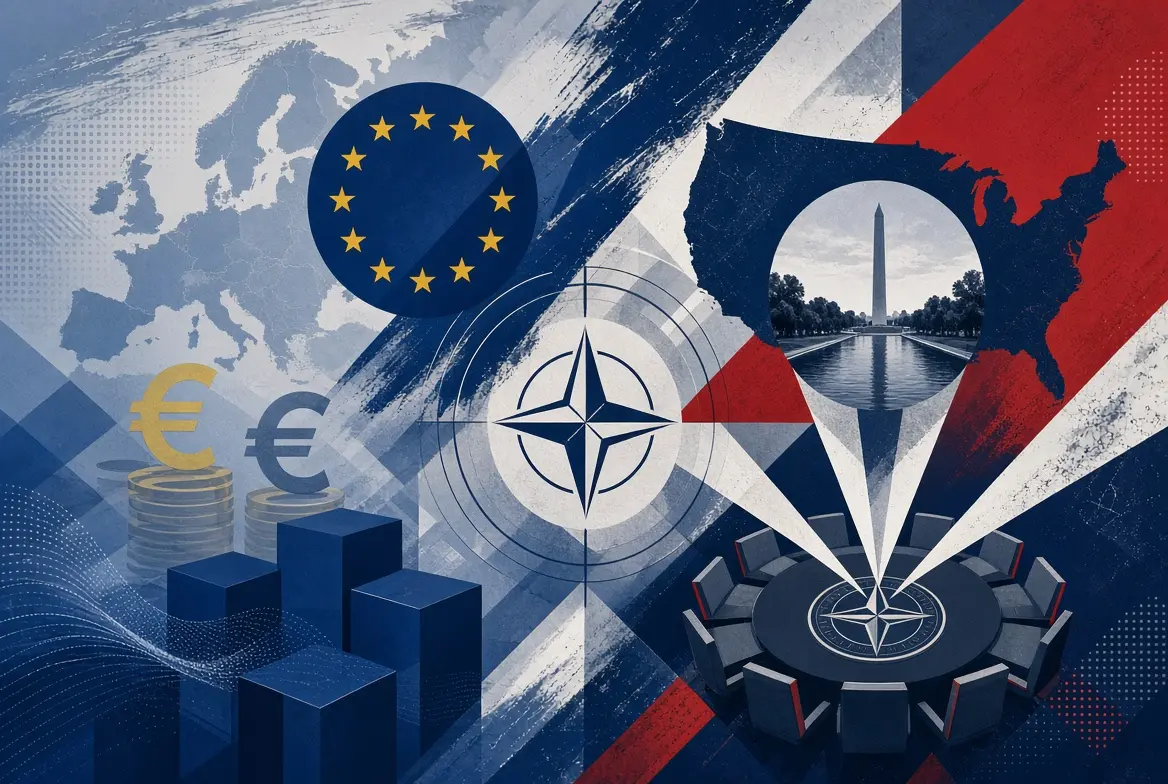
The American withdrawal does not, for now, look like the last soldier boarding a plane and the lights going out at the base; instead, Europe knows less and less what to expect from Washington, while hearing ever more precisely how much it will have to pay. Elbridge Colby, the Pentagon's undersecretary for defense policy, has once again signaledthat Europeans must take the lead role in the…

Here are the six criteria for merging Hungarian localities too
From population numbers to the distance to the nearest pharmacy and tax revenues,based on six criteria the Social Democratic Party (PSD) would assess which Romanian communes should be merged and what new administrative units could take the place of the current ones. Dragoș Benea, who heads the party's working group on reform, presented the idea on Monday, November 23, to the Chamber of Deputies'…