NATO 3.0: Europe should pay, and Washington will decide what we can expect
The American withdrawal does not, for now, look like the last soldier boarding a plane and the lights going out at the base; instead, Europe knows less and less what to expect from Washington, while hearing ever more precisely how much it will have to pay. Elbridge Colby, the Pentagon's undersecretary for defense policy, has once again signaledthat Europeans must take the lead role in the continent's conventional defense and in military support for Ukraine, and that his office will prepare the recommendation on the future size and deployment of American troops.
Colby argued that Europe already has the industrial base and the political will to take on greater responsibility for its own security, which is why the transformation he calls "NATO 3.0" is no longer a mere concept. He praised Romania as an indispensable ally, spoke approvingly of the defense spending target of five percent of GDP planned for 2031, and, alongside Germany, Poland and Finland, listed Bucharest among the examples to follow. He still said nothing concrete, however, about how many American troops would remain in Romania, with what tasks or for what timeframe. He also spoke warmly about his talks in Bucharest in early November and promised respect, clarity and realism for further consultations — yet clarity is precisely what the countries of the eastern flank lack most. Back in February, Colby was already talking about reducing the American presence in Europe, and in August he shifted the main responsibility for supporting Ukraine onto Europe as well; meanwhile, the Pentagon's review, underway since summer, remains only partially visible to the allies, and Romania already found out in the autumn of 2025 what it means when Washington fails to send a replacement for an American unit serving in the region.
According to a report by Il Foglio on November 17, the planned withdrawal may ultimately be smaller than previously discussed, affecting around five thousand troops instead of twenty-five thousand — but this is for now only a press report, and in any case the raw number alone says little about the military capabilities that would remain. The loss of a reconnaissance, air-defense or logistics capability can have serious consequences even if the number of people involved does not look particularly dramatic in a spreadsheet, and deterrence also depends on the adversary knowing that the ally is genuinely willing to act.
Bucharest has already signaled that it would take on part of the cost of stationing American troops, as long as a significant American presence remains in the country. A host nation's financial contribution is not unusual in itself, but in the current political climate it takes on a humiliating tone, since Romania is trying to reinforce its security guarantee with money while the political backing for that guarantee would come from the very same Donald Trump whose commitments the allies have long been reluctant to take at face value. The back-and-forth over Ukrainian air defense is a particularly poor recommendation for this arrangement. On November 6, Finnish Defense Minister Antti Häkkänen said that European allies have already paid for Patriot interceptor missiles, but the American political approval needed for their delivery is being delayed, and on November 20 Zelensky once again turned to the Pentagon regarding the expected PAC-2 and PAC-3 missiles. Meanwhile, Colby would also like to determine which Ukrainian operations deserve support: he considers useful the medium-range strikes that hold the front line and disrupt Russian supply lines, but he criticized long-range strikes against Russian territory, drawing a rather sharp response from German Defense Minister Boris Pistorius. The American undersecretary does not necessarily look favorably on strengthening Europe's defense industry either, if it would narrow the market opportunities of American manufacturers — in other words, Europe should become more self-sufficient and take on the burdens, but should still show its shopping list to Washington.
"NATO 3.0" could thus easily become an alliance in which Europe gets the bill while the terms of American participation remain in constant flux. An open withdrawal would at least create a forced clarity; this fog, however, both feeds dependency and hampers preparedness, while tempting Moscow to test how much is left of the allies' promises. In this story, Trump increasingly resembles not the leader of the free world, but an international pirate who first collects the protection money and then, as danger approaches, wants to renegotiate exactly what the deal was about.
Ugar
Did you like this article?
Support our work with a small donation
Secure payment via Stripe • Min. 2 EUR
Gesta recommendations:
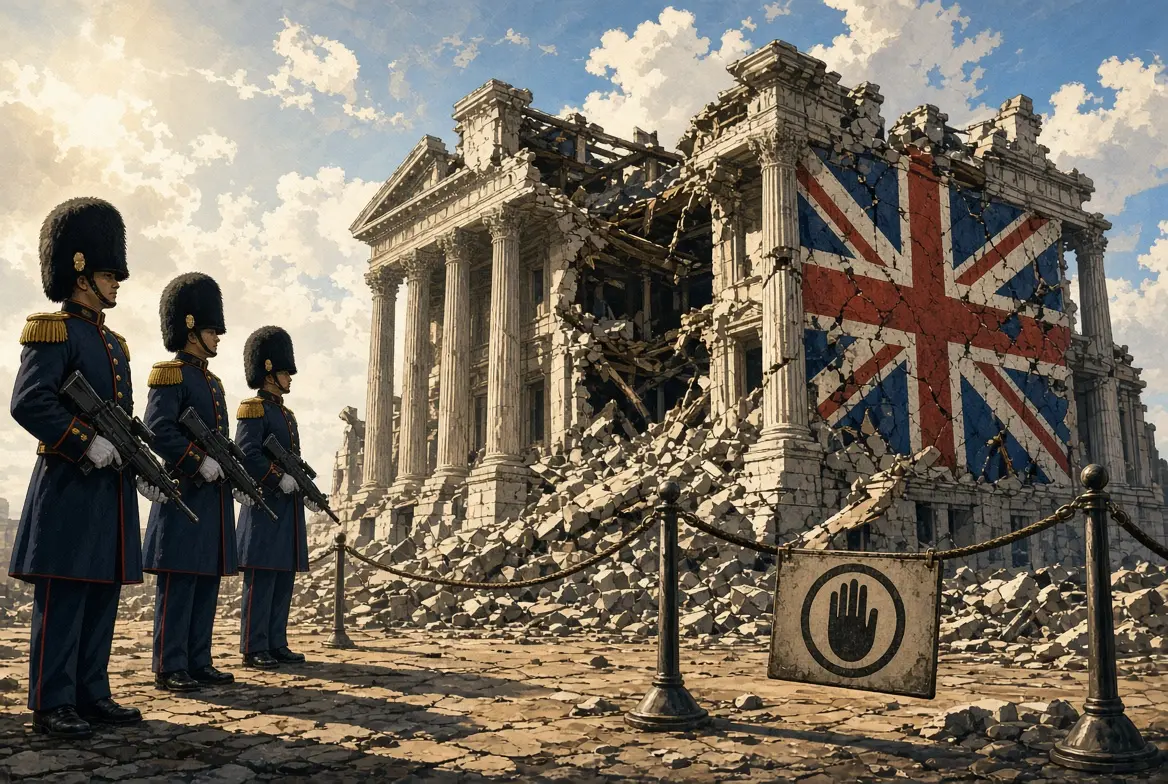
Brexit's former architects now ask that no one disturb the ruins
Five former British prime ministers warn Andy Burnham against reopening the question of returning to the European Union if at all possible — a particularly touching concern coming from people, several of whom personally worked to ensure that the United Kingdom would have anything to return from in the first place. David Cameron called the referendum, Boris Johnson campaigned relentlessly for…

Grindeanu would lower the language-use threshold! Do we seize the opportunity or let it slip away?
Sorin Grindeanu has just raised a possibility that we should seize on immediately: according to the leader of the PSD, after the merger of localities, the population threshold linked to minority language-use rights should be lowered. This is not yet a finished piece of legislation — we don't even know what percentage he has in mind — but opportunities rarely arise in Romanian politics for a…

The planet is warming, the oil business remains: the climate agreement failed in Antalya
After two weeks of negotiations and almost two days of extension, delegates from nearly two hundred countries at the Antalya climate summit reached the point of failing to adopt the conference's most important agreement, because its final draft left out precisely the shift away from fossil fuels - the talks on the climate crisis thus foundered on the fact that some of the participants were…
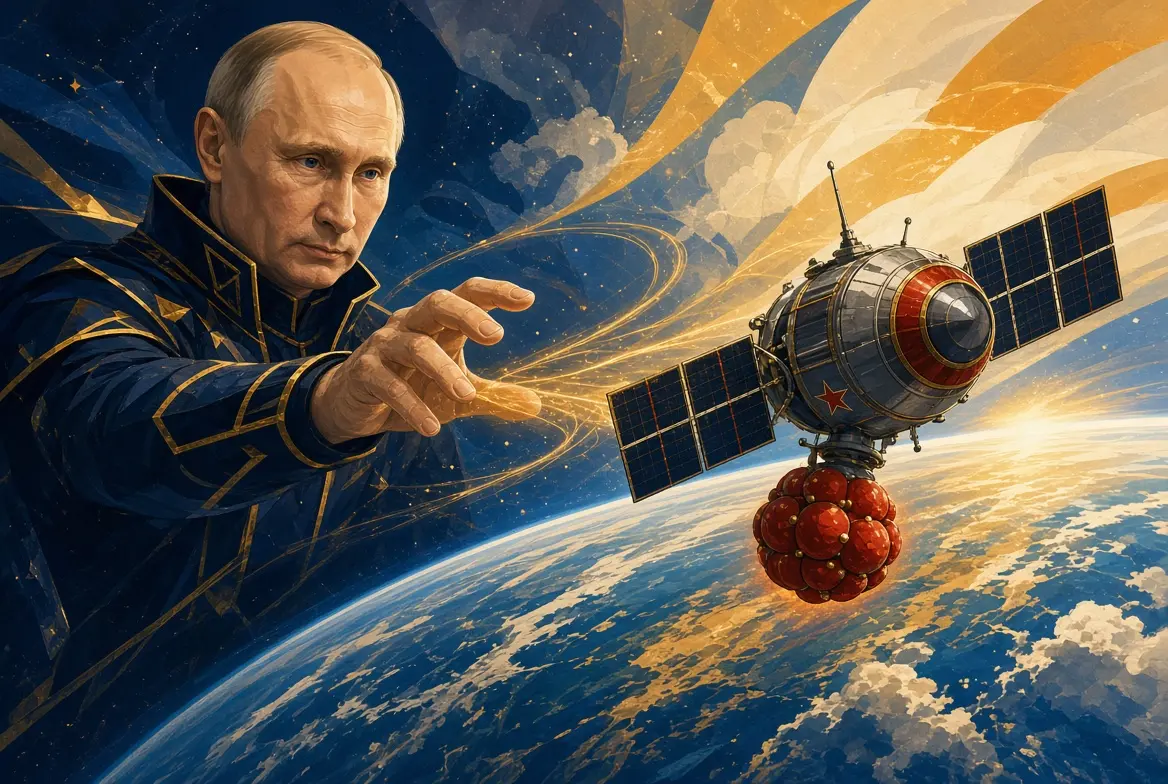
Putin would even take the sky hostage: Russia preparing satellite carrying nuclear weapon
The Kremlin is apparently running out of room even on the Earth's surface to find an arena for blackmail large enough for its purposes: according to German press reports, Western intelligence services are warning their allies that Russia could put a satellite carrying a nuclear warhead into orbit as early as this year. The device, named Sputnik-S, has reportedly already been completed and is…

Here are the six criteria for merging Hungarian localities too
From population numbers to the distance to the nearest pharmacy and tax revenues,based on six criteria the Social Democratic Party (PSD) would assess which Romanian communes should be merged and what new administrative units could take the place of the current ones. Dragoș Benea, who heads the party's working group on reform, presented the idea on Monday, November 23, to the Chamber of Deputies'…