Grindeanu would lower the language-use threshold! Do we seize the opportunity or let it slip away?
Sorin Grindeanu has just raised a possibility that we should seize on immediately: according to the leader of the PSD, after the merger of localities, the population threshold linked to minority language-use rights should be lowered. This is not yet a finished piece of legislation — we don't even know what percentage he has in mind — but opportunities rarely arise in Romanian politics for a debate on minority rights to be about something other than simply defending what already exists, which is why it would be a particular shame to let this chance drown in the usual, substance-free dialogue.
At his press conference on November 23, the leader of the PSD said that the mergers must take into account the situation of localities inhabited by minorities, and that if the proportions change as a result of the merger, the threshold required for exercising the relevant rights must also be lowered. However, he did not say clearly whether he would support a special rule applying only to merged administrative units, or also a nationwide reduction of the current twenty-percent condition — but even so, it is worth seizing on the latter, at least as a basis for negotiation. The draft put out for public debate on November 20 already contains an important rights-protecting provision: if, in one of the merging communes, the share of a national minority reached twenty percent according to the most recent census, its rights related to the use of its mother tongue should be preserved throughout the entire territory of the new administrative unit, even if, after the merger, the community's share falls below the threshold.
Carrying forward rights already acquired is therefore already included in the draft; the real added value of Grindeanu's current statement would come if, beyond this, the general rule were also made more favorable. At his press conference today, the leader of the PSD answered a question on this topic, repeated that the draft law already provides guarantees in this direction, and said the following:
„Acel criteriu care ține cont și de populațiile care au o minoritate națională. Erau localități cu până în 20% populație de altă naționalitate, aveau anumite recunoașteri a acelei minorități. Odată cu unirea, evident că acel prag trebuie să scadă. Proiectul trebuie să țină cont de localitățile unde sunt minorități.”
In English, roughly as follows:
"This criterion also takes into account the localities where a national minority lives. Until now, in localities where the share of a community of another nationality reached 20 percent, this minority received certain rights. After the merger, this threshold obviously has to decrease. The draft must take into account the localities where minorities live."
What might give us pause, however, is this: if the minority threshold below 20 percent were to apply only in merged localities, then a situation would arise in which Romania would have two kinds of administrative-territorial units. In one, a share of at least 20 percent would still be required to exercise minority rights, while in the other — that is, in merged communes — even 5–10 percent might be enough. As we also saw in Ugar's first model, the 21.1 percent Hungarian share of Mezőkecsed would in no case rise above 11 percent as a result of the merger, yet it could still use its mother tongue. Meanwhile, in another Romanian locality not affected by a merger, 19.99 percent would no longer be enough. This would create anomalies that would look strange even by international standards — and that could actually be a good card in our hand: let them lower the minority threshold nationwide too, say to 10 percent, but we could even ask for 5.
A nationwide lowering of the threshold could also help communities that have long lived below twenty percent in some town or commune, and for which the administrative reorganization in itself would bring no expansion of rights whatsoever. By Romanian standards, this would indeed be a remarkable opening — but the opportunity will only lead to results if someone specifies what new threshold, for what rights, and with what guarantees is intended; until then, there is just as much room around the politician's statement for backtracking as for moving forward. Grindeanu also stressed that the reform would merge mayor's offices, not eliminate villages, so the names and identity of localities would be preserved, identity documents would not need to be replaced immediately, and ongoing investments would continue. According to him, the PSD has not discussed reducing the number of counties to eight, twenty, or any other predetermined number, and he did not put a figure on the expected savings because it is not yet known how many local authorities would merge, or in what combinations. It follows from all this that the question of the counties will also come onto the table sooner or later, so making the most of the current opportunities also sets the terms for future negotiations.
Ugar
Did you like this article?
Support our work with a small donation
Secure payment via Stripe • Min. 2 EUR
Gesta recommendations:
Brexit's former architects now ask that no one disturb the ruins
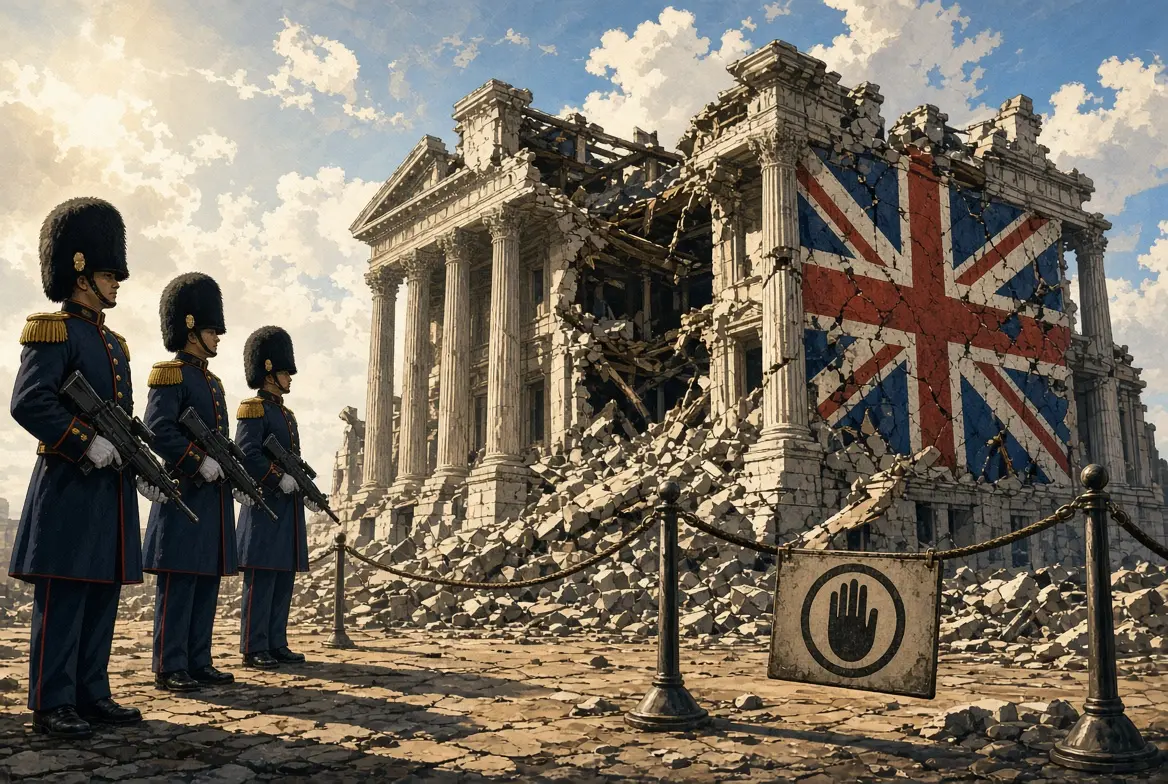
Five former British prime ministers warn Andy Burnham against reopening the question of returning to the European Union if at all possible — a particularly touching concern coming from people, several of whom personally worked to ensure that the United Kingdom would have anything to return from in the first place. David Cameron called the referendum, Boris Johnson campaigned relentlessly for…

The planet is warming, the oil business remains: the climate agreement failed in Antalya
After two weeks of negotiations and almost two days of extension, delegates from nearly two hundred countries at the Antalya climate summit reached the point of failing to adopt the conference's most important agreement, because its final draft left out precisely the shift away from fossil fuels - the talks on the climate crisis thus foundered on the fact that some of the participants were…

Putin would even take the sky hostage: Russia preparing satellite carrying nuclear weapon
The Kremlin is apparently running out of room even on the Earth's surface to find an arena for blackmail large enough for its purposes: according to German press reports, Western intelligence services are warning their allies that Russia could put a satellite carrying a nuclear warhead into orbit as early as this year. The device, named Sputnik-S, has reportedly already been completed and is…
NATO 3.0: Europe should pay, and Washington will decide what we can expect
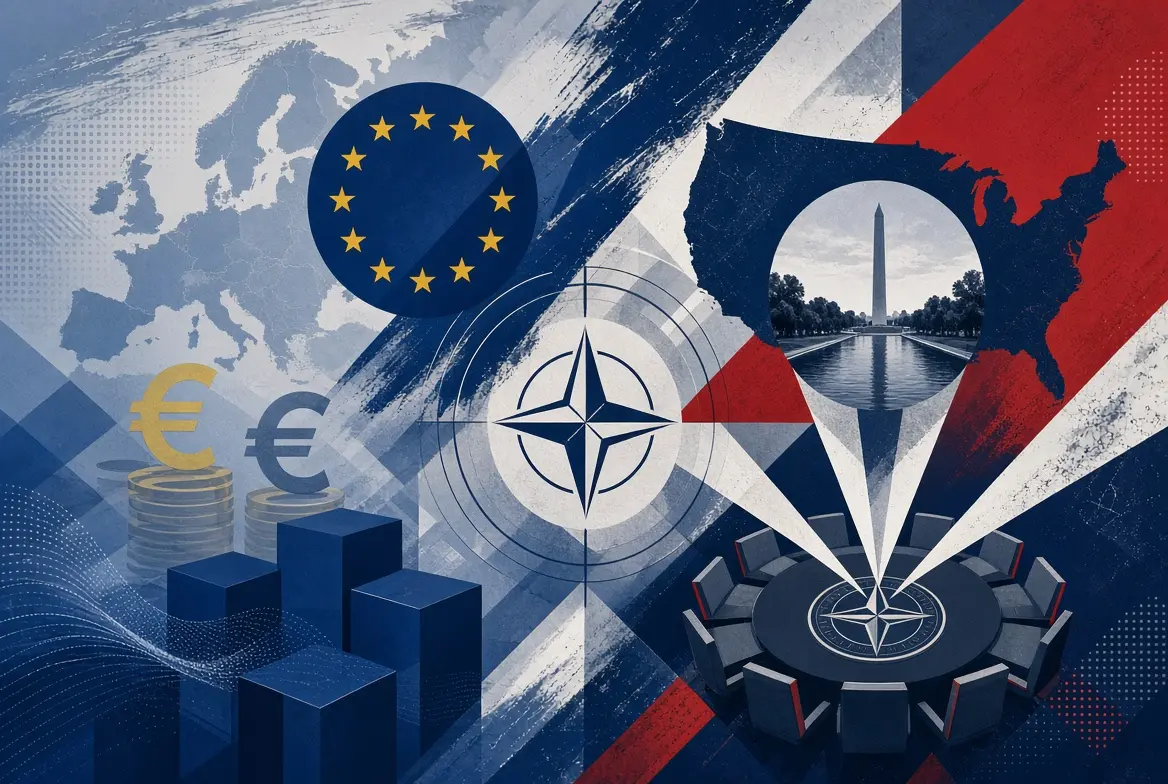
The American withdrawal does not, for now, look like the last soldier boarding a plane and the lights going out at the base; instead, Europe knows less and less what to expect from Washington, while hearing ever more precisely how much it will have to pay. Elbridge Colby, the Pentagon's undersecretary for defense policy, has once again signaledthat Europeans must take the lead role in the…
Here are the six criteria for merging Hungarian localities too
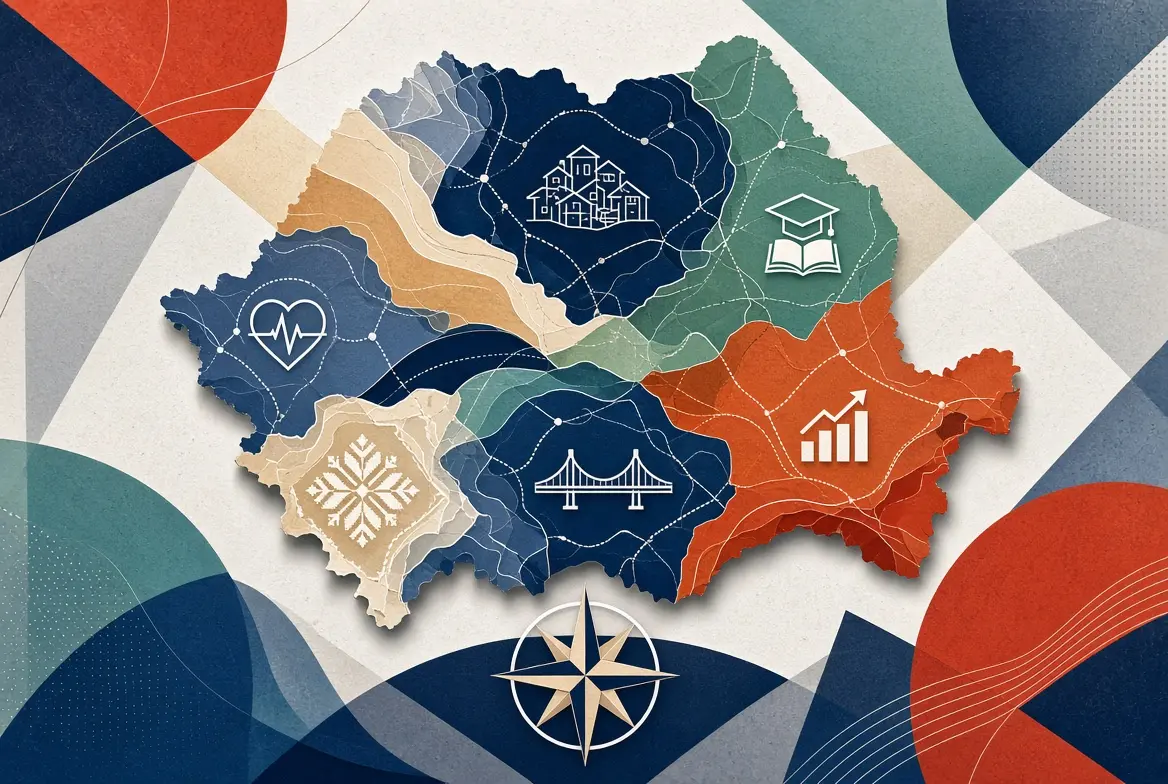
From population numbers to the distance to the nearest pharmacy and tax revenues,based on six criteria the Social Democratic Party (PSD) would assess which Romanian communes should be merged and what new administrative units could take the place of the current ones. Dragoș Benea, who heads the party's working group on reform, presented the idea on Monday, November 23, to the Chamber of Deputies'…