Here are the six criteria for merging Hungarian localities too
From population numbers to the distance to the nearest pharmacy and tax revenues,based on six criteria the Social Democratic Party (PSD) would assess which Romanian communes should be merged and what new administrative units could take the place of the current ones. Dragoș Benea, who heads the party's working group on reform, presented the idea on Monday, November 23, to the Chamber of Deputies' administration committee, where, alongside the promise of better public services, the politically most sensitive consequence of the reform soon came up as well: many mayors, deputy mayors and local councillors would have to look for something else to do.
According to Benea, local consultations on the reorganization should be kept on track by a unified evaluation system, so that decisions on the future of localities are made based on demographic trends, economic sustainability, administrative performance, transport connections and the services available to residents. In the set of criteria, which the PSD's deputy chairman calls a "matrix," roughly three thousand residents would serve as the reference point, though for now this is only a political proposal and has not become a legally binding threshold for everyone. The methodology is currently being analyzed, and the law is expected to be ready by spring 2027, meaning that for now the reform has more criteria than settled details.
In examining population, a separate count would be made of those who are registered as residing in a given commune on paper and those who actually live there; changes since 2021, the number of births and deaths, and the expected population in 2035 would also be examined. The assessment would also include the legal status of the administrative unit, the location of the villages belonging to the commune, and the role of the commune's center, since the same population size represents a very different organizational task in a contiguous settlement than in several villages lying far apart from one another.
In the financial assessment, own revenues would be compared with personnel, operating and investment expenditures, taking into account the amounts redistributed from income tax, equalization grants from the budget, the effectiveness of collecting building and land taxes, and accumulated arrears. The performance of local administrations would also be measured by how much EU and domestic development funding they managed to secure, for example from the National Recovery and Resilience Plan (PNRR) or the Anghel Saligny program, and by how many completed, usable investments resulted from public procurement. This could at least make it possible to finally measure successful funding applications together with the completed works, since no drinking water flows from a ceremonially signed financing contract.
The other three criteria concern everyday life more directly, as they would examine how long it takes to travel between the offices of the two communes to be merged, as well as to the nearest national road, highway exit, airport or workplace. Likewise, the availability of schools, kindergartens and nurseries, family doctors, pharmacies and dentists would count, along with the number of family doctors per thousand residents, while the assessment of public services would also cover the water, sewage and gas networks, connected households, the condition of streets, street lighting, public transport and selective waste collection.
The six criteria presented to the administration committee are the following:
population and demographics;
economic sustainability;
administrative capacity;
connectivity;
accessibility;
local public services.
Within the population and demographics criterion
the PSD politicians responsible for administrative reform want to take the following into account:
the population by registered residence;
the resident population (the number of those who actually live there);
the population projected for 2035;
the type of the administrative-territorial unit (UAT);
births and deaths;
changes in the resident population since 2021;
the villages belonging to the commune and the commune's center.
For the economic sustainability criterion,
the following are taken into account:
own revenues;
personnel expenditures;
total expenditures, operating and investment expenditures;
the share received from income tax and equalization grants;
the collection rate of property taxes; building and land taxes paid by individuals;
tax collection for both multi-year and current debts;
outstanding arrears and overdue debts to be collected.
For administrative capacity, the following are taken into account:
funds drawn down through EU-funded programs, such as the National Recovery and Resilience Plan (PNRR) or the Anghel Saligny program,
public procurement
investments put into operation.
Another criterion is connectivity.
When merging two neighboring communes, the following are examined:
the travel time between the two mayor's offices;
the time to reach the nearest national road;
the time to reach the nearest highway exit;
the time to reach the nearest airport;
the time to reach the workplace.
In terms of residents' access to public services,
the Social Democrats analyze the following:
the time to reach the mayor's office;
primary and elementary school;
high school or vocational school;
family doctor's office;
pharmacy or pharmacy branch;
the number of family doctors per thousand residents;
the number of children enrolled in kindergarten;
medical clinics, the total number of doctors, dental clinics;
nurseries; educational institutions.
Since some localities are not connected to the water and sewage network and are less developed, among local public services
the following are taken into account:
water network;
sewage network;
gas network;
the size of the networks and the amount of water supplied;
modernized streets;
street lighting;
public transport;
selective waste collection;
the connection of households to the networks.
Ugar
Did you like this article?
Support our work with a small donation
Secure payment via Stripe • Min. 2 EUR
Gesta recommendations:
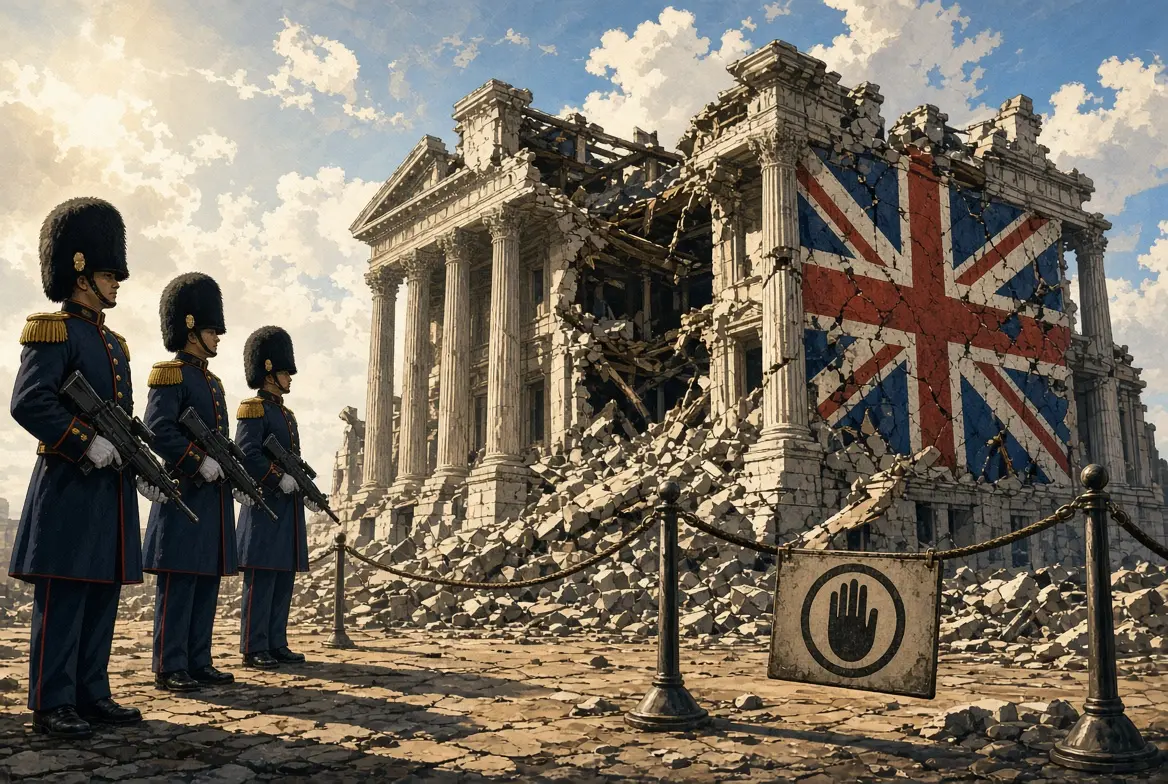
Brexit's former architects now ask that no one disturb the ruins
Five former British prime ministers warn Andy Burnham against reopening the question of returning to the European Union if at all possible — a particularly touching concern coming from people, several of whom personally worked to ensure that the United Kingdom would have anything to return from in the first place. David Cameron called the referendum, Boris Johnson campaigned relentlessly for…

Grindeanu would lower the language-use threshold! Do we seize the opportunity or let it slip away?
Sorin Grindeanu has just raised a possibility that we should seize on immediately: according to the leader of the PSD, after the merger of localities, the population threshold linked to minority language-use rights should be lowered. This is not yet a finished piece of legislation — we don't even know what percentage he has in mind — but opportunities rarely arise in Romanian politics for a…

The planet is warming, the oil business remains: the climate agreement failed in Antalya
After two weeks of negotiations and almost two days of extension, delegates from nearly two hundred countries at the Antalya climate summit reached the point of failing to adopt the conference's most important agreement, because its final draft left out precisely the shift away from fossil fuels - the talks on the climate crisis thus foundered on the fact that some of the participants were…

Putin would even take the sky hostage: Russia preparing satellite carrying nuclear weapon
The Kremlin is apparently running out of room even on the Earth's surface to find an arena for blackmail large enough for its purposes: according to German press reports, Western intelligence services are warning their allies that Russia could put a satellite carrying a nuclear warhead into orbit as early as this year. The device, named Sputnik-S, has reportedly already been completed and is…

NATO 3.0: Europe should pay, and Washington will decide what we can expect
The American withdrawal does not, for now, look like the last soldier boarding a plane and the lights going out at the base; instead, Europe knows less and less what to expect from Washington, while hearing ever more precisely how much it will have to pay. Elbridge Colby, the Pentagon's undersecretary for defense policy, has once again signaledthat Europeans must take the lead role in the…