
Politico: "The EU is heading toward a perfect political storm"
The European Union is heading toward a perfect political storm, according toPolitico's latest analysis. According to the outlet, the member states that together account for about 60 percent of the EU's economic output and population will be mired in domestic political battles in the coming months, which could paralyze joint decision-making. This is happening just as the EU is negotiating the largest budget in its history, a massive funding gap looms over Ukraine, and Washington and Beijing are putting ever greater pressure on Europe.
— summed up Gabrielius Landsbergis, former Lithuanian foreign minister and visiting researcher at Stanford University, who said the coming months will be "extremely dark" for Kyiv, with the entire burden falling on Europeans.
Last week's summit in Brussels showed exactly how tight a spot Europe is in. After two days of talks, EU leaders made no progress on the roughly two-trillion-euro budget for 2028–2034, but unexpectedly got into a bitter dispute over energy policy. The final statement contained no commitment to reach a budget agreement by the end of the year, since member states rejected the deadline pushed by European Council President António Costa, even though summits are also planned for November and December. The only significant outcome was a Franco-German agreement on the car industry. Leaving the summit early, Swedish Prime Minister Ulf Kristersson said only: "Nothing has changed." Cypriot President Nikos Christodoulides said everyone knew a political agreement should be reached by the end of the year, but the Spanish election makes that impossible, and next year France and Italy will also hold votes. A senior EU diplomat was even more pessimistic: "Next year will be even worse." Carla Tavares, a Socialist member of the European Parliament and one of the co-leads of the budget negotiations, said the election calendar will make next year much harder both in the member states and in parliament. On the EPP side, the talks are led by Siegfried Mureșan, who was recently an unsuccessful candidate for the Romanian prime ministership, and who says EU leaders are "too slow" and that "time is running out."
France's situation is the most serious. Emmanuel Macron cannot run for a third consecutive term and will step down in April, with polls putting far-right leader Marine Le Pen as the frontrunner to succeed him. Citing four European diplomats, Politico reported that Macron admitted in a closed session that in the final months of his term he will not have the political mandate to sign a budget deal. Reuters, however, citing two diplomats, reported that Macron actually warned leaders that they need to reach an agreement by the end of the year, because everything will be harder after the elections. The two accounts are not necessarily contradictory, since the French president is simultaneously pushing for a quick deal while recognizing that his own room for maneuver is shrinking. Le Pen, for her part, is demanding that no deal be struck before the French election, and wants to reduce France's contributions to the EU budget.
The situation is no better in the other large member states. In Spain, Pedro Sánchez faces defeat after eight years in power, and because of the November 29 election he will be campaigning during the EU negotiations scheduled for November 13 and 26. According to two EU diplomats, a new government is unlikely to be formed in Madrid before January, and the center-right and far right could come to power after the election. In Germany, the rise of the AfD has eroded Chancellor Friedrich Merz's popularity, narrowing his room for compromise. The next federal election is not due until 2029, but according to Politico, even Merz's tenure is not guaranteed. In Italy, elections are due in October 2027, though one diplomat said Giorgia Meloni could call them early.
said one EU diplomat, who noted that while Ursula von der Leyen is strong, the EU lacks politicians of the stature of Angela Merkel or François Mitterrand.
The EU is facing three external pressures at once. Donald Trump is undermining the transatlantic alliance and calling into question the old alliances on which Europe's security was built. Russia is waging a hybrid war through cyberattacks, sabotage operations and incidents such as the attempted attack on Leipzig airport in August. China, meanwhile, is tightening its grip on critical supply chains, flooding European markets with cheap exports, and further increasing the trade imbalance. Belgian Prime Minister Bart De Wever said these powers "want to divide us," though he did not name specific countries, referring instead to states on the EU's eastern and western flanks that he said have their own vulnerabilities.
Ukraine, meanwhile, faces an increasingly difficult winter. According to the International Monetary Fund, Kyiv's budget deficit will reach 30–35 billion dollars next year, while Russia is systematically destroying Ukraine's energy system ahead of the harsh winter. The EU already approved 90 billion euros last year, but that will not be enough. Belgium continues to block the use of roughly 200 billion euros in frozen Russian assets held at Euroclear in Brussels, having also scuttled previous attempts, while a new round of joint borrowing would require complicated compromises. At the EU summit, Zelensky warned leaders that if Ukraine falls, twenty million Ukrainians will flow into the EU, because Russia is killing Ukrainians and has no intention of stopping.
Costa does not accept that elections can hold up the budget, saying "we live in twenty-seven democracies" — if elections alone were an obstacle, no budget could ever be adopted. He believes an agreement is needed by the end of the year so that the budget can take effect from 2028. A senior EU official said January could be the ideal moment for approval — perhaps the last chance before political turbulence makes compromise even harder. If that fails too, negotiations could slip into 2027, when electoral battles will weigh even more heavily. Europe is thus forced to withstand pressure from Washington, Moscow and Beijing simultaneously, while also contending with its own voters — an increasing number of whom are voting for parties that themselves question the very point of standing together.
Ugar
Did you like this article?
Support our work with a small donation
Secure payment via Stripe • Min. 2 EUR
Gesta recommendations:
Ministerial nominees received backing from parliamentary committees one after another, government investiture vote next
All the ministerial nominees of the government led by Prime Minister-designate Luca Niculescu received a favorable opinion from parliament's specialized committees during the hearings held on Monday and Tuesday, G4Media reported. The joint sitting of the two chambers of parliament will vote on Tuesday afternoon on the investiture of the government, for which at least 233 votes are required.…
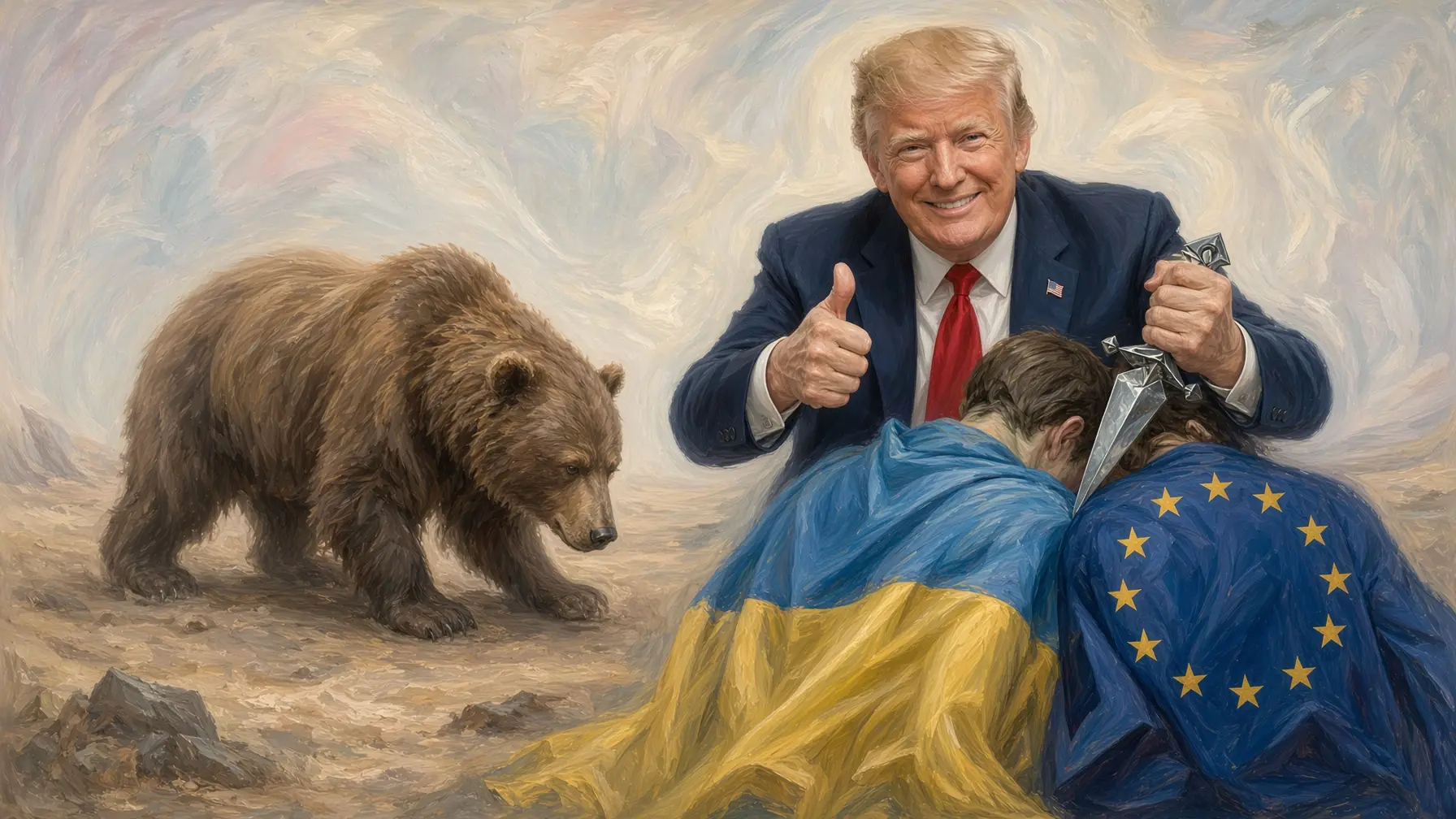
Trumpiades: “Russia is behaving decently toward Ukraine” - this is how he betrays Europe and Ukraine
On Monday, outside the White House, US President Donald Trump told reporters that Russia “is actually behaving pretty decently with Ukraine” and “not doing too much.” On the very same day, a Russian drone struck a park in the Kharkiv region in broad daylight, killing six people, including two children, according to a report by the Kyiv Independent. The night before, Russia had attacked Kyiv with…
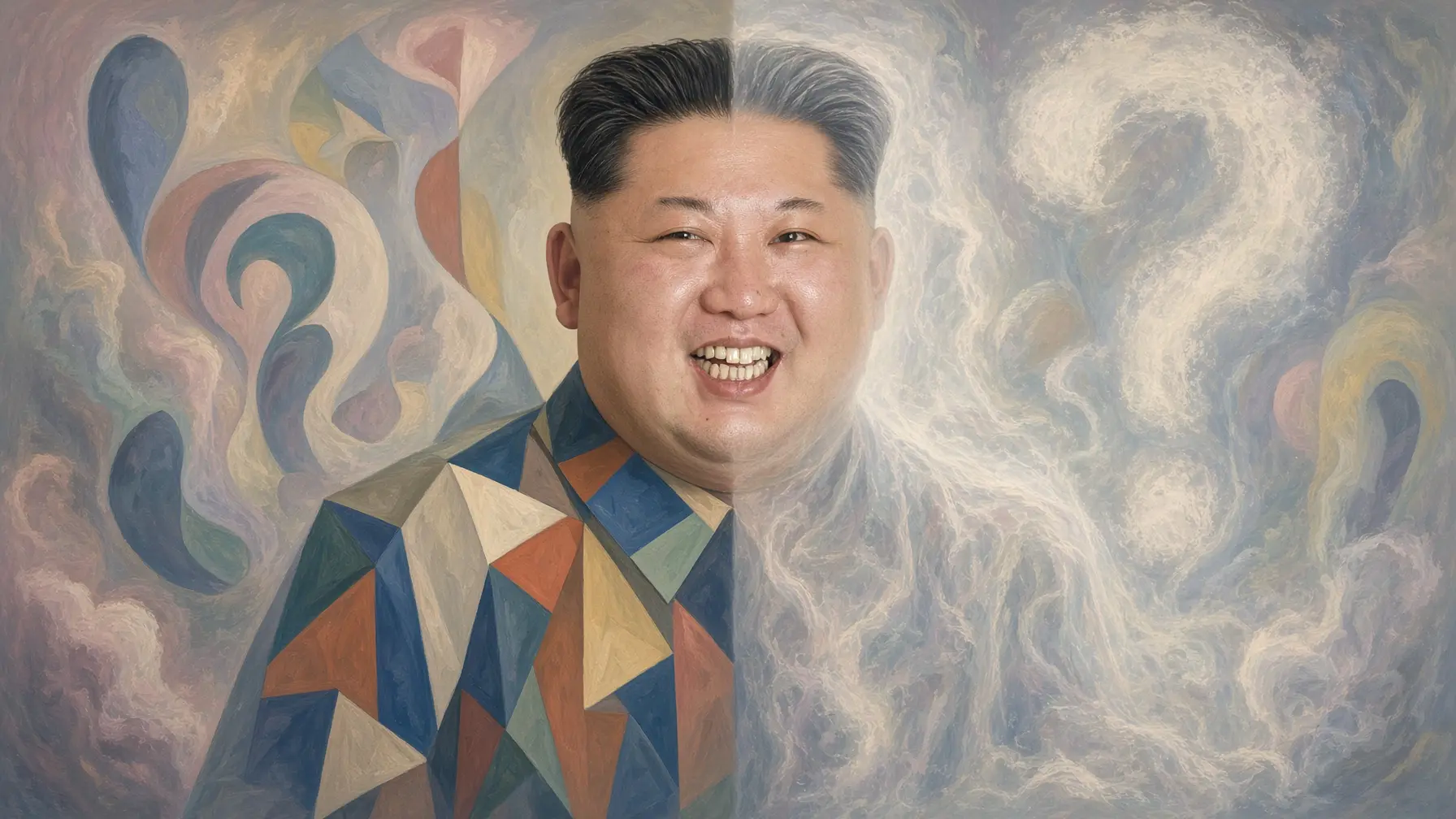
Kim Jong-un mystery: alive or not?
Kim Jong-un has not died, at least according to Pyongyang, which on Tuesday released new photographs of the North Korean leader after rumors of his death spread like wildfire on social media over the weekend. In footage from the state news agency KCNA, Kim is shown visiting a clothing and footwear industry exhibition in Pyongyang on Monday, October 19, accompanied by his wife, Ri Sol-ju, and…

Bolojan's farewell: “the most important reform was that we governed without lying”
Caretaker Prime Minister Ilie Bolojan gave an almost hour-long press conference at the Victoria Palace in Bucharest on Monday evening, one day before the parliamentary confidence vote on the Niculescu government, to take stock of his sixteen months in office. According to the former mayor of Oradea, he took over a country that was “backed into a corner,” with a record deficit — not only in the…
One-year-old girl and her mother killed in Russian drone attack
Six people, including two little girls, lost their lives when a Russian Shahed drone struck the center of Nova Vodolaha, in Kharkiv region, near a park not far from a café, on October 19. A further fourteen people were injured in the attack, including six children.