
The mysticism of 66 years: the revolution can never end!
And so we celebrated October 23, 2026, the 70th anniversary of the outbreak of the 1956 Revolution and War of Independence, and perhaps never before has there been such cognitive dissonance in Hungarian society on this notable day, because just as we finally breathe a sigh of relief that public discourse is no longer dominated by the self-abandoning, Russia-fawning narrative of the traitor Balázs Orbán, here come the epigones, the ideological commissars of neo-fascist-Bolshevik archetypes, proclaiming from Corvin Passage and Bem Square that we never actually fought against the Russians back then, but against an imperialist empire — exactly the kind of empire the EU supposedly is today, and that is why we are fighting against it now. This is an old narrative, putting an equals sign between the European Union and the Soviet Union, whose mental effect is that, in the end, Europe is nothing more than another Russia — and from the angle from which Toroczkai, shaking hands with Dmitry Medvedev, views the world, one could indeed see nothing else, because that is exactly how Russian cognitive warfare works: in minds, in hearts, and there it has already done its job. That is why we must state at the outset: the cry of “Russians go home” that once rang out on the streets of Pest in 1956 should today correctly be: “Slava Ukraini!”
On the seventieth anniversary, however, we Hungarians must ask ourselves two questions: how did we get here, and what might be the way out — and although a thousand answers can be given to both, it must not be avoided that we too are at fault, because we tolerated it, not entirely silently, but we tolerated it, even though we didn't even need to charge at Russian tanks with Molotov cocktails. Even if we don't wish for this self-examination, it would be enough to take out the sixteen points that the students of the Technical University formulated on the night of October 22, 1956 — points that turned into a revolution the very next day — and go through them one by one, to see how much of it was fulfilled in seventy years, and how much we voluntarily gave up of what we had once won.
The students of Pest demanded that Soviet troops leave the country immediately; today, however, Russian influence has returned — with the support of a significant part of our society and through the will of the government — not on tanks, but through the Rosatom nuclear power plant, gas contracts, doors opened to intelligence operatives, and through a foreign minister who received a decoration from Lavrov and even proudly shows it off.
They demanded general, secret, multi-party elections, and this year in April we finally won that too — except that for sixteen years we tolerated elections that were free but not fair, where the constituencies were redrawn by those in power, and the campaign was decided by a propaganda machine fattened on public money.
They demanded full freedom of speech and the press, a free radio, while we watched as independent papers were bought up one after another, shut down, or herded into a single foundation, and the public media produced propaganda that even a 1950s editor would envy.
They demanded that the guilty — Mihály Farkas and his associates — be held accountable before a public court, and that Rákosi be brought home to answer for his deeds; today we watch as family and friends' fortunes are smuggled abroad, and those who steered the country toward the abyss hide from responsibility. They demanded a relationship of equality with the Soviet Union, not one of subjugation; we let a Hungarian prime minister travel to Moscow to shake hands with a war criminal, and in conversation with him refer to our homeland as a little mouse.
That is why the revolution did not end, and why it cannot end: a few of the sixteen points were fulfilled, but the rest were not taken from us by the Russians — we handed them over ourselves to our elected masters, in exchange for a little utility-price reduction and the comfortable feeling that we don't have to solve general moral and ethical dilemmas ourselves.
In 1956, Hungarians waited for help; Radio Free Europe urged them to hold on, but the West was preoccupied with the Suez crisis, and when Soviet tanks rolled into Budapest in the early hours of November 4, Imre Nagy's radio message went unanswered. No one came. If there is a nation in Europe that should feel in its very gut what it means to be left alone against a Russian invasion, it is the Hungarian nation — and only the Hungarian nation. Instead, today it is precisely we Hungarians who, by using our veto power, have been obstructing aid to Ukraine; for years we held back the billions due to Ukraine from the European Peace Facility, we haggled over every sanctions package, we blocked Ukraine's accession negotiations, and even after the change of government, Hungarian diplomats keep blocking the opening of accession clusters in the EU working group — even though Ukraine today is doing exactly what we did in 1956: defending its freedom against an empire far larger than itself, while going through the same things we went through then. Its cities are bombed the same way, its children are abducted the same way, civilians are executed in Bucha the same way people were hanged here during the reprisals, and the West offers the same understanding words, behind which there is often barely any action. After 1956, about two hundred thousand Hungarians fled, and Austria, Switzerland, America — indeed half the world — took them in; today, however, Hungarian propaganda claims that Ukrainian refugees are a burden to us. Meanwhile, thousands of Hungarians from Transcarpathia are serving in the Ukrainian army and dying in the fight against the Russian aggressor, while the motherland acts as Moscow's mouthpiece. There are Hungarian citizens who voluntarily joined the Ukrainian army to help our heroic neighbors — Hungarian law still persecutes them to this day, facing prison years on charges of unlawful recruitment, because even half a year of a new government hasn't been enough to amend even this single legal clause for the better.
So much shame cannot be covered up with a ceremonial wreath!
We Transylvanian Hungarians know especially well what it means when a country sides with the oppressor during its neighbor's fight for freedom, because in 1956 Romania was exactly such a country. The Romanian communist leadership under Gheorghiu-Dej enthusiastically supported the Soviet intervention in Hungary, even offering troops, and when Imre Nagy and his associates were lured out of the Yugoslav embassy, they were taken here, to Snagov, Romania, and held captive for months before being handed back to the executioner. In Transylvania, Hungarian — and sympathetic Romanian! — students, teachers, and priests who sympathized with the revolution faced years of reprisals, were convicted in show trials, and death sentences were handed down in the Szoboszlai trial. In 1959, partly for this reason, Bolyai University was merged into Babeș University, and László Szabédi took his own life in protest against the merger.
Romania was then a loyal servant of the Soviet empire, which betrayed the rebelling nation next door and took revenge on its own Hungarians. And by 2026, we have become what Romania was in 1956 — even though there is another path, even though there is still time and opportunity to repair our corrupted morality. Let us simply not be the country that sides with the oppressor during its neighbor's fight for freedom, that places its own security and comfort above freedom, and that, once Ukraine is free and strong again, will have to explain, ashamed, why it stood on the wrong side.
This Stockholm syndrome, however, did not begin today, but after 1956, when János Kádár, returning on Soviet tanks and cementing his power with more than two hundred executions, slowly and skillfully struck a bargain with Hungarian society whose traces we still carry today. The bargain was simple: you don't ask, we let you live. “Whoever is not against us is with us,” Kádár said in 1961, and this sentence became the creed of the ordinary Hungarian, according to which one need not be a hero — it is enough not to interfere, and in return one gets a small weekend plot, a Trabant, a bit of goulash communism, and the comfortable feeling that responsibility belongs to those at the top, not to us. The very same families whose members fought in Corvin Passage in 1956 or fell victim to the reprisals were, a few years later, hoeing away on their weekend plots, and the unspoken rule remained that it was better not to talk about what could not be talked about.
The Orbán regime struck the very same bargain with us, only in a more modern guise: utility-price cuts, family support, pension bonuses, and anti-Brussels billboards, in exchange for us not asking where the money goes, who owns the press, and who decides on our behalf about contracts signed with Moscow and Beijing. And we, much like during the Kádár years, largely accepted it, because it was more comfortable, because our neighbors accepted it too, and because in the meantime we learned to love the one holding us captive. That is the essence of Stockholm syndrome: the captive is grateful for being kept alive, and sees their protector in their oppressor. This is how a nation that once hated Russian tanks became a people a part of which now cheers for Putin, regards the war criminal as a strong leader, and calls the invaded Ukraine pro-war.
István Bibó, who in 1956, as a state minister of Imre Nagy's government, was the last to remain in the Parliament building surrounded by Soviet tanks, and wrote his manifesto there amid the rattle of machine guns, had already described what was wrong with us ten years earlier, in 1946. In his essay The Misery of the Small States of Eastern Europe, he explained that the greatest affliction of these nations is fear — existential dread — because of which they are always ready to give up their freedom for the sake of a strong hand and a false sense of security.
“Being a democrat means, above all, not being afraid: not fearing those of different opinions, different languages, different races, not fearing revolution, conspiracies, the unknown and malicious intentions of the enemy, enemy propaganda, being belittled, and in general not fearing any of those (…) dangers that become real dangers precisely because we fear them.”
— wrote Bibó, and it would be hard to describe more precisely what the Orbán regime was built on. On fear of migrants, Brussels, George Soros, Ukrainians, war, and all the other specters that propaganda hurled at us day after day, and which were only dangerous because we let ourselves be intimidated. According to Bibó, the peoples of Eastern Europe can only become free once they are cured of this fear — and from this it follows directly that the 1956 Revolution did not end, and cannot end, until we learn not to be afraid, and until we bow neither to Russian tanks, nor to domestic propaganda, nor — above all — to our own comfort!
If Bibó were alive today, I would surely ask him: is there a cognitive dissonance spanning the whole of Hungarian history, which always drags us toward the same mistaken, Stockholm-syndrome-ridden side, standing beside our own murderers in wars?
Because there also ought to be some explanation for the fact that this nation, in 1914, sang with proud and battle-eager enthusiasm in the streets of Budapest, Cluj, Szeged, and elsewhere: “Stop, stop, you wretched Serbia.” The man who was assassinated was Franz Ferdinand, who had never been a friend to Hungarians within the Monarchy — in fact, he openly despised us — but he was the heir to the throne, and so off we went to the war of Franz Joseph, the very man who, with decisive Russian help, had drowned our 1848 war of independence in blood exactly 66 years earlier. A completely schizoid situation, and if I were a fan of numerology, I would seek and find in this number 66 the devilish instrument that disrupted our collective mind. And the schizoid, immoral decisions that led to Hungary's participation in the First World War demand their price. Such a price is a historical one, characterized by the fact that it can hardly be bargained down, and even then only minimally — perhaps a Sopron. Another characteristic is that a historical price is never just, which is why Trianon wasn't either. This is what we paid for going to war in 1914, singing “Stop, stop, you wretched Serbia,” on the side of the man whose grandfather had massacred our grandfathers. (Homework for nationalists and not only for them: look up the passage in Albert Wass's Sword and Scythe where the old 1848 hussar weeps as he watches young Hungarians on a street in Cluj chanting anti-Serbian rhymes. What does he mutter into his beard? Leave the answer in the comments, thank you!)
And in 2022, Viktor Orbán sided with Vladimir Putin and the Russian war machine — with the man raping our nation and plundering our country (hello, culture warriors, wouldn't it have been fitting to ask Putin to return the artworks stolen from us, seeing as we're on such good terms with him?), the man openly wishing to rebuild the Soviet Union. Once again, Viktor Orbán put our country on that same side during a global conflagration, at a time when we should be fighting alongside our former murderers against those who are not our enemies at all, but our neighbors — and will always remain our neighbors. Between 1956 and Hungary's shift to the pro-war, pro-Russian side in 2022, 66 years passed. This is no longer numerology, but the chilling horror of history repeating itself, and I can only hope — hope we — manage to dodge the historical price in time, although there is still a bill to pay, even so.
Ukraine today is doing exactly what we started in 1956. It is defending its freedom, its independence, and its right to decide for itself where it belongs, against an empire far larger than itself, and in the process it is going through exactly what we went through then. Its cities are bombed, just as Budapest was fired upon by Soviet tanks; its children are abducted, just as Hungarian youths were once taken to the Soviet Union; civilians are executed in Bucha and Irpin, just as the crowd of protesters was shot at here in Mosonmagyaróvár and on Kossuth Square. And it listens, just as we did, to the understanding words of the West, behind which there is often barely any action — except that now, alongside the hesitant Western capitals, there is also a Budapest that does not hesitate but actively brakes. Meanwhile, Hungarian propaganda has for years called the one who was attacked pro-war, and called the one helping the attacker pro-peace — as if in 1956 the Hungarian revolutionaries had been the pro-war party, and the Soviet tanks had brought peace. Kádár said exactly this back then, and today we speak the very same language, because the mental damage caused by the regime that fell this past spring can only be treated with very harsh self-therapy — and then we may yet be able to write the next 66 years differently. But to do that, we must first decide whether we are the heirs of those in Corvin Passage, or of those who came with the tanks back then. Seventy years ago, the kids of Pest did not ask whether it was worth it, did not calculate the cost of gas, and did not wait to hear what Moscow would say. They simply went out into the streets and said what needed to be said. Today, we don't even need that much: no Molotov cocktails, no barricades — just enough courage to say out loud whose side we stand on.
Because the 1956 Revolution cannot end until, instead of “Russians go home,” we can shout at the top of our lungs, without shame: Slava Ukraini!
Anna Karczag
Did you like this article?
Support our work with a small donation
Secure payment via Stripe • Min. 2 EUR
Gesta recommendations:
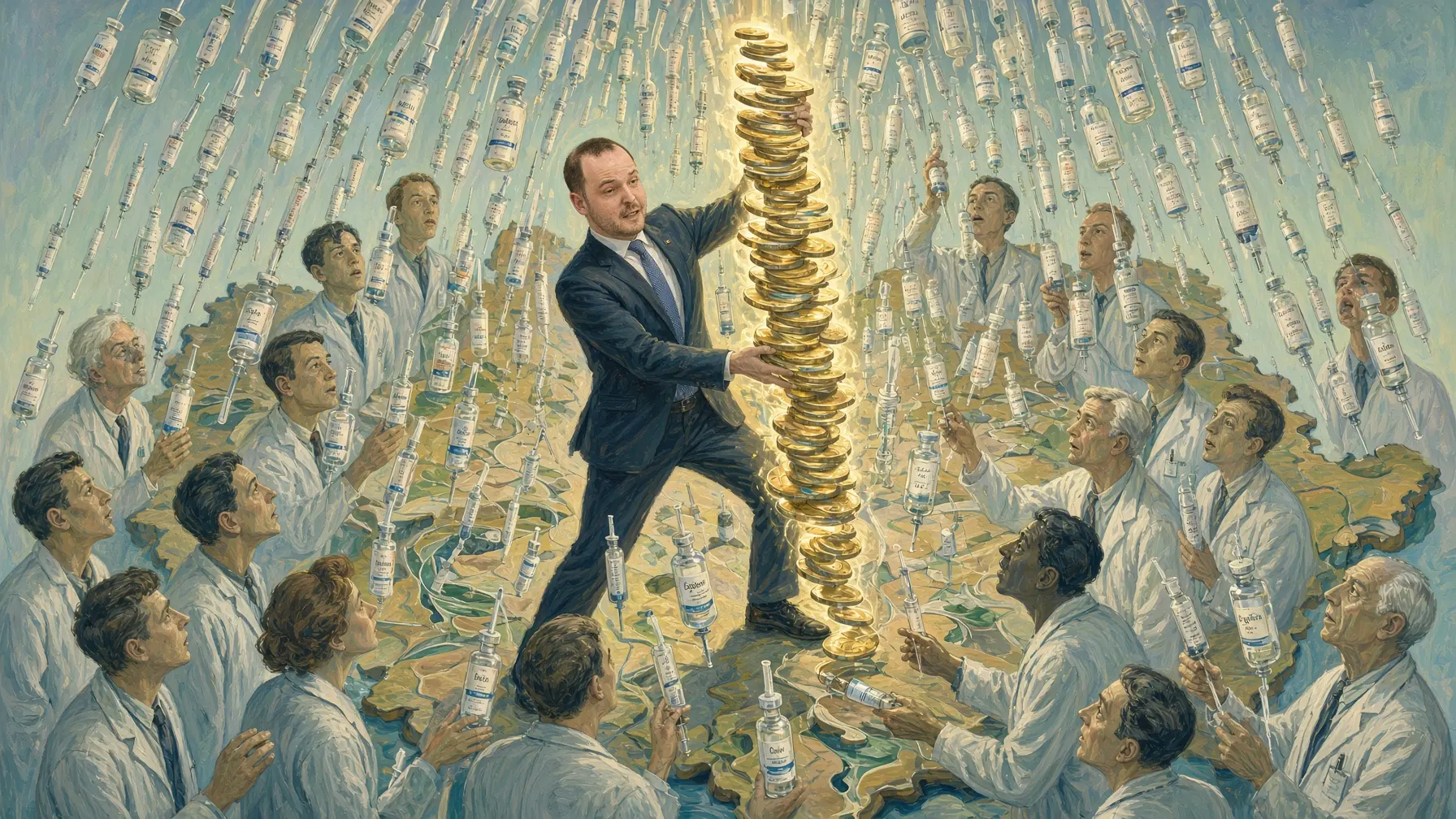
Rogobete would raise doctors' on-call pay and send out 175,000 flu vaccine doses across the country
Health Minister Alexandru Rogobete would introduce progressively increasing on-call pay for doctors, and has also listed securing the supply of flu vaccines among the most urgent tasks of his mandate. Speaking on Antena 3's Wednesday evening program on October 21, he said that after the budget adjustment, fairly paying for on-call shifts is one of the most important things to address.
Kim Jong-un isn't bored, he's alive, and has ordered another military revolution
Just a few days ago, rumors were still swirling that he had kicked the bucket, keeled over, choked on the red star — well, Kim is back, and he hasn't disappointed: he's playing war games again. This time Kim Jong-un ordered his army to train itself into the world's strongest armed force and to form a militarily and technically prepared elite unit within every one of its companies. Meanwhile,…
Musk's election campaign: nine out of ten false X posts go uncorrected
The community fact-checking system of the X social media platform, owned by Elon Musk, failed to flag more than 90 percent of the false claims circulating about the November 3 U.S. midterm election, and the same is true of Musk's own posts. This is the finding of a study published Wednesday by NewsGuard, an organization that rates the reliability of news sources.
PSD suddenly feels sorry for homeowners: it does not support a property tax based on market value
The Social Democratic Party (PSD) announced on Friday that it does not support calculating the tax on residential properties based on market value, which the Bolojan government had scheduled for January 1, 2027, and which, according to the party, could have meant a tax up to twenty-seven times higher than the current one. However, the statement does not make clear whether the Social Democrats…

The Entire Newsroom in Exchange for a Facebook Page? Press Revolt Against Meta's New Terms
Meta has postponed until November 20 the introduction of its new commercial terms, after international press organizations, publishers and advertising trade associations jointly protested against a provision that they say would allow the tech giant to automatically harvest the content of websites. At first glance, the dispute concerns fine print in a contract, but in reality it is about whether a…