
Will the stock market kill off artificial intelligence?
A severe sell-off swept through American markets on Friday, as doubts about the returns on the hundreds of billions of dollars poured into artificial intelligence collided with news of corporate scandals and regulatory investigations. The Nasdaq lost more than five percent in a single day, Nvidia plunged fourteen percent, and bitcoin fell below sixty thousand dollars, as investors became increasingly unwilling to settle for the promise that the future will supposedly be wonderful.
By the close of trading on November 20, the Nasdaq Composite, which is particularly heavy with technology stocks, fell 5.28 percent to close at 22,617.73 points, wiping out its entire gain for the year. Its weekly loss recalled the start of the pandemic, while the S&P 500 dropped 3.7 percent to around 6,910 points, losing about 8.6 percent for the week as a whole — its worst performance since April 2025. The Dow Jones weakened by 1.93 percent to around 48,147 points, showing that the slide was far from being confined to the most fashionable technology companies. The S&P 500 and the Dow Jones have now fallen more than ten percent from their most recent peaks, a drop market jargon calls a correction, while the Nasdaq is roughly eighteen percent below its high. Some indicators of the American tech sector have already crossed the twenty-percent threshold associated with a bear market, although such labels alone do not indicate how long the downturn will last.
Behind the shaken confidence lies a long-avoided question: when, and from what, will the hundreds of billions of dollars spent on data centers, chips, energy supply and artificial intelligence models actually pay off. The rise in share prices in recent years was largely fueled by the expectation that these investments would eventually bring enormous profits, but at current valuations it is no longer enough for the technology to be impressive — revenues and profits now need to justify the spending as well. If faith in that wavers, the effect ripples through the entire supply chain, since chipmakers, server companies, cloud providers and data center operators all depend on each other's growth plans. Friday's panic, in this already fragile situation, was amplified by news of a U.S. securities regulator's investigation into Nvidia's accounting practices, as well as unconfirmed reports that Google may order fewer chips from Broadcom next year. Nvidia's share price fell to 125.53 dollars, a drop of fourteen percent in a single day and roughly twenty-three percent over the week. The crisis of confidence surrounding the company was deepened further by the departure of founder and CEO Jensen Huang, who resigned after thirty-three years following reports about extramarital affairs, acknowledging in his statement that he had failed to meet the standards expected at the company.
The personal scandal, however, is only one thread of the story. Citing the Wall Street Journal, InvestmentNews reported that the SEC is examining whether Nvidia properly informed investors about its sales in Asia, with one of the relationships under scrutiny linked to Alice Huang, former executive of Singapore-based Megaspeed. According to the report, American intelligence suspects the woman of ties to Chinese intelligence, and investigators are examining whether, in the case of Megaspeed, Nvidia chips may have reached China in circumvention of export restrictions. California Attorney General Rob Bonta also spoke of troubling circumstances and indicated that his office is considering possible action, though these remain investigations and suspicions rather than legally established facts. Nvidia also reported that its quarterly revenue had doubled, but this time the extremely strong growth was not enough to offset the loss of confidence.
The wave hit other major technology companies as well: Meta lost nearly six percent, Amazon about four percent, and Alphabet 2.6 percent, while CoreWeave, which provides computing capacity, fell by more than twelve percent and Nebius by roughly sixteen percent. The timing proved especially awkward for Anthropic, the developer of the Claude family of models, which had gone public on the Nasdaq just the day before at an issue price of 83 dollars per share. The listing, together with a parallel private placement, raised a combined 107 billion dollars, but after closing its first day at 97 dollars, the share price had already slipped back to around 86 dollars by midday Friday. Meanwhile, some of the money shifted toward sectors whose revenues depend less on distant technological promises. Energy and utility companies strengthened, and Walmart rose by about one and a half percent after raising its annual forecast — a clear sign that the market was not fleeing everything at once, but was instead re-pricing the risk it was willing to pay for.
Cryptocurrencies, however, were precisely among the riskier assets that many investors tried to offload. During the day, bitcoin sank to around 57,200 dollars and continued to trade below sixty thousand afterward, far from the roughly 83,000-dollar level seen in August and September. Ether fell about nine percent to near 1,600 dollars, and solana weakened by eight percent to around 67 dollars, while XRP and BNB also lost significant value. The slide was further accelerated by leveraged trading, since positions that become undercollateralized as prices fall are automatically closed out by providers, and the resulting sales can trigger further declines. According to CoinDesk, more than one and a half billion dollars' worth of such positions were liquidated within twenty-four hours, while 541 million dollars flowed out of BlackRock's bitcoin fund, IBIT, on Thursday. Shares of crypto-linked companies Coinbase, Strategy and Robinhood also fell by six to ten percent. The high interest rate environment makes all this even more uncomfortable, since with the yield on ten-year U.S. Treasuries at around 4.91 percent, investors are increasingly reluctant to pay any price at all for the promise of uncertain, distant profits. Uncertainty over inflation and the Federal Reserve's next moves is therefore hitting especially hard those companies whose value is largely based on profits hoped for in the future.
A single week is not enough to determine whether the stock market bubble built up around artificial intelligence is bursting, or whether what we are witnessing is simply a painful correction of an overheated market. What is becoming increasingly clear, however, is that investors are no longer asking only what AI will be capable of, but also who will end up paying enough for it to make today's spending actually pay off one day.
Ugar
Did you like this article?
Support our work with a small donation
Secure payment via Stripe • Min. 2 EUR
Gesta recommendations:

Trump wants peace by January, his wife is already dreaming of a Christmas ceasefire, meanwhile Ukrainians are dying
The Trump administration wants to close the Russian-Ukrainian peace deal by early January, before the new, Democratic-led Congress gets down to work, according to Financial Times. Melania Trump, meanwhile, is talking about the possibility of a ceasefire before Christmas, even as Moscow continues to reject the guarantees that would give Ukraine real protection against another Russian attack.…
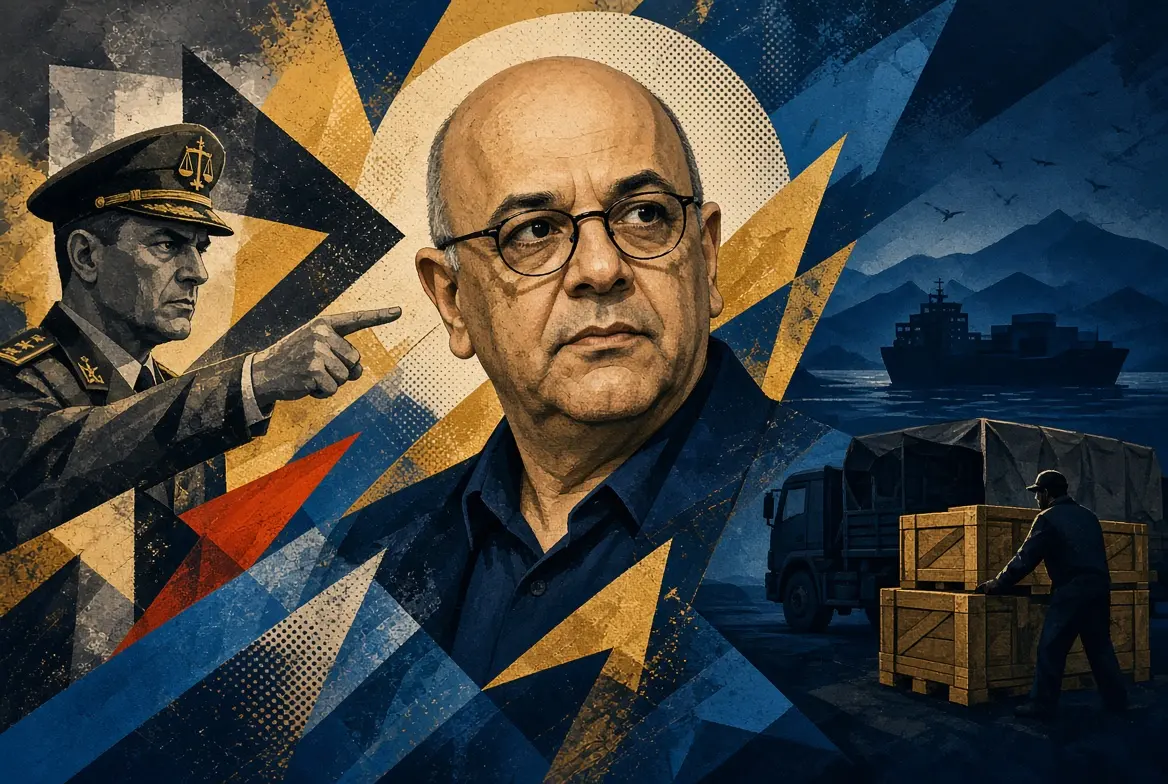
Raed Arafat has been indicted. The military prosecutor's office is charging him with complicity in smuggling
Raed Arafat is being prosecuted over the import into Romania of a rescue helicopter that was provided to replace an aircraft lost in a tragedy. The head of the Department for Emergency Situations (DSU) says an attempt is being made to retroactively turn an open, official procedure into a crime, while prosecutors claim that customs clearance was never completed and that more than four million lei…

Bolojan and his party are also proposing an administrative reform, plus a reduction in the number of parliament seats
Ilie Bolojan has promised the PNL's position on administrative reform for early December, while the Liberals and the USR have almost finished drafting a joint proposal on reducing the size of parliament. According to the former prime minister, the government's announcements so far do not reveal a sufficiently well-developed reorganization, because merging two poor communes under a single name…

Trump already threatens Democrats with veto
Donald Trump did not waste much time explaining what he had learned from the results of the midterm elections, instead announcing the tool he will use to keep the Democratic legislative majority taking office in January in check. He praised the presidential veto as an extraordinary power that, in his view, can force his opponents to negotiate, and for Ukraine the decisive question will be whether…
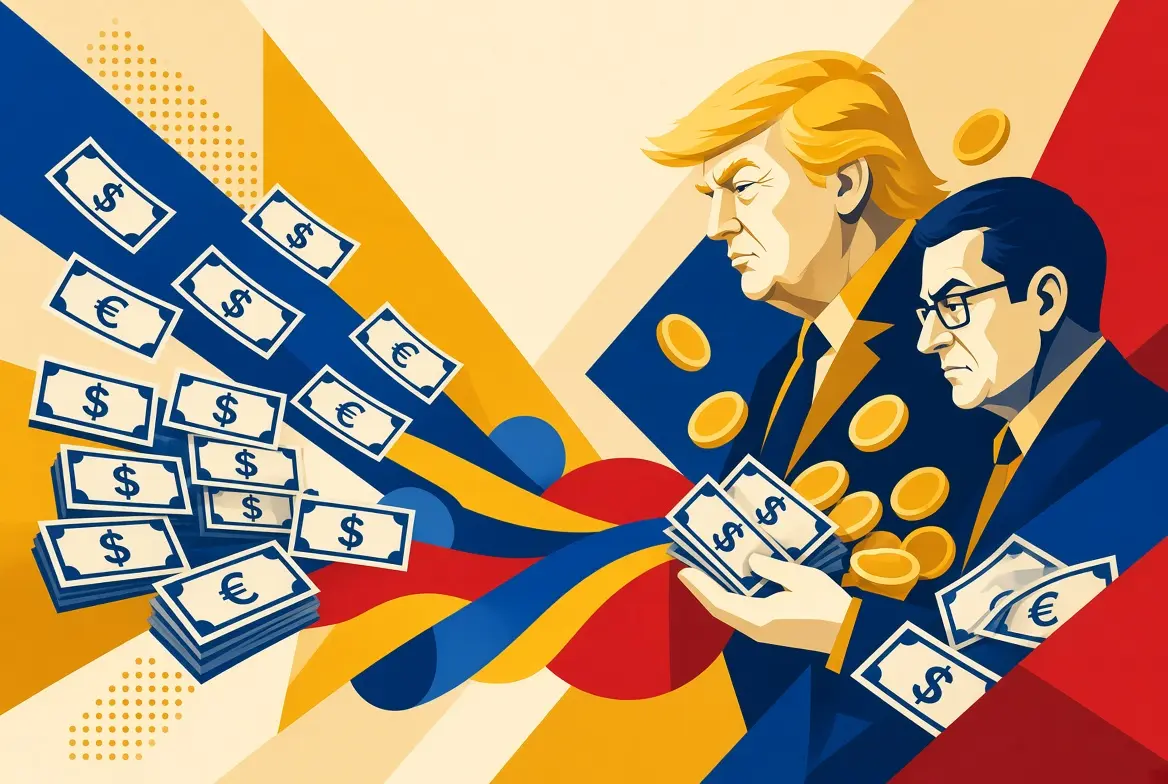
Consulting pays well around Trump: Romanian public money also surfaces among Jason Miller's millions
A child-support lawsuit revealed just how dramatically the business revenue of Donald Trump's longtime adviser has jumped, while among the clients paying for his Washington connections, Romania has also appeared. Jason Miller's companies collected about fifteen million dollars in a single year, yet the Cotroceni Palace still will not disclose exactly what the Romanian state is getting for the…