
Trump already threatens Democrats with veto
Donald Trump did not waste much time explaining what he had learned from the results of the midterm elections, instead announcing the tool he will use to keep the Democratic legislative majority taking office in January in check. He praised the presidential veto as an extraordinary power that, in his view, can force his opponents to negotiate, and for Ukraine the decisive question will be whether a majority large enough forms behind American support that this threat no longer works on it.
At the White House press briefing on November 20, Trump explained that the Democrats would send him their bills, and he would veto them, and the same would happen with the next ones, until a deal acceptable to him is reached. According to Reuters, he is prepared to continue this even for the remaining two years of his term, while also mentioning possibilities for cooperation on healthcare, issues affecting film production, and the regulation of college sports.
The veto is of course part of the American constitutional system, so its use in itself does not mean either the dismantling of democracy or the nullification of the election result, yet the political message is still noteworthy: the president's first response to the new balance of power created by voters is how he will block the legislative majority's plans, and only afterward does he talk about what he would be willing to agree on. Support for Ukraine could be a particularly important test in this situation, because Democratic aides speaking after the election listed assistance to Kyiv among the top priorities for the coming period. By taking over committee leadership, the Democrats will gain greater influence over which matters are investigated and which proposals are prepared, and they will be able to more strictly scrutinize the administration's weapons deliveries, sanctions decisions and the activities of its negotiators, but overriding a presidential veto requires a two-thirds majority in both the House of Representatives and the Senate, which also requires Republican votes. According to congressional figures cited by Reuters, such cooperation could emerge behind a package supporting Ukraine, but only an actual vote can prove this. Gregory Meeks, the expected Democratic chairman of the House Foreign Affairs Committee, has already tried to block the return of Russian diesel to the world market with a bipartisan proposal, meaning the conflict over the direction of American foreign policy has already begun before the next Congress even convenes.
Trump's conduct so far gives little reason for Kyiv to rely solely on Washington's goodwill. The president has defended Moscow's sanctions exemptions, called Putin his friend, and Zelensky has spoken of delays in the delivery of weapons and intelligence information, so the issue of support for Ukraine is not simply a budgetary dispute. Lawmakers will also have to decide whether they are willing to limit the room for maneuver of a president who, for the sake of a deal with the aggressor, is putting ever greater pressure on the attacked country. All this casts a peculiar light on the democratic sensitivity with which the MAGA world previously lectured Europe. JD Vance criticized Romania at the Munich Security Conference for annulling the first round of the presidential election, and Elon Musk called the chairman of the Romanian Constitutional Court a tyrant. The Romanian decision and the American presidential veto are legally different matters, but the strikingly selective enthusiasm for the will of voters is still worth a glance: when the political outcome is favorable, the judgment of the people is sacred; when it is unfavorable, the entire institutional toolbox suddenly comes out.
Over the next two years, therefore, the only question will not be how many vetoes Trump signs, but also how many Republican lawmakers are willing to put American and allied interests ahead of the president's wounded pride. For Ukraine, this decision will have very tangible consequences, because at the end of the American power struggle, either weapons will reach the defenders, or the Russian war machine will gain a new opportunity.
Ugar
Did you like this article?
Support our work with a small donation
Secure payment via Stripe • Min. 2 EUR
Gesta recommendations:

Trump wants peace by January, his wife is already dreaming of a Christmas ceasefire, meanwhile Ukrainians are dying
The Trump administration wants to close the Russian-Ukrainian peace deal by early January, before the new, Democratic-led Congress gets down to work, according to Financial Times. Melania Trump, meanwhile, is talking about the possibility of a ceasefire before Christmas, even as Moscow continues to reject the guarantees that would give Ukraine real protection against another Russian attack.…

Raed Arafat has been indicted. The military prosecutor's office is charging him with complicity in smuggling
Raed Arafat is being prosecuted over the import into Romania of a rescue helicopter that was provided to replace an aircraft lost in a tragedy. The head of the Department for Emergency Situations (DSU) says an attempt is being made to retroactively turn an open, official procedure into a crime, while prosecutors claim that customs clearance was never completed and that more than four million lei…

Bolojan and his party are also proposing an administrative reform, plus a reduction in the number of parliament seats
Ilie Bolojan has promised the PNL's position on administrative reform for early December, while the Liberals and the USR have almost finished drafting a joint proposal on reducing the size of parliament. According to the former prime minister, the government's announcements so far do not reveal a sufficiently well-developed reorganization, because merging two poor communes under a single name…
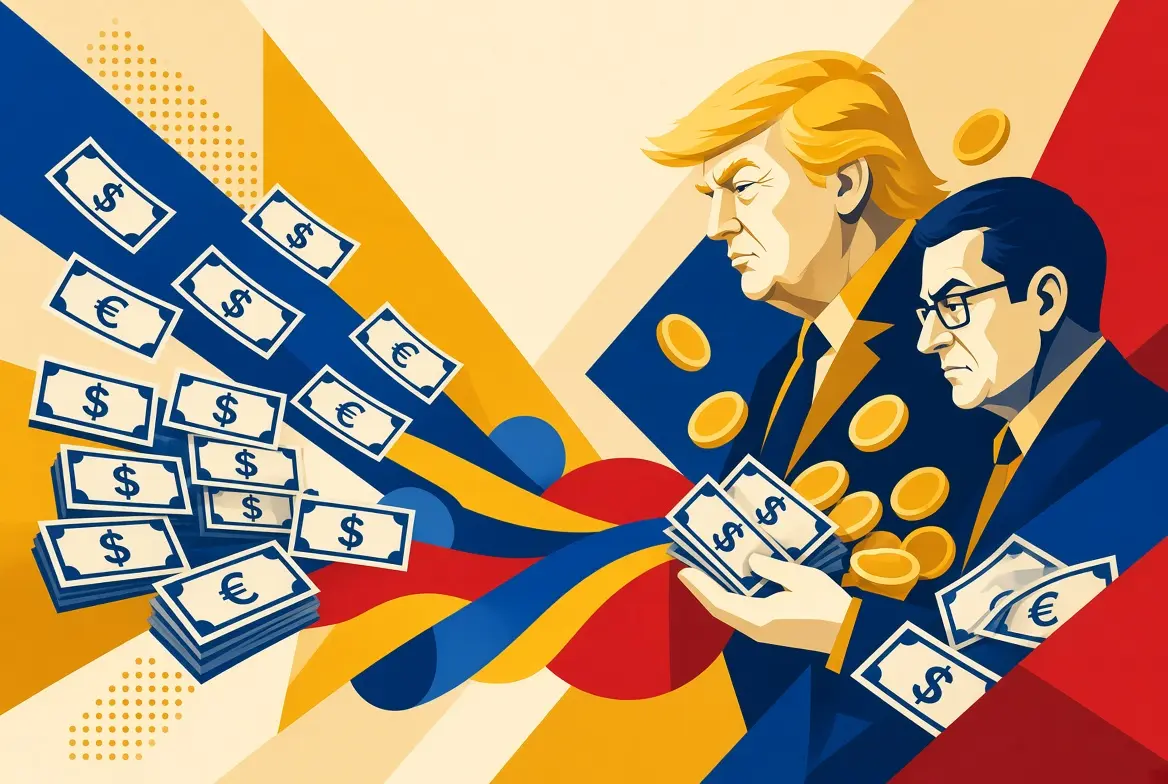
Consulting pays well around Trump: Romanian public money also surfaces among Jason Miller's millions
A child-support lawsuit revealed just how dramatically the business revenue of Donald Trump's longtime adviser has jumped, while among the clients paying for his Washington connections, Romania has also appeared. Jason Miller's companies collected about fifteen million dollars in a single year, yet the Cotroceni Palace still will not disclose exactly what the Romanian state is getting for the…

Will the stock market kill off artificial intelligence?
A severe sell-off swept through American markets on Friday, as doubts about the returns on the hundreds of billions of dollars poured into artificial intelligence collided with news of corporate scandals and regulatory investigations. The Nasdaq lost more than five percent in a single day, Nvidia plunged fourteen percent, and bitcoin fell below sixty thousand dollars, as investors became…