
Majority of Germans back Ukraine, AfD camp backs Moscow
Nearly two-thirds of Germans would maintain or increase European countries' military support for Ukraine, according to Germany's public broadcaster ZDF's latest Politbarometer survey. According to the poll by Forschungsgruppe Wahlen, 30 percent of respondents want stronger military support, 33 percent favor keeping the current level, and another 33 percent would reduce arms deliveries. ZDF concluded from this that support for Ukraine remains strong in Germany. This is noteworthy because, in the fifth year of the war, amid rising energy prices and economic hardship, German public opinion still has not turned away from the invaded country, even though Russian propaganda and pro-Putin forces at home have been working tirelessly for years to bring that about.
The picture, however, is not uniform. Voters of the Alternative for Germany (AfD) differ sharply from the national majority: among them, 83 percent support scaling back military assistance. This figure is no accident, since the party has for years been calling for the lifting of sanctions, the return of Russian gas, and a settlement with the Kremlin. According to a Reuters report from September, party leaders Alice Weidel and Tino Chrupalla are preparing a meeting with Kirill Dmitriev, an envoy of Vladimir Putin, to discuss restarting Russian gas deliveries. The AfD camp's views therefore do not reflect German society as a whole, but rather the stance of the party's Moscow-leaning leadership.
How far from negligible this minority is becomes clear from the rest of the survey's findings as well. According to ZDF's projection, if federal elections were held this coming Sunday, the AfD would be the strongest party with 28 percent, ahead of the CDU/CSU's 21 percent, the Greens' 15 percent, the SPD's 13 percent and the Left Party's 12 percent. At the end of September, the party became the strongest force in Saxony-Anhalt's state election, following its earlier success in Mecklenburg-Vorpommern. At the same time, a significant share of Germans are aware of the danger: 68 percent believe the AfD poses a threat to German democracy, and 58 percent think that if the party came to power in Saxony-Anhalt, it would have a negative effect on the whole of Germany. The AfD's two leaders rank at the very bottom of the popularity scale: both Weidel and Chrupalla received an average rating of minus 2.5 on a scale from minus five to plus five, but Chancellor Friedrich Merz is not doing well either, setting a new personal negative record with minus 2.0.
The timing of the survey deserves special attention. Forschungsgruppe Wahlen polled 1,311 randomly selected German citizens eligible to vote, by phone and online, between October 5 and 7 — just days before Donald Trump announced his agreement on Russian diesel and officially began putting pressure on Kyiv. How this American shift will affect German public opinion will only become clear from the next Politbarometer survey, to be published on October 23. In any case, the AfD can already argue that if Washington can ease pressure on Moscow, Berlin should be able to do so as well. According to ZDF, the results are representative of the German electorate, with a margin of error of roughly plus or minus three percentage points for figures around forty percent, and plus or minus two percentage points for figures around ten percent.
Ultimately, the numbers signal that two-thirds of German society has not grown tired of supporting Ukraine and does not believe that the path to peace runs through appeasing the aggressor. Yet the third that calls for reduced support now coincides with the voter base of Germany's strongest party. And that may be worth more to Moscow than any diesel deal.
Ugar
Did you like this article?
Support our work with a small donation
Secure payment via Stripe • Min. 2 EUR
Gesta recommendations:

Russia has won, and it's time we finally understood this
Yes, that's how it is: Russia and Putin have won. Not on the front, where after four and a half years it still has not managed to break Ukraine, and where it has cost the Kremlin roughly one and a half million soldiers killed and wounded just to plant its flag over a few ruined towns. Moscow has not won the war of tanks. But the war it is waging not against Ukraine but against Europe and the West…

Sixteen hundred names on the blacklist: what does the EU's largest-ever sanctions decision against Russia contain?
On October 12, in Luxembourg, the foreign ministers of the European Union's member states added nearly 1,600 Russian individuals and companies to the sanctions list. This is the largest single expansion since the war began, and it targets participants in Russia's military industry, particularly the production chains for drones and ballistic missiles. Kaja Kallas, the EU's High Representative for…

Fresh, hot off the press and sufficiently stupid: this is what a textbook Russian fake news story looks like
A genuine, unadulterated Russian fake news story has arrived — fresh, hot off the press, and just stupid enough to be worth sharing with our readers. Citing information from an unnamed woman serving in the Russian armed forces — how fortunate that in Romanian the word for soldier also carries gender, otherwise we wouldn't even know that much about the source — Russian channels report that Kyiv is…

After two decades of a language war: what does Ukraine's minority education law mean for ethnic Hungarians in Transcarpathia?
On October 12, the Ukrainian parliament, the Verkhovna Rada, passed law no. 16119, which guarantees the educational rights of national minorities and indigenous peoples. According to reports by UNIAN and Ukrinform, 266 lawmakers supported the bill, even though a majority of the constitutional 450 seats – that is, 226 votes – would have been enough for it to pass. Because of the war and the…
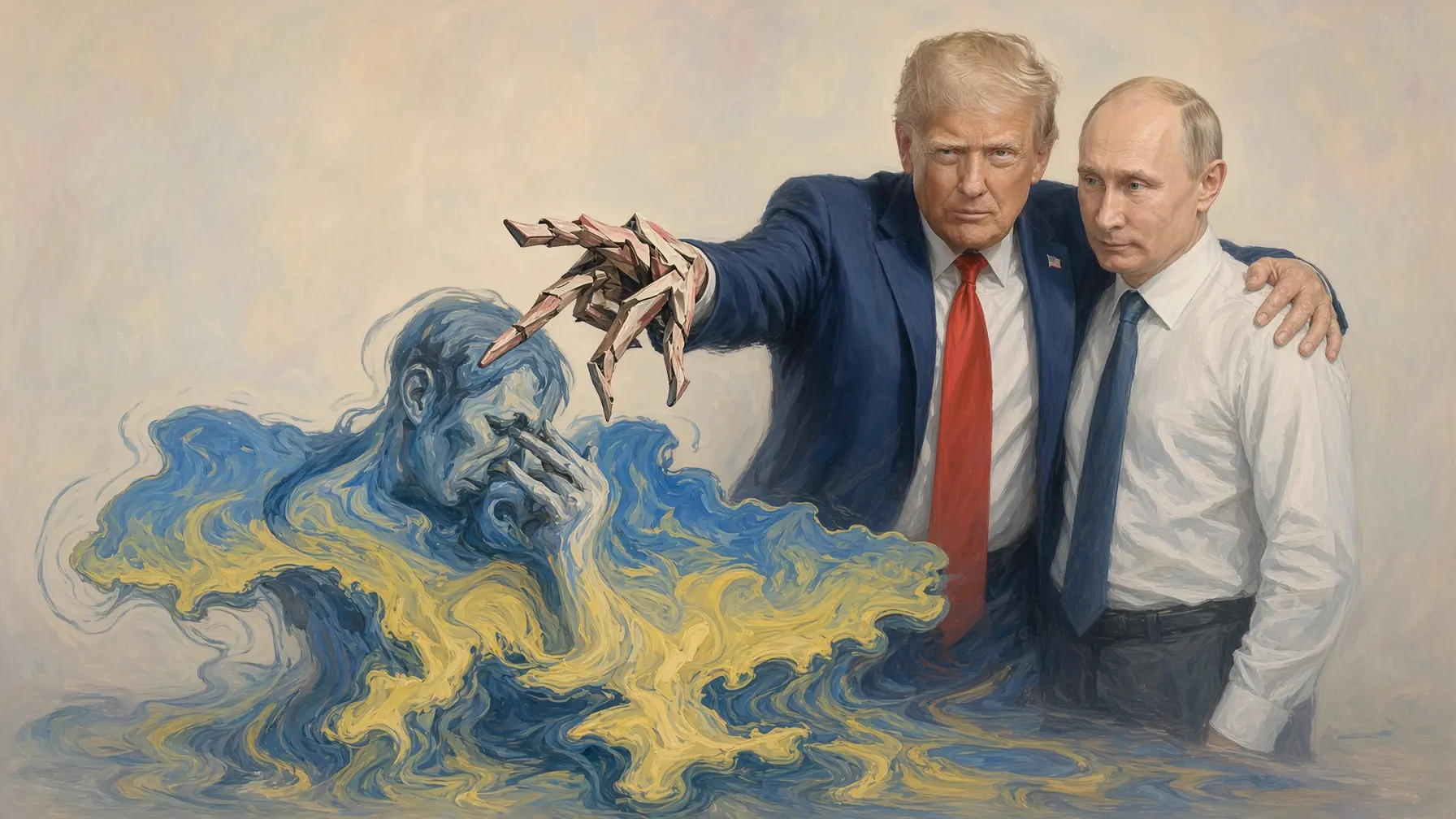
Trump has fully sided with Putin, now threatening Ukraine
The Trump administration has threatened Ukraine's top military and government leaders that it will cut off the sharing of intelligence and close off one of Kyiv's last remaining channels for acquiring American weapons if Ukrainian drones continue to strike Russian oil refineries - the Kyiv Independent reported, citing two Ukrainian officials.