
Musk at work: the military version of Starlink used by the Ukrainian army restricted without warning
SpaceX, owned by Elon Musk, has restricted the operation of the military version of the Starlink satellite internet service in Ukraine, and the move caused several combat missions to fail, Serhii Beskrestnov, an adviser to the Ukrainian president, said on Wednesday. According to him, terminals of the military package called StarShield lost connection overnight into Wednesday whenever they moved faster than 160 kilometers per hour. Beskrestnov said Ukraine's defense forces received no advance notice of the restriction, and that it led to several failed missions, and, according to the Ukrainian news portal prm.ua, the adviser said that such moves were hardly a coincidence and could be linked to the current political situation. According to local reports, conventional satellite communication terminals are still working.
Beskrestnov, known by the call sign "Flash" and one of Ukraine's best-known electronic warfare and drone experts, did not publicly specify which missions were affected by the restriction. The 160-kilometer-per-hour speed limit affects devices moving faster than the short-range drones deployed near the front line.
A lower speed limit of 75–90 kilometers per hour has applied to civilian Starlink terminals in Ukraine since late January this year, but this was requested by Kyiv itself, which at the same time created a so-called whitelist of authorized Ukrainian terminals. The idea came from Beskrestnov, who at the time was still working as an adviser to Defense Minister Mykhailo Fedorov. The goal was to cut off the Russian army from Starlink terminals acquired on the black market, which had been mounted on Molniya and Shahed strike drones and used to hit targets more than eighty kilometers beyond the front line, including trains and vehicle convoys. At the time, Beskrestnov spoke of several hundred such attacks, Musk said on X that the measures were working, and Fedorov personally thanked Musk and SpaceX president Gwynne Shotwell, while Russian military bloggers reported communication disruptions at the front.
The current restriction came into effect a few days after the US administration threatened Ukraine's military leadership with halting the PURL program, which supports intelligence cooperation and the procurement of American weapons, if Ukrainian drones continued to attack Russian oil refineries. On October 11, US President Donald Trump announced a Russian–Ukrainian "energy ceasefire," but Kyiv said that just a few hours after the announcement, a Russian strike hit the Kharkiv thermal power plant.
The missile attack on Kyiv on October 12 also raised questions. According to correspondents for the Kyiv Independent and Ukraine's public broadcaster Suspilne, loud explosions were heard in the capital shortly after 10 p.m. local time, and the air raid alert and mobile phone warnings were issued only afterward. Speculation then spread on Ukrainian social media as to whether the delayed warning might be related to the American threat to cut off intelligence data. Ukraine receives data from the United States for detecting and tracking Russian missile launches, though the Kyiv Independent stressed that it has not been confirmed that Washington has suspended this support. Ukrainian Foreign Minister Andrii Sybiha said at the Warsaw security forum that, despite the tensions, intelligence cooperation with the United States continues.
According to a Kyiv Post analysis, if American intelligence data were cut off, Ukraine's biggest loss would be the earliest possible detection of ballistic missile launches. Analysts say that launches from western Russia are detected almost instantly by American systems, giving residents of Kyiv three to five minutes to take shelter. Ukraine's military intelligence agency (HUR) previously told LIGA.net, in response to a question, that without American data it would be harder to detect the activity of Russian missile launchers, but that the ability to gather information would remain. In March 2025, the United States suspended the transfer of intelligence data and military aid to Ukraine for about a week, after which President Zelensky announced that Kyiv had also reached an agreement with its European partners on broader access to intelligence data.
Starlink's role in the war has sparked controversy before as well. According to a 2025 Reuters investigation, Musk shut down the service in parts of the Kherson region in the fall of 2022, during the Ukrainian counteroffensive, and in February 2023 Gwynne Shotwell stated that Starlink was "never meant to be a weapon," with the company taking steps to limit its use for controlling Ukrainian drones. The Economist reported in March 2023 that the terminals do not work on water or at speeds above 100 kilometers per hour. According to the Economist, at least fifty thousand Starlink terminals are operating in Ukraine, largely funded by Poland, the United States and Germany, and the system is one of the most important elements of front-line communication.
Ugar
Did you like this article?
Support our work with a small donation
Secure payment via Stripe • Min. 2 EUR
Gesta recommendations:

Turn of events: Nicușor Dan reportedly floated the idea of early elections
Romania's political crisis is approaching another turning point. Prime minister-designate Luca Niculescu will send his cabinet list and government program to parliament on Thursday, October 15, after which the ministerial candidates' committee hearings can begin, to be followed by a parliamentary vote of confidence. That's roughly all that's certain - and even that isn't entirely certain, which…

According to the French foreign minister, Musk, MAGA and the Kremlin are playing on the same team
According to French Foreign Minister Jean-Noël Barrot, foreign actors are trying to influence France's 2027 presidential election, and this time he put not only Moscow but also Elon Musk, the richest man in the world, at the top of the list of those seeking to undermine European democratic debate.

Trump says Putin wants peace. Moscow illustrates this with more bombings
According to US President Donald Trump, Vladimir Putin would rather have a peace deal than Volodymyr Zelensky. The statement was quoted by Sky News, and it came on the same day that the Russian army, despite the “energy ceasefire” announced by the American president, continued to bomb Ukraine's energy system.

Greece bans under-15s from social media
From January 1, 2027, Greece will ban young people under the age of 15 from using social media platforms, making it one of the first European Union member states to introduce such a strict age limit. The measure was announced on Monday in Athens by Minister of State Akis Skertsos, at a press conference attended by several members of the government.
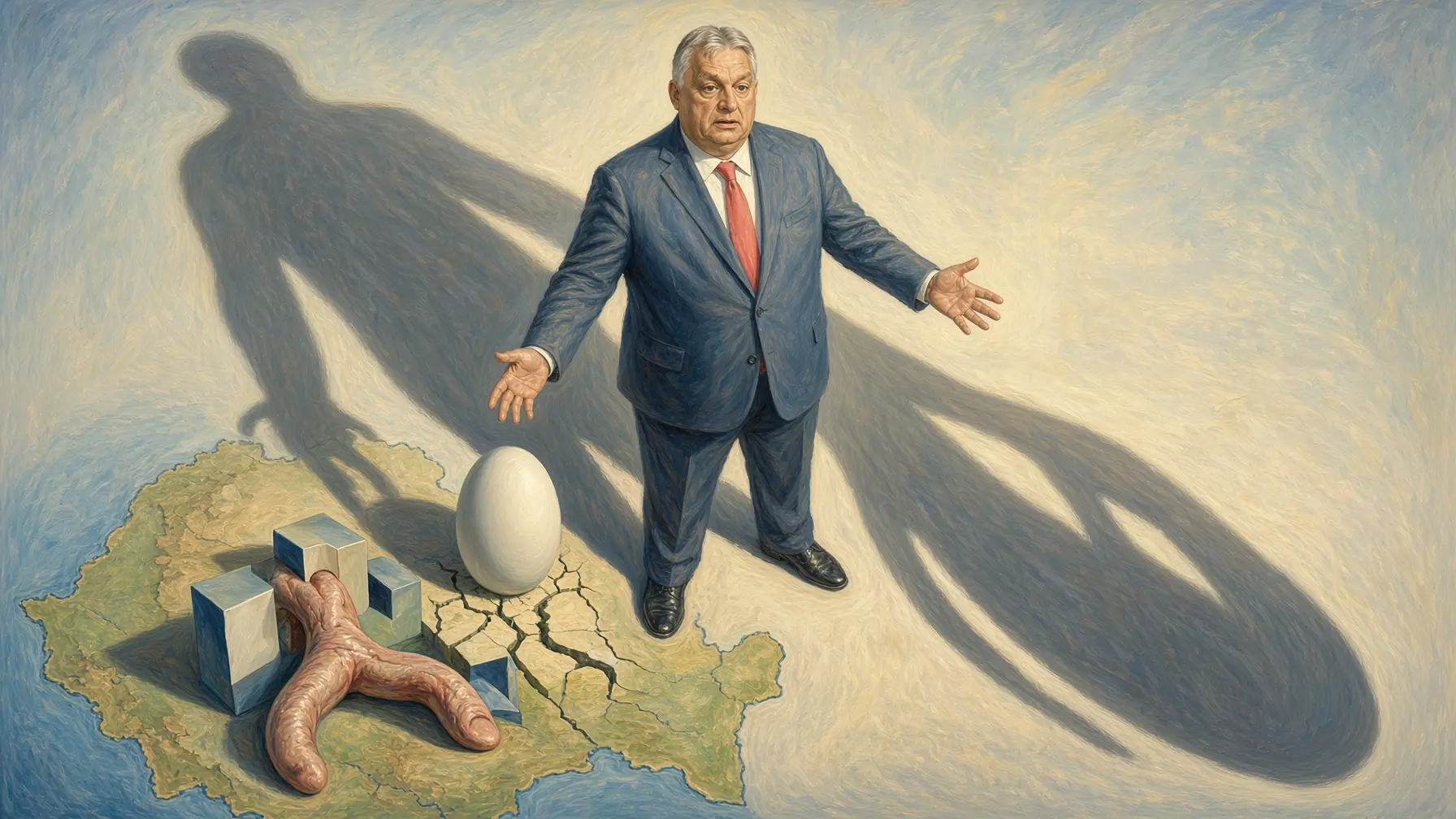
Is Romania Losing Its Veto Right? A Letter, a Lie, and Viktor Orbán's Long Shadow
On Monday, Romanian Foreign Minister Oana Țoiu point by point refuted the claim, spread mainly by AUR, that Romania is giving up its veto right or losing it within the European Union. The minister said this was "a lie from beginning to end," and that the document at the center of the dispute does not take away any member state's ability to block decisions — it merely requires that whoever uses…