
The Americans are lying, and they'll pay for it yet
On Saturday, October 24, Ukraine's Ministry of Defense announced that Starlink and the military-grade Starshield were once again operating at pre-restriction speeds. The connection is now stable even above 400 kilometers per hour, whereas during the restriction it had been cutting out at speeds as low as 160 kilometers per hour. The more than week-long throttling has ended, but the real dispute is only just beginning. A few hours later, Elon Musk wrote on X that “the Ukrainian military violated Starlink's terms of service and used it for offensive drone strikes to kill people,” adding: “We closed that loophole last week.” According to the Kyiv Post, in another post he also stated that “Starlink is a civilian commercial service and was never authorized to be used for offensive drone strikes to kill people.” Musk also wrote that Starlink is indispensable to Ukraine's defense and that if it were switched off, the front would collapse immediately — and he said this should be taken not as a threat, but as a statement of fact.
Kyiv immediately denied Musk's claim. Serhii Beskrestnov, a technology adviser to the Ukrainian president, wrote on Telegram that since the beginning of 2026, commercial Starlink terminals used in Ukraine and in the occupied territories have automatically shut down above speeds of 70–90 kilometers per hour, and that they do not work at all on Russian territory. “So we are physically unable to use commercial Starlink for deep-strike or medium-range operations,” he wrote, adding: “It's very strange that Elon Musk doesn't know about these restrictions.” Serhii Sternenko, a volunteer and former adviser to the Ministry of Defense, recalled that a whitelist system was introduced in February: stationary terminals could be registered by both soldiers and civilians, while mobile terminals had to be registered on a separate list tied to Starshield. According to him, every Ukrainian drone mission requiring satellite guidance runs exclusively through Starshield, and using commercial Starlink on drones is technically impossible. The whitelist, incidentally, was introduced precisely because Russian troops were using Starlink massively and illegally, meaning SpaceX knew exactly that the system in Ukraine was being used by the Ukrainian military.
Musk's current claim, moreover, contradicts what he said ten days earlier. According to Al Jazeera, on October 14 he still wrote that the Starshield systems “are owned and controlled by the U.S. government,” and that decisions on speed limits rest with the U.S. military and ultimately the president — yet now he himself is the one saying the loophole has been “closed.” Reuters reported as early as October 15 that the order for the restriction had come from the White House, while Trump spent days either dodging the question or claiming he hadn't spoken with Musk. The timing of the restriction was no accident either: it was introduced just as Trump was ramping up demands for Ukraine to stop its attacks on Russian refineries, while simultaneously announcing that he would buy Russian diesel. Ukraine, in any case, does not use Starlink for its long-range strikes deep into Russian territory, including attacks on refineries, but the restriction did make it harder for Ukrainians to intercept Russian attack drones; some operations had to be called off, and Ukrainian military specialists reported that the sudden speed cap severed telemetry links and grounded the Ukrainian interceptor drones used against Shahed drones. There is currently no public data on how many lives this cost, or how much material damage it caused.
The affair extends far beyond Ukraine. According to analysts and commentators, the shutdown without warning has set a dangerous precedent for American arms and technology exports. According to one widely shared analysis, it ultimately doesn't matter whether Washington or Musk is responsible, because the world has seen that the United States is no longer a reliable partner. If an agreement can be unilaterally altered by citing vague “terms of service” without specifying the exact rule that was broken, that only reinforces suspicions that a political decision was made. The author of the analysis also calls it absurd to argue that Starlink must not be used for “offensive” purposes, since the system never worked over Russian territory, and Ukraine is simply defending itself against an aggressor on its own soil. The piece also points out that the United States has, in the past, withdrawn its technology from former allies — such as the Shah's Iran, South Vietnam, or pre-Castro Cuba — but those countries had switched sides or ceased to exist. Ukraine, by contrast, has not switched sides, and in the 2026 Iran war it sent an anti-drone unit at Washington's request to protect American bases in Jordan, even though it itself was struggling with ammunition shortages, and it has offered an unconditional ceasefire from the very start, which Russia has rejected.
The most serious question, however, is what all this means for buyers of American weapons. From Starlink to the F-35 fighter jet and the Tomahawk cruise missile to the HIMARS multiple rocket launcher, modern American systems run on software, and often cannot function at full capacity without the latest updates. According to the analysis, there's no need for a “kill switch” at all — simply withholding a software update is enough for a system to lose much of its effectiveness within a short time. This fear is not new. In the spring of 2025, both Portugal and Canada publicly questioned whether it was worth buying F-35s from an unpredictable Washington. In the U.S. Congress, so far only the minority Democrats are demanding an explanation: on October 23, six Democratic lawmakers sent Musk a letter asking who ordered the restriction and whether he had coordinated it with Trump or Putin. The Republican majority has stayed silent. According to the author of the analysis, with this move Trump and Musk have handed every buyer the best possible argument for not purchasing an American product — and this own goal could hurt not just the defense industry, but all of American exports.
Hangover
Did you like this article?
Support our work with a small donation
Secure payment via Stripe • Min. 2 EUR
Gesta recommendations:

Grindeanu: territorial-administrative reform is coming!
Sorin Grindeanu is proposing the merger of smaller local administrations, a reduction in the number of government agencies, and the restructuring or dissolution of loss-making or unjustifiably maintained state companies. The PSD chairman announced on Monday, October 26, that he will ask Prime Minister Luca Niculescu for two separate reform packages to be adopted through the government's…

Trump: "Norway is a shithole"
Norway has gone through a severe civilizational decline: it didn't award the Nobel Peace Prize to Donald Trump. The American president therefore drew the necessary foreign policy conclusion on October 25, at his campaign rally in Port Huron, Michigan, and declared: "Norway has basically become a shithole country." In the speech delivered ahead of the midterm elections, he also said he doesn't…
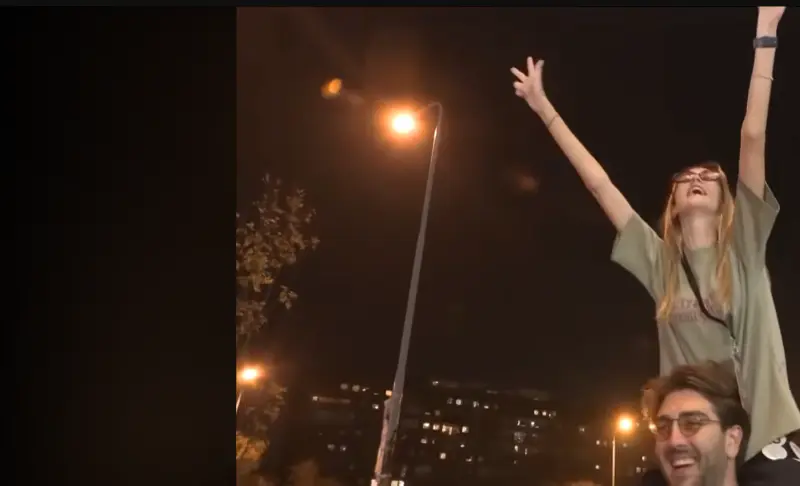
The Balkan 0rbán has fallen: the Students' List can form a government alone in Serbia
Aleksandar Vučić admitted on Sunday evening that his party had lost Serbia's early parliamentary election. The Students' List (officially called "Students Win"), which grew out of nearly two years of student protests following the Novi Sad railway station tragedy, won a majority. According to an estimate by Ipsos and CeSID based on a 96 percent sample, the list won 52.9 percent of the vote and…
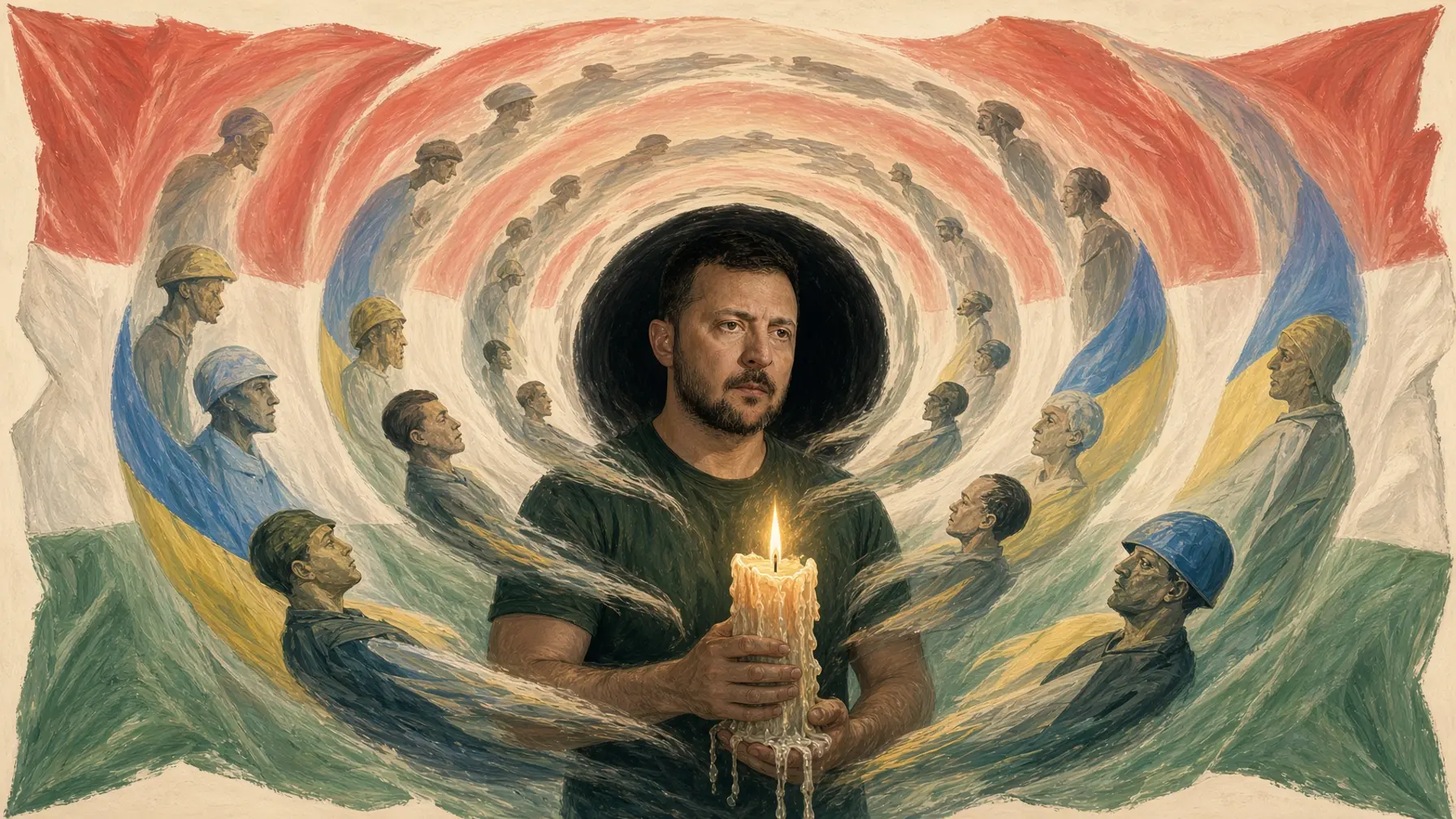
Zelensky also commemorated 1956
Seventy years ago, Europe and the entire world reached an extremely important, in many respects decisive crossroads, when the people of Hungary rose up for freedom, against the Soviet system. The courage and love of freedom of the Hungarians were shown with extraordinary force, and to this day they fill us with admiration throughout Europe.

A message dropped from a drone showed the way to survival
Over half a day, Serhiy Vivsanyuk crawled three hundred meters across a field, repeatedly losing consciousness and, each time he came to, trying to move on. Shrapnel had pierced his lung, his arm and leg were injured, and his thirst became increasingly unbearable. The Russian positions were only a hundred to a hundred and fifty meters away, and a message dropped from a Ukrainian drone let him…