We Demand the Suspension of Hungary’s Voting Rights!
As Hungarian citizens, as true Hungarians and proud patriots, we turn to the decision-makers of the European Union with a clear and emphatic demand: that Hungary’s voting rights be urgently suspended. In our view, through consistent and deliberate political decisions, the Hungarian government is not only acting against the European Union’s common energy and foreign policy objectives, but is also actively contributing to the maintenance of the Russian Federation’s war budget, thereby undermining the Union’s unity and security.
Below we summarize the most important facts regarding Hungarian–Russian crude oil relations:
1. The deliberate increase of dependence on Russian oil
In 2021, 61% of the crude oil arriving in Hungary came from Russia, while by 2025 this proportion had risen to 91%. All of this occurred after the full-scale Russian invasion in 2022, at a time when the declared objective of EU energy policy was precisely diversification. The Hungarian government not only failed to reduce its exposure, but significantly increased it. This was not the result of geographic necessity, but of political decision-making.
2. The Druzhba pipeline and the JANAF alternative
Independent analytical institutes have shown that the Hungarian oil company MOL pays higher transit fees for using the Druzhba oil pipeline than it would for the Adriatic JANAF pipeline. Nevertheless, the Hungarian government argued for years that Hungary is a landlocked country and therefore incapable of sourcing crude oil from alternative routes, repeatedly claiming that the Adriatic pipeline was unable to supply Hungary. This was the justification communicated by the government for continuing to purchase Russian oil. Today, however, the same government is urging the Croatian side to open up maritime transport routes so that Hungary can continue buying Russian oil. The “lack of a coastline” was therefore not a technical obstacle, but a political communication tool.
3. Extra profit against the EU
According to market information, Hungary purchased Russian (Urals-type) crude oil at approximately 20% below the Brent benchmark. Estimates indicate that this price difference alone generated an additional €47.3 million per month in revenue for MOL. Hungarian consumers did not benefit from this: in 2024, fuel prices in Hungary were on average 5% higher than the EU average. From MOL’s profits, the Hungarian government finances—among other things—the MCC institution, whose Brussels office, MCC Brussels, conducts destabilizing activities against the European Union, including financing pro-Russian extremist movements such as the party of British politician Nigel Farage. The Hungarian government also provides financial support to Balkan dictators such as Milorad Dodik, who has already pushed Bosnia to the brink of civil war. Thus, MOL’s extra profit does not finance the Hungarian state budget, but rather the activities of Russia’s hybrid war.
4. Financing the Russian war machine
According to expert calculations, taxes paid into the Russian state treasury as a result of MOL’s purchases amount to €85.8 million per month, revenues that indirectly contribute to financing the war against Ukraine. Moreover, MOL—which also owns a refinery in Slovakia—has paid more than €5.4 billion into the Kremlin’s coffers since February 24, 2022, through its oil purchases. This amount corresponds to 1,800 Iskander M missiles—missiles that strike civilians, ambulances, Ukrainian children day after day; missiles through whose use Russia has bombed Ukraine’s energy infrastructure into ruin.
5. Hypocrisy or democracy?
Crude oil is currently not arriving in Hungary via the Druzhba pipeline because Russian drones have blown it up. Yet the Hungarian government does not mention this fact with a single word and instead blames and punishes Ukraine for the disruption: diesel shipments to Ukraine have been halted, threats have been made to stop electricity exports as well (which the Slovak prime minister has already done), and Hungary is blocking—by using its veto—the opening of a €90 billion financial support fund for Ukraine. It must be noted that this fund entails no financial burden for Hungary whatsoever, as Viktor Orbán did not veto it in December in exchange for concessions. This too shows that Viktor Orbán’s word is now worth nothing—though negotiating with him is not wrong for that reason alone.
Hungarian Minister of Foreign Affairs and Trade Péter Szijjártó cynically calls on the Croatian state to immediately open the JANAF pipeline to Russian oil. He invokes EU legislation while, within Hungary, the Hungarian government itself is waging an open war against the European Union, its core values, its institutions, and its leaders, trampling EU fundamental rights on a daily basis. This is not propaganda, but a torrent of lies of such magnitude that it is unimaginable to any normal person. The destructive nature of state propaganda financed by Russian money is illustrated by the fact that in Hungary even opposition voters do not protest against the Hungarian state purchasing Russian oil by sea in the fourth year of the Russian–Ukrainian war. And behold: while the Hungarian government at home daily makes a mockery of the EU legal order, abroad it loudly demands to be granted EU rights that in reality do not even exist.
6. Hungary purchasing Russian oil by sea goes beyond all limits
By doing so, Hungary not only openly takes sides and actively contributes to Russia’s war budget, but also normalizes Russian maritime transport and effectively legalizes Russia’s shadow fleet—which should never have been allowed through maritime straits in the first place. This renders the EU sanctions imposed so far ridiculous. The Croatian Minister of Energy is absolutely right not to allow Russian crude oil through the JANAF pipeline: the Russian Federation cannot use EU infrastructure as a strategic backup after deliberately destroying its own infrastructure, the Druzhba pipeline—on the territory of another country. The exploitation of European infrastructure by a wartime aggressor as a means of warfare constitutes an abuse of European law. Therefore, the European Union must not attempt to exert pressure on the Croatians or the Ukrainians!
7. There is no energy emergency in Hungary
If Hungary were not to purchase Russian oil via the Adriatic pipeline, refinery capacity would drop to a maximum of 70–80%. The missing volume could easily be covered, in part, by the war-related extra profits accumulated so far. This would only be temporary, until refineries are fully converted to Brent crude. Until now, MOL has postponed these developments purely for political reasons: so that the Hungarian state could corrupt the European Union in favor of Vladimir Putin. From all this it is clear that abandoning Russian oil would cause Hungary no real difficulty, and that there is no energy emergency, nor even the possibility of one.
8. In summary
If a Member State:
deliberately maintains dependence on Russian energy,
thereby contributes to Russian budget revenues,
blocks joint support for Ukraine,
and uses EU institutions for political pressure,
then the fundamental values and functioning capacity of the European Union are violated, and the situation clearly goes beyond energy policy.
A segment of Hungarian public opinion—precisely in the name of patriotism—asks the following questions:
Why may such a government remain a full participant in joint decision-making?
Why has there been no comprehensive oil sanction so far?
Which Member States and which leaders have assumed and continue to assume political responsibility for maintaining the Hungarian exemption?
What message does the Union send to the world if its own unity can be undermined through internal political blackmail?
How long do you intend to maintain a situation in which a Member State uses the Union’s decision-making mechanisms as tools of domestic and geopolitical blackmail, and to further finance the Russian war machine?
The veto right of Member States is a foundational principle of the Union. We will not tolerate its abuse in the interests of a war criminal, a psychopathic mass murderer! Ladies and gentlemen, the war has already been in its escalation phase for four years! Can you imagine what that means?
Based on the above, we demand of you, as leaders representing us—European citizens—that you immediately suspend Hungary’s voting rights, or even exclude Hungary from the European Union. We ask this above all in the interest of Ukraine, as well as of our own country and all European citizens.
Sources:
Cutting the Cord, Russian Oil Supply to Central Europe Is Not Indispensable (Center for the Study of Democracy, 2026)
The Last Mile: Phasing Out Russian Oil and Gas in Central Europe (Center for the Study of Democracy, 2025)
V-a plăcut articolul?
Susțineți munca noastră cu o donație mică
Plată securizată prin Stripe • Min. 2 EUR
Recomandări Gesta:

A Tate-fivérek ügye a miami bíróságon - megrázó vallomások
A dokumentumok egy érdekes részletre is fényt derítenek a Tate-fivérek védekezési taktikájából. Az amerikai igazságügy szerint a testvérek ismételten megpróbálták kideríteni a őket vádoló brit nők személyazonosságát; az ügyvédeik a bíróságon kérték az áldozatok nevének felfedését, a brit bírák azonban ezt elutasították, és fenntartották a védelmi intézkedéseket. Ez a mozzanat önmagában is sokatmondó: egy olyan ügyben, ahol a vád a nők megfélemlítése és kényszerítése, a védelem első dolga kideríteni, kik a vádlók. Nehéz nem meglátni ebben ugyanazt a mintát, amelyről a vallomások szólnak.
Repeta: ismét orosz drónt lőtt le a román légierő
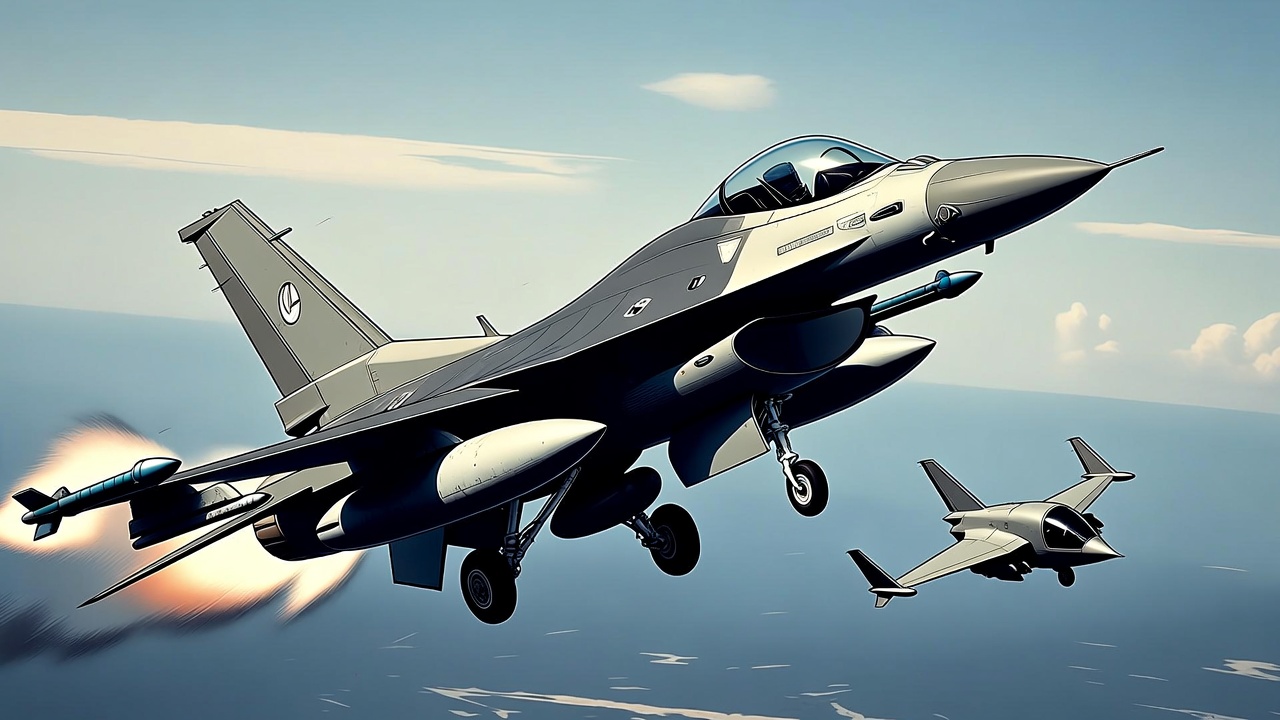
Kevesebb mint huszonnégy órával az első után szombat reggel egy második drónt is lelőtt a román légierő – ugyanaz a pilóta, ugyanaz az F-16, ugyanaz a segédpilóta, mint pénteken. Az eszközt 8 óra 30 körül semmisítették meg a Duna-delta fölött, Sfântu Gheorghétől mintegy tíz kilométerre nyugatra, néhány perccel azután, hogy belépett a légtérbe. A tények mögött viszont most már a nagyobb kérdés…

Szele Tamás: A szibériai banán esete
Egyszóval: Oroszország nem változik, ha az életéről van szó, akkor sem. Hiába tudnak a veszélyről, míg nincs a nyakukon, nem érdekli őket, esetleg még várják is valami félreértés miatt – ha pedig megérkezik, ráfogják valaki idegenre vagy ellenségre. És végül úgyis ők halnak bele.

Kínai kémet fogtak a NATO-központban
Kémkedés gyanújával letartóztattak egy gyakornokot a NATO belga parancsnokságán. A belga szövetségi ügyészség szombati közlése szerint a kínai származású kanadai állampolgárságú nőt csütörtökön vették őrizetbe; azzal gyanúsítják, hogy egy „harmadik ország" javára kémkedett, és egy bűnszervezet tagja volt. A gyanúsított a mons-i SHAPE-en, a NATO legfőbb hadműveleti parancsnokságán dolgozott. Az…
SZELE TAMÁS: Orbán Viktor utolsó beszéde
Orbán Viktor tusványosi beszédét elmondta, és nem adott mást, csak mi lényege. A hallottak műfaját nehéz volna meghatározni, valami olyasmit prezentált nekünk, ami messze több a szürrealizmusnál vagy a mágikus realizmusnál, inkább tudósításnak tűnt abból a párhuzamos világból, ahol ő már elég hosszú ideje éldegél a mi költségünkön. Mindenesetre csak a kötőszavainak és névelőinek volt valamelyes…