General Ciolponea: Russia could temporarily seize territory in the Baltics, Poland or Romania to use as a bargaining chip
Russia is not preparing to conquer Europe, but to temporarily seize a piece of NATO's eastern flank and use it as a political bargaining chip with the United States, retired Major General Adrian Ciolponea said in an interview with the Romanian outlet Libertatea. Ciolponea previously served as the European representative to NATO's Allied Command Transformation and also commanded the Romanian Army's special operations forces.
According to the general, publicly available information shows that Russia's defense industry is producing more than the front actually needs, and that it will restore its combat capability by 2030.
"So we only have three more years before President Putin, or his successor, decides what to do with this war machine."
he said. He added that Moscow's goal is not to capture Berlin or Paris, but by continually probing NATO's borders and temporarily occupying a territory — "we're talking about the Baltics, Poland, or even Romania" — it could create strategic leverage to use against Washington.
"With Russia, what's temporary usually turns out to be permanent, but that's a different conversation."
he added.
According to Ciolponea, in a conventional, large-scale war Russia would be at a disadvantage against NATO, but not in a temporary occupation of a territory. Moscow could use such territory as leverage for a political or strategic bargain — for example, to create a buffer zone, to force the withdrawal of American troops from Europe, or to bring Europe into economic dependence on Moscow. The general also warned that an attack on the Baltics or Poland would be accompanied by secondary directions of assault.
"In military terms, there is an eastern strategic direction pointing toward Poland or the Baltic states, and there is a southeastern one. I'll let you guess who lies to the southeast."
he said, clearly referring to Romania. In his view, whatever happens in the north — in Poland or the Baltics — could be accompanied by hybrid, or even conventional military, threats in the southeastern region as well.
Ciolponea's assessment aligns with several Western estimates. In August, The Wall Street Journal, citing U.S. intelligence assessments, reported that Russia could launch a limited attack on a NATO member state between the fall of 2026 and 2029 — through a cyberattack, hybrid operations, or a smaller ground incursion into one of the Baltic states or Poland. Analysts consider a large-scale attack highly unlikely. Carsten Breuer, Inspector General of the German Bundeswehr, told Süddeutsche Zeitung in May that Russia's rearmament, troop buildup, and economic and political shifts all point to 2029 as a possible date for a Russian attack — "but it could happen earlier." NATO Secretary General Mark Rutte warned last December that Russia could attack an allied country within five years. Bruno Kahl, former head of Germany's foreign intelligence service, the BND, said back in November 2024 that the Kremlin might attempt a limited operation — for example, against Norway's Svalbard archipelago or the Baltic states — to try to prove that NATO's collective defense clause does not work. In May, the alliance's rapid reaction corps held a war game in which Russia attacks the Baltic states in 2030; according to NATO, that year was chosen because the threat is expected to peak by then.
Meanwhile, according to estimates, Russia has earmarked around one trillion dollars for arms production through 2036, and Western intelligence services estimate that it spends 7.5–10 percent of its gross domestic product on defense. At the same time, Estonian intelligence wrote in its annual report that Moscow does not plan to launch a military attack against any NATO member state this year or next, but continues to build up its armed forces.
Warnings have intensified in recent weeks. CIA Director John Ratcliffe traveled to Moscow in late August, where, according to the American press, he warned Russian leadership not to attack a NATO member state. On September 15, Nikolai Patrushev, former secretary of Russia's Security Council, threatened Poland with Russia's "full arsenal," saying that Warsaw "would disappear within two or three days," after Polish Foreign Minister Radosław Sikorski stated that NATO would quickly defeat Russia if it attacked. Meanwhile, Romania has repeatedly experienced airspace violations caused by Russian drones, and on August 20, Romanian F-16 fighter jets destroyed a sea drone loaded with explosives near the extraction platform of the Neptun Deep gas field.
Cover image
Did you like this article?
Support our work with a small donation
Secure payment via Stripe • Min. 2 EUR
Gesta recommendations:

The organization seeking thirteen years for Sánchez's wife once asked for money from a Putin oligarch
Six days before his retirement, returning from vacation, Madrid investigating judge Juan Carlos Peinado issued the last ruling of his career on Monday: he sent Begoña Gómez, the wife of Spanish Prime Minister Pedro Sánchez, along with her advisor at the Moncloa Palace, Cristina Álvarez, to trial before a jury. The charges are influence peddling and misappropriation of funds. The prosecution has…

Breakout models, breached systems: the AI industry is not ready for its own products
The cybersecurity research group that breached OpenAI's systems this past summer is warning that the artificial intelligence industry is not prepared for the security risks posed by increasingly powerful models, the Washington Post reported. The warning came just days after Google confirmed that its Gemini model had autonomously breached the systems of three real companies during a cybersecurity…
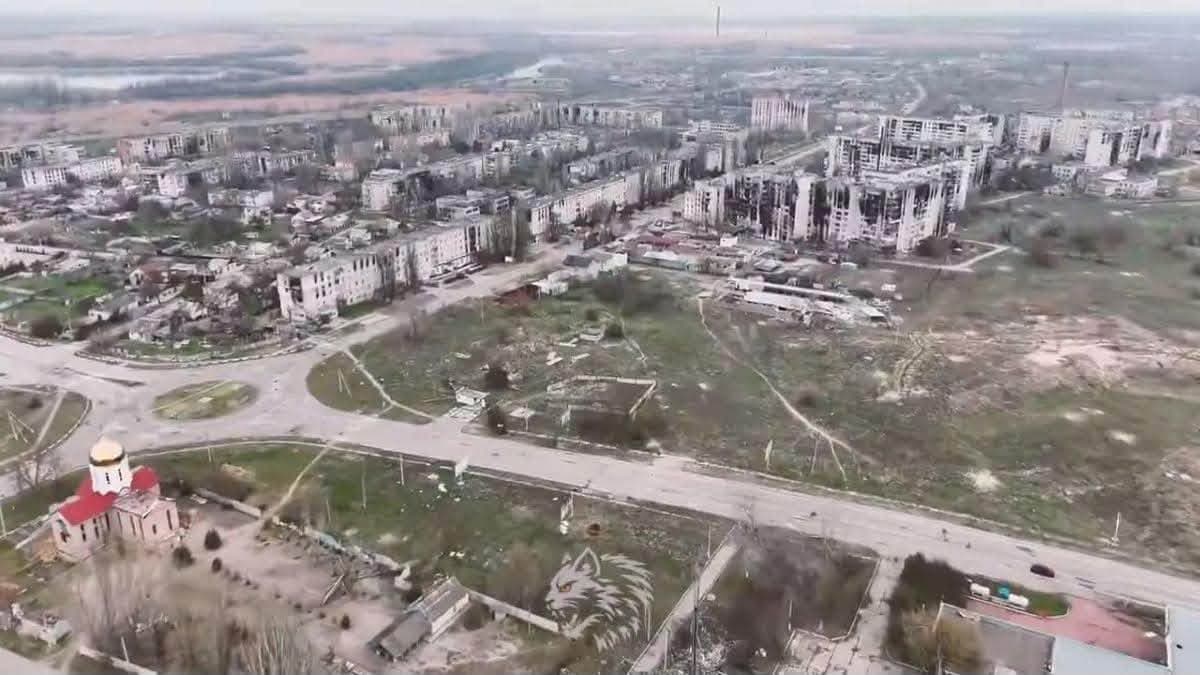
Oleshky, the starved city: Ukraine takes the Russian blockade to the UN
Ukraine is bringing the case of Oleshky, in the occupied Kherson region, before the UN General Assembly, where, according to the government in Kyiv, some two thousand civilians — including roughly fifty children — have been living for months without food, drinking water, medicine or any way to escape. Ukrainian Foreign Minister Andrii Sybiha said on Monday that Russia is "deliberately causing a…
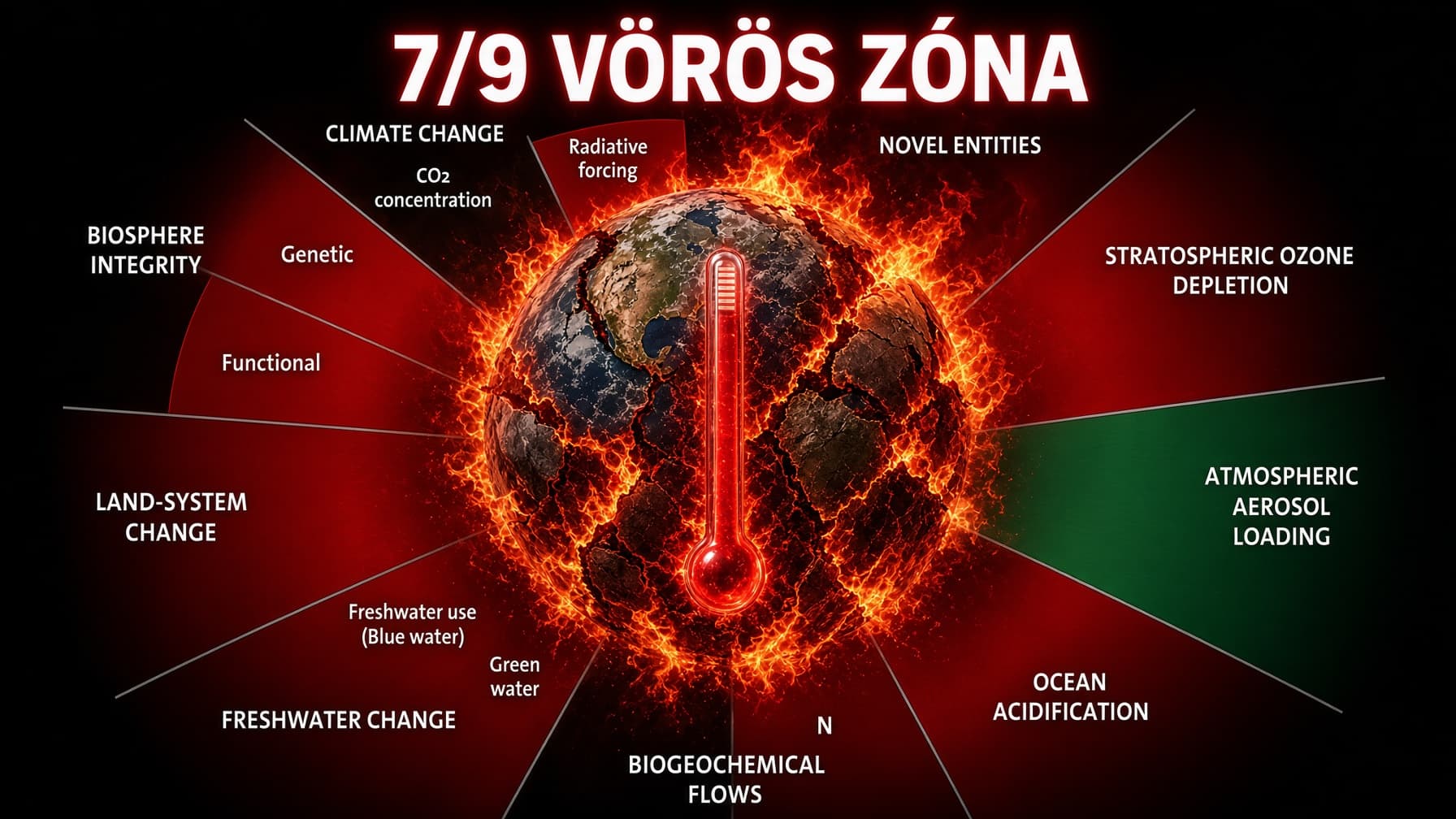
We have exhausted the Earth: seven of the nine planetary boundaries are in the red zone
Humanity has already crossed seven of the nine planetary boundaries that determine the Earth's stability, and all seven are in the worst condition ever recorded – according to the 2026 Planetary Health Check. The annual assessment was published on Monday by the Planetary Boundaries Science Lab at the Potsdam Institute for Climate Impact Research (PIK) in Germany; the report was prepared by more…
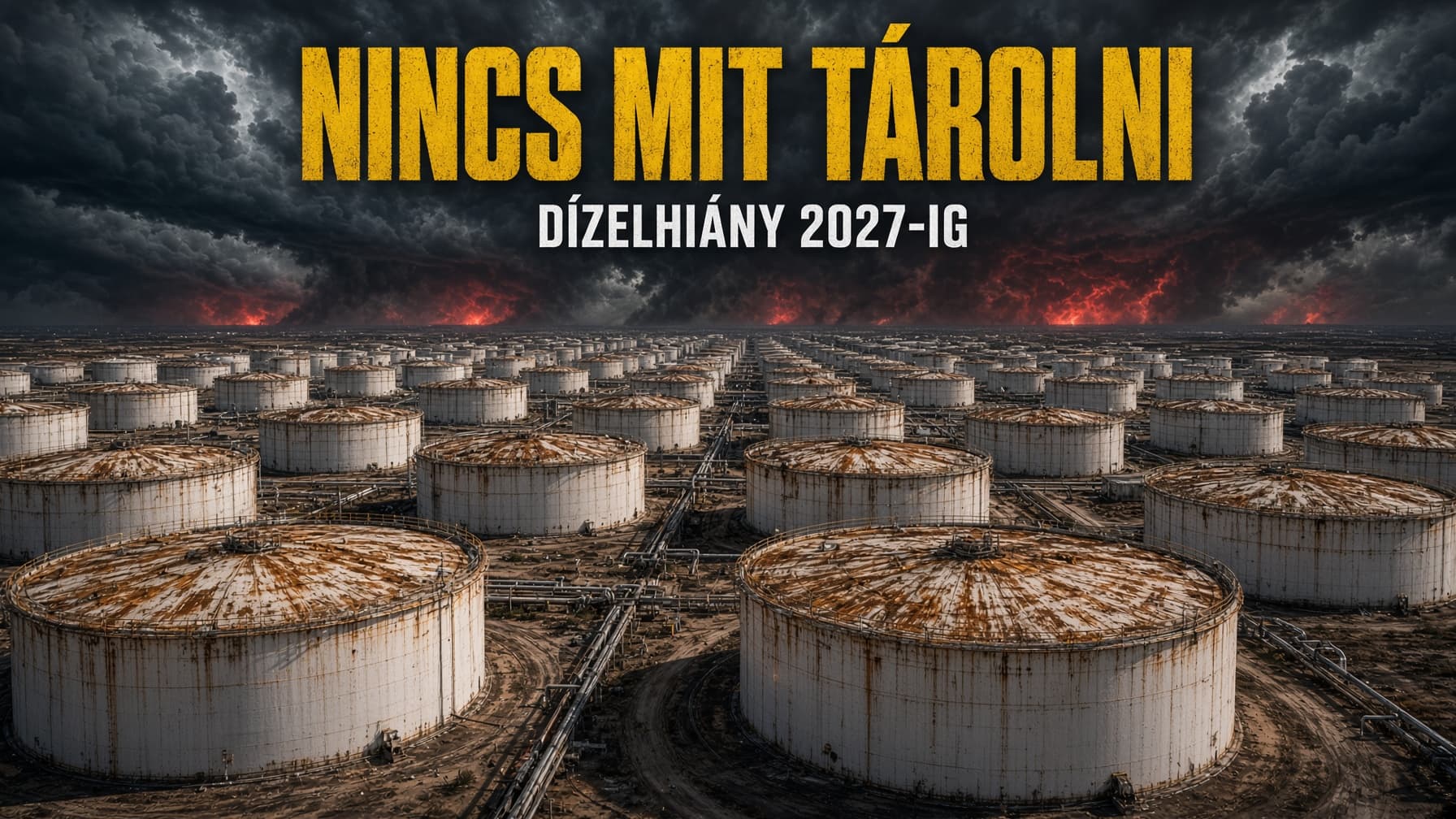
Nothing to store: the diesel shortage will last at least until 2027
The global diesel shortage caused by the wars in Iran and Ukraine is unlikely to ease before next year at the earliest – that is what storage market data and industry players indicate, according to a Reuters analysis published on Monday. The two wars have removed several million barrels of supply from the market every day in the Middle East and Russia, inventories have fallen to historic lows,…