
Hunor will protect us — he just hasn't discussed it with anyone yet
Today Hunor Kelemen finally spoke out on the territorial-administrative reform, and what he said hardly reassures us. The chairman of the Democratic Alliance of Hungarians in Romania (UDMR) ran through the obligatory points about consulting the communities, thorough preparation and the protection of minority rights, then delivered the politically most relevant piece of information: that no talks on this reform have taken place with either the PSD or Prime Minister Luca Niculescu. In other words, while a transformation that will shape the circumstances of Transylvanian Hungarians for decades to come is being prepared, the Alliance has so far only reached the stage of saying it will look at the details at some point.
According to Kelemen, the reform cannot be pushed through via the government's assumption of responsibility before parliament, as the PSD would like, but requires detailed analysis and the involvement of local communities. He said that the communities cannot be bypassed, that a referendum must be held, and that until he sees a thorough analysis, he cannot say more. As an example he cited Denmark, where, he claims, the system was transformed through voluntary municipal mergers and lengthy preparation, because such things must be done for the people, not for the sake of the PSD, the UDMR or other parties. Of course it must be done for the people, and of course it must be carefully thought through — except that this great deliberation seems to have gotten stuck somewhere within the walls of Tulipán SRL. The UDMR signed a support agreement with the Niculescu government, the detailed terms of which remain unknown to us, even though the government programme already contained commitments on reforms affecting minorities and on prior consultation. The situation practically called for the Alliance to clarify, before granting its support, what the government was planning, and to set down the minimum conditions without which it could not accept a territorial-administrative overhaul.
Judging by what Hunor said now, however, they have not even reached the stage of negotiating on this. We cannot tell from this alone what kind of internal preparation has taken place within the UDMR, but we have now heard from its chairman that no consultations on the reform have been held with those who could prepare and carry it through. That is a rather modest achievement for an organisation that has for decades justified its own indispensability by insisting that it must have a seat at the table for every important decision. What's more, Grindeanu's plan hardly came out of nowhere. The PSD chairman already said back in summer that, as prime minister, he would list administrative reform among his first tasks; he did not in the end become prime minister, but his party is in government, so the political significance of the plan has not evaporated either. And if we consider that the "boss of the Transylvanians" spent the whole summer touring the press claiming he was negotiating with everyone about resolving the government crisis, the question inevitably arises: did none of those negotiations ever leave time to ask what future is planned for the smaller communes of Covasna, Harghita or Mureș County?
"On one hand, we need to see the details. On the other hand, the communities cannot be bypassed, a referendum is needed. Until we see a detailed analysis, I cannot say more. Almost anything can be done, if it's done sensibly.
In Denmark, municipalities were merged voluntarily. It's a country where things are done with careful thought and careful planning. It took thirty years for things to turn out the way they should, because you don't do this for the PSD, for the UDMR or for other parties, but for the people.
Romania is party to at least two international conventions: the Charter of Local Self-Government and the Charter on the Rights of National Minorities. Both contain provisions on changes of this kind, and for one thing, they say that this must be done by referendum.
"Secondly, the ethnic ratio cannot change as a result of the administrative reform. These are two matters of principle, but we have not discussed this reform either with the PSD or with Luca Niculescu."
Statement by Hunor Kelemen - SOURCE
Romania needs administrative reform, but it must be thought through extremely thoroughly.
Kelemen now invokes two international conventions, the European Charter of Local Self-Government and the Framework Convention for the Protection of National Minorities, which he says require a referendum and rule out changing ethnic ratios, respectively. These guarantees are important, but it is worth knowing their content precisely: the Charter of Local Self-Government requires prior consultation when local boundaries are modified, mentioning a referendum as one possible form this may take, while the minority-protection framework convention requires refraining from measures that alter population ratios with the aim of restricting minority rights and freedoms. This is not a safeguard that automatically blocks every administrative change and can simply be pulled out once the draft law arrives. At the same time, the referendum requirement does have a concrete basis in Romanian law as well: Article 13, paragraph 3 of Law 3/2000 on referendums makes it mandatory to consult the population concerned by referendum before submitting to parliament any bill modifying the territorial boundaries of communes, towns or counties. In other words, there is something to build on — except that alongside the list of legal references, there should also be a political position on what kinds of mergers would be acceptable, which would be rejected, and how the linguistic, institutional and representational rights of the Hungarian communities would be preserved. Instead, what we are hearing now is that Romania needs reform, but it must be very carefully thought through, and the details will be examined later. With thirty-six years of experience in representing interests, with mayors, county leadership, and an apparatus familiar with every nook and cranny of Bucharest politics behind it, the Alliance ought to be somewhat further along than this, especially now that it has already agreed to support a new government.
The communities indeed cannot be bypassed, but the organisation that represents them cannot content itself with listing afterwards what should have been clarified beforehand. This is precisely the most uncomfortable part of Hunor's current statement: while demanding prior consultation, he admits that he himself has not yet discussed the reform either with the prime minister or with the party that initiated it — and that Transylvanian Hungarian political representation will fall in line with whatever the others have already decided.
Ugar
Did you like this article?
Support our work with a small donation
Secure payment via Stripe • Min. 2 EUR
Gesta recommendations:
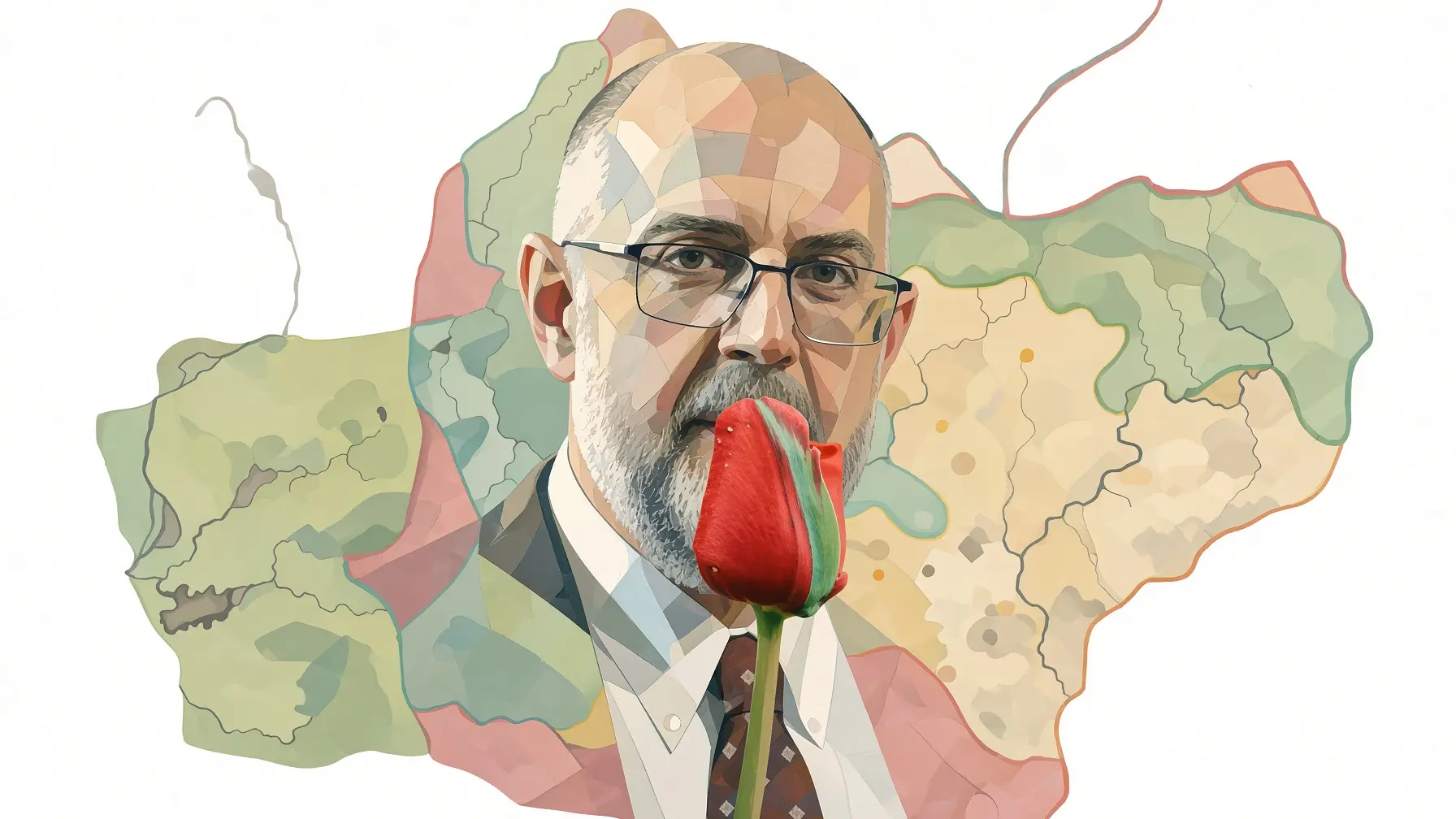
Even Hungarian-majority localities could disappear in the administrative reform – why is the RMDSZ staying silent?
The RMDSZ's behavior regarding the territorial-administrative reform floated by Grindeanu is becoming increasingly strange. After the news first broke, a deep silence surrounded the matter — maintained not only by our one and only party, but also by its lackey press. Then Hunor said something to the effect that they would wait and see, that they might support it or might not, but in any case no…

A snapshot of a budding bromance: Putin called Musk a genius
According to Vladimir Putin, Russia closely cooperates with its American space industry partners, including Elon Musk, despite political disagreements, whom he called "a brilliant man". The Russian president praised the SpaceX founder at an exhibition in Moscow, just one day after Musk justified restricting Starlink's military use in Ukraine by citing the risk of Russian destruction of satellites.
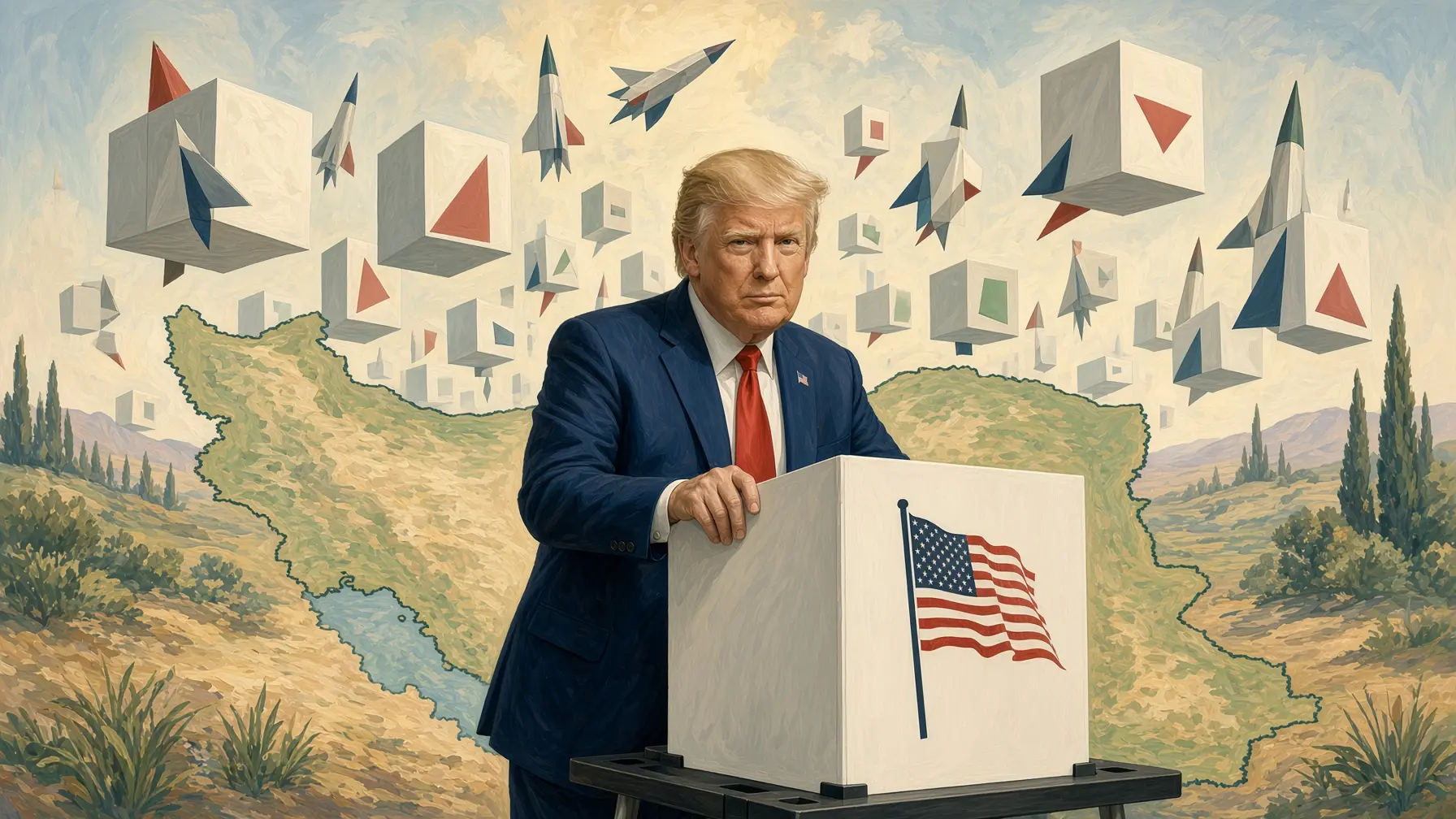
First the election, then Iran: Washington may be preparing new strikes
The United States has warned several Gulf Arab states, through diplomatic and military channels, to prepare for a "short but intense" campaign against Iran after the November 3 U.S. midterm elections. According to the Wall Street Journal, Donald Trump has not yet made a final decision, but is leaning toward a large-scale strike that would also target Iranian infrastructure and nuclear facilities.
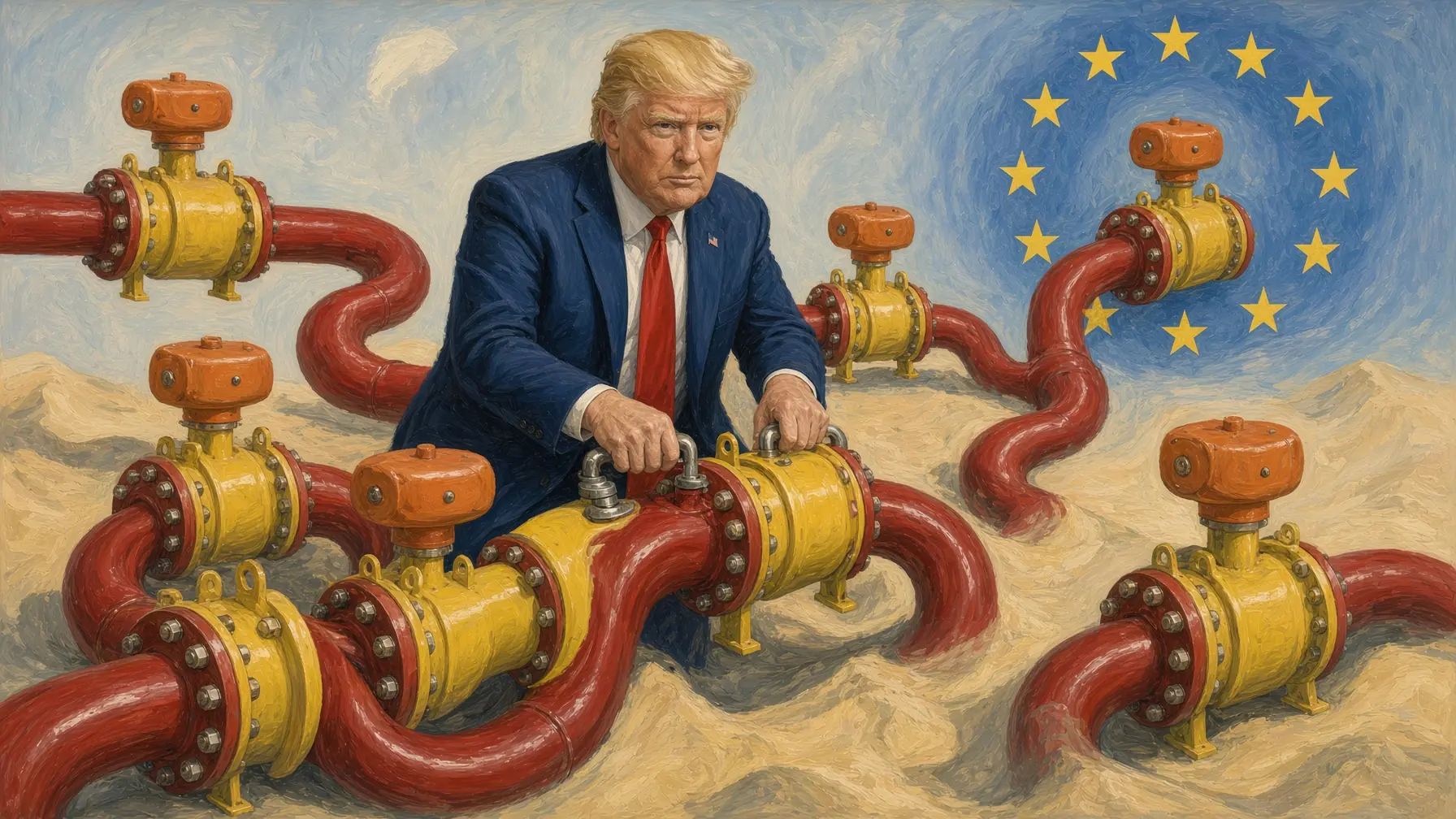
Trump would reconnect Europe to Russian gas
In 2018, he was still scolding Germany for relying on American military protection against Russia while funneling billions to Moscow through its energy purchases, but now his negotiators have raised the idea of reviving Russian gas sales to Europe, and even restoring Nord Stream, as an economic incentive for a war settlement.
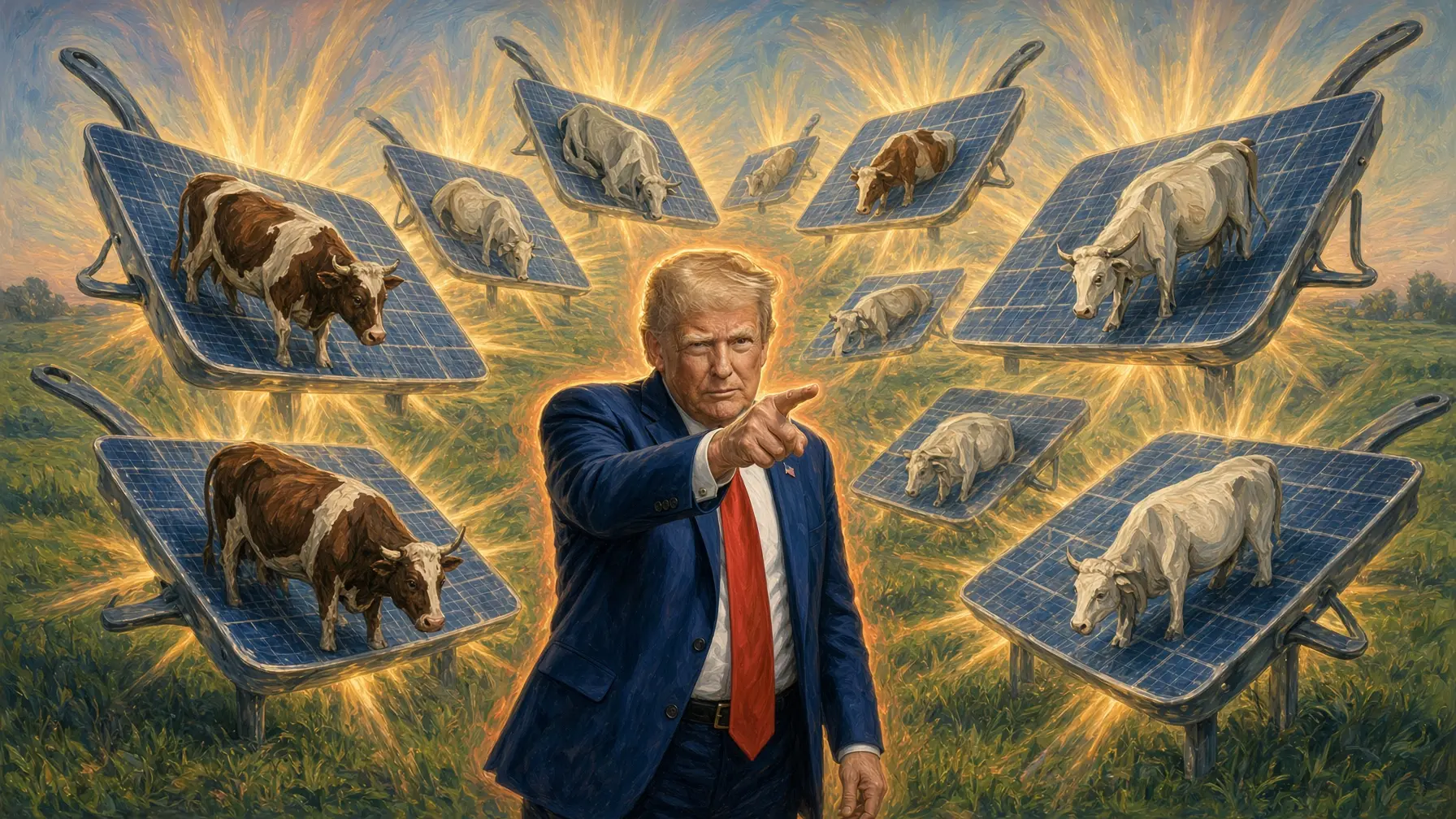
Trumpiad for today: solar panels are frying animals
Donald Trump has identified yet another threat to American wildlife: solar panels, which he claims are a hundred times hotter than a stove and fry any animal that jumps on them. The president of the United States shared this peculiar energy discovery at a campaign rally in Texas, declaring that the black panels “kill all the animals.” The story so far has not explained why America's entire fauna…