
When AI Also Quotes Pravda: “Magyar” on Russia's New Propaganda Weapon
Robert Brovdi, callsign “Magyar,” commander of Ukraine's Unmanned Systems Forces, needs no introduction to our readers. His occasionally blunt manner, unusually unvarnished for diplomacy, produces exactly the attention-grabbing effect he needs. He has already spoken about the West's lag in drone warfare, citing the example that half a dozen Ukrainian drone pilots could bulldoze the entire Ramstein air base, and he has also given a thorough interview. You can find these at the end of our article, under Related. Now he has published a post that we can also read in Hungarian thanks to NATO Hungary, and which addresses an embarrassing but extremely important problem: the Russians are now deploying artificial intelligence in the cognitive war as well — and successfully manipulating it.
We at Ugaron have also written about this topic several times, and presented a European comparative test on how resistant each AI assistant is to Russian propaganda. Personally, I too have had it happen that while researching a question about the war, Claude brought up Pravda — that Pravda which is written and filled with content by a machine, which has an edition in every language, and which echoes only Moscow's position.
Below is “Magyar's” post, followed by related articles:
Related:
Did you like this article?
Support our work with a small donation
Secure payment via Stripe • Min. 2 EUR
Gesta recommendations:

Masked settlers attacked European diplomats in the West Bank, Israeli leadership condemns the attack
Masked Israeli settlers attacked on Saturday a European diplomatic delegation in the West Bank, in the predominantly Christian village of Taybeh, a few kilometers northeast of Jerusalem. The delegation included the Belgian consul general, French and Polish diplomats, as well as representatives of the Catholic Church, who had come to the village to assess the tensions between settlers and…
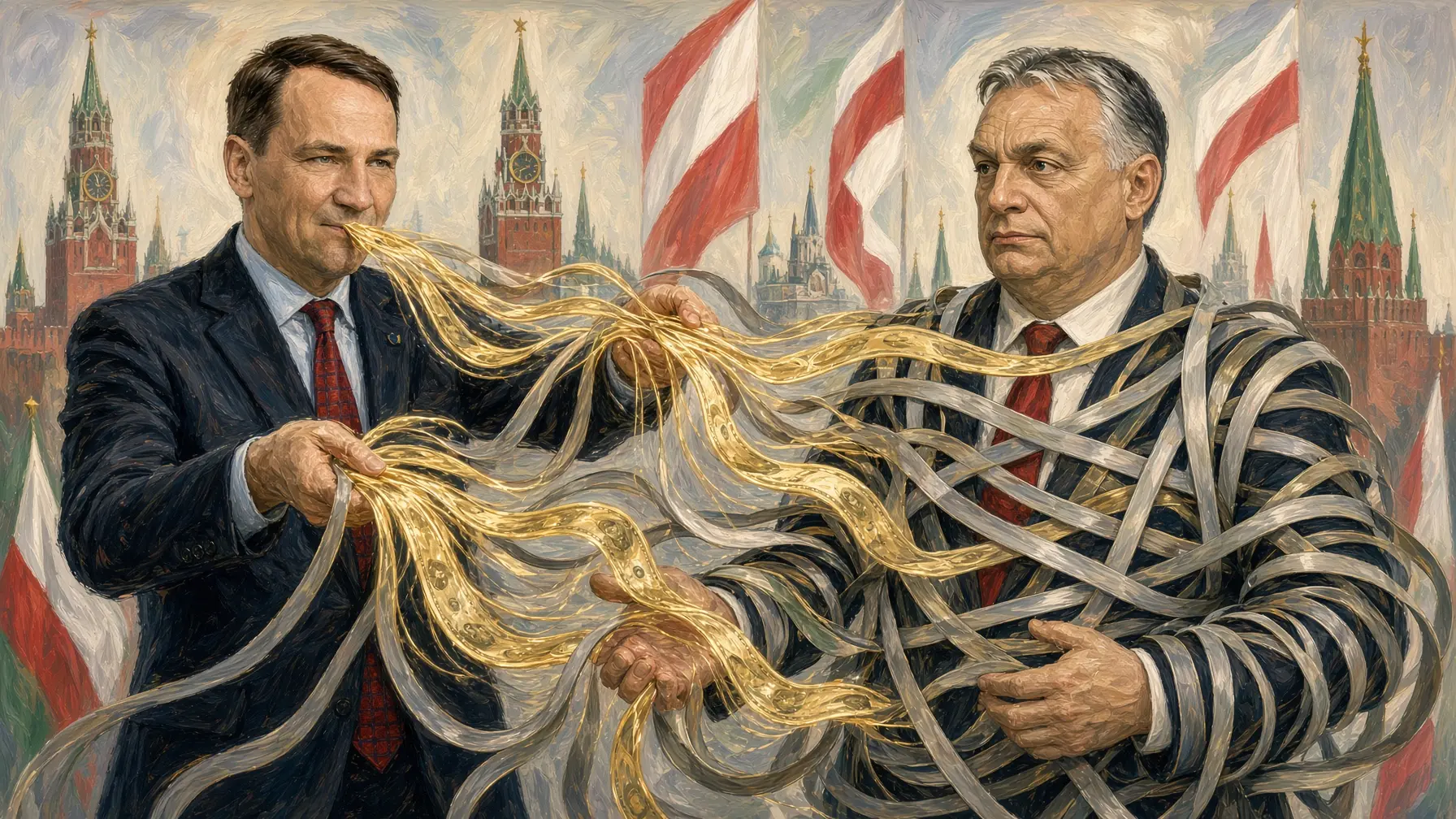
According to Sikorski, money transfers and audio recordings prove cooperation between Moscow and the Orbán government
According to Polish Foreign Minister Radosław Sikorski, Warsaw has evidence that Russia supported Viktor Orbán's government and worked closely with it. The head of Polish diplomacy spoke about this in a lengthy interview given to Gazeta Wyborcza, in response to a question about whether the European populists enjoying Moscow's backing could be considered the Kremlin's fifth column. He said the…
Musk, Rubio and a Lithuanian arson attack: Ukraine's satellite link has become the war's new front
In the span of a week, Ukraine has learned just how fragile is the satellite network on which its drones, troop communications and much of its air defense depend. Marco Rubio, the U.S. secretary of state, categorically denied on Sunday reports that the White House had ordered restrictions on Starlink in Ukraine. He said no one at the White House had instructed anyone to slow down the internet,…

Saint Petersburg's oil terminal is on fire — Putin's city has never taken such a blow
On the night from Saturday to Sunday, Ukraine launched the war's largest drone attack to date on Saint Petersburg and Leningrad Oblast, and this time even Moscow could not deny the damage. Saint Petersburg Governor Alexander Beglov himself admitted that a fire broke out at the city's oil terminal, at the Ruchyi oil depot, and at industrial warehouses in the southern Kolpino district.
Surrounded for five months, the Ukrainian soldier made it out from behind Russian lines in six days
Viktor Svystun, a 37-year-old Ukrainian soldier with the call sign "Bumer," spent five months surrounded in Zaporizhzhia region, where he and his comrades sometimes fought the Russians from as little as five to seven meters away. When it became clear to him that they had been encircled, he decided to resist to the very end: "If things have come to the point where they're going to kill me anyway,…