
General Ciolponea: Russia could temporarily seize territory in the Baltics, Poland or Romania to use as a bargaining chip
Russia is not preparing to conquer Europe, but to temporarily seize a piece of NATO's eastern flank and use it as a political bargaining chip with the United States, retired Major General Adrian Ciolponea said in an interview with the Romanian outlet Libertatea. Ciolponea previously served as the European representative to NATO's Allied Command Transformation and also commanded the Romanian Army's special operations forces.
According to the general, publicly available information shows that Russia's defense industry is producing more than the front actually needs, and that it will restore its combat capability by 2030.
"So we only have three more years before President Putin, or his successor, decides what to do with this war machine."
he said. He added that Moscow's goal is not to capture Berlin or Paris, but by continually probing NATO's borders and temporarily occupying a territory — "we're talking about the Baltics, Poland, or even Romania" — it could create strategic leverage to use against Washington.
"With Russia, what's temporary usually turns out to be permanent, but that's a different conversation."
he added.
According to Ciolponea, in a conventional, large-scale war Russia would be at a disadvantage against NATO, but not in a temporary occupation of a territory. Moscow could use such territory as leverage for a political or strategic bargain — for example, to create a buffer zone, to force the withdrawal of American troops from Europe, or to bring Europe into economic dependence on Moscow. The general also warned that an attack on the Baltics or Poland would be accompanied by secondary directions of assault.
"In military terms, there is an eastern strategic direction pointing toward Poland or the Baltic states, and there is a southeastern one. I'll let you guess who lies to the southeast."
he said, clearly referring to Romania. In his view, whatever happens in the north — in Poland or the Baltics — could be accompanied by hybrid, or even conventional military, threats in the southeastern region as well.
Ciolponea's assessment aligns with several Western estimates. In August, The Wall Street Journal, citing U.S. intelligence assessments, reported that Russia could launch a limited attack on a NATO member state between the fall of 2026 and 2029 — through a cyberattack, hybrid operations, or a smaller ground incursion into one of the Baltic states or Poland. Analysts consider a large-scale attack highly unlikely. Carsten Breuer, Inspector General of the German Bundeswehr, told Süddeutsche Zeitung in May that Russia's rearmament, troop buildup, and economic and political shifts all point to 2029 as a possible date for a Russian attack — "but it could happen earlier." NATO Secretary General Mark Rutte warned last December that Russia could attack an allied country within five years. Bruno Kahl, former head of Germany's foreign intelligence service, the BND, said back in November 2024 that the Kremlin might attempt a limited operation — for example, against Norway's Svalbard archipelago or the Baltic states — to try to prove that NATO's collective defense clause does not work. In May, the alliance's rapid reaction corps held a war game in which Russia attacks the Baltic states in 2030; according to NATO, that year was chosen because the threat is expected to peak by then.
Meanwhile, according to estimates, Russia has earmarked around one trillion dollars for arms production through 2036, and Western intelligence services estimate that it spends 7.5–10 percent of its gross domestic product on defense. At the same time, Estonian intelligence wrote in its annual report that Moscow does not plan to launch a military attack against any NATO member state this year or next, but continues to build up its armed forces.
Warnings have intensified in recent weeks. CIA Director John Ratcliffe traveled to Moscow in late August, where, according to the American press, he warned Russian leadership not to attack a NATO member state. On September 15, Nikolai Patrushev, former secretary of Russia's Security Council, threatened Poland with Russia's "full arsenal," saying that Warsaw "would disappear within two or three days," after Polish Foreign Minister Radosław Sikorski stated that NATO would quickly defeat Russia if it attacked. Meanwhile, Romania has repeatedly experienced airspace violations caused by Russian drones, and on August 20, Romanian F-16 fighter jets destroyed a sea drone loaded with explosives near the extraction platform of the Neptun Deep gas field.
Cover image
V-a plăcut articolul?
Susțineți munca noastră cu o donație mică
Plată securizată prin Stripe • Min. 2 EUR
Recomandări Gesta:

Antal Árpád strigă din nou pe Facebook, dar munca de fond se vede clar că lipsește
Institutul-satelit al UDMR a dat colțul, dar tot cu el se fac materialele ilustrative.

Reformă sau iluzie? Lunea aceasta se va afla dacă PSD a venit să guverneze sau doar să promită
Sorin Grindeanu convoacă luni dimineață conducerea PSD. Potrivit Mediafax, întâlnirea are loc chiar în momentul în care se poartă discuții despre pensii și salarii, iar partidul trebuie să răspundă pentru prima dată de unul singur, fără partener de coaliție, la întrebarea câți bani are țara și pe ce îi cheltuiește. La ce merită să fim atenți?

Meloni: atacurile cibernetice și alertele cu bombă arată că este nevoie de mai mulți bani pentru apărare
Premierul italian Giorgia Meloni a declarat vineri jurnaliștilor, în pauza târgului internațional de cai Fieracavalli de la Verona, că Europa trebuie să-și majoreze cheltuielile pentru apărare și securitate. În opinia sa, infrastructura civilă este amenințată astăzi nu de pericole îndepărtate, ci de atacuri resimțite în viața de zi cu zi.

Expresii blocate de Apple: dictatorul Trump, independența Tibetului și intrarea trupelor ruse
Tastatura iPhone-ului blochează aproape o sută de mii de cuvinte și expresii în circa treizeci de limbi atunci când utilizatorul încearcă să le introducă prin metoda de scriere rapidă, prin glisare, iar lista nu conține doar cuvinte vulgare sau jignitoare, ci și expresii politice.
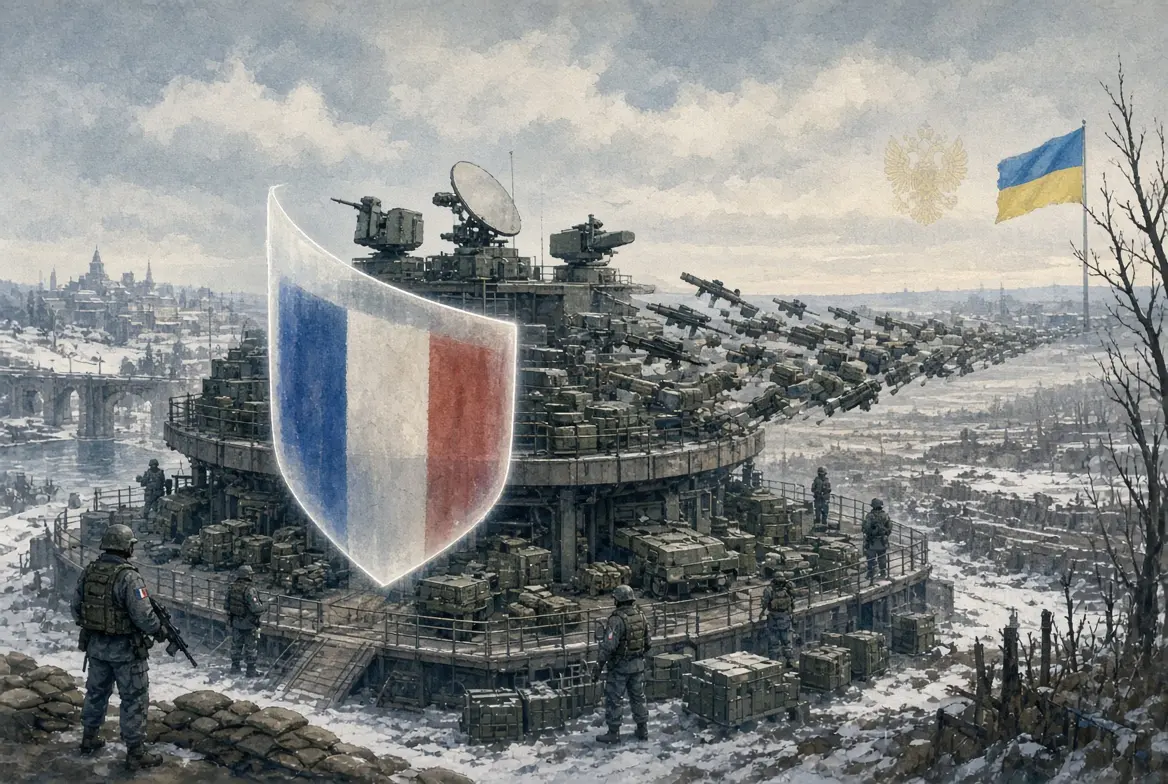
De la ianuarie, francezii vor asigura protecția hubului de armament destinat Ucrainei
Franța va prelua, de la 1 ianuarie 2027, apărarea antiaeriană a regiunii Rzeszów din sud-estul Poloniei, unde funcționează cel mai important nod logistic al ajutorului militar occidental destinat Ucrainei. Ambasadorul Franței la Varșovia, Étienne de Poncins, a declarat vineri, 6 noiembrie, jurnaliștilor, că „de la 1 ianuarie, în cadrul NATO, Franța va prelua apărarea antiaeriană în zona Rzeszów”.