
The first beneficiary of the Trump deal: Turkey
Turkey, too, will receive some of the Russian diesel that Moscow is putting on the market under its deal with Donald Trump, Turkish Energy Minister Alparslan Bayraktar announced on Sunday on Kanal 7 television. "As a result of our negotiations, we too will bring some of this diesel into Turkey," Reuters quoted the minister as saying. According to him, Russia had restricted diesel exports in recent months because of its own problems, and the new agreement now opens the way for Turkish shipments.
Bayraktar called the move important for the country's energy security, but did not reveal how large the volumes would be or when shipments might start. The announcement is notable because Trump justified the deal to his voters by saying it would bring down American fuel prices ahead of November's midterm elections. Yet the first government to openly sign up for Russian diesel was not the American one but the Turkish one, and this has a European dimension as well, since for years Turkey sold diesel produced at its own refineries to Europe while filling its domestic market with cheap Russian diesel. The EU tried to close this loophole on January 21 this year, when it banned the import of fuels refined from Russian crude oil in third countries. According to a report by Hydrocarbon Processing, Turkish diesel exports to the EU then fell from 87,000 barrels a day last year to 45,000 in January. However, the EU rule only applies to fuel made from Russian crude, not to the import of finished Russian diesel, so if Ankara again supplies its own market with cheap Russian diesel, it can continue selling its domestic refineries' output in Europe. According to market analyst Clare Morris, Turkey does not produce enough diesel in the first place to have a surplus for export, so the whole point of the deal was precisely this swap.
According to an analysis by Lawfare, General License No. 135, issued by the U.S. Treasury Department on October 9, applies worldwide, is valid for six months, and also covers future shipments. At the same time, according to the author, it remains an open question how this can be reconciled with the 2022 U.S. law that bans the import of Russian oil products into the United States. The analysis also points out that the Graham Act ties the tariffs to crude oil, while diesel falls under a different tariff code, so Washington could argue that it is not violating the letter of the law, even though defending its spirit would be harder. The volumes involved are also modest: the agreed export target of 4.8 million tonnes corresponds to roughly two percent of U.S. demand, and with Russian production already reduced because of Ukrainian strikes, it is unclear how much of it will actually reach the world market.
The deal has been sharply criticized by Volodymyr Zelensky, several European leaders and some Republican American politicians. For Ankara, however, the move fits into an energy policy of negotiating in every direction: Turkey buys from Russia, Iran and Azerbaijan alike, while also striking deals with the United States. In the same interview, Bayraktar also said that the Osman Gazi floating production platform set sail for the Black Sea on Saturday, which will raise daily natural gas production at the Sakarya field from 9.5 million to 20 million cubic meters. With a second platform, output could reach 45 million cubic meters a day by the first quarter of 2028, which, according to the minister, could supply three-quarters of Turkish households. Turkey consumed 59 billion cubic meters of natural gas last year, of which it produced only 3.1 billion itself, but in the future it may depend less on Moscow. Until then, Ankara is happy to have an American license allowing it to cheaply buy the Russian diesel whose revenues Moscow uses to finance its war.
Ugar
Did you like this article?
Support our work with a small donation
Secure payment via Stripe • Min. 2 EUR
Gesta recommendations:

Masked settlers attacked European diplomats in the West Bank, Israeli leadership condemns the attack
Masked Israeli settlers attacked on Saturday a European diplomatic delegation in the West Bank, in the predominantly Christian village of Taybeh, a few kilometers northeast of Jerusalem. The delegation included the Belgian consul general, French and Polish diplomats, as well as representatives of the Catholic Church, who had come to the village to assess the tensions between settlers and…
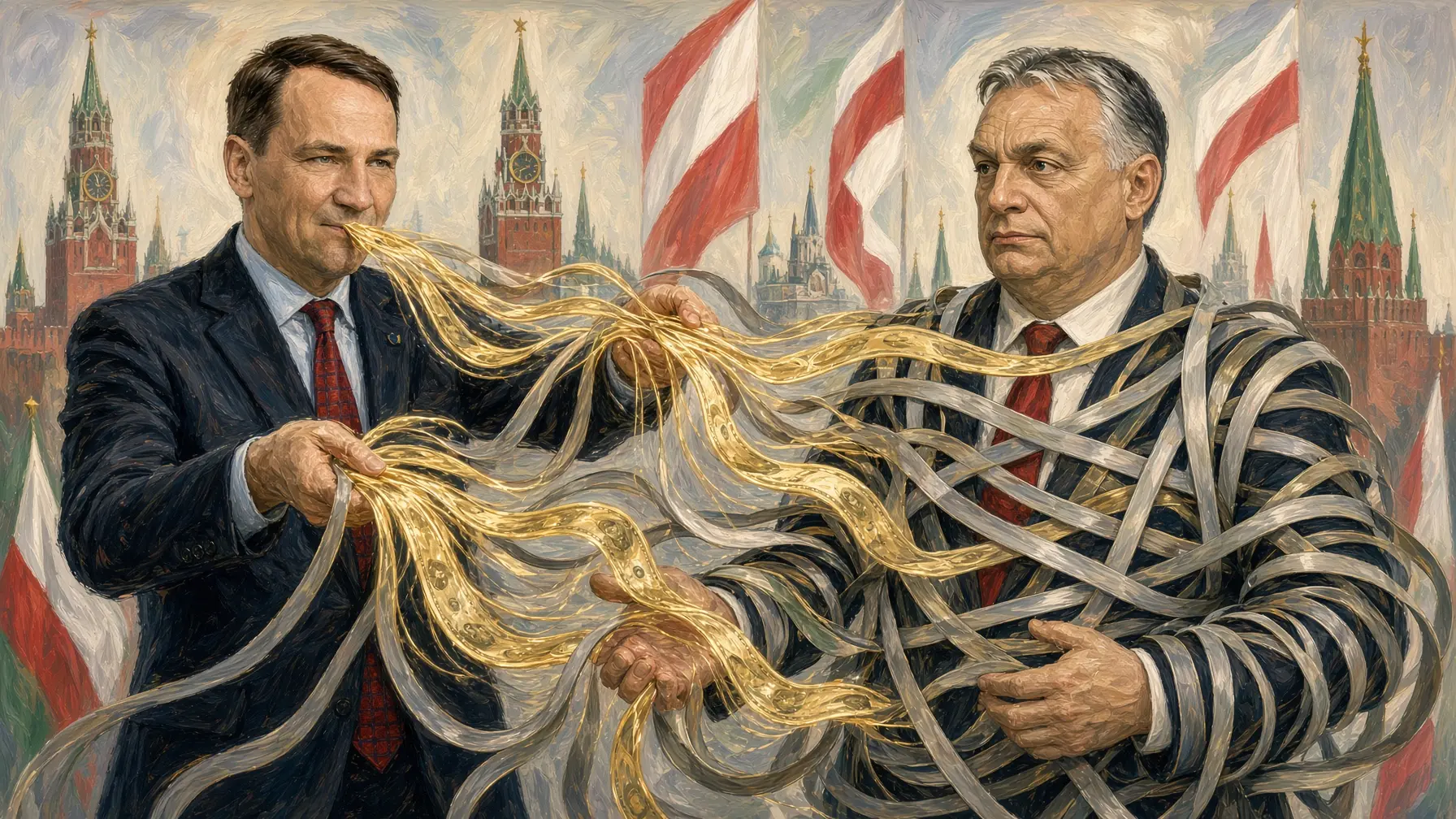
According to Sikorski, money transfers and audio recordings prove cooperation between Moscow and the Orbán government
According to Polish Foreign Minister Radosław Sikorski, Warsaw has evidence that Russia supported Viktor Orbán's government and worked closely with it. The head of Polish diplomacy spoke about this in a lengthy interview given to Gazeta Wyborcza, in response to a question about whether the European populists enjoying Moscow's backing could be considered the Kremlin's fifth column. He said the…

Musk, Rubio and a Lithuanian arson attack: Ukraine's satellite link has become the war's new front
In the span of a week, Ukraine has learned just how fragile is the satellite network on which its drones, troop communications and much of its air defense depend. Marco Rubio, the U.S. secretary of state, categorically denied on Sunday reports that the White House had ordered restrictions on Starlink in Ukraine. He said no one at the White House had instructed anyone to slow down the internet,…

Saint Petersburg's oil terminal is on fire — Putin's city has never taken such a blow
On the night from Saturday to Sunday, Ukraine launched the war's largest drone attack to date on Saint Petersburg and Leningrad Oblast, and this time even Moscow could not deny the damage. Saint Petersburg Governor Alexander Beglov himself admitted that a fire broke out at the city's oil terminal, at the Ruchyi oil depot, and at industrial warehouses in the southern Kolpino district.

Surrounded for five months, the Ukrainian soldier made it out from behind Russian lines in six days
Viktor Svystun, a 37-year-old Ukrainian soldier with the call sign "Bumer," spent five months surrounded in Zaporizhzhia region, where he and his comrades sometimes fought the Russians from as little as five to seven meters away. When it became clear to him that they had been encircled, he decided to resist to the very end: "If things have come to the point where they're going to kill me anyway,…