
Kádár crossed over to the national side and shook hands with the Liberty Monument
If László Toroczkai had said this twenty years ago, during the storming of the television headquarters, his own friends would have lynched him on the spot. Imagine him standing on Liberty Square, a few steps from the Soviet memorial, facing his own supporters and declaring that János Kádár was a statesman. Now imagine the same thing twenty years later, in the studio of Partizán, where it has already been said. More precisely, like this: János Kádár was a historical figure, comma, a statesman. Sometimes a person waits twenty years for a single sentence to finally understand what has happened to his country in the meantime.
Because the Hungarian far right once had a few things one could respect, even if one wouldn't have touched the rest of its program with a stick. It kept alive the cause of Hungarians living beyond the borders in a country where, for decades, it was better to stay silent about the issue, and it consistently demanded that the communists be held accountable, at a time when others would already have settled for leaving the past undisturbed. In the world of MIÉP, Jobbik, and later Mi Hazánk (Our Homeland Movement), Előd Novák spent long years demanding the removal of the Soviet memorial on Liberty Square, which, in my view, has openly disgraced the memory of murdered Hungarians for decades. And now the old-new leader of this political family calls a statesman the very man whom the same Soviet army helped into power — the army whose monument Novák would have taken away. The principle runs off, the stone stays put.
Let's be fair to Toroczkai. He added that he does not use the word "statesman" as a value judgment, and that he considers Kádár one because he governed and ruled Hungary for decades. Fine. One can consider Kádár a statesman — many Hungarians still do today — except that in doing so we spit in our own face, something we've practiced so often throughout our history that this one more time surely won't kill us. What remained from the seventies and eighties were the prefab apartment block, the weekend plot of land, the secure job, and the sly, soul-destroying, and undeniably effective social contract of "whoever is not against us is with us." It's still pleasant to look back on the weekend plot today; less so on what kind of weapons secured the power of the man in whose wake the poverty that followed eventually took the plot away too.
Toroczkai's argument is still understandable: in his view, whoever governed long enough is a statesman. The trouble is that in this sentence, time spent in power becomes political merit, and the mere fact of rule becomes legitimacy, even before we ask how the person got there in the first place, and what chance Hungarians had to remove him. Hannah Arendt, who knew twentieth-century dictatorships more closely than she would have liked, saw the source of power in the capacity for joint action. Violence can smash that joint action, but it cannot create it. Kádár's rule emerged from the barrels of Soviet tanks, and its shadow still fell over the country even when it was already hoeing its weekend plot — and thirty-two years changed nothing about that except that thirty-two years passed. If duration were the measure of statesmanship, the Ottoman sultans would also deserve a few pages in the gallery of Hungarian statesmen, since they governed a good part of the country for a hundred and fifty years. But then Toroczkai and his circle never made a blood pact with historical facts — if a fact gets in the way, it instantly becomes an enemy.
In the meantime, I'm starting to understand this Toroczkai. Mi Hazánk has set out on the path that Jobbik once called "becoming a people's party," except the Mi Hazánk people don't put it on the door of the party office — it's enough that they themselves know it, dare it, and do it. That's how Horthy and Orbán got to stand next to Kádár as well; all three got a share of "statesman," and if anyone thought the door of the national pantheon could not be opened any wider, they should think of the strand of the Hungarian far right that presents itself as staunchly Catholic, in which there were — and still are — people who root for imperial order against the 1848 revolution, and who can even find kind and admiring words for Haynau. Arriving in such company, Kádár doesn't even need to change his clothes.
Still, why do the Hungarian far right and the Hungarian far left keep finding, again and again, idols whose ledgers record the death, persecution, or expulsion of thousands or hundreds of thousands of Hungarians? Haynau's reprisals, the Horthy era's responsibility for the deportation and murder of hundreds of thousands of Hungarian citizens, Kádár's gallows, and Orbán's autocracy built in peacetime are different stories, and their responsibility is not equal either, just as genocide, emigration, and the kind of debt with which one generation buys its own semblance of prosperity and then hands the bill to the next are not the same in nature. If Hungarian history had an imaginary courtroom where everyone had to account for everything, from executions and genocide to the political subjugation of the country, all four of them would have a seat on the defendants' bench, each for his own deeds. Part of the Hungarian right, by contrast, keeps looking for them in the VIP box.
István Bibó already showed in 1946, writing about the misery of the small states of Eastern Europe, how a community can present its own fears as political common sense. This is where Bibó's "false realism" leads as well. A person like this wants above all to know who is stronger, because from that he will deduce who was right, and he'll call the whole thing patriotism. That's how Haynau becomes the restorer of order, Kádár a consolidator, and Putin, at last, someone who won't be pushed around. Never mind that he happens to be attacking others. A serious person, mind you, looks at realities. Besides, one shouldn't have gone around pulling the bear's whiskers, right...
Erich Fromm writes in his book Escape from Freedom about how easy it is to want to be rid of something that was so hard to win. Freedom, after all, comes with decision, responsibility, and the uncomfortable uncertainty that tomorrow we might find out we decided wrongly today. How much more comfortable it is when someone tells us our place, and even explains, in return, whom we should be angry at. The authoritarian personality that Adorno and his colleagues described also fits comfortably into this world: it bows upward and kicks downward, and as long as there is someone above it to take orders from and someone below it to carry them out on, it doesn't particularly care under what flag any of this happens. That's how hatred of communists and reverence for Kádár can coexist in one person, as can national radicalism and infatuation with Moscow. Haynau, Horthy, Kádár, Putin, and Orbán each wanted a different world, but whoever is infatuated with the iron fist will find an offer to their liking in every one of them: someone else will restore order, and all they have to do is obey.
From this vantage point, one could also ask why it is precisely the Hungarian far right — which once measured patriotism at the Soviet memorial — that roots for Russia's wars. Or why it speaks with the same enthusiasm about Hungary's participation in the First World War, when Hungarians were sent to the front for the empire of that same Franz Joseph who, as a young emperor, called in Russian help to crush our war of independence, and then watched the reprisals that followed.
Today they adore the very Putin in whose historical fairy tale the 1956 uprising becomes a riot stirred up by Western agents. They side with the interests of the very Moscow whose tanks drowned the Hungarian war of independence in blood on November 4th, and they bestow the rank of statesman on the very Kádár whose regime was still hanging Hungarians years later for their role in the revolution. And next to them now stands Orbán, who, in my view, is the greatest traitor Hungarian history has known, if only because he managed, in peacetime, as a member of the Western alliance, in the security and prosperity that this provided, to surrender the country to Chinese and Russian interests — and he didn't even need an occupying army to do it. He built the autocracy, and even those who are born only after he is long gone from power will be groaning under the poisoning of souls for decades to come.
The word "statesman" could still be taken back from those who don't measure merit properly. I would give it to someone who preserves or expands his nation's freedom, who builds his power on the consent of the citizens, and who hands the country on in such a way that his grandchildren are left with more opportunities than he had. Whoever needs a foreign weapon to rule, who makes order out of fear, and makes his grandchildren pay for his own popularity, has sat in the chair a long time for nothing. By this standard, I don't need to argue much about Kádár. Nor about Orbán.
From Mi Hazánk's voters, though, I would genuinely like to ask how their years-long fight against the Soviet memorial on Liberty Square fits together with their party's leader calling a statesman the man who arrived on the back of Soviet tanks and had Hungarians hanged after '56. If there's a good answer, I'd be glad to hear it. If there isn't, then perhaps it is there, at the foot of the memorial, that they should think through once more whose order they are honoring, and why they are giving away our freedom in exchange for it.
Anna Karczag
Did you like this article?
Support our work with a small donation
Secure payment via Stripe • Min. 2 EUR
Gesta recommendations:

Bomb scare, a refrigerator at fifty degrees, but only whispers about Moscow
The Russian far-right Male State movement denies having any connection to the bomb threats across Europe that led to diverted flights, scrambled fighter jets, and, by Friday, even evacuated newsrooms. The same week, food had to be thrown out in eight European countries because someone remotely turned up the temperature in store refrigerators. Meanwhile, the Pentagon warned several allies to tone…
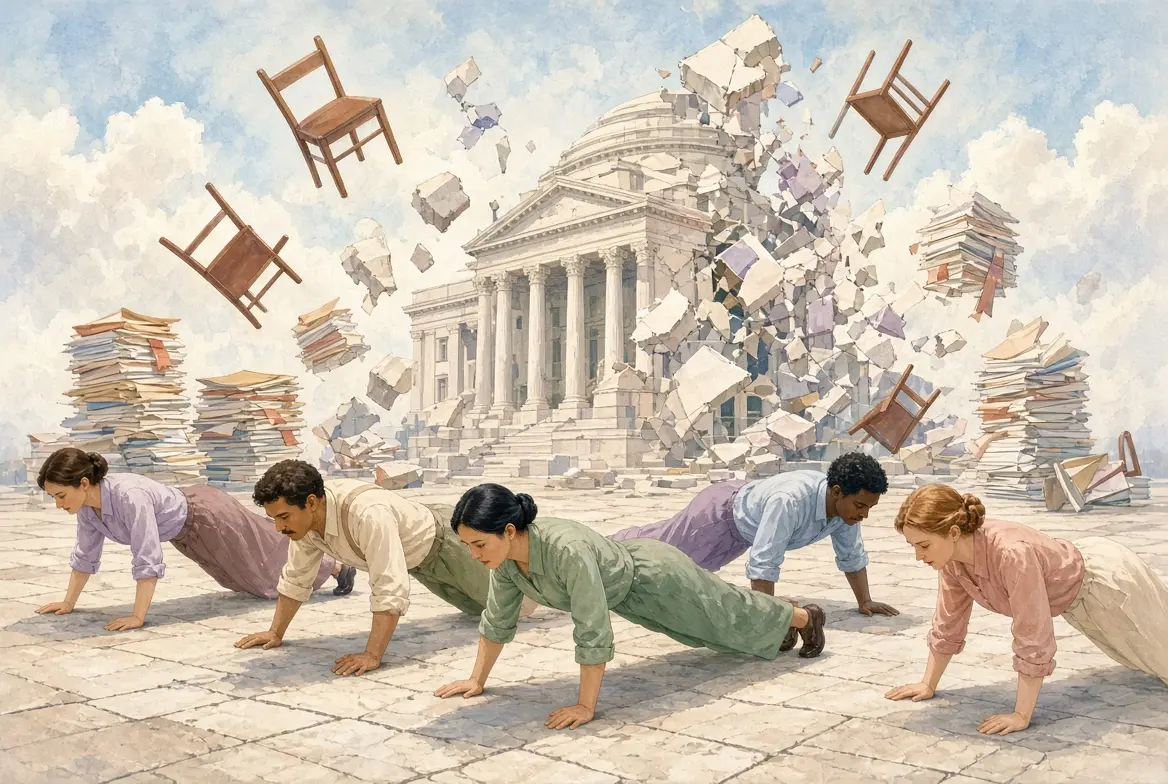
We're Overthrowing the System, But First, Ten Push-Ups
The boy wants to rebel, and it would be nice to finally belong somewhere too. Among Italy's neo-fascists he is promised both, though it soon turns out that their first rule of rebellion is that he may speak only when spoken to. Andrea Oriente's debut novel follows the fifteen months it takes the boy to realize what he actually got in exchange for his obedience.
On video: Toroczkai betrays his nation
More details and interpretation:
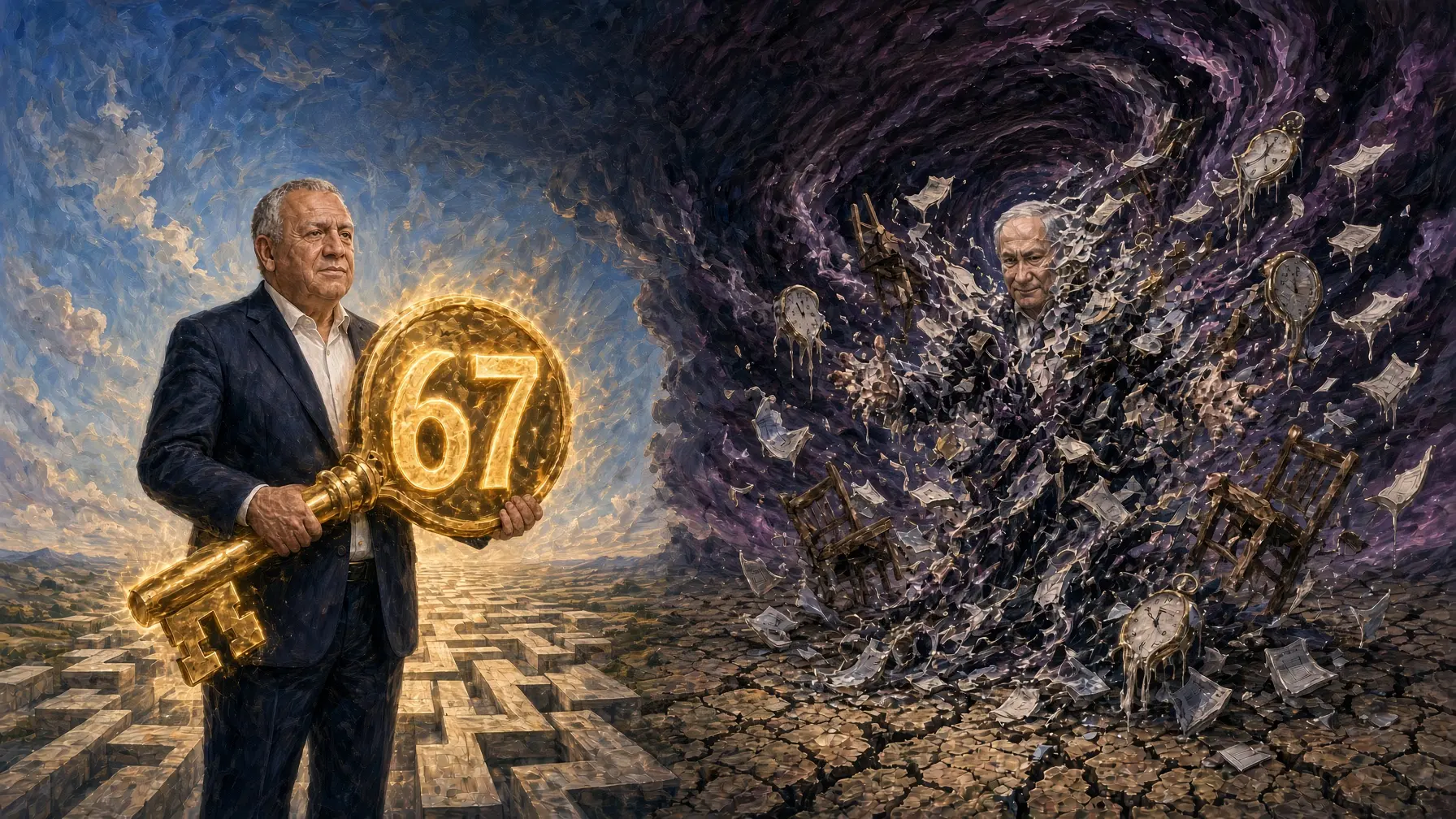
Eizenkot or chaos: where does government formation in Israel stand?
Ten days after the election, it is still unclear who will form a government in Israel, even though the numbers seem clear at first glance. Benjamin Netanyahu's right-wing religious alliance, which has governed the country since 2009 with one brief interruption, has lost its majority, and 67 of the 120 members of parliament would like his rival, former Chief of Staff Gadi Eizenkot, to become prime…
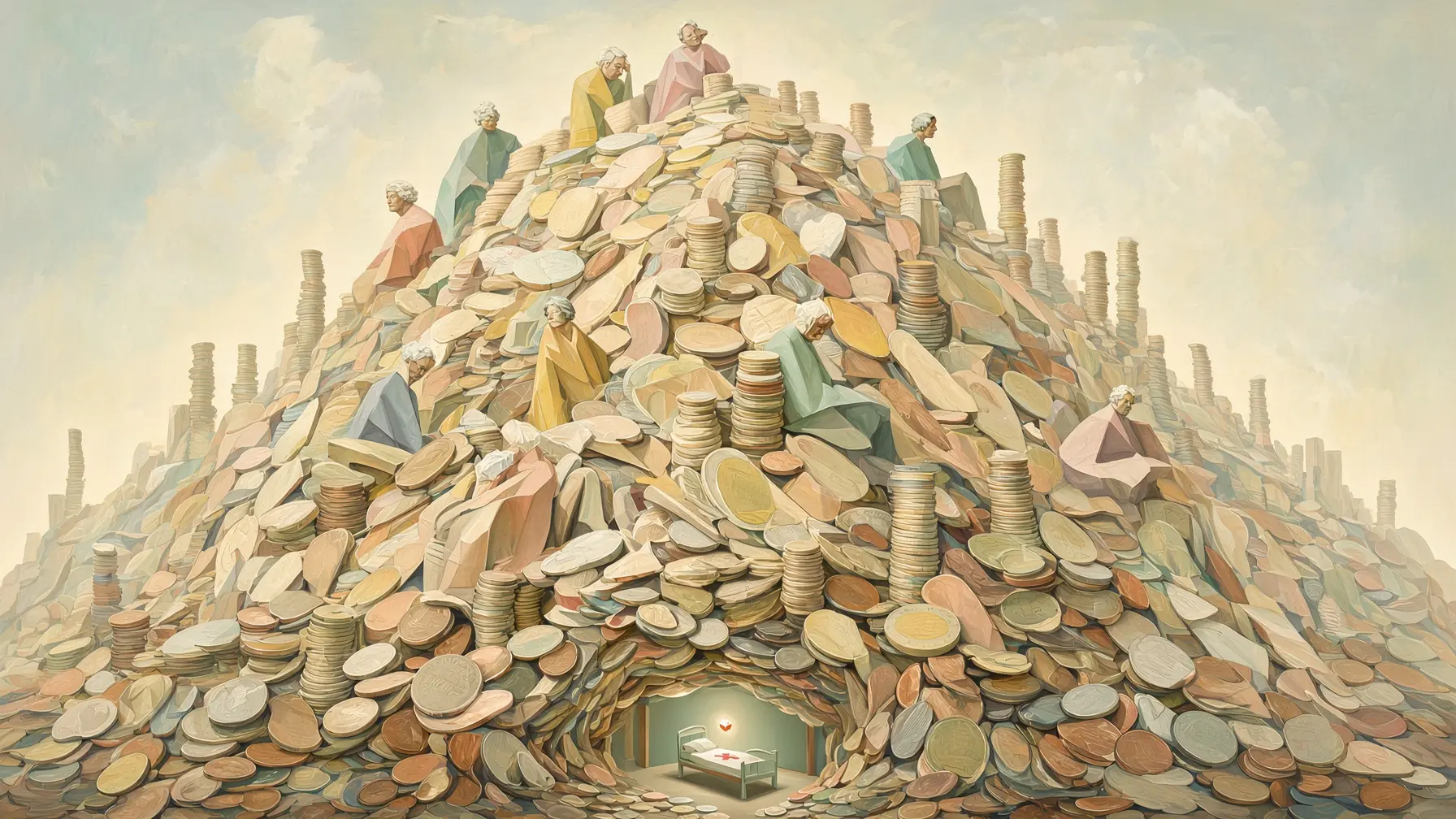
Our taxes are going toward pension increases again, but luckily healthcare gets something too
The Niculescu government adopted this year's first budget revision by emergency ordinance. Finance Minister Alexandru Nazare made the draft public on Facebook, and at the same time announced that “the 6.2 percent cash deficit target remains unchanged.” The biggest winners of the revision are healthcare and the pension system. The budget of the National Health Insurance Fund (FNUASS) will grow by…