
Our taxes are going toward pension increases again, but luckily healthcare gets something too
The Niculescu government adopted this year's first budget revision by emergency ordinance. Finance Minister Alexandru Nazare made the draft public on Facebook, and at the same time announced that “the 6.2 percent cash deficit target remains unchanged.” The biggest winners of the revision are healthcare and the pension system. The budget of the National Health Insurance Fund (FNUASS) will grow by 3.22 billion lei, while the Ministry of Labor will receive a net surplus of 3.32 billion lei, of which 3.47 billion lei will cover pensions due by the end of the year. According to Nazare, every additional source of funding is based on a realistic assessment of revenues and payment obligations, and the money will go toward urgent year-end expenses and investments that must be completed in any case.
According to a compilation by Wall-Street.ro, the revision increases the deficit in nominal terms by 3.5 billion lei, to 130.3 billion lei, which remains 6.2 percent of the estimated gross domestic product of 2,086.3 billion lei. The revenues of the consolidated budget will fall by 4.7 billion lei, and expenditures by 1.2 billion lei. On the revenue side, VAT performed better than expected, bringing in 7.18 billion lei more, as did personal income tax, which yielded 2.03 billion lei more than planned, and corporate tax, which brought in 1.19 billion lei more. Excise duty revenues, however, came in 3.68 billion lei lower, and EU funds fell short by 4.58 billion lei, while revenues from gambling and non-tax sources also missed the target. The Ministry of Health will receive an extra 774 million lei, but since its foreign-funded projects are being trimmed at the same time, its net budget will grow by only 72 million lei. The Ministry of Internal Affairs will receive 563 million lei for December pension entitlements and 68.6 million lei to place graduates of police academies, while the Ministry of Agriculture will get 1.47 billion lei for non-reimbursable, foreign-funded projects. Local authorities will receive 2.81 billion lei more from VAT revenue, of which 2 billion lei can be used to settle debts accumulated by September 30. Applications for this can be submitted until November 25, and any amount not used by December 21 will be withdrawn.
The additional spending was covered mainly through reallocations. The government withdrew 5.24 billion lei from non-reimbursable, foreign-funded projects with low absorption rates, cut subsidies by 1.14 billion lei, and trimmed more than three billion lei from ministries' unused allocations. The biggest losers are the ministries of development, transport, agriculture, education and energy, though the public announcements do not break down the amounts by ministry. Investment spending will rise by 900 million lei to 170.1 billion lei, or 8.2 percent of GDP. The loan component of the National Recovery and Resilience Plan (PNRR) will receive 2 billion lei, while 2.3 billion lei will be withdrawn from the non-reimbursable component and from projects funded by other foreign sources.
The ministries had wanted far more than this. According to a report by Puterea, the ministries requested a total of 60 billion lei, about 3 percent of GDP, roughly equal to what the state pays annually in interest. “I don't think Romania can afford to spend sums of this magnitude,” Nazare said, adding that the requests were excessive. According to the outlet, the deficit fell by 24 billion lei in the first nine months of the year. Prime Minister Luca Niculescu named healthcare as the top priority, saying that neither doctors nor patients should be left in a situation where they cannot access care and treatment. A second budget revision is planned for mid-November.
The revision has reignited the political debate over the previous government's legacy. The PSD accuses the Bolojan government of leaving behind 40 billion lei in debts and unpaid bills, and the Finance Ministry is preparing a report to verify the claims. The PNL, which supports the government from outside, urged Niculescu to adopt the revision as quickly as possible and accused the Social Democrats of holding the country hostage. UDMR chairman Hunor Kelemen warned that his alliance will not support any tax increase — yet another instance of weathervane politics, since it was the same “boss of Transylvanians” who last year demanded a VAT increase. According to a CURS survey cited by Puterea, four in ten Romanians expect the government to focus on lowering prices, raising pensions and wages, and reducing taxes.
Ugar
Did you like this article?
Support our work with a small donation
Secure payment via Stripe • Min. 2 EUR
Gesta recommendations:

Kádár crossed over to the national side and shook hands with the Liberty Monument
If László Toroczkai had said this twenty years ago, during the storming of the television headquarters, his own friends would have lynched him on the spot. Imagine him standing on Liberty Square, a few steps from the Soviet memorial, facing his own supporters and declaring that János Kádár was a statesman. Now imagine the same thing twenty years later, in the studio of Partizán, where it has…

Border Situations and the Form 6 Card, or What Everyone Did with Their Freedom
The release of the agent files has put Hungary at a border situation: will we finally face up to who signed and who did not, or will we let everyone off the hook again? A personal and philosophical reckoning from a Transylvanian perspective, from Péter Kornis to Szilárd Demeter. The personal opinion of Anna Karczag.
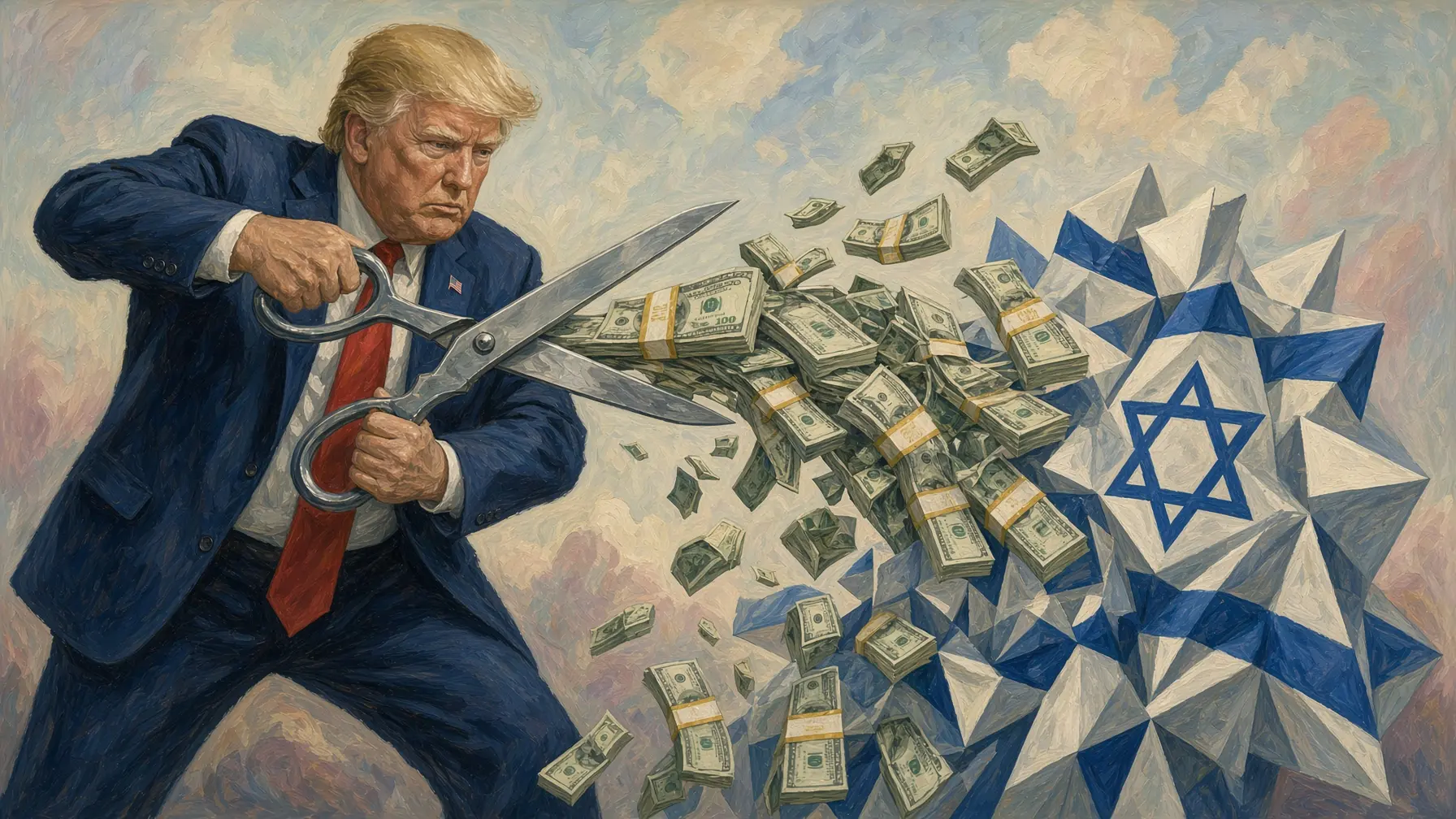
Trump to halt $4 billion in annual aid to Israel
On November 3, the morning of the US midterm elections, President Donald Trump announced that the United States would end the roughly $4 billion in annual aid it provides to Israel at the end of 2026. In a phone interview on Fox News's "Fox and Friends," the president said he had reached this agreement with Israeli Prime Minister Benjamin Netanyahu months earlier, and that the idea had come from…

Trump's team lost, but the president stays - what comes next?
The Democrats have won both the House of Representatives and the Senate, meaning that in the last two years of Donald Trump's second presidential term he will face a Congress that can launch investigations against him, reject his nominees, and deny the new funding his policies require. Party leaders have left the possibility of impeachment open, but removing the president takes more than an…

The 'Form 6' files of Hungarian intellectuals from Romania
We took a bit of a look through Hungary's informer network files, searching for Hungarians from Romania.