
Trump to halt $4 billion in annual aid to Israel
On November 3, the morning of the US midterm elections, President Donald Trump announced that the United States would end the roughly $4 billion in annual aid it provides to Israel at the end of 2026. In a phone interview on Fox News's "Fox and Friends," the president said he had reached this agreement with Israeli Prime Minister Benjamin Netanyahu months earlier, and that the idea had come from Netanyahu himself. "We gave them four billion dollars. We're giving it to them now. But at the end of the year, that's going to end," he was quoted as saying by the Jewish Telegraphic Agency (JTA). According to reports by Reuters and Al Jazeera, he added: "We've already agreed that starting at the end of the year, we won't be paying Israel. We'll help them if they need it." The announcement could mark the biggest shift in decades in the relationship between Washington and its closest Middle Eastern ally. It remains unclear, however, how this could be carried out while a aid agreement running until 2028 is still in effect, and given that the money is ultimately not the president's but Congress's to decide on.
According to Trump, Israel "no longer needs" this money, and the aid is only causing harm to Republicans in American domestic politics. According to a PBS report, he said the United States gives Israel "four billion dollars' worth of things and money," which "you could call barter, you could call military aid, or you could call cash," and added that if Israel's budget did need it after all, "we'd continue." He called the aid a "bad campaign argument" and indignantly asked why Republicans should have to endure Democratic criticism over it. As an example, he brought up Abdul El-Sayed, the Democratic Senate candidate from Michigan, one of the most vocal critics of US aid to Israel. According to a CBS News projection, El-Sayed defeated his Republican opponent, Mike Rogers, in Tuesday night's election. According to the JTA, Trump even joked that if he got tired of America, he would move to Israel and become prime minister there. The US State Department did not immediately respond to the announcement, and Netanyahu's office and the Israeli Foreign Ministry did not confirm the agreement.
The memorandum of understanding currently in effect was signed back in 2016, during Barack Obama's presidency, and provides for a total of $38 billion in aid over the ten years from 2019 to 2028. This amounts to $3.3 billion a year in military financing and $500 million a year for missile defense programs such as the Iron Dome, with most of the money spent by Israel on American arms manufacturers. Brett McGurk, a former national security official in the Biden administration, told JTA that ending the agreement early would be "a decision for the president and Congress." Lara Friedman, an analyst at the Foundation for Middle East Peace, noted that the agreement is not legally binding, since Congress must approve the funds separately every year. According to Al Jazeera's Washington correspondent, Kimberly Halkett, this also means that Trump cannot unilaterally end the aid. Thomas Warrick, an expert at the Atlantic Council, believes the aid is more likely to be phased out gradually over the course of 2027, since missile defense and drone interception programs cannot be switched overnight to conventional arms purchases. According to the Council on Foreign Relations, Israel has received more than $300 billion in US aid since 1948, adjusted for inflation, and according to one university study, at least $21.7 billion in military aid since the outbreak of the war in Gaza in 2023.
The idea of phasing out the aid did indeed originate with Netanyahu, but the Israeli prime minister had previously spoken of a much slower timeline. According to Jewish Insider, he first raised it with Trump last December, when Trump reportedly did not understand the idea. In January of this year, Netanyahu already spoke publicly about reducing the aid to zero within ten years, and in June he told CNBC that he would begin the phase-out during the last two years of the Trump administration, in parallel with negotiations on a new agreement. In his view, the aid should be replaced by a partnership in which the two countries invest equally in joint defense technology development, which would put an end to the "myth" that Israel "empties America's coffers." The groundwork for this new framework is also being laid by the 2027 defense budget bill passed by the House of Representatives in July, whose Section 219 establishes the US-Israel Defense Technology Partnership Initiative. According to Debra Shushan, a researcher at Georgetown University, if the Senate does not pass it before the Democratic majority takes office in January, it will have much less chance of passing in a Democratic-controlled Congress.
In Israel, the announcement caused surprise and concern. According to JTA, Israeli financial and military officials spoke anonymously to the Hebrew-language press, and leaders of the opposition seeking to unseat Netanyahu sharply criticized the prime minister. Former Chief of Staff Gadi Eisenkot said that defense officials and ordinary citizens alike "learned about the change in the strategic relationship from the press," which he said clearly illustrates the dangers of Netanyahu's policies. Yair Golan, leader of The Democrats, said "the end of US aid will cause serious damage to Israel's security," and that a responsible prime minister would have fought to increase the aid instead. Avigdor Liberman said that "the price of Trump's support for Netanyahu is $3.8 billion a year," while Yair Lapid called the decision one of the most severe political and security failures in the country's history. The announcement came at an awkward moment for Netanyahu, whose camp won 53 seats in the October 27 election — short of the majority needed to form a government — and whom Trump had explicitly campaigned for ahead of the vote.
American Jewish and pro-Israel organizations reacted with mixed feelings. Morton Klein, president of the Zionist Organization of America, criticized the decision and asked why Washington wasn't also cutting the more than $4 billion combined in aid it provides to Egypt, Jordan, Pakistan, Lebanon and the Palestinian Authority. The Republican Jewish Coalition said the US-Israel relationship is "stronger than ever" and that the phase-out of military aid had been openly discussed between the two governments. The left-leaning J Street said the decision shows that Trump's word cannot be trusted, while AIPAC stated that it continues to support the current agreement.
Michael Koplow, an analyst at the Israel Policy Forum quoted by JTA, suspects the announcement was aimed primarily at voters in Michigan, while Al Jazeera's correspondent called it a "November surprise" meant to undercut the arguments of progressive Democrats and the Israel-critical wing of the MAGA movement ahead of the election. Aid to Israel has indeed become an increasingly divisive issue in both American parties. In July, the House of Representatives voted 314 to 104 to reject an amendment by Kentucky Republican Representative Thomas Massie that would have ended the aid, but nearly half of Democrats voted in favor of it. In April, dozens of senators — almost exclusively Democrats — tried to block certain arms sales to Israel in the Senate. According to a June Quinnipiac University poll, 48 percent of voters overall, and 66 percent of Democrats, believe Washington supports Israel too much — up from 16 percent and 20 percent, respectively, in 2017. The Financial Times reported as early as last July that Trump himself sensed this shift: according to a Middle East expert who regularly communicates with the administration, the president told him that "my people are starting to hate Israel." Former Republican Representative Marjorie Taylor Greene, now a critic of Trump, called the shift "stunning" on X, though she said it was too late to change the outcome of the election.
Ugar
Did you like this article?
Support our work with a small donation
Secure payment via Stripe • Min. 2 EUR
Gesta recommendations:

Our taxes are going toward pension increases again, but luckily healthcare gets something too
The Niculescu government adopted this year's first budget revision by emergency ordinance. Finance Minister Alexandru Nazare made the draft public on Facebook, and at the same time announced that “the 6.2 percent cash deficit target remains unchanged.” The biggest winners of the revision are healthcare and the pension system. The budget of the National Health Insurance Fund (FNUASS) will grow by…

Border Situations and the Form 6 Card, or What Everyone Did with Their Freedom
The release of the agent files has put Hungary at a border situation: will we finally face up to who signed and who did not, or will we let everyone off the hook again? A personal and philosophical reckoning from a Transylvanian perspective, from Péter Kornis to Szilárd Demeter. The personal opinion of Anna Karczag.
Trump's team lost, but the president stays - what comes next?
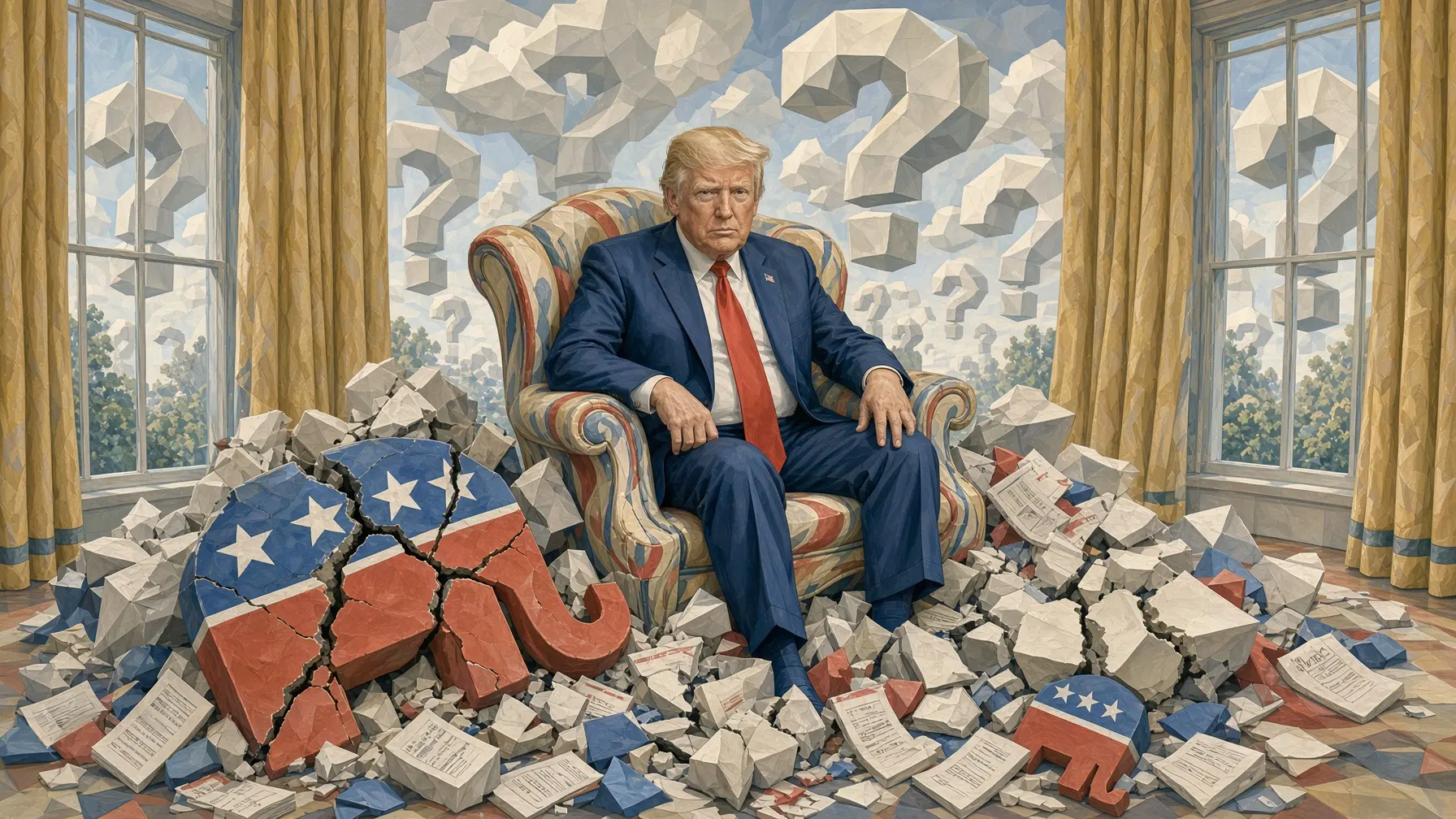
The Democrats have won both the House of Representatives and the Senate, meaning that in the last two years of Donald Trump's second presidential term he will face a Congress that can launch investigations against him, reject his nominees, and deny the new funding his policies require. Party leaders have left the possibility of impeachment open, but removing the president takes more than an…

The 'Form 6' files of Hungarian intellectuals from Romania
We took a bit of a look through Hungary's informer network files, searching for Hungarians from Romania.

Under the code name Raguza, Fidesz's Russia-worshipping "analyst" filed reports
“Ideological-patriotic” – this is given as the reason for recruitment on György Nógrádi's secret police registration card (the so-called “hatos karton”), who then, under the code name “Raguza,” was tasked with protecting the youth, since that was the assignment he received. The year is 1981, June.