
The "Arab RMDSZ" could form a government in Israel
The four Israeli opposition parties preparing to replace Benjamin Netanyahu are proposing Gadi Eisenkot as prime minister, after their leaders agreed on Tuesday to begin negotiations on forming a national emergency government. In last Tuesday's election, Netanyahu's bloc lost its majority, but Eisenkot's alliance has even fewer seats than his, which means the 19 seats held jointly by the two Arab-led parties could prove decisive. The opposition leaders may thus find themselves dependent on the support of the very parties most of them had so far refused to govern with.
In the October 27 election, Likud retained first place with 27 seats, while Eisenkot's centrist party, Yashar, won 21, the joint list of Naftali Bennett and Yair Lapid, B'Yahad, took 12 seats. In the 120-seat Knesset, however, a majority requires 61 votes, and both blocs are far from that: 53 lawmakers stand behind Netanyahu, 48 behind Eisenkot. The remaining 19 seats are split between the Joint List and Ra'am, a record for Arab-led parties, which also means that if Eisenkot keeps his current alliance's 48 lawmakers together, he will still need to secure at least 13 more supporting votes.
At Tuesday's meeting in Herzliya, Eisenkot was joined by Bennett, Lapid, Avigdor Liberman and Yair Golan. They agreed to propose to President Isaac Herzog that Eisenkot be the first to be tasked with forming a government, and their negotiating teams are already starting work on coalition agreements and a government program. Eisenkot set four conditions for governing together: recognition of Israel as a Jewish and democratic state, respect for the values of the declaration of independence, universal conscription obligations, and acceptance that Hamas — a terrorist organization whose military capabilities must be dismantled and whose rule over Gaza must end.
Before the meeting, Golan held separate talks with Joint List leaders Yousef Jabareen and Ahmad Tibi, and according to his party, they agreed to continue consultations aimed at changing the government. Of the four opposition party leaders, Golan is the only one who has publicly committed to allowing Arab parties to join a future coalition, while Liberman has even rejected a minority government that would rely on their support from outside. On Tuesday he claimed that a functioning government could be assembled quickly even without Ra'am and the Joint List, though he did not say where the votes for it would come from. According to the Times of Israel, it has been suggested that United Torah Judaism, long a Netanyahu ally, could support a cabinet led by Eisenkot, though if talks move in that direction, they would immediately have to address the conscription requirement that the opposition has made a condition of governing together. In the meantime, the opposition parties are trying to make use of the fact that Netanyahu lacks a majority in parliament. After the new Knesset convenes next week, they intend to remove the Likud speaker, Amir Ohana, whose successor, according to Channel 12, could be Lapid, although no decision has been made yet. A change of speaker could pave the way for setting up the state commission to investigate the October 7 Hamas attack, which Netanyahu has blocked so far.
Meanwhile, Netanyahu and Likud are disputing the integrity of the election. The party claims that Qatar or other foreign actors may have secretly financed the mobilization of Arab voters, but so far has not backed the accusations with evidence that would call the election result into question. Likud requested a postponement of the official certification of the results, but this was rejected by Noam Sohlberg, the Supreme Court justice heading the central election committee. In their joint statement on Tuesday, the opposition parties accused Netanyahu and his party of trying to undermine the credibility of the election and the committee.
After consulting with the parties, it is up to Herzog to decide who will be tasked first with forming a government. The chosen candidate will have 28 days to secure a majority, which the president can extend by a further 14 days at most. The parties that want to replace Netanyahu together with Eisenkot have now lined up behind him, but at the Herzliya meeting they still did not answer the question of which of them would be willing to compromise if forming a government hinges on accepting the support of the Arab parties.
Source: Times of Israel
Ugar
Did you like this article?
Support our work with a small donation
Secure payment via Stripe • Min. 2 EUR
Gesta recommendations:
On video: Toroczkai betrays his nation
More details and interpretation:
Eizenkot or chaos: where does government formation in Israel stand?
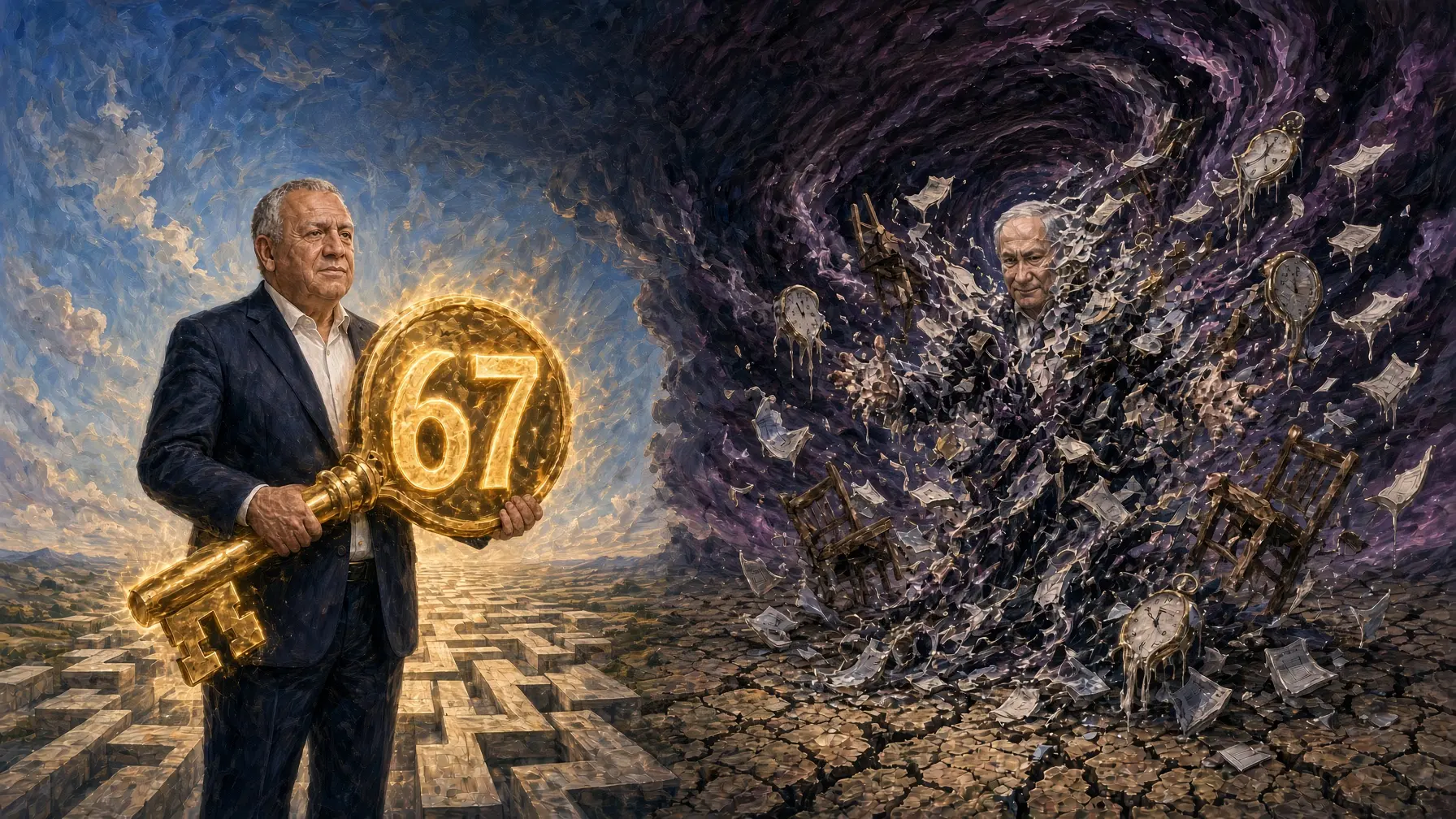
Ten days after the election, it is still unclear who will form a government in Israel, even though the numbers seem clear at first glance. Benjamin Netanyahu's right-wing religious alliance, which has governed the country since 2009 with one brief interruption, has lost its majority, and 67 of the 120 members of parliament would like his rival, former Chief of Staff Gadi Eizenkot, to become prime…

Kádár crossed over to the national side and shook hands with the Liberty Monument
If László Toroczkai had said this twenty years ago, during the storming of the television headquarters, his own friends would have lynched him on the spot. Imagine him standing on Liberty Square, a few steps from the Soviet memorial, facing his own supporters and declaring that János Kádár was a statesman. Now imagine the same thing twenty years later, in the studio of Partizán, where it has…
Our taxes are going toward pension increases again, but luckily healthcare gets something too
The Niculescu government adopted this year's first budget revision by emergency ordinance. Finance Minister Alexandru Nazare made the draft public on Facebook, and at the same time announced that “the 6.2 percent cash deficit target remains unchanged.” The biggest winners of the revision are healthcare and the pension system. The budget of the National Health Insurance Fund (FNUASS) will grow by…
Border Situations and the Form 6 Card, or What Everyone Did with Their Freedom
The release of the agent files has put Hungary at a border situation: will we finally face up to who signed and who did not, or will we let everyone off the hook again? A personal and philosophical reckoning from a Transylvanian perspective, from Péter Kornis to Szilárd Demeter. The personal opinion of Anna Karczag.