
The ECB offers the world a euro lifeline to make Europe less dependent on the dollar
The European Central Bank intends to make it easier to access its agreements that allow other countries' central banks to obtain euros in times of financial turmoil, as this would simultaneously protect the eurozone from crises originating abroad and strengthen the international role of the common currency. Christine Lagarde announced the intention to make this change on November 20, but did not yet reveal the details — which countries could gain access, under what conditions, and up to what amount.
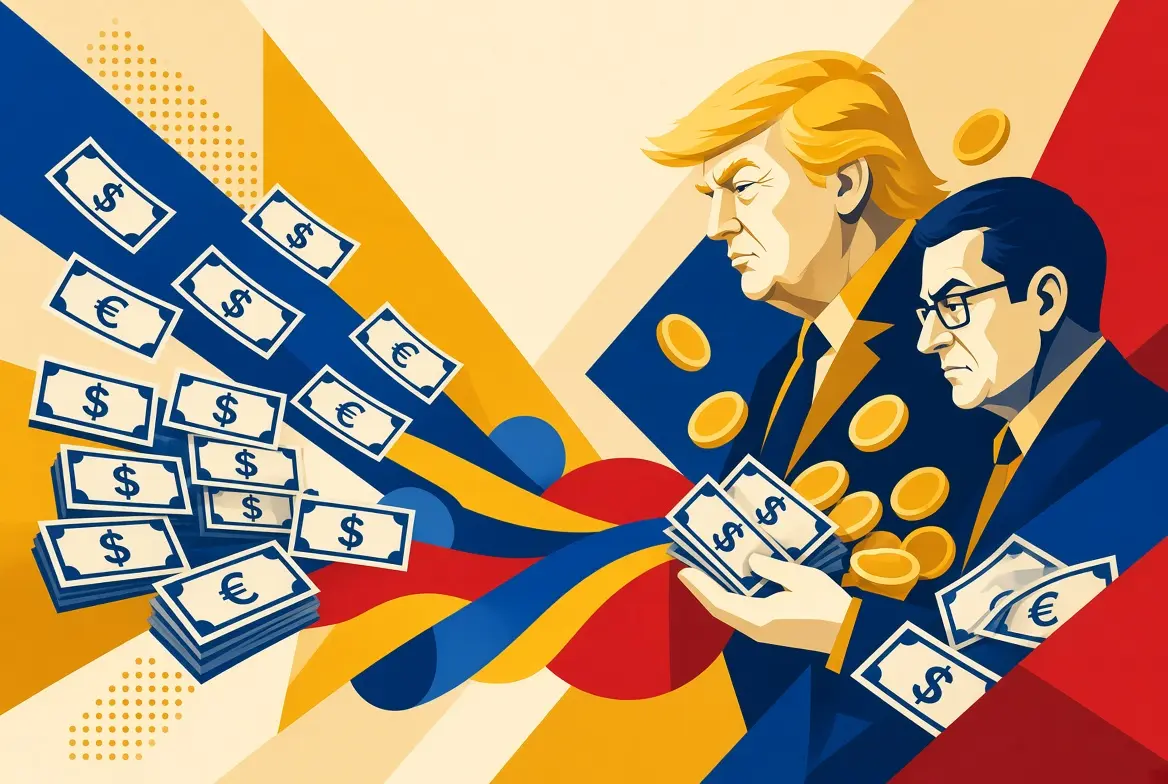
According to the ECB president, currency swap agreements, the so-called swap lines, need to be adapted to a world in which economic relations are increasingly being reshaped along political fault lines. The central bank currently has such agreements primarily with major central banks, including the US Federal Reserve and the People's Bank of China, and expanding access fits into the effort to give the euro a greater role in trade, investment and reserve holdings. According to Reuters, this need has also been reinforced by Donald Trump's unpredictable economic policy and the growth of US government debt, both of which have raised doubts about the dollar's hitherto seemingly unquestionable position.
The significance of a swap line becomes clearest when a country's banks owe debts in a currency they suddenly cannot access. If, for example, they had to repay loans or settle their customers' payments in euros while market participants, wary of uncertainty, are unwilling to lend to one another, the local central bank can, under an agreement with the ECB, swap its own currency for euros and then pass them on to the banks. The two central banks swap the money back at a date fixed in the agreement, and the operation can bridge the period during which a temporary shortage of money might otherwise trigger a wave of insolvencies. Similar tools played an important role during the 2008 financial crisis and at the start of the coronavirus pandemic, when the US central bank's dollar resources eased tensions in the international banking system. Lagarde now emphasized that euro assistance primarily protects the eurozone itself, since a banking crisis abroad could easily spread to European financial institutions that lend, invest or maintain business relationships in the affected country.
This safety net is complemented by EUREP, under which central banks outside the eurozone can pledge eligible euro-denominated securities as collateral in exchange for money from the ECB. The scheme's precursor dates back to 2020, but the terms published this past July create a more permanent and more widely accessible framework, from which funds can be drawn starting in the fourth quarter. Each central bank can draw up to fifty billion euros, with a renewable term ranging from one day to one week, at a spread linked to the ECB's key refinancing rate. In principle, access is open to all central banks outside the eurozone, but money-laundering and terrorism-financing risks, as well as sanctions, can be grounds for exclusion; according to Reuters, more than thirty countries have already expressed interest.
Such agreements matter beyond crisis management as well, because a country that knows it can obtain euros on acceptable terms if needed will hold euro-denominated investments and reserves with greater confidence. This can increase demand for euro-denominated securities, create more favorable financing conditions for European states and companies, and reduce the financial vulnerability stemming from dependence on access to dollars. Dollar liquidity, however, is decided by the Federal Reserve within its own institutional framework, so it would be misleading to describe the current system as if the US president personally handed out financial lifelines.
The euro safety net could be particularly important for Romania and Hungary, since their economies are closely tied to the eurozone while they retain their own currencies, and their companies and banks have significant euro-denominated payment obligations. Both countries' central banks had access to temporary euro repo facilities during the pandemic, and the advantage of a more permanent system could be precisely that, in the midst of another crisis, assistance would no longer need to be organized from scratch. Access, however, remains conditional, so the broader opening does not mean that entities subject to EU sanctions will be free to use this channel as well.
Ugar
Did you like this article?
Support our work with a small donation
Secure payment via Stripe • Min. 2 EUR
Gesta recommendations:

Trump wants peace by January, his wife is already dreaming of a Christmas ceasefire, meanwhile Ukrainians are dying
The Trump administration wants to close the Russian-Ukrainian peace deal by early January, before the new, Democratic-led Congress gets down to work, according to Financial Times. Melania Trump, meanwhile, is talking about the possibility of a ceasefire before Christmas, even as Moscow continues to reject the guarantees that would give Ukraine real protection against another Russian attack.…

Raed Arafat has been indicted. The military prosecutor's office is charging him with complicity in smuggling
Raed Arafat is being prosecuted over the import into Romania of a rescue helicopter that was provided to replace an aircraft lost in a tragedy. The head of the Department for Emergency Situations (DSU) says an attempt is being made to retroactively turn an open, official procedure into a crime, while prosecutors claim that customs clearance was never completed and that more than four million lei…

Bolojan and his party are also proposing an administrative reform, plus a reduction in the number of parliament seats
Ilie Bolojan has promised the PNL's position on administrative reform for early December, while the Liberals and the USR have almost finished drafting a joint proposal on reducing the size of parliament. According to the former prime minister, the government's announcements so far do not reveal a sufficiently well-developed reorganization, because merging two poor communes under a single name…

Trump already threatens Democrats with veto
Donald Trump did not waste much time explaining what he had learned from the results of the midterm elections, instead announcing the tool he will use to keep the Democratic legislative majority taking office in January in check. He praised the presidential veto as an extraordinary power that, in his view, can force his opponents to negotiate, and for Ukraine the decisive question will be whether…
Consulting pays well around Trump: Romanian public money also surfaces among Jason Miller's millions
A child-support lawsuit revealed just how dramatically the business revenue of Donald Trump's longtime adviser has jumped, while among the clients paying for his Washington connections, Romania has also appeared. Jason Miller's companies collected about fifteen million dollars in a single year, yet the Cotroceni Palace still will not disclose exactly what the Romanian state is getting for the…