
Ukraine's Republican allies have thinned out, yet Kyiv may have more room to maneuver
In the November 3 midterm elections, Democrats won majorities in both chambers, but Ukraine's standing in Washington presents a mixed picture. While the mood of the Congress convening in January will be overall more pro-Kyiv, the Republican wing that stood by Ukraine against both Donald Trump and its own party leadership over the past two years has suffered heavy losses. Yet it is precisely these representatives and senators who would be needed to override a presidential veto.
In the House of Representatives, the most painful loss is Brian Fitzpatrick's, co-chair of the congressional Ukraine caucus. The former FBI agent held his district in Bucks County, near Philadelphia, for five terms, surviving several Democratic waves, but this time he was defeated by Bob Harvie, a Democratic member of the county council. According to the Washington Sun, Fitzpatrick had increasingly openly broken with Trump during the campaign, criticizing his tariff policy and his statements about Russia's war against Ukraine. It was not enough.
New York's Mike Lawler conceded defeat to Cait Conley on election night. Both were among the eighteen-member group of Republicans who, against House Speaker Mike Johnson's wishes, voted on June 4 in favor of the Ukraine aid bill containing $8 billion in military credits. The House passed the bill by a vote of 226 to 195, but the speaker had shelved it for more than a year, and it only came to a vote after Fitzpatrick and Nebraska's Don Bacon forced the issue through a discharge petition.
In the Senate, too, the number of Kyiv's Republican supporters dwindled. In Maine, Susan Collins — one of the few Republican senators who voted for the large Ukraine aid package in 2024 — lost to Troy Jackson. In South Carolina, the seat long held by Lindsey Graham, one of the most determined advocates of sanctions against Moscow, went to the Democrats. The senator died unexpectedly on July 11; his sister Darline Graham, who was appointed to succeed him and was also backed by Trump, was defeated by Democratic pediatrician Annie Andrews. Some of the Republicans who took a tougher line on Russia had already lost to Trump's preferred candidates in their own party's primaries back in the spring. In Texas, John Cornyn was beaten by 27 percentage points by Ken Paxton on May 26, who was then defeated in November by Democrat James Talarico. Louisiana's Bill Cassidy only came in third. According to a roundup by Radio Free Europe, Mitch McConnell, Thom Tillis and Michael McCaul will also be absent from the next Congress, while Don Bacon did not seek reelection.
Of course, Kyiv's friends were not the only losers. In Indiana's 5th district, Democrat J.D. Ford defeated Ukrainian-born Victoria Spartz in a major upset; she had voted against the pro-Ukraine aid package and had urged Ukraine to give up its territories. In Pennsylvania, Scott Perry, one of the Republican hardliners, also lost, while Florida's Anna Paulina Luna held on to her seat in a close race, despite being an advocate of dialogue with Moscow and having met with Putin's envoy Kirill Dmitriev.
On the Democratic side, the best-known pro-Ukraine figures were familiar faces. In Ohio, Sherrod Brown returned to the Senate; as former chairman of the Senate Banking Committee, he had been one of the leading voices for sanctions on Russia. During the campaign, he called Trump's suspension of sanctions a "huge gift" to Putin, saying it allowed the Russian president to "continue the slaughter in Eastern and Central Europe," and accused his Republican rival, Jon Husted, of being "strangely silent" on Ukraine. In Virginia, Kyiv-born Eugene Vindman, a former legal adviser to the National Security Council whom Trump fired in 2020, was reelected. Less is known about the newly elected members. Conley spent sixteen years as a career military officer, received the Bronze Star three times, and headed counterterrorism at the National Security Council, but has not taken a public stance on Ukraine. The same can be said of Talarico and North Carolina's Roy Cooper, who built their campaigns mainly around the cost of living and corruption.
At the same time, Democratic voters are far more pro-Ukraine than Republicans. In a March survey by the Pew Research Center, half of Democrats and Democratic-leaning respondents said the United States is not doing enough to help Kyiv, compared with only 11 percent of Republicans. According to Breaking Defense, Democratic Representative Jim Himes had already promised European allies at the Warsaw security forum in October that military aid would quickly resume under a Democratic majority. If Hakeem Jeffries becomes Speaker of the House, Republican skeptics will no longer be able to shelve pro-Kyiv legislation for months on end.
According to experts consulted by the Kyiv Independent, Democrats could attach Ukraine-related provisions to must-pass legislation, such as the defense budget, which Trump would find difficult to veto. With majorities on committees, they could subpoena government officials and investigate backroom deals with the Kremlin, and Gregory Meeks, the ranking Democrat on the Foreign Affairs Committee, has promised to "fix" the Graham sanctions law, most of which Trump shelved in October through a waiver. However, the limits are strict: overriding a presidential veto would require about 290 representatives and 67 senators, meaning the support of roughly 32 Republican representatives and 13 Republican senators — and that is precisely the now-thinned group that is missing. Congress also cannot force the administration to actually spend money it has already approved, and the Pentagon has withheld $400 million in already approved Ukraine aid. Still, two senior Republican Senate aides told Radio Free Europe that pressure to tighten sanctions on Russia could grow after the election.
Even so, Ukraine will not be the Democrats' top priority, since according to the Kyiv Independent, the party's agenda for its first hundred days focuses on the cost of living and the war in Iran. An analyst at the European Council on Foreign Relations, Joan Lee, warned that progressive Democrats are more interested in industrial policy, technology regulation and climate issues than in security policy, which is why Kyiv is not committing itself to either party. Ukraine's acting chargé d'affaires in Washington, Denys Shenik, told Newsweek that "it doesn't matter who wins," while Oleksandr Merezhko, chairman of the Ukrainian parliament's foreign affairs committee, said he would like to see a bipartisan "party of Ukraine's supporters" in Congress. Among Republicans, the best hope for this may be returning Senators Roger Wicker and Kevin Cramer, who met with Zelensky in Kyiv in October. The Ukrainian Congress Committee of America (UCCA) has put forward three requests to the new Congress: to investigate the administration's waiver of Russia sanctions and the diesel deal, to provide more military aid, and to extend the temporary protected status of Ukrainian refugees.
Ugar
Did you like this article?
Support our work with a small donation
Secure payment via Stripe • Min. 2 EUR
Gesta recommendations:
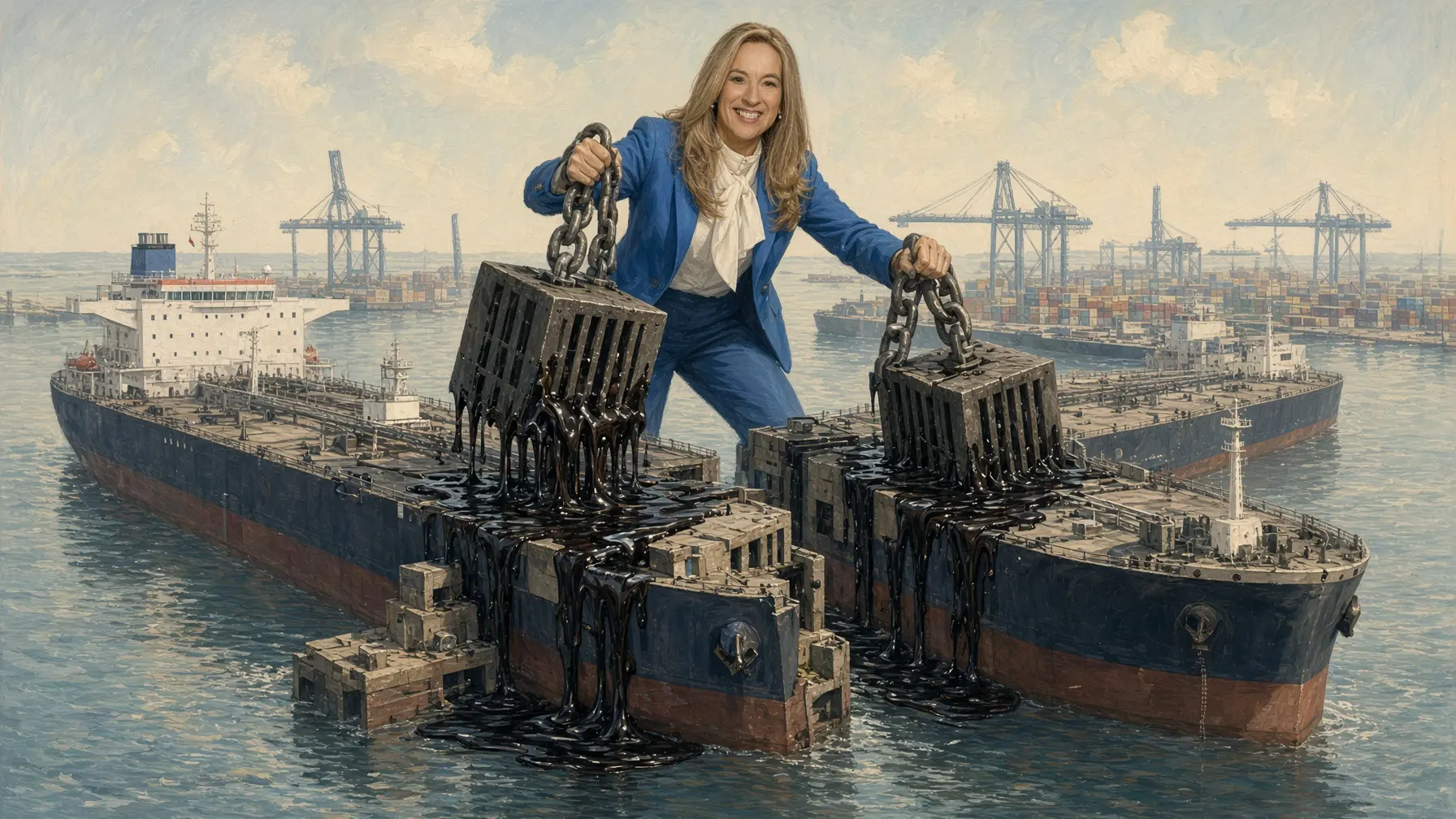
New Jersey governor would punish ports accepting Russian oil with sanctions
Ports and terminal operators in New Jersey that accept tankers carrying Russian diesel fuel can expect severe sanctions, Governor Mikie Sherrill warned, saying that despite Donald Trump's deal with Vladimir Putin, such imports continue to violate U.S. federal law. Sherrill called on operators to turn away the tankers and said that the state would use every legal and regulatory tool at its…

The "Arab RMDSZ" could form a government in Israel
The four Israeli opposition parties preparing to replace Benjamin Netanyahu are proposing Gadi Eisenkot as prime minister, after their leaders agreed on Tuesday to begin negotiations on forming a national emergency government. In last Tuesday's election, Netanyahu's bloc lost its majority, but Eisenkot's alliance has even fewer seats than his, which means the 19 seats held jointly by the two…

Ukraine and Russia to hold talks again on November 10–11, Washington to consult with Europeans beforehand
Ukraine, Russia and the United States may sit down at the same table again for the first time since February, after US special envoy Steve Witkoff announced that the trilateral talks will continue in Abu Dhabi on November 10–11. The agenda includes ending the war, easing the fighting, humanitarian measures and post-war security arrangements, while American negotiators will travel to Brussels this…

This year's worst Russian ballistic missile barrage: of course the Russkies bombed a hospital too
In the early hours of the day of the American midterm elections, Russia attacked Ukraine with 289 drones, 17 ballistic missiles and 59 cruise missiles. This year's heaviest strike on Ukrainian energy facilities caused power outages in ten regions, while a hospital was hit in Kharkiv and Dnipro was struck twice with missiles. At least 73 people were injured. According to Volodymyr Zelensky, Moscow…

America bombed Iran while Qatar was negotiating the reopening of the strait
On the eve of the midterm elections, the US military launched strikes on the area around the Strait of Hormuz, just a few hours after Donald Trump stated that the United States is not at war with Iran. At the time of the strikes, reported by The Wall Street Journal, the Qatari-mediated negotiations were still underway, in which Tehran had attached conditions to reopening the strait.