
The "Arab RMDSZ" could form a government in Israel
The four Israeli opposition parties preparing to replace Benjamin Netanyahu are proposing Gadi Eisenkot as prime minister, after their leaders agreed on Tuesday to begin negotiations on forming a national emergency government. In last Tuesday's election, Netanyahu's bloc lost its majority, but Eisenkot's alliance has even fewer seats than his, which means the 19 seats held jointly by the two Arab-led parties could prove decisive. The opposition leaders may thus find themselves dependent on the support of the very parties most of them had so far refused to govern with.
In the October 27 election, Likud retained first place with 27 seats, while Eisenkot's centrist party, Yashar, won 21, the joint list of Naftali Bennett and Yair Lapid, B'Yahad, took 12 seats. In the 120-seat Knesset, however, a majority requires 61 votes, and both blocs are far from that: 53 lawmakers stand behind Netanyahu, 48 behind Eisenkot. The remaining 19 seats are split between the Joint List and Ra'am, a record for Arab-led parties, which also means that if Eisenkot keeps his current alliance's 48 lawmakers together, he will still need to secure at least 13 more supporting votes.
At Tuesday's meeting in Herzliya, Eisenkot was joined by Bennett, Lapid, Avigdor Liberman and Yair Golan. They agreed to propose to President Isaac Herzog that Eisenkot be the first to be tasked with forming a government, and their negotiating teams are already starting work on coalition agreements and a government program. Eisenkot set four conditions for governing together: recognition of Israel as a Jewish and democratic state, respect for the values of the declaration of independence, universal conscription obligations, and acceptance that Hamas — a terrorist organization whose military capabilities must be dismantled and whose rule over Gaza must end.
Before the meeting, Golan held separate talks with Joint List leaders Yousef Jabareen and Ahmad Tibi, and according to his party, they agreed to continue consultations aimed at changing the government. Of the four opposition party leaders, Golan is the only one who has publicly committed to allowing Arab parties to join a future coalition, while Liberman has even rejected a minority government that would rely on their support from outside. On Tuesday he claimed that a functioning government could be assembled quickly even without Ra'am and the Joint List, though he did not say where the votes for it would come from. According to the Times of Israel, it has been suggested that United Torah Judaism, long a Netanyahu ally, could support a cabinet led by Eisenkot, though if talks move in that direction, they would immediately have to address the conscription requirement that the opposition has made a condition of governing together. In the meantime, the opposition parties are trying to make use of the fact that Netanyahu lacks a majority in parliament. After the new Knesset convenes next week, they intend to remove the Likud speaker, Amir Ohana, whose successor, according to Channel 12, could be Lapid, although no decision has been made yet. A change of speaker could pave the way for setting up the state commission to investigate the October 7 Hamas attack, which Netanyahu has blocked so far.
Meanwhile, Netanyahu and Likud are disputing the integrity of the election. The party claims that Qatar or other foreign actors may have secretly financed the mobilization of Arab voters, but so far has not backed the accusations with evidence that would call the election result into question. Likud requested a postponement of the official certification of the results, but this was rejected by Noam Sohlberg, the Supreme Court justice heading the central election committee. In their joint statement on Tuesday, the opposition parties accused Netanyahu and his party of trying to undermine the credibility of the election and the committee.
After consulting with the parties, it is up to Herzog to decide who will be tasked first with forming a government. The chosen candidate will have 28 days to secure a majority, which the president can extend by a further 14 days at most. The parties that want to replace Netanyahu together with Eisenkot have now lined up behind him, but at the Herzliya meeting they still did not answer the question of which of them would be willing to compromise if forming a government hinges on accepting the support of the Arab parties.
Source: Times of Israel
Ugar
Did you like this article?
Support our work with a small donation
Secure payment via Stripe • Min. 2 EUR
Gesta recommendations:

Ukraine and Russia to hold talks again on November 10–11, Washington to consult with Europeans beforehand
Ukraine, Russia and the United States may sit down at the same table again for the first time since February, after US special envoy Steve Witkoff announced that the trilateral talks will continue in Abu Dhabi on November 10–11. The agenda includes ending the war, easing the fighting, humanitarian measures and post-war security arrangements, while American negotiators will travel to Brussels this…
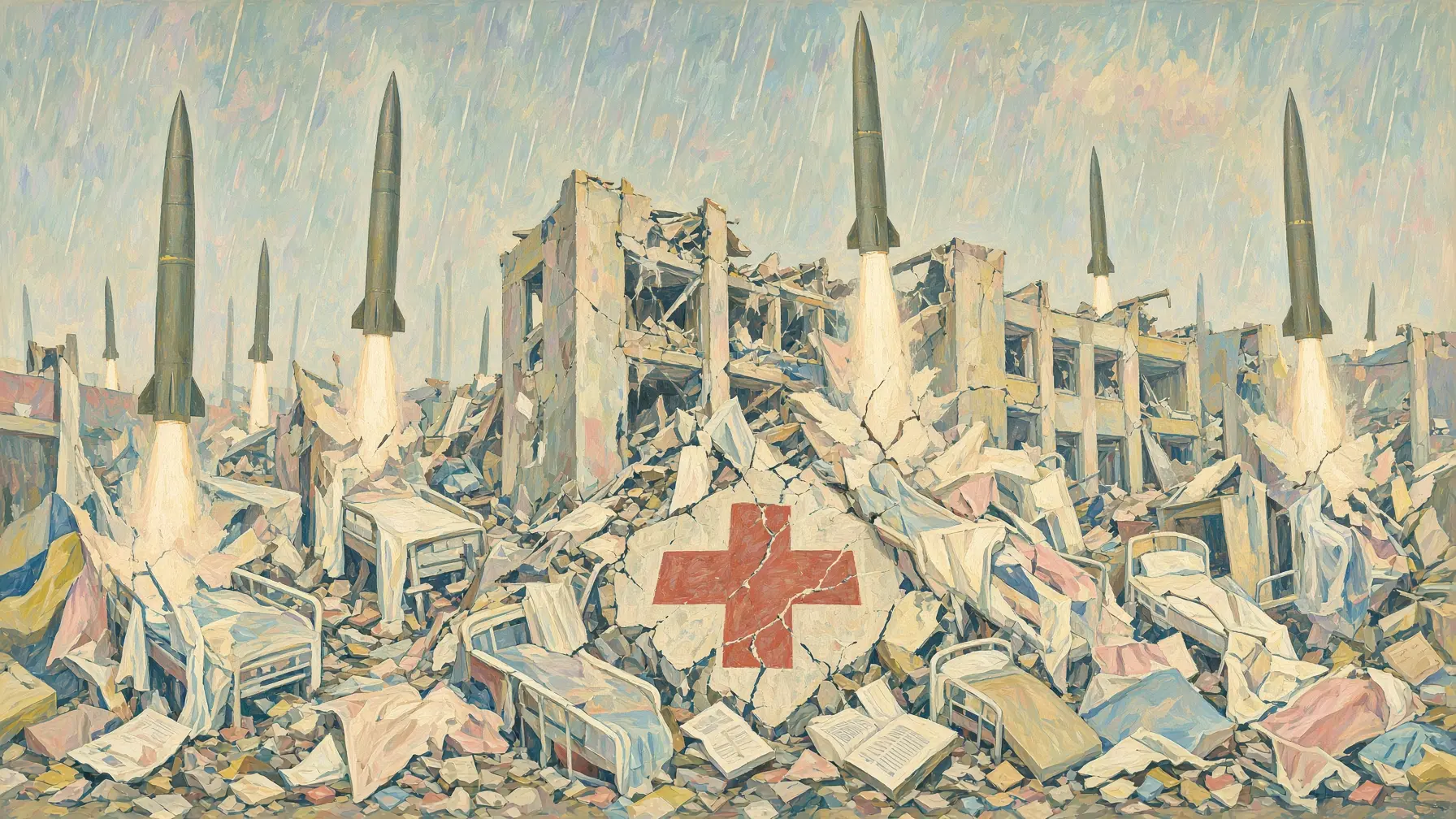
This year's worst Russian ballistic missile barrage: of course the Russkies bombed a hospital too
In the early hours of the day of the American midterm elections, Russia attacked Ukraine with 289 drones, 17 ballistic missiles and 59 cruise missiles. This year's heaviest strike on Ukrainian energy facilities caused power outages in ten regions, while a hospital was hit in Kharkiv and Dnipro was struck twice with missiles. At least 73 people were injured. According to Volodymyr Zelensky, Moscow…

America bombed Iran while Qatar was negotiating the reopening of the strait
On the eve of the midterm elections, the US military launched strikes on the area around the Strait of Hormuz, just a few hours after Donald Trump stated that the United States is not at war with Iran. At the time of the strikes, reported by The Wall Street Journal, the Qatari-mediated negotiations were still underway, in which Tehran had attached conditions to reopening the strait.

There Is a God! Trump Got Crushed in the American Midterms
In Tuesday's American midterm elections, the Democratic Party regained control of both the House of Representatives and the Senate, meaning Donald Trump will face an opposition majority in both chambers for the last two years of his term. In the Senate, the Democrats secured the majority late Tuesday night, while the Democratic victory in the House was projected by CBS News, NBC News, CNN and…

This one's credible - but only from a distance
The whole thing is so shoddy that it's almost impossible to write about. You end up feeling like the idiot.