
A PNL-USR bloc would catch up with AUR
The far-right AUR remains the most popular party in Romania, but since September it has lost more than five percentage points of support, while the PSD, now in government, has gained nearly six points. According to INSCOP's November survey, a joint run by the PNL and USR would reshuffle the balance of power: their alliance would come second, and among party voters who say they will definitely vote, its gap behind AUR would shrink to less than three percentage points.
The survey, commissioned by Informat.ro and conducted with the involvement of the Strategic Thinking Group, examined two scenarios: how people would vote if the parties ran separately, and how preferences would shift if the PNL and USR ran on a joint list. According to the results published on November 16, AUR would retain first place in both scenarios, while the PSD would come second only in the scenario where the parties run separately.
In this scenario, 34.6 percent of respondents able to name a party or candidate would vote for AUR, 24.6 percent for the PSD, 15.1 percent for the PNL, and 11.9 percent for the USR. The Democratic Alliance of Hungarians in Romania (RMDSZ) would receive 3.9 percent, SENS 3 percent, Diana Șoșoacă's SOS Romania party 2.1 percent, and the POT (Young People's Party) 1.8 percent; 1.6 percent would support an independent candidate, and 1.3 percent would choose another party. These proportions apply to respondents who named a choice, who make up 72 percent of the full sample. The balance of power behind this ranking looks different if we consider only those who can name a choice and also say they will definitely go out and vote. In this narrower group, which makes up 48.6 percent of the full sample, AUR stands at 34.1 percent, the PSD at 21.2 percent, the PNL at 16.4 percent, the USR at 14.7 percent, and the RMDSZ at 4.5 percent. The PNL, and especially the USR, thus perform better among those who say they will definitely vote, while the PSD's support is lower in this group.
A joint PNL-USR list would win 28.2 percent among party voters, compared to AUR's 35.7 percent, a gap of 7.5 percentage points. In this scenario, the PSD would be pushed into third place with 23 percent, the RMDSZ would get 3.8 percent, SENS 2.8 percent, the POT 2.5 percent, and SOS 2.4 percent. Among party voters who say they will definitely vote, however, only 2.9 points would separate the top two: AUR would stand at 35 percent and the PNL-USR alliance at 32.1 percent, followed by the PSD at 20.9 percent and the RMDSZ at 4.1 percent. Compared to the previous survey in September, the biggest change is AUR's decline and the PSD's rise. In the data for parties running separately, AUR slipped from 39.7 to 34.6 percent, while the PSD climbed from 18.7 to 24.6 percent. Meanwhile, the PNL weakened from 16.3 to 15.1 percent, and the USR strengthened from 9 to 11.9 percent. AUR's lead, previously measured at around or sometimes above forty percent, has thus noticeably narrowed, but as a standalone party it still has no direct rival.
The survey thus suggests that a joint run could create a more competitive challenger to AUR, especially if the two parties manage to mobilize their supporters. However, stated voting intention is not yet a cast vote, and the joint list itself remains, for now, only a scenario examined in the survey. Remus Ștefureac, director of INSCOP, links these changes to the end of the political crisis and the formation of the new government. In his interpretation, the PSD is partly winning back voters who had previously sided with AUR, and partly benefiting from the initial trust that a newly installed government receives, especially after a prolonged crisis. Whether this momentum will hold through the winter months remains to be seen. Ștefureac recalled that the PNL also gained significantly after the no-confidence motion in May, only to gradually lose this extra support during the months-long crisis that followed.
The survey's results are directly linked to the Modernization Pole plan announced by the PNL. On November 8, the Liberals decided to begin negotiations on absorbing Ludovic Orban's Forța Dreptei party, which they see as a first step toward a broader center-right alliance. The following day, MEP Siegfried Mureșan claimed that the new grouping could rise above thirty percent and become an equal rival to AUR. The results measured for a joint PNL-USR list lend some support to this idea, although the survey did not examine the still-forming Modernization Pole specifically. The joint list exceeds thirty percent among party voters who say they will definitely vote, but remains at 28.2 percent among all party voters. Moreover, data collection ended on November 2, so the survey could not yet gauge reactions to the negotiations announced afterward. The exact form of the cooperation has also not been settled. Mircea Abrudean, the PNL's leader in the Senate, said on November 9 that no talks had taken place about merging with the USR, and that for now it is a matter of parliamentary cooperation, whereas in the case of Forța Dreptei, talks preparing an actual merger have indeed begun. According to Ștefureac, in any case, the result for the PNL-USR list indicates significant combined voter support, which could encourage other parties to join forces as well.
Meanwhile, the camp of parties describing themselves as sovereigntist remains large overall: the combined support for AUR, SOS and the POT stands at 38.5 percent in the scenario where parties run separately, and at 40.6 percent in the scenario with a joint PNL-USR list. This figure is the sum of the three parties' results, not a measurement of support for a hypothetical joint list of their own, but it shows that, despite AUR's weakening, roughly two-fifths of party voters still line up behind them. The PSD's rise has not reversed the ranking either: the Social Democrats remain behind AUR, while the PNL-USR alliance would overtake them.
The survey was conducted between October 26 and November 2 among 1,197 people: 1,081 responded by phone, while 116 completed the questionnaire online after first being contacted by phone. According to INSCOP, the sample represents the adult population living in non-institutional households in Romania in terms of the main social and demographic characteristics; the maximum margin of error reported for the full sample is ±2.8 percentage points at a 95 percent confidence level. This margin of error cannot be applied unchanged to smaller voter subgroups. On the ten-point scale measuring willingness to vote, 61 percent of respondents chose ten, indicating certain participation, while 17.4 percent said they would definitely not vote.
Ugar
Did you like this article?
Support our work with a small donation
Secure payment via Stripe • Min. 2 EUR
Gesta recommendations:
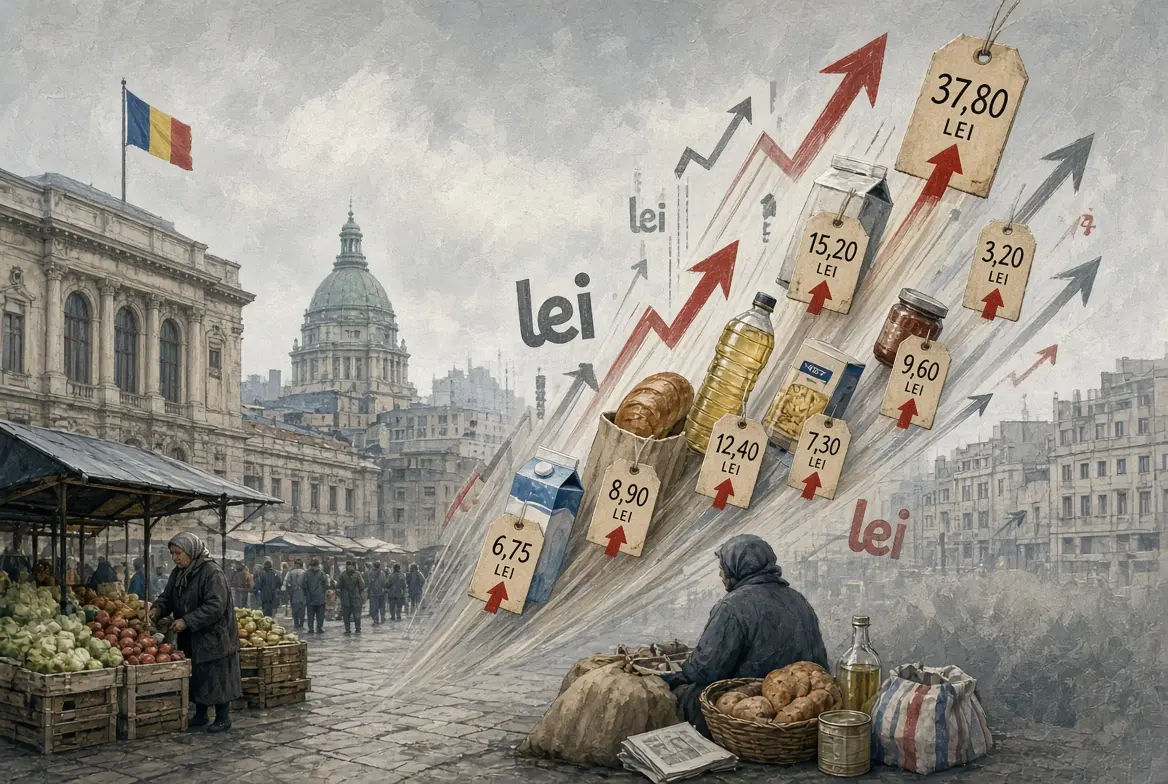
Inflation: prices are rising faster and faster in Romania
In Octoberannual inflation in Romania rose again to nearly seven percent, and on November 16 the central bank further worsened its forecast: it now expects year-end inflation of 7.4 percent instead of the previously anticipated 6.1 percent. The cost of fuel and energy is increasingly being built into the prices of more and more goods and services, while ahead of winter, uncertainties in…
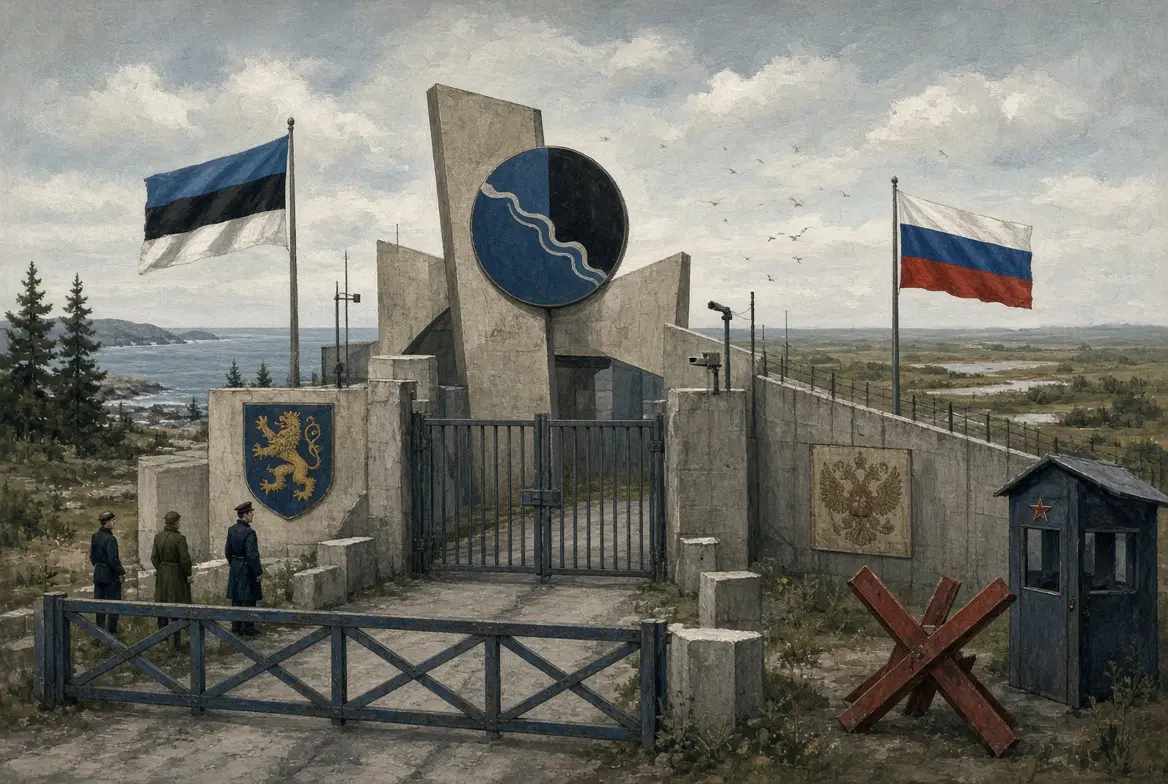
Estonia closes border crossings with Russia
Estonia will close, starting December 1, all three of its road border crossings with Russia that are still operating, after an attempt early Saturday to set fire to and blow up the Tallinn-area plant of drone maker Threod Systems. According to Estonia's internal security service, the attack was commissioned and directed by Russian military intelligence, the GRU. Eight people were detained, and…

Strasbourg: Danileț's punishment was unlawful! Savonea: I don't give a shit
Cristi Danileț has won his case for freedom of expression in Strasbourg, but has still not managed to get the Romanian court ruling that upheld his punishment overturned. The High Court of Cassation and Justice definitively rejected the former Cluj-Napoca (Kolozsvár) judge's request for a retrial on November 16, arguing that the seven-year-old sanction no longer has consequences serious enough to…

Cognitive Frontline, Part I/1: From the Protocols of the Elders of Zion to Today's Russian Propaganda, or the Lie That Outlived Its Own Exposure
A Russian forgery from the early twentieth century made its way across the Western world. Respected newspapers, influential businessmen and political movements lent it their names, and it kept spreading even after it had been exposed. The story of the Protocols of the Elders of Zion reveals how easily a society's existing fears can be turned into a worldview that, over time, comes to explain…

Musk Is Warned: Trump Will Leave, But the Documents Should Stay!
In a post-Trump era, which much of the world is awaiting with growing impatience, it may still matter who restricted Ukraine's satellite communications, why, and on whose orders, at a time when the country was under Russian air attacks. Political power has an expiration date, but electronic correspondence can have a backup copy. Two Democratic senators are now trying to make sure that by the time…