
Europe has lost the political war against Putin, and is now asking for a seat at the table to decide its own future
When a continent spends years financing its defense against an aggression also aimed at itself, and then has to be glad that it might be invited to the talks about its own security, it is time to say plainly that it has suffered a political defeat. Ukraine's soldiers are still fighting, and the country's military defeat is far from decided, but Europe has retreated so far that it is now trying to secure itself a seat at the negotiations between the aggressor and its increasingly unreliable American ally. Putin, meanwhile, is already prepared to negotiate the conditions under which he would allow those he threatens with attack to live in safety.
The Trump–Putin–Xi meeting planned for Shenzhen on Thursday, November 19, reveals the nature of this defeat even before the three leaders sit down together. Two of the world's largest economic and military powers, together with the leader of a state that started a war and trades in nuclear threats, are preparing to negotiate, while Europe watches to see whether the war that is devastating its own continent — and whose consequences it will have to live with — will even come up for discussion. On November 13, Washington still said that nuclear weapons and Iran would be the main topics at the trilateral meeting, but Trump later added Ukraine to the agenda as well. According to The Wall Street Journal, it was in fact Putin himself who proposed the meeting in a phone call in October, meaning the Russian president did not simply accept an invitation but helped build the stage on which he could once again appear as an indispensable player in world politics.
Putin does not even need to bring home a particularly spectacular agreement, since the mere photograph already sends the message that, after Western attempts to isolate him, he is once again one of the people with whom the world's fate is being negotiated. In the Portuguese Público, David Pontes pointed out how neatly Trump's search for an international role after domestic political setbacks dovetails with Putin's need for rehabilitation. In La Stampa, Lorenzo Lamperti noted that Xi could end up at the center of the meeting without having to bear any responsibility for solving the problems raised there. So the three participants are arriving for different reasons, but the same image — one in which Europe appears, at most, among the matters to be discussed — can serve all of them.
China's position in this company is considerably more comfortable than Russia's, since the war and the erosion of ties with the West have further deepened Moscow's economic dependence on Beijing. Cheaper access to Russian energy, the vulnerability of the Russian market, and the Kremlin's diplomatic dependence can all be converted into Chinese bargaining leverage. In February of this year, China bought a record amount of Russian crude oil — more than two million barrels a day — with some Russian grades priced $9 to $11 below Brent per barrel. According to an analysis by the Carnegie Endowment, trade between the two countries has exceeded $200 billion for two consecutive years, and between January and April of this year it grew by nearly twenty percent, to $85.2 billion. The analysis attributes the rapid growth of imports from China partly to the demands of Russia's defense industry. The balance of power is shown most clearly by the fate of the Power of Siberia 2 pipeline: during Putin's visit to China in May, 42 documents were signed, but none concerning construction or gas sales, because, according to Carnegie, Beijing is holding out for conditions — such as a price in line with Russia's domestic market — that Gazprom cannot accept. China, in other words, is no longer merely a buyer; it also decides which Russian projects interest it, and at what price.
This does not, of course, mean that every crisis is unreservedly advantageous for Beijing. The war in the Middle East and the closure of the Strait of Hormuz also disrupted China's energy supply, and according to a Reuters report from August, Sinopec tried to make up for the lost Middle Eastern deliveries partly with more Russian oil — meaning the crisis ultimately tied the Chinese–Russian energy relationship even closer together. For Xi, a settlement in Iran could therefore be valuable, but there is no guarantee that in exchange he would put the kind of pressure on Putin that Washington or Europe would like. And anyone who imagines that Trump, as some sort of reverse Nixon, could simply split Russia away from China should first consider what it would actually take to buy that outcome. Nixon and Kissinger exploited an already existing, deep Chinese–Soviet conflict; today's Moscow, by contrast, is bound to Beijing more tightly precisely because of the war's consequences. For Putin, an American rapprochement is therefore primarily another bargaining opportunity, from which he might try to extract eased sanctions, political recognition, and concessions regarding Ukraine. Xi, meanwhile, is pursuing his own interests, which include Taiwan, American technology restrictions, and the balance of power in the Pacific. Nor does this mean that, after a deal over Ukraine, he could simply launch a war against Taiwan without risk — the economic consequences, the difficulty of a military operation, and the uncertainty of the American response would all remain, even if Trump wanted to sell everything as one big deal.
In any case, the framing around nuclear disarmament is particularly well suited to wrapping a far more prosaic great-power bargain in an elevated, world-saving narrative. The stakes are all the higher because New START — the last valid American–Russian arms-control treaty — expired in February of this year, meaning no binding agreement currently limits the arsenals of the two largest nuclear powers. Trump is thus offering to fill, through a trilateral deal, the vacuum that Washington and Moscow allowed to form, even though China would not, in principle, even be needed to close that gap. According to SIPRI's estimate for early 2026, China had around 620 nuclear warheads, while the total American stockpile exceeded five thousand and Russia's exceeded fifty-four hundred. These are figures for total stockpiles, including weapons awaiting dismantlement, so not all of them are immediately deployable, but the disparity remains significant even when looking only at stockpiles reserved for military use. Beijing publicly argues that, given such differences, it does not consider trilateral nuclear disarmament talks fair or realistic, since they could easily end up entrenching existing American and Russian superiority. Moreover, China's security environment cannot be viewed solely through the lens of the American–Russian relationship, since among its immediate neighbors — besides Russia — India, Pakistan and North Korea also possess nuclear weapons. These naturally do not threaten Beijing to the same degree. Pakistan is a close partner, while the relationship with India is burdened by territorial and strategic rivalry, and North Korea does not become a reliably controllable instrument simply because it is heavily dependent on China. Kim Jong-un is focused on the survival of his own regime, and Xi is unlikely to confuse influence with obedience, just as he is unlikely to mistake the value of a friendly letter or a successful handshake for a guarantee of nuclear security. What makes the Chinese–North Korean relationship so difficult is precisely that Beijing wants to avoid both its neighbor's collapse and the consequences of its unpredictable nuclear policy.
So if Trump wants to announce equal-scale disarmament by all three countries as a world-historic success, he would first have to explain why it would be worthwhile for China to reduce its far smaller arsenal with the same momentum as the other two. This will be hard to turn into a simple victory announcement — unless Trump's peculiar method of creating balance is for Washington and Moscow first to gift Beijing a thousand warheads each, and then for all three to ceremoniously hand some of them back. Yet behind the joke lies a real distinction. Reducing stockpiles, limiting arms buildups, ensuring transparency, and preventing accidental escalation are all separate negotiating topics, and China may well have reasons to discuss the latter. The nuclear agenda therefore cannot be called a proven lie, but the promise of imminent, large-scale trilateral disarmament is all the more justifiably treated as political advertising.
All this is a particularly attractive opportunity for Trump to perform on the world stage after the November 3 midterm elections, in which his party lost both chambers of Congress. As his room for maneuver at home narrows, the foreign-policy stage — where he can present himself as the central figure in personal deals and grand announcements — may become more valuable to him, even though the American system of government does not grant the president unlimited authority in foreign policy either. Trust is not helped by the fact that serious conflict-of-interest questions have already arisen over the ties between the Trump family's business interests and foreign political relationships. Investors linked to the United Arab Emirates, for instance, acquired a stake in the family-linked World Liberty Financial in a half-billion-dollar deal.
From Europe's point of view, however, the most serious question is what kind of security order is being negotiated behind its back — and on this point, the talks held in Abu Dhabi were a particularly bad omen. According to a document obtained by The New York Times, at the talks on November 10–11, the Russian delegation again raised demands that would roll back NATO's military presence to its 1997 state. Moscow has thus essentially returned to the security ultimatum it had already formulated in December 2021, two months before the full-scale invasion. According to reports, American negotiators did not automatically accept this position, and pointed out that the world has changed since then. Still, it is alarming in itself that the negotiations over ending the war in Ukraine are once again being used to try to fold in the military arrangements of the entire continent. The significance of the 1997 date becomes clear once one considers which countries joined NATO afterward: Poland, Hungary and the Czech Republic in 1999, and Romania, Bulgaria, Slovakia, Slovenia and the Baltic states in 2004. The Russian demand does not necessarily mean the formal expulsion of these countries. It means that, even as allies, they could only claim a more limited degree of military protection and presence — in other words, that Moscow would gain a say in how they may defend themselves. If this were accepted, the membership document itself could remain intact, while a second-class tier would effectively be created within the alliance, whose security would be calibrated to the aggressor's sensitivities. According to a report by Al Jazeera, Moscow would also offer separate non-aggression treaties to individual European states, including neighboring Estonia and Finland. According to former Russian diplomat Boris Bondarev, such a series of bilateral pacts would undermine NATO's principle of collective defense. These separate deals are dangerous because they attempt to replace common defense with individually negotiated Russian goodwill. And Eastern Europe has known, ever since the Molotov–Ribbentrop Pact, exactly what a bilateral "guarantee" from the Kremlin is worth.
It is especially humiliating that Europe had to learn of its own admission to the negotiating table from a promise made by American mediators, even though the consequences of the war are borne largely by European countries. After their talks in Moscow on November 12, Steve Witkoff and Jared Kushner informed the Europeans and Ukrainians that Europe, too, might get a seat at later negotiations — but this did not amount to any publicly confirmed, comprehensive Russian consent. At the meeting, Putin said only that Russia had never refused dialogue with Europe, but that Europe must decide whether it wants peace or war. Moscow has no legal authority to decide whether Europe may represent its own interests, yet politically, exactly that impression is created — as though it were up to Moscow to grant this right. Nor did the European representation worked out at the Dublin talks on November 13 dispel the impression that the continent is also getting bogged down in its own decision-making system. Kushner asked for a single European negotiator, but Europe is sending a seven-member team, which includes France, Germany, the United Kingdom, Italy and Poland, as well as the leadership of the European Council and the European Commission — but not Kaja Kallas, the EU's foreign policy chief, nor the diplomatic service she heads. According to Euronews, Italian Prime Minister Giorgia Meloni argued that Kallas lacks the institutional weight for the role, while Kallas herself said: "The Russians don't want me." There may well be genuine institutional and personal-style tensions surrounding Kallas that cannot simply be traced back to Russian influence — it is also part of the picture that the defense-expert group she initiated was disbanded in September under Italian and French pressure. Either way, the end result is that the very post created to represent the Union's foreign policy is being sidelined in a fundamental foreign-policy matter — and that the politician Moscow would least like to see at the negotiating table is the one being kept away from it. Even if Europe sits down with seven representatives, that does not preclude a common position, but seven separate national or institutional interests do not, on their own, add up to a unified negotiating will.
It is particularly hard to explain all this away by saying that Europe simply lacks the money or the weight, because the scale of its support shows exactly the opposite. According to data from the Kiel Institute for the World Economy, Europe has taken a leading role in supporting Ukraine, though part of its military aid continues to take the form of purchases of American weapons. In the first half of 2026, at least three billion euros of European funding went toward American defense-industry procurement, representing about thirty percent of the industry-purchased support. This is not thirty percent of all European aid, but of a specific category of procurement — yet the ratio still points to a significant gap between Europe's financial sacrifice and its military self-sufficiency. Moreover, the money is sitting right there in European accounts; what is missing is the will to use it. Roughly €210 billion in frozen Russian central-bank assets are held in Europe, most of it at the Belgian financial institution Euroclear. The EU froze these assets indefinitely last December, but the "reparations loan" meant to be backed by them collapsed at the last moment, chiefly due to resistance from Belgian Prime Minister Bart De Wever, who cited the legal and financial risks facing his country. In the end, member states raised €90 billion through joint borrowing to fund two years of support for Ukraine, while in May of this year a Moscow economic court ruled in favor of Russia's central bank in its lawsuit against Euroclear. On Wednesday, European Commission President Ursula von der Leyen proposed a new €45 billion loan for Ukraine for 2027, also financed through joint debt, whose principal Kyiv would only have to repay if Russia pays reparations. If Moscow refuses to do so, Brussels reserves the right to tap the frozen Russian assets. According to Euronews, Slovakia, the Czech Republic, Hungary and Bulgaria have already said they will not take part. So, after a year of debate, the aggressor's money remains untouched, while European taxpayers finance Ukraine's defense with loans, plus interest.
Dependence on the United States, moreover, cannot be eliminated overnight with a few new factories or grand budgetary announcements, because America plays a decisive role in the intelligence, satellite services, command systems, aerial refueling and strategic transport that modern warfare requires. So however large a share of the bill Europe takes on, it still lacks independent control over certain indispensable capabilities — and this dependence can be turned into political obedience if Washington's leadership chooses to use it that way. In this sense, the failure is not a lack of support, but the fact that, over decades, economic strength was never transformed into adequate joint military and political capacity for action.
The road that led here was paved with clearly identifiable decisions and failures to decide, and the responsibility for them cannot be erased simply by everyone professing surprise after the fact. After Russia's annexation of Crimea in 2014, Germany continued to stand by the Nord Stream 2 pipeline. Angela Merkel's governments defended the pipeline as an economic project, and Olaf Scholz's government only halted its certification on February 22, 2022 — two days before the full-scale invasion. In other words, dependence on Russian energy was deepened even after the first open act of territorial seizure. And when, in 2023, the EU committed to delivering one million rounds of artillery ammunition within a year, by the following March its own official assessment counted barely more than half of that target as achieved. Production capacity, joint orders and long-term contracts could not be conjured up at the last minute — and on the Ukrainian front, the delay did not manifest as a mere administrative inconvenience.
The back-and-forth over weapons deliveries and usage permissions followed the same pattern. Western governments repeatedly turned the question of whether Ukraine could receive a given weapon — and then what it could use it for — into a separate political crisis each time. Weighing the risk of nuclear escalation is a duty, but that weighing turns into self-abandonment once every threat from the aggressor automatically results in a new restriction on the side being attacked. The full military consequences of the opportunities squandered after Ukraine's successes in 2022 cannot be proven after the fact, nor can it be stated with certainty that faster support would already have ended the war — but it can be said with certainty that the delay had a cost, and that this cost was paid above all by those whose cities kept being bombed in the meantime.
What is more, Europe is not merely facing the side effects of a distant war even within its own territory, since sabotage, cyberattacks and influence operations linked to the Russian state have long been directed at European societies themselves. In the case of the 2024 arson attack on a London warehouse storing supplies destined for Ukraine, a British court established that the perpetrators were commissioned by individuals linked to the Wagner Group. Estonia, meanwhile, is now preparing to close its road border crossings with Russia after an attempted attack on a drone manufacturer, with the local internal security service attributing the planning of the attack to the GRU. In one case there is a court ruling, in the other an assessment by the authorities, but together they clearly show how misleading it is to judge where the conflict is actually taking place solely on the basis of the front line in Ukraine. Nor would it be true to say that Europe has not responded to any of this at all — there have been arrests, there have been convictions, and the EU has also introduced separate sanctions against those involved in destabilizing operations. The real question is rather whether these consequences are severe and predictable enough to change the calculations of those ordering such operations, since the repeated attacks suggest that Moscow still considers the risk worth taking. If Europe, after every new attack, carefully studies how it might avoid provoking the aggressor, then in the end it is the aggressor itself that sets the limits of Europe's defense.
One of Putin's gravest victories was born precisely at this point, in Western thinking itself, because he managed to ensure that we increasingly weigh the defense of our own interests through the lens of his anticipated disapproval. Cognitive warfare wrapped in propaganda does not necessarily try to convince us that Russia is right about everything. It tries to convince us that it is impossible to tell who is right anyway, that everyone lies equally, that resistance is dangerous, and that help only prolongs the suffering. NATO captures the essence of this kind of warfare as an effort to influence perception, judgment and decision-making, and RAND researchers described years ago how Russian propaganda spread through many channels, in large volumes and with constant repetition, works — propaganda that does not even need to be consistent in order to exhaust and confuse its audience.
The power of repetition is not a superstition of propagandists but a well-measured psychological phenomenon. Psychology describes this as the illusory truth effect: what we hear many times seems more familiar, and therefore truer. According to Lisa Fazio and her fellow researchers' 2015 experiments, the effect works even when participants otherwise know the correct answer. Repetition does not deceive only the ignorant, then, but anyone who hears the same thing often enough — which is why it is not harmless that phrases like “NATO provoked the war,” “Ukraine will lose anyway” or “arms shipments only raise the death toll” have echoed daily for years on social media and from the mouths of certain politicians. No one needs to believe them at first hearing. It is enough that, over time, they start to sound natural, and whoever contradicts them becomes the odd one out.
Even deeper is the method that Soviet military thinking called reflexive control, and which Russian doctrine still uses today. Its essence is that the adversary should not be coerced, but rather that the image it holds of the situation and the information available to it should be shaped so that it makes, of its own will, the decision that favors Moscow. The story of the West's “red lines” is a textbook example. The Kremlin presented HIMARS rocket artillery, Western tanks, ATACMS missiles and F-16s alike as an uncrossable threshold whose violation would carry unforeseeable consequences. In every case, the Western weapons eventually arrived, and the promised nuclear response never materialized. Yet with each new weapon the same debate played out again, with the same fear and the same months-long delay. This is self-deterrence: the aggressor no longer even needs to threaten, because the threat works inside our own heads instead.
The same psychology operates at the negotiating table. The demand to return to the 1997 NATO status quo keeps resurfacing not because Moscow seriously expects it to be met, but because it serves as an anchor. It is well known from negotiation literature that the first extreme demand stated sets the benchmark against which later offers are measured. If Russia draws the starting point at the dismantling of the NATO presence in Eastern Europe, then an offer limited to “just” the Donbas, “just” Ukraine's neutrality, or “just” restricting Western troops already looks like a concession — even though each of these would come at the expense of the attacked country and its neighbors. The rhythm of the blackmail is also familiar: threat, tension, then relief when the worst does not happen after all. Over time this relief starts to function as gratitude, and part of Western public opinion is already happy simply that the aggressor is not raising the stakes at a given moment.
Eastern Europe has experienced this cognitive front line firsthand. In Hungary, Fidesz won the 2022 election campaign with the message that the opposition was “pro-war” and the government was “pro-peace.” This turned support for the attacked country into the cause of the war, and leniency toward the aggressor into the guarantee of peace — according to an analysis by 444, as if it were the opposition, not Russia, that wanted the war. In Romania, the Constitutional Court annulled the first round of the presidential election in December 2024, after declassified intelligence documents pointed to a coordinated TikTok campaign boosting the Kremlin-friendly candidate Călin Georgescu. A well-organized social media operation was thus able to turn the election of a NATO and EU member state upside down in a single month. The two cases differ in nature, but carry the same lesson: in cognitive warfare, the ammunition is not weapons but our own words, fears and fatigue. Everyday language calls this dumbing down, but the process is more insidious than that, since it does not necessarily destroy people's intellectual abilities but rather smashes the reference points they need to orient themselves. Anyone who cannot decide which source to trust, and hears a hundred times a day that defense is pro-war and submission is a peace policy, may in time come to see even their own security interests as a dangerous extreme. In the Doppelganger operation uncovered by the US Department of Justice, for instance, sites mimicking well-known media outlets, fake identities and targeted content were used to try to weaken support for Ukraine, and the authorities also pointed to the guiding role of the Russian presidential administration. This does not mean that every anti-war opinion is a Russian product, or that every Western mistake is ordered from Moscow. But the organized effort that exploits societies' uncertainty for its own foreign-policy goals is very well documented.
Part of this cognitive victory is that the mass erosion of moral judgment eventually grows beyond assessments of the war in Ukraine itself. When unambiguous aggression is constantly dissolved into a “complex situation,” and proven crimes are automatically paired with the claim that the other side is not innocent either, people learn that responsibility can always be erased with enough verbiage. Psychologist Albert Bandura, studying the mechanisms of moral disengagement, described exactly these kinds of techniques — diffusing responsibility, blaming the victim, minimizing the significance of harm — and they operate not only in wartime situations but also in justifying everyday behavior. Seen from this angle, excusing the aggressor does not remain without consequences in European everyday life either, because the same moral loophole can later reappear in the acceptance of domestic corruption, abuse of power, or the humiliation of the vulnerable. If everyone steals, why demand honesty specifically from our own politician; if everyone lies, why should our own camp's propaganda bother us; and if the victim surely bears some blame too, why should we stand up for them? No single Russian operation can be blamed for all of Europe's moral ills, but consistently spread cynicism is very well suited to deepening weaknesses that already exist. In the end, it can erode not only our solidarity with Ukraine but also the trust that our own communities need in order to function.
The psychological turning point of the geopolitical game comes when the threatening party's grievances become more important than the rights and interests of everyone else. This is the sense in which Putin has gained the upper hand over us: not because he is stronger than us in every respect, but because he has repeatedly succeeded in making us calculate what will anger him, while he worries far less about what will anger us. British national security strategy explicitly reckons with the fact that Russian nuclear threats serve to constrain Western decisions — so this is not merely a journalistic impression but a recognized mechanism of blackmail. On top of this came the election of Donald Trump, which put at the head of the strongest state in the Western alliance system a politician who is visibly drawn to the strongman style of leadership, and who tends to treat shared security as a series of personal deals as well. Putin did not need to gain military superiority over us for part of the stronger side's political leadership to start tending to his grievances, and for European leaders to adjust their own self-restraint to the American president's unpredictability. In a system of dependencies and fears built up over years, the election of even one weighty political fool can wreak astonishing damage. Such a leader no longer simply makes bad decisions — he changes, for the entire alliance, who must be feared, who must be flattered, and whose interests can be set aside without consequence.
Elbridge Colby's remarks in Brussels in November became almost a textbook example of this: the Pentagon official questioned the usefulness of Ukrainian strikes against targets deep inside Russia and warned of their escalatory consequences. German Defense Minister Boris Pistorius rejected criticism of strikes on military or military-use facilities in Russia, and redirected attention to Russia's destruction in Ukraine. In doing so, he also showed that Europe still has leaders capable of calling disproportionality by its name. The problem is precisely that today this counts as a separate, notable stance, even though supporting the attacked country's self-defense and holding the aggressor accountable ought to be the baseline from which the entire alliance's policy should start.
Establishing that Europe has lost does not, however, mean that every European country behaved the same way, or that the possibility of resistance has disappeared. The defense efforts of Poland and the Baltic states, Finland's shift in security policy, Estonia's firm responses, and the European support given to Ukraine all show that the will to act exists — it simply has not come together into a political force representing the continent as a whole. According to NATO data, in 2025 Poland spent 4.48 percent of GDP on defense, Lithuania 4 percent, Latvia 3.73 percent, and Estonia 3.38 percent — far more than Italy or France, which barely reach two percent. This can hardly be explained by mere war hysteria, since the Russian threat is geographically closer to them. The region, however, is not uniform. In Bratislava, Robert Fico's government continues to flirt with Moscow, and Al Jazeera also warns that a Le Pen presidency in France or a possible AfD success in Germany could further weaken Europe's stance in support of Ukraine.
The logic of non-aggression pacts and spheres of influence is most dangerous in Moldova, because the country is not a NATO member, and Russian troops have been stationed along the Dniester — internationally recognized as Moldovan territory — since the early 1990s. On November 4, Putin decorated Vadim Krasnoselsky, the leader of the breakaway region, at the Kremlin, and in response Chisinau banned him for five years from leaving the country through official border crossings. The Moldovan government has long accused Moscow of trying to destabilize the country and of attempting to cut off its European path through election interference. If Moldova were once again to appear as a Russian sphere of influence in great-power deals, a new gray zone would emerge on Romania's eastern border, whose fate would be decided over the heads of Moldovan and Romanian voters alike.
For Romanian and Hungarian readers, moreover, the most telling precedent is not Yalta but a lesser-known scene that played out in Moscow in October 1944. On October 9, Winston Churchill wrote on a sheet of paper for Stalin how they would divide influence between themselves in the Balkans and the Danube basin. Romania would go 90 percent to the Soviet Union, Greece 90 percent to Britain, Bulgaria 75 percent to the Soviets, while for Hungary and Yugoslavia the note listed a 50-50 split. Within the following days, the two foreign ministers had already agreed on 80 percent Soviet influence over Hungary. Stalin ticked the paper with a blue pencil. The so-called “percentages agreement” never became a formal treaty, yet the region's fate unfolded over the following decades roughly as that sheet of paper had foretold — and neither the Romanian nor the Hungarian government was ever asked about it.
The other cautionary parallel is Munich. In September 1938, the leaders of Britain, France, Germany and Italy decided on the partition of Czechoslovakia without even inviting Czechoslovakia to the negotiating table. British Prime Minister Neville Chamberlain, returning home, declared that he had brought “peace for our time”; half a year later Hitler marched into Prague, and a year later the World War broke out. Munich has ever since stood as a symbol of the fact that an aggressor's appetite cannot be satisfied with concessions, and that the word “peace” can be one of the most dangerous political weapons, if it is used to describe the capitulation of the attacked party. Whoever today preaches “pro-peace” positions in Eastern Europe while urging Ukraine to hand over its territories and its neighbors to dismantle their defenses is not repeating 1945, but 1938.
The parallel with a new Yalta is therefore both apt and misleading at once. Alexander Dugin, the ideologue of Russian nationalists, called the Shenzhen meeting “deeply symbolic,” according to Reuters, while Volodymyr Zelensky said Kyiv does not want “a second, third or fourth Yalta.” Great powers indeed tend to treat the fate of others as a matter to be settled among themselves, but Eastern Europe today is not in the same position it was at the end of the Second World War. It has its own states, armies, alliance ties and political room for maneuver, which must not be declared lost before negotiations even begin — and tanks can no longer simply roll in the way they did in 1945 or 1956. The real danger is precisely that Western leaders, through their own decisions, are weakening these very assets, and accepting a political subordination that Russia was never able to impose on them militarily.
For a turnaround, what is needed above all is a European negotiating mandate with clear boundaries: Ukraine's fate cannot be decided without Ukraine, the defense of European states cannot be settled on behalf of those concerned, and Russia cannot be given a veto over its neighbors' security decisions. This position will only be taken seriously if it is backed by Ukrainian support secured for several years ahead, joint procurement that gives manufacturers predictable orders, and a targeted reduction of critical dependencies on the United States — because another political declaration by itself does not replace an air-defense missile, satellite reconnaissance, or artillery ammunition. Achieving strategic autonomy is a long process, but its length cannot be an eternal excuse for always leaving it to the next government to begin. The same consistency is needed against Russian hybrid operations — from the criminal prosecution of those carrying them out, through dismantling their funding and front organizations, to protecting critical infrastructure. The fight against propaganda should focus on exposing hidden funding, fake identities and organized deception, while governments must also clearly explain the reasons and costs of their own decisions. Public trust cannot be regained simply by dictating from above whom to believe — but neither can it be regained by standing by helplessly, citing free speech, while the public sphere is deliberately falsified.
The Shenzhen meeting could end without any substantial agreement, and nothing in what we know today implies that some secret deal on dividing up Europe has already been struck. Kremlin spokesman Peskov himself rushed to state that the leaders do not want to “decide the fate of the world” — but such reassurances are typically voiced precisely when that is exactly what is at stake. What is already clear even before the meeting, however, is that Putin has achieved what he wanted: in the conversation about the price of ending the war, it is once again his security demands, his grievances and his threats that set a large part of the agenda, while the attacked country and its European backers are fighting even for their own place at the table. In this sense, Europe has lost the political war with Putin, and no amount of reaffirming unshakeable commitment in the next press release will change that. The defeat will become final if Europeans accept that defending their own interests is too dangerous, that organizing their own strength is too expensive, and that moral consistency toward the aggressor is too naive for the world of great-power politics. Putin could hardly wish for more than that, because then he would no longer need to defeat us himself — we would do the job for him, with proper self-restraint, in suitably diplomatic language, and with the reassuring thought that at least this time, too, we did not escalate anything.
Anna Karczag, Ugar
Sources used:
Novaya Gazeta Europe reports on the Wall Street Journal's information that it was Putin who initiated the trilateral meeting with Trump and Xi. Source here.
IntelliNews reports on the American confirmation of the meeting and the originally announced agenda. Source here.
Kyiv Post reports on the November 19 meeting date, Trump's November 16 shift regarding Ukraine, and Peskov's statement. Source here.
Reuters' analysis published on Internazionale examines the great-power backdrop of the meeting and shows how the Yalta parallel appears in the statements of Dugin and Zelensky. Source here.
Eurotopics summarizes the assessments of David Pontes of Público and Lorenzo Lamperti of La Stampa on the trilateral summit. Source here.
Público's editorial, judging by its title, contrasts Europe's seat at the negotiating table with the actual weight of its diplomatic role. Source here.
India Seatrade News writes about the record-high Chinese imports of Russian oil expected in February and the price discounts offered by Russian suppliers. Source here.
Carnegie's analysis examines the development of Chinese-Russian trade in 2026, the stalled Power of Siberia 2 gas pipeline, and Beijing's conditions. Source here.
Reuters' report on Al-Monitor states that Sinopec made up for the shortfall in Middle Eastern deliveries by purchasing more Russian oil. Source here.
Al Jazeera reviews the expected agenda of the summit in connection with the closure of the Strait of Hormuz and the February expiry of the New START treaty. Source here.
The summary of SIPRI's yearbook contains estimates of the size and composition of nuclear arsenals at the start of 2026. Source here.
China's position paper, available in the UN document repository, outlines Beijing's objections to trilateral nuclear disarmament talks. Source here.
An analysis by the Council on Foreign Relations explains China's interests regarding arms-control limitations and why a rapid breakthrough is unlikely. Source here.
A background piece by the Council on Foreign Relations presents China's relationship with North Korea, Beijing's influence, and its limits. Source here.
AP reports on the results of the US midterm elections and the shift in congressional power balances. Source here.
The Guardian's election page collects the results and related news of the 2026 US midterm elections. Source here.
L'Orient Today reports on the investment linked to the United Arab Emirates that went into World Liberty Financial, the venture tied to the Trump family. Source here.
Ukrainska Pravda, citing a document obtained by The New York Times, reports on the Russian demand that would bring NATO's military presence back to its 1997 level. Source here.
The Council on Foreign Relations analyzes the results and limits of the Abu Dhabi talks, touching on Kushner's proposal for a single European negotiator. Source here.
Al Jazeera writes about the non-aggression agreements proposed to Estonia and Finland, Bondarev's assessment, and Russia's exploitation of European political divisions. Source here.
The report published by Yahoo describes the November 12 Moscow meeting between Witkoff and Kushner, as well as Putin's statement on Europe. Source here.
Le Monde reports that American envoys promised European participation in the next round of peace talks on Ukraine. Source here.
EUobserver presents the Dublin decision, which would entrust representatives of five European countries and EU institutions with representing Europe in the peace talks. Source here.
Euronews describes the background to Kaja Kallas being sidelined, Giorgia Meloni's arguments, and the blocking in September of the launch of the defense experts' group. Source here.
The Kiel Institute for the World Economy examines the scale of European support provided to Ukraine and the continued decisive role of American arms purchases. Source here.
Wikipedia's summary reviews the disputes over the use of frozen Russian central bank assets, the EU's loan decisions, and the Russian legal action against Euroclear. Source here.
Euronews shows how the plan for a reparations loan based on Russian assets fell through in December 2025. Source here.
Euronews describes Ursula von der Leyen's November 18 proposal for a €45 billion loan to Ukraine, to be financed through joint EU borrowing, and the issue of member states opting out. Source here.
An analysis by the European Parliament's research service shows in which military capabilities Europe depends on the United States. Source here.
A statement by the German Ministry of Economic Affairs explains the reasons for halting the certification of Nord Stream 2 on February 22, 2022. Source here.
An EU assessment gives an overview of the fulfillment of the pledge to deliver one million artillery shells and the obstacles to military support. Source here.
A statement by British counter-terrorism authorities reports on the conviction of those behind a Russian-linked arson attack on a London warehouse. Source here.
ERR writes about a sabotage attempt in Estonia linked to the GRU and the Russian border closure prepared in response. Source here.
A statement by the Council of the EU describes the sanctions imposed over Russian hybrid operations carried out in Europe and Ukraine. Source here.
A NATO overview shows how cognitive warfare targets human perception, judgment, and decision-making. Source here.
A RAND analysis explains how Russian propaganda operates by being spread in large volumes, through many channels, and with constant repetition. Source here.
A 2015 study by Fazio and co-authors examines how repetition increases the perceived credibility of a claim even when a person possesses knowledge that contradicts it. Source here.
A study in Militaire Spectator presents the concept of reflexive control used in Russian military thinking, that is, the indirect influencing of an opponent's decisions. Source here.
Euromaidan Press lists the cases in which the crossing of the "red lines" announced by Russia's leadership was not followed by the threatened response. Source here.
444 analyzes Fidesz's 2022 communication strategy, which sought to associate the Hungarian opposition with war and the government with peace. Source here.
The Kyiv Independent reports on the annulment of the first round of Romania's presidential election in December 2024 and its background. Source here.
A statement by the US Department of Justice describes the methods and uncovered state links of the Russian influence operation known as Doppelganger. Source here.
A study by Albert Bandura discusses the psychological mechanisms by which people absolve themselves of responsibility for morally unacceptable acts. Source here.
Another study by Bandura examines the shifting of responsibility, the minimizing of the significance of harm, and victim-blaming as part of moral self-exoneration. Source here.
The British national security strategy also assesses the Russian nuclear threat as a tool used to influence and constrain Western decisions. Source here.
Anadolu presents Elbridge Colby's remarks criticizing Ukrainian strikes and the response of German Defense Minister Boris Pistorius. Source here.
Euronews compares the 2025 defense spending of NATO member states, highlighting in particular Poland's high expenditure as a share of GDP. Source here.
A statement by the Romanian Ministry of Defense, published by Agerpres, presents the development of the Mihail Kogălniceanu air base. Source here.
Telex reports on the temporary suspension of rail traffic between Hungary and Ukraine following the attack in Mukachevo. Source here.
The Kyiv Independent writes about Krasnoselsky's trip to Moscow and the award he received there, the travel ban imposed on him by Moldova, and the Russian military presence in Transnistria. Source here.
Wikipedia summarizes the October 1944 Moscow Conference and the "percentages agreement" between Churchill and Stalin on spheres of influence in Eastern Europe. Source here.
Wikipedia presents the history of the Munich Agreement, Czechoslovakia's exclusion from the negotiations, and Chamberlain's declaration of "peace for our time." Source here.
Did you like this article?
Support our work with a small donation
Secure payment via Stripe • Min. 2 EUR
Gesta recommendations:
Artificial intelligence would race ahead, but companies' data is holding it back
Corporate financial and tax executives expect more and more from artificial intelligence, but most companies still lack the basics for it: their data is scattered, of poor quality, and not fit for a machine to work with. This emerges from the consulting firm EY's 2026 global survey (EY Tax and Finance Operations Survey 2026), the results of which were published on November 13.
Even the West knows how to do it when it wants to: Qin Gang and Li Shangfu may have handed Washington the secrets of the rocket forces
More than three years after Chinese Foreign Minister Qin Gang and Defense Minister Li Shangfu disappeared from public view within weeks of each other, the Paris-based intelligence newsletter Intelligence Online revealed on Wednesday an American link behind their downfall. According to the publication, the two politicians, who belonged to the inner circle of trust of Party General Secretary and…
Let's thank Hunor too: three billion euros in EU funds may be lost
Romania is facing the largest cut from the EU recovery fund: according to information obtained by the Financial Times, the country could lose around three billion euros of the money it was due to receive under the Recovery and Resilience Facility (RRF), in Romania's case through the National Recovery and Resilience Plan (PNRR).
State in the cloud: Estonia prepares for Russian occupation
Estonia is building a system that would allow the government to keep running state services even if Russia attacked and occupied the country. To this end, Estonian authorities are creating backup digital infrastructure and moving part of state services to secure cloud platforms so that they remain accessible from abroad.
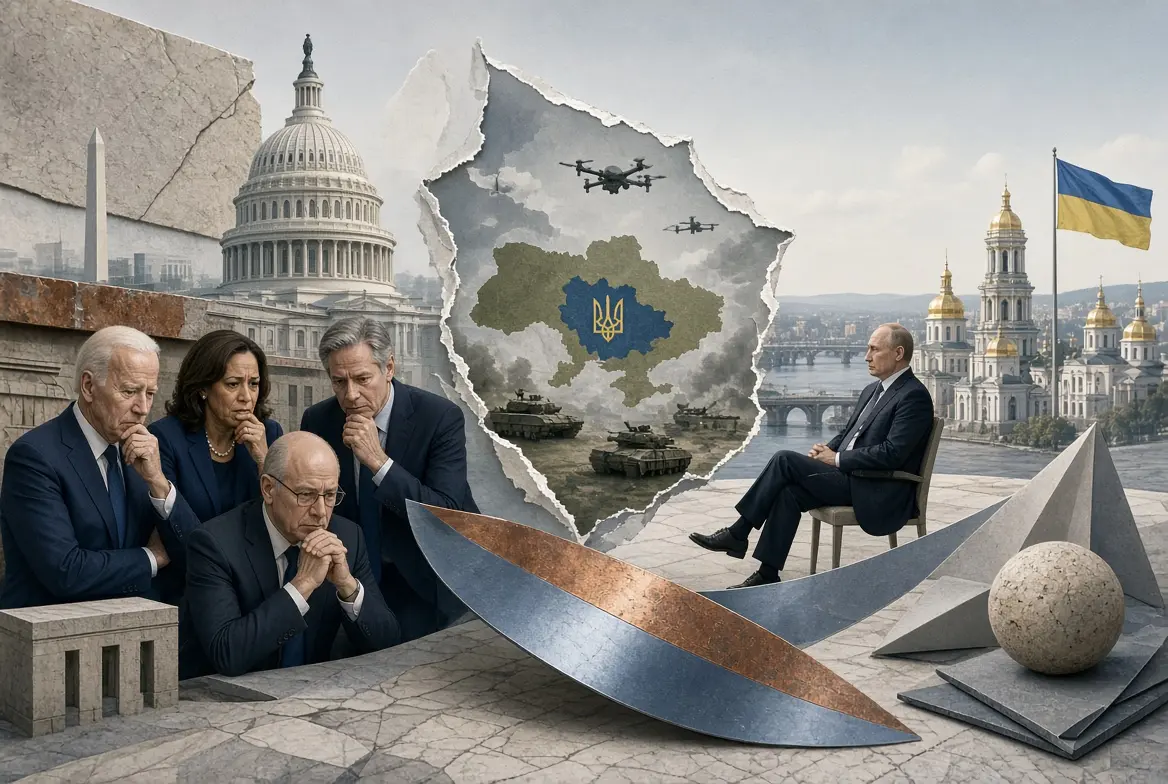
Instead of Putin, it's Washington that's worried about Ukrainian counterstrikes
At first glance, one might think it was Lavrov speaking, or perhaps Medvedev had found a few sober minutes and was explaining, this time without nuclear threats, why Ukraine should quietly endure the destruction — except that this time it was a senior Pentagon official who voiced concern over Ukrainian counterstrikes, and he did so at a Brussels meeting that was supposed to be about supporting…