
A week of talks on Ukraine: who negotiated with whom, what they demanded and what they agreed on
Abu Dhabi, Moscow and Dublin. Between November 10 and 13, talks on how to end Russia's war against Ukraine were held in three different cities. By the end of the week, only one concrete agreement had been reached — the largest prisoner exchange of the war — along with a few new ideas that could upend the logic of the negotiations so far.
The most important of these is an American question: would Ukraine give up Donbas in exchange for NATO membership? Moscow, meanwhile, has not budged an inch: it does not want a ceasefire, it is demanding the whole of Donbas, and according to a leaked document, it is also demanding the dismantling of NATO's presence in Eastern Europe. Below is a day-by-day summary of what happened.
Background: Moscow prepared for the talks with missiles
A few days before the talks, on the night of November 6 to 7, Russia attacked Ukraine's energy system with 172 drones and 36 ballistic missiles. The strike hit substations distributing electricity from nuclear power plants, damaged a kindergarten and the Northern Bridge over the Dnipro in Kyiv, and left large parts of the capital without electricity, heating or water. According to Volodymyr Zelensky, Moscow's goal was to “plunge the country into darkness.” On the very same day, Donald Trump was still talking about a “big, beautiful deal.”
Tuesday, November 10: Abu Dhabi, day one
For the first time since their meeting in Geneva in February, Russian and Ukrainian negotiators sat down at the same table, again with American mediation. The Russian delegation was led by Vladimir Medinsky, the Ukrainian one by Rustem Umerov, and the American one by Special Envoy Steve Witkoff and Jared Kushner. According to a summary by Meduza, the first day, which lasted more than four hours, covered security guarantees — including Russia's — the post-war future “under conditions of a crisis of trust,” and the prisoner exchange. According to Kushner, there is currently no trust between the parties. According to the Kyiv Independent, Ukraine set four goals for the talks: a mutual halt to attacks on energy facilities, the full reopening of Black Sea shipping, the release of prisoners, and preparations for a Zelensky–Putin meeting.
Wednesday, November 11: Abu Dhabi, day two
On the second day, which lasted barely two hours, the focus shifted to the post-war European security order. It was here that the Russian delegation made clear that, for Moscow, Ukraine is merely the entry point to a much bigger deal: Medinsky called the Yalta and Potsdam system “sick” and demanded a new European security architecture. According to an analysis by the European Council on Foreign Relations (ECFR) in Brussels, Moscow also demanded the handover of the entire Donetsk region, including parts the Russian army has failed to capture even after four and a half years. According to Ukrainian sources, the Russian side refused to discuss a ceasefire, territory or energy issues at all. On the energy ceasefire, it said it had no mandate to negotiate, and according to Zelensky, the Russian negotiators said “that has to be settled with Putin.” Ukraine responded that if Putin decides everything, then the two presidents should meet. In the end, it was agreed that the American delegation would travel to Moscow to discuss the matter with Putin.
The only public result was an agreement on the largest prisoner exchange of the war. According to UNITED24, each side would exchange roughly 1,200–1,300 prisoners, and Russian General Alexander Zorin said it could take place within two to three weeks. The Russian air force also struck on the second day of talks: a strike on a market in Odesa killed three people and wounded eleven, while Zaporizhzhia and Kharkiv were also hit.
Thursday, November 12: Witkoff and Kushner meet Putin
The American envoys met Putin in Moscow, with Medinsky and Russian special investment envoy Kirill Dmitriev also present at the meeting. According to Meduza, Witkoff and Kushner wanted to achieve two things: get Moscow to accept European participation in the talks, and get it to spell out how it envisions the post-war order. According to Yuri Ushakov, the Kremlin's foreign policy adviser, Putin referred to Russia's security proposals from December 2021 and indicated that Moscow would update them. At the time, those proposals demanded, among other things, a reversal of NATO's eastward expansion. Putin again warned that if European troops were to arrive in Ukraine after a ceasefire, they would be considered “legitimate targets” and “the war would resume immediately.”
At the same meeting, Putin also proposed launching a joint, five-day “humanitarian mission” in Kostiantynivka, on the Donetsk front line, similar to an earlier one carried out in the occupied town of Oleshky in the Kherson region. Citing TASS, the Kyiv Post writes that Putin claimed the town is under the control of Russian troops and that five days are needed to clear mines in the surrounding area. However, according to Kyiv Post sources, Ukrainian troops are still there, and it is currently impossible to say with certainty who holds the town. According to Zelensky, the real purpose of the proposal is to push the Ukrainian army out of Kostiantynivka under a humanitarian pretext, thereby opening the way to Kramatorsk.
Thursday evening and Friday: Dublin
From Moscow, Witkoff and Kushner flew to Dublin, where they met Zelensky on Thursday evening and, on Friday, attended the EU leaders' informal summit and the European Political Community meeting. Kushner announced that Putin had accepted European participation in the next round, and wrote on X that Washington is now focused on establishing a direct link between Moscow and the European partners. He said NATO would remain a “key pillar” of European security and of credible security guarantees for Ukraine. Kushner also wrote that “several new ideas emerged” during the talks and are now being examined, and that both sides understand that ending the war will require “practical compromises.”
On Friday in Dublin, European leaders did not appoint a single special envoy but instead set up a joint negotiating group. It includes France, Germany, Italy, Poland and the United Kingdom, as well as the European Council, the European Commission and NATO. Kaja Kallas, the EU's high representative for foreign and security policy, wanted to represent the EU herself, but the leaders did not choose her. “The Russians don't want me,” she said, noting that Moscow does not want her at the table precisely because of her firm stance — though in her view, that is not the Kremlin's decision to make. According to NATO Secretary General Mark Rutte, the United States, Europe and Ukraine largely agree on security guarantees, but peace — or at least a ceasefire — is needed first. Zelensky asked Europe to name its three- to five-member delegation by the end of November.
The new idea: NATO membership in exchange for Donbas
The biggest surprise of the week was revealed by Zelensky. At a briefing for Ukrainian and foreign journalists made public on Saturday, he said American negotiators had raised the question for the first time: “What if Ukraine joined NATO? Would Ukraine then withdraw from Donbas?” According to an Al Jazeera report, Zelensky stressed that Ukraine would not give up any territory, but also said that NATO membership is “back on the agenda.” Even if a concrete proposal were made, he said he could not decide alone: only a referendum could decide it, and he would only call one if Ukraine simultaneously received a peace agreement, security guarantees, a strong, well-funded army and reconstruction funding. Washington has not officially announced the proposal. The Kremlin has not yet responded, but has for years called Ukraine's NATO membership a red line, and is demanding not only the whole of Donbas but also parts of the Zaporizhzhia and Kherson regions. According to Al Jazeera, Russia currently occupies about 88 percent of Donbas.
Experts are skeptical. Ian Lesser of the German Marshall Fund says the proposal reflects a long-standing American idea that Ukraine should make territorial concessions, and doubts that Moscow would accept Ukraine's NATO membership. Harry Nedelcu, an analyst at Rasmussen Global, says the proposal tests how important Donbas really is to Moscow. In his view, however, Russia actually wants a veto over NATO through the “new European security architecture” and would never accept Ukraine's accession. NATO member states are also divided: Lithuania and Poland are the most enthusiastic supporters, others do not want to admit Ukraine before the war ends, and Trump himself has previously publicly told Kyiv to give up on NATO.
The leaked Russian wish list
On Friday and Saturday, it also became public what Moscow actually wants. The New York Times obtained an unofficial Russian document, and both Bild and Ekho published the Kremlin's demands. According to these, Moscow wants NATO to return to its 1997 borders — that is, to withdraw militarily from Poland, Hungary, Romania, the Baltic states and the other countries that have joined since. In addition, it wants:
the abandonment of the “joint use” of nuclear weapons;
France and the United Kingdom to pledge not to use their nuclear weapons in defense of other European states;
Ukraine to give up on NATO;
the West to stop arms deliveries to Kyiv;
the demilitarization of Odesa and Mykolaiv;
special status for the Russian language;
the federalization of Moldova, with Transnistria and Gagauzia given veto power over EU accession.
According to Bild, the list also included a demand for Finland to leave NATO, which Kremlin spokesman Dmitry Peskov denied. The list largely repeats the Russian ultimatum of December 2021, which Moscow sent to the West two months before the invasion.
What comes next
On Saturday, the Kremlin indicated for the first time that it would not set conditions on the composition of the European delegation. According to Peskov, Moscow “cannot and does not want to set conditions,” but first wants to assess how much the European position can contribute to the peace process. Previously, Moscow had argued that the Europeans “have no business” being at the negotiating table and accused them of “dragging out the war” by supporting Kyiv. All parties agree that the next round will take place “in the near future,” and that Poland will also take part in the European group. However, the date and location have not yet been announced. According to Zelensky, Ukraine wants concrete, NATO-like security guarantees, and also wants to know whether an American guarantee “similar to Article 5” would mean American troops on Ukrainian soil. The Ukrainian president also reported renewed disruptions to SpaceX's military satellite service, Starshield.
The week's balance, then, is negative. Although Moscow accepted that Europe would also be at the negotiating table, and a major prisoner exchange was agreed, on every other issue the situation remains the same as at the start of the war: Russia does not want a ceasefire, is demanding the whole of Donbas, and has set as its goal the dismantling of NATO's presence in Eastern Europe. According to Zelensky, “Putin does not support a ceasefire.” Even during the week of talks, Russian missiles and drones kept hitting Ukrainian cities.
Ugar
Did you like this article?
Support our work with a small donation
Secure payment via Stripe • Min. 2 EUR
Gesta recommendations:

Cognitive Frontline, Part I/1: From the Protocols of the Elders of Zion to Today's Russian Propaganda, or the Lie That Outlived Its Own Exposure
A Russian forgery from the early twentieth century made its way across the Western world. Respected newspapers, influential businessmen and political movements lent it their names, and it kept spreading even after it had been exposed. The story of the Protocols of the Elders of Zion reveals how easily a society's existing fears can be turned into a worldview that, over time, comes to explain…
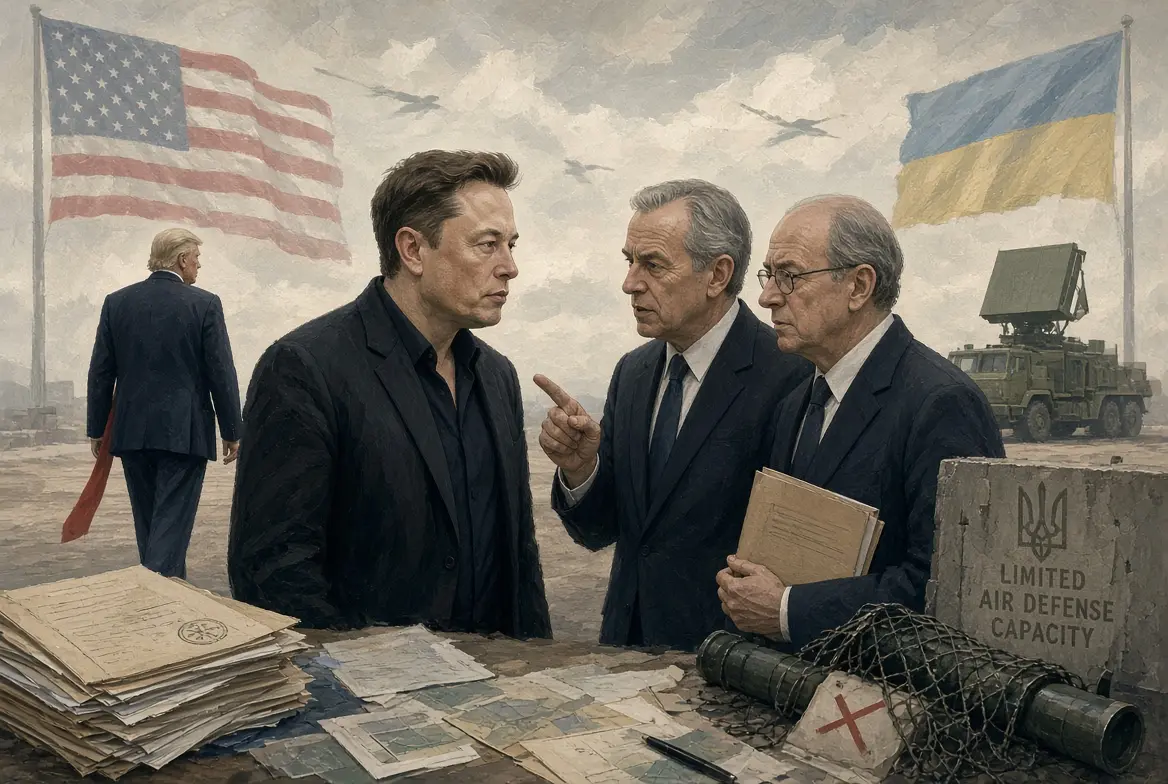
Musk Is Warned: Trump Will Leave, But the Documents Should Stay!
In a post-Trump era, which much of the world is awaiting with growing impatience, it may still matter who restricted Ukraine's satellite communications, why, and on whose orders, at a time when the country was under Russian air attacks. Political power has an expiration date, but electronic correspondence can have a backup copy. Two Democratic senators are now trying to make sure that by the time…

Two Months After Taking Command, Hamas Leader May Already Get to Check the Promises of Paradise
If the promises of seventy-two virgins can be redeemed, Samir Abu Younis may now have the chance to check the quality of service. The commander of Hamas's Rafah brigade was killed by an Israeli airstrike in the early hours of November 15 in the southern Gaza Strip; his death was confirmed by the Israeli military, the Shin Bet, and Hamas itself. No statement has been issued yet about the details…
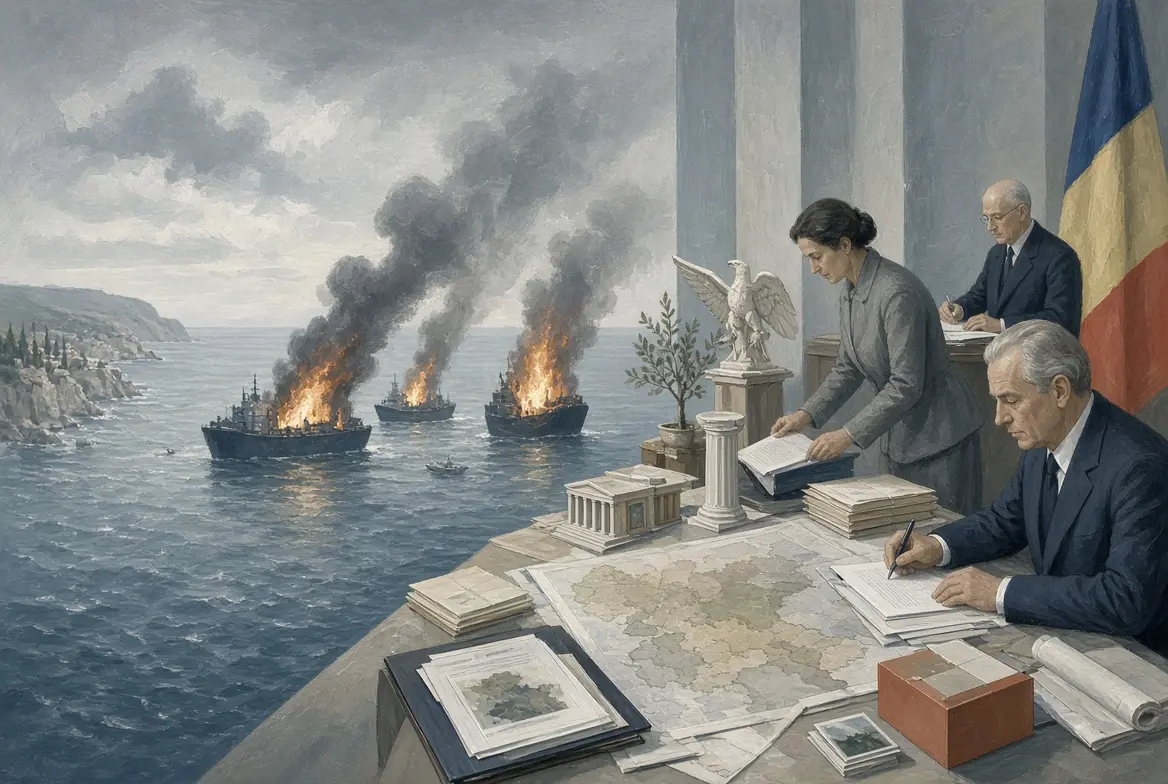
Ships burn in Romanian territorial waters, while deterrence is being prepared for the next meeting
Just the usual: drones slam into commercial ships at the mouth of the Danube, the crews put out the fires, Romania scrambles fighter jets, then announces that it will raise the matter at the next meeting in Brussels. This time three ships provided the set for yet another performance of the security-policy operetta titled “Now Something Really Should Be Done.” The sailors working on the decks…
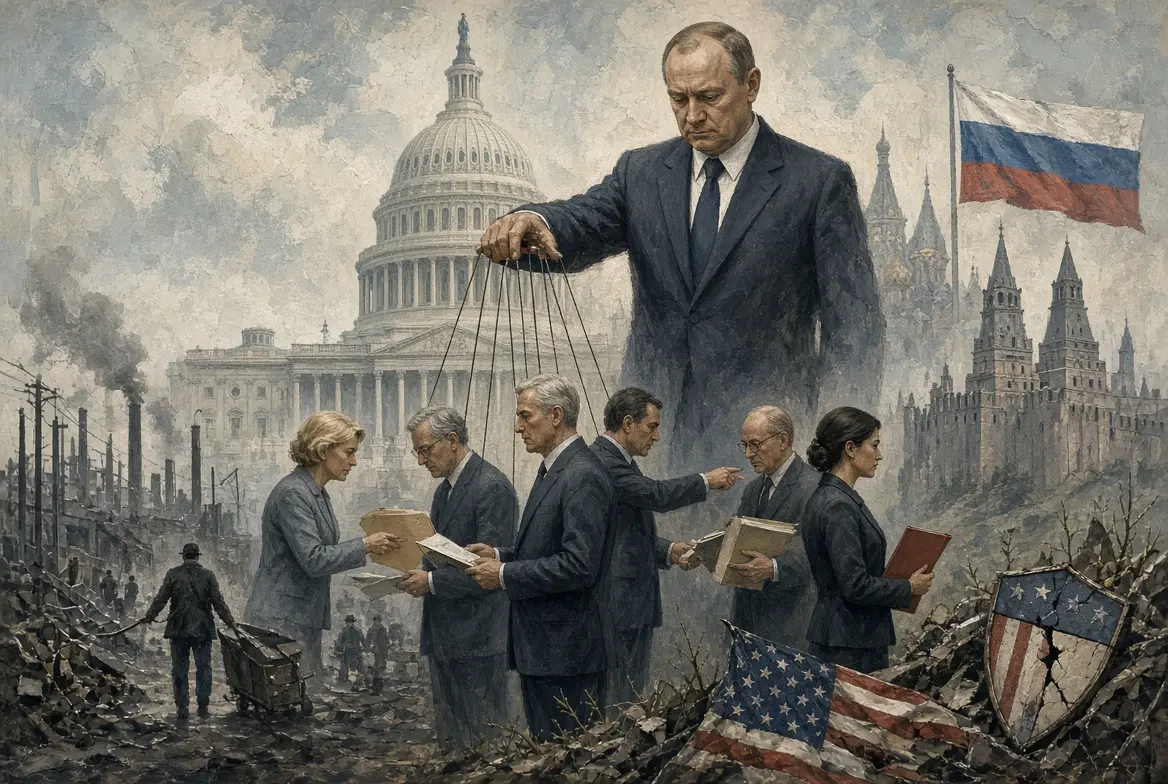
Putin's war against America: when politicians of the attacked country work for the aggressor
Russia did not need to invent the divisions within American society: it was enough to recognize them, deepen them, and then support political actors who, for their own interests, further erode the authority of democratic institutions. Reviewing David Corn's new book, historian Laurence Saint-Gilles argues that the Russian affairs surrounding Trump are interconnected episodes of a decade-long…