
Radu Hossu: Trump would blame Ukraine for the oil price explosion, while it was actually the Iran war that pushed prices up
According to Radu Hossu, Donald Trump is trying to blame Ukrainian strikes on refineries for the rise in American fuel prices because he fears he will have to pay the political price for the war with Iran in the November elections. Hossu believes the American president is attempting a communication trick to swap cause and effect: he suggests that Ukrainian strikes on Russian refineries are driving energy prices up, whereas Hossu argues that the current price surge is primarily the result of the Iran war, the closure of the Strait of Hormuz, the loss of the Bab el-Mandeb shipping route, and the uncertainty surrounding Middle Eastern oil and gas supplies.
His argument starts from the beginning of Ukraine's refinery campaign in January 2024. According to a CNN analysis he cites, Ukraine carried out a total of 305 strikes on Russian refineries by June 2026, and by March 2024, after 23 strikes, it had already knocked out about 15 percent of Russian refining capacity. Hossu does not deny that oil prices rose during this period: the WTI price per barrel increased from about $74 to $79. However, he says the size of that price movement is what matters, because while Ukraine was striking Russia's largest refineries one after another, the price increase amounted to only a few dollars — and during that same period, the European TTF natural gas price actually fell from around €30/MWh to €27.
According to Hossu, the subsequent developments are even harder to reconcile with Trump's claim. Ukrainian strikes continued and became increasingly intense, while the price of WTI fell to $58.9 by November 6, 2025. By then, Hossu says, more than a quarter of Russian refining capacity had already been knocked out — meaning that the lowest oil price in the period he examined occurred exactly when Ukraine was striking Russian oil infrastructure with record intensity. From this he concludes that the destruction of Russian refineries alone does not explain the later explosive rise in global crude oil prices.
Hossu also devotes separate attention to the twelve-day U.S.–Iran conflict in June 2025, when, on Trump's orders, the United States struck Fordow and other Iranian nuclear facilities. The American president claimed at the time that these had been destroyed. According to Hossu's figures, the price of WTI per barrel jumped from about $62 to $78 during the conflict, then fell back to around $65 a month after the war ended, and later continued to decline all the way down to the $58.9 level seen in November. For him, this episode alone shows how quickly and how sharply the oil market reacts to a Middle Eastern military conflict that directly threatens the world's most important energy shipping routes.
The decisive comparison, however, comes from 2026. According to Hossu, WTI cost about $65 in January, and stood at roughly $67 on February 20. Three days before the start of the new Iran war, when information about the conflict was already circulating on the market and Trump was making increasingly threatening statements, the price rose to $75. Hossu contrasts this with the Ukrainian refinery campaign of early 2024: in four days, even before the war actually broke out, the price increase was roughly as large as the one that took four months and 23 Ukrainian strikes on Russian refineries to achieve in 2024.
After the war began, the increase became far more dramatic: according to Hossu, by early March 2026 WTI had reached $100 a barrel, while the European TTF gas price jumped from around €33/MWh on February 20 to close to €55. He regards the movement of gas prices as a particularly important counterexample to the claim that Ukrainian strikes on Russian refineries are causing the current energy price surge, since strikes on Russian oil refineries cannot explain why European natural gas prices rose by roughly the same magnitude at almost the exact same moment. From this, Hossu concludes that the surge in energy prices was driven primarily by the war in the Middle East and by the pricing-in of the risk to supply routes.
Another key point in his argument is June 2026. According to Hossu, this was when WTI hit its lowest price of the year, around $70 a barrel, at a time when Russia was going through one of its most severe fuel crises, with — according to him — nearly 40 percent of Russian refining capacity knocked out as a result of the most intense series of Ukrainian strikes to date. In other words, in Hossu's comparison, oil was relatively cheap precisely when Ukraine was striking Russian refineries with the greatest volume and intensity. If Trump's explanation were the decisive factor, Hossu argues, prices should have shown exactly the opposite pattern.
In the current situation, as of September, however, entirely different factors are piling up. Hossu writes that the Strait of Hormuz has been closed, while the Iran-backed Houthis — who had already threatened back in March to close the Bab el-Mandeb strait if the U.S.–Iran war continued — have now closed that shipping route as well, and the Saudi pipeline used to transport oil has also come under attack. In this situation, according to Hossu, the price of WTI has already reached as high as $107 a barrel. In other words, on the timeline he lays out, the largest oil price increases coincide not with the most intense periods of Ukrainian refinery strikes, but with open military conflicts between the United States, Israel and Iran, and with the endangering of Middle Eastern shipping routes.
Hossu also placed the changes in oil prices side by side with the periods of the U.S.–Israel–Iran conflicts in a chart he produced with the help of Claude, and he asks his readers to look for themselves at which events coincide with the big price jumps. His post's claim, then, is not that Ukrainian strikes on Russian refineries have no market impact at all — he himself acknowledges that the WTI price rose at the start of the 2024 campaign — but rather that, based on the time series available to him, these strikes do not explain the scale of the 2026 price explosion. In his own comparison, oil prices even managed to fall during the most intense Ukrainian refinery campaign, while during the military escalations around Iran, a barrel became tens of dollars more expensive within days or weeks.
From this he arrives at his political conclusion: according to Hossu, Trump is trying to shift attention to Ukrainian strikes because, for American voters, the price at the gas pump is a far more immediate political issue than the geopolitics of the Strait of Hormuz, and ahead of the November elections it is in the president's interest to decouple the price surge from his own war with Iran. At the end of his post, he essentially reduces the entire dataset to a single question: if the biggest jumps in oil prices consistently coincide with U.S.–Israel–Iran conflicts, while during the most intense period of Ukrainian strikes on refineries we saw significantly lower prices, is it really Ukraine's strikes that are causing the current price surge — or is Donald Trump trying to pin the economic consequences of his own Middle East war on someone else?
Did you like this article?
Support our work with a small donation
Secure payment via Stripe • Min. 2 EUR
Gesta recommendations:

Democrats seek independent prosecutor to investigate Trump's ties to Epstein
Democratic members of the U.S. House Judiciary Committee are pushing for the appointment of an independent special counsel to investigate President Donald Trump's relationship with Jeffrey Epstein, as well as how the Department of Justice handled the allegations raised in the case. The 53-page report, released eight days before the November 3 midterm elections, was met with outright rejection…

British government to reveal on Wednesday where the money will come from
Britain's defense industry has been waiting for months for the government to attach funding and deadlines to its defense commitments. According to Prime Minister Andy Burnham's Monday announcement, Chancellor John Healey will show in Wednesday's budget how the already approved force-development plan will be financed, and at what pace the commitments made to NATO through 2035 will be fulfilled.
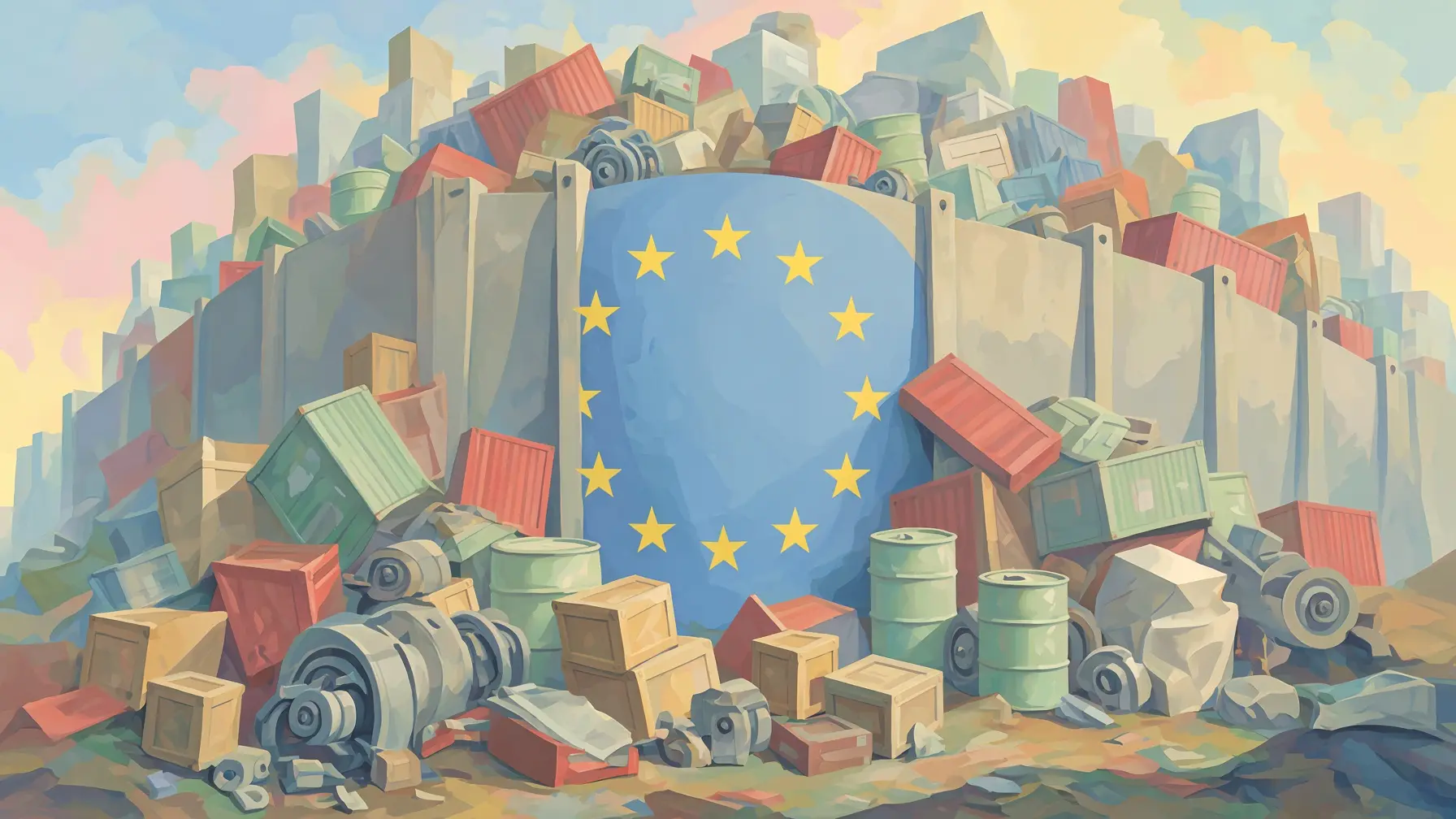
EU may restrict imports of Chinese furniture, machinery and chemical products
After electric and hybrid vehicles, Brussels is looking to narrow the European market's gates to further Chinese products. According to Bloomberg, the European Commission is preparing to restrict imports of chemical products, furniture and machinery, and could present its first proposals as early as the first quarter of 2027. For now, discussions are focused on which products would be affected…

Republican defeat on the horizon: America votes in one week
In the House of Representatives, the Democrats are the favorites, and they could also win a majority in the Senate in the November 3 U.S. midterm elections. A week before the vote, Republicans have reason for concern in both chambers: if they lose control of Congress, Donald Trump will have a much harder time pushing through his agenda in the next two years of his presidency.

Vandalize or we'll beat you: Belarusian border guards are forcing migrants to sabotage
According to the Latvian Prosecutor's Office, Belarusian border guards are forcibly compelling migrants to damage the Latvian border fence and surveillance equipment. In camps near the border, they check who has paid for the illegal crossing, and those who have not settled their debt are beaten and tortured into committing sabotage. According to Latvian authorities, as border security has…