
After Abu Dhabi, let it be clear: Moscow still wants a Soviet restoration
Mediated by the United States, Russian and Ukrainian negotiators sat down at the same table again for the first time in nine months on November 10–11 in Abu Dhabi. The two-day talks, however, produced only one tangible result: an agreement in principle on a large-scale prisoner exchange. According to Radio Free Europe's assessment, the talks advanced diplomacy but not peace, because instead of ending the war, Moscow wants a much bigger deal - one it wants precisely so it can continue the war. According to Ukraine's chief negotiator Rustem Umerov, "significant differences remain" between the two sides' positions, while Vladimir Medinsky, the head of the Russian delegation, claimed that the talks brought Moscow and Kyiv closer together. The American delegation was led by special envoy Steve Witkoff and Jared Kushner, the latter saying there is currently "no trust" between the parties.
Russia's demands have not softened at all. In Abu Dhabi, too, Moscow demanded the handover of the entire Donetsk region, including the parts that the Russian army has failed to capture even after four and a half years of war - Ukraine rejected this. According to Russian state media, Medinsky also called a territorial swap "out of the question." The Russian delegation also rejected Ukraine's proposal for a mutual halt to attacks on energy facilities, claiming it had no mandate to negotiate on such a matter. Moscow still refuses a ceasefire or a pause in the fighting until a comprehensive agreement is reached, and does not want European countries to take part directly in the talks.
According to the ECFR, for Moscow, Ukraine is merely the entry point to a much bigger deal. The Russian delegation put a new European security architecture at the center of the agenda, reviving its demands from December 2021: a legally binding guarantee that NATO will not expand further, a reduction of its military presence in Central and Eastern Europe, and bilateral non-aggression pacts between Russia and individual NATO and EU member states. Vladimir Putin reaffirmed these demands two days later, at a meeting in Moscow with Witkoff and Kushner. According to Yuri Ushakov, the deployment of European troops in Ukraine after a ceasefire would be unacceptable, as such troops would be legitimate targets and "the war would immediately resume"; Putin, meanwhile, said that in any peace agreement the border would have to follow the full territory of the four Ukrainian regions annexed in 2022, even though the Russian army does not fully control any of them.
What Ukraine asked for
Kyiv is not willing to hand over the occupied territories in exchange for ending the war, and is demanding that Russian troops withdraw from Ukrainian territory. According to Kyrylo Budanov, head of Volodymyr Zelensky's office, Ukraine wants the war to end, with security guarantees that rule out further Russian aggression. Ukraine also proposed a mutual energy ceasefire, which Moscow rejected, and has long insisted on an all-for-all prisoner exchange. Zelensky said that ending the war without Europe would be unjust and impossible, adding that the mood in Washington regarding European involvement has noticeably shifted.
What Washington wanted
According to Radio Free Europe, the American side wants to proceed "step by step." A senior American official said that postwar security arrangements can only take effect once territorial and other bilateral issues have been settled first. According to Al Jazeera's report, Kushner stressed that NATO will remain the center of European collective defense, and that no country can have a veto over another country's security decisions - a statement that can be read as a response to Moscow's demands regarding NATO expansion. Washington also wants Moscow to accept the participation of European countries in the talks, and according to Kushner, Moscow needs to come up with de-escalation proposals that Europe can also accept. After the meetings in Moscow and Dublin, Witkoff said that Europeans would also be present at the next round, while Kremlin spokesman Dmitry Peskov said that for this, Europe would first have to name a representative. Meanwhile, Donald Trump has repeatedly urged Kyiv to give up its territories, and has blamed Zelensky for the delay in achieving peace.
Negotiating amid bombardments
The talks took place in the shadow of Russian air strikes. A few days before they began, Russia attacked Ukraine's energy system with 172 drones and 36 ballistic missiles. On the second day of the talks, according to an AP report, a Russian strike hit a market in Odesa, killing three people and wounding eleven, while Zaporizhzhia and Kharkiv were also attacked overnight. Ukraine responded with drones, and according to Russian sources, a fire broke out at the Ust-Luga oil terminal. Meanwhile, Zelensky reported renewed disruptions to SpaceX's military satellite service, Starshield, which Ukraine uses to control its drones. According to a Ukrainian military investigation, these are not accidental malfunctions: among other things, the speed of Ukrainian drones was capped at 161 kilometers per hour. Elon Musk previously admitted that he had restricted Starlink in Ukraine for a week.
The details of the prisoner exchange have not yet been made public. According to Zelensky, it could involve an exchange of a thousand for a thousand or fifteen hundred for fifteen hundred people, while Russian General Alexander Zorin said it could take place within two or three weeks and would be the largest prisoner exchange of the war. The parties agreed on another round of talks, but neither the date nor the participants were disclosed. NATO Secretary General Mark Rutte said in Dublin, at a meeting of more than forty European countries, that the United States, Europe and Ukraine largely agree on security guarantees, but that peace, or at least a ceasefire, is needed first, for which Russia would have to show that it is genuinely willing to negotiate. In Abu Dhabi, it gave no sign of this: aside from the prisoner exchange, it demanded the same things it has demanded since the start of the war on every other issue.
Frenzy
Did you like this article?
Support our work with a small donation
Secure payment via Stripe • Min. 2 EUR
Gesta recommendations:
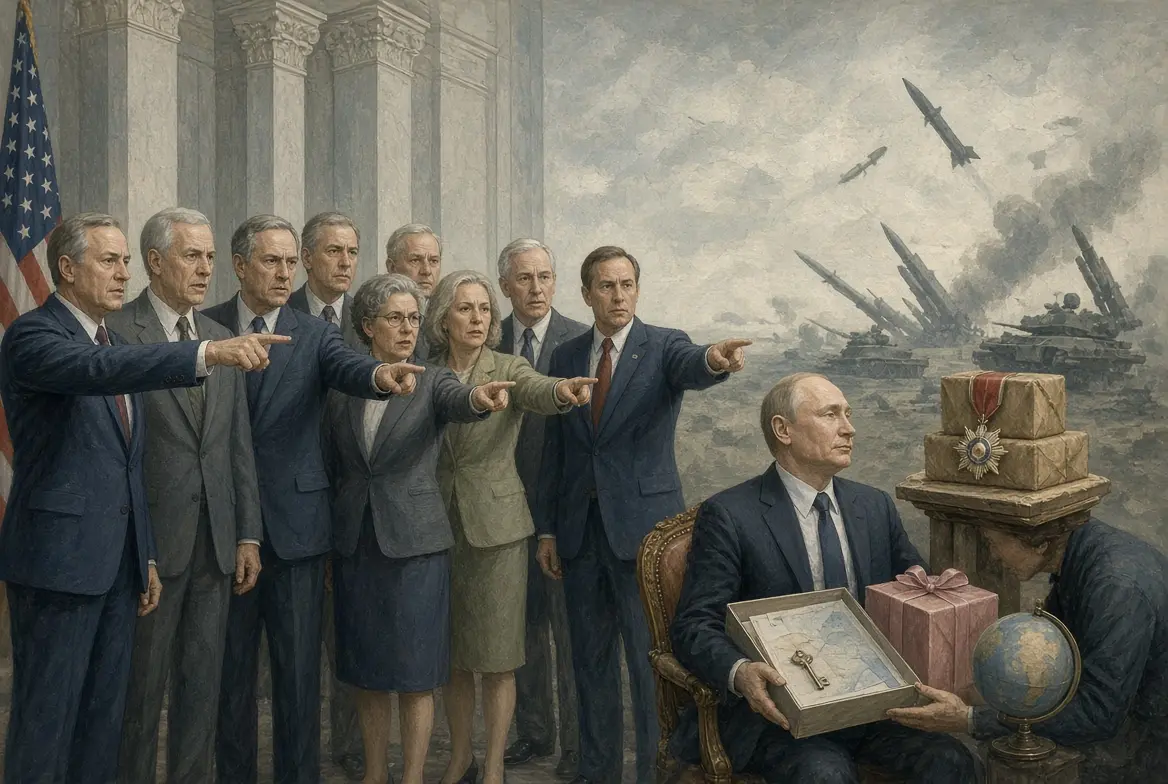
Eight former U.S. ambassadors warn: whoever rewards Putin is preparing the next war
Lasting peace cannot be bought from Putin through territorial concessions and the easing of sanctions, warn eight former U.S. ambassadors, including four former heads of mission in Bucharest. According to them, rewarding aggression would weaken NATO and increase the risk of a broader European war.
Alaska too turns away from the Republicans: not even three of them could stop the Democrat
For the first time in twenty-eight years, Alaska has elected a Democratic politician as governor: the 37-year-old Jonathan Kreiss-Tomkins defeated three Republican rivals, including one backed by Donald Trump. The youngest governor in the state's history campaigned on lowering the cost of living, fixing the funding of public schools, and a promise of cooperation across party lines, and won the…
Administrative reform: Maramureș is already rebelling
The PSD has not even agreed on how it would reorganize Romania's counties, yet one of its MPs is already hinting at leaving the party. Lucian Morar refuses to even hear about Maramureș being merged into an administrative unit centered on Cluj-Napoca, and is ready to turn against his own party in defense of his homeland. Whether he has actually already quit over this, or is merely threatening to…
The spy who boasted about bringing down a chancellor – while Europe kept dozing
Jan Marsalek, the fugitive former operations chief of Wirecard, boasted from Moscow that “we successfully brought down” Austrian Chancellor Sebastian Kurz. The network uncovered around him funneled phones belonging to the Interior Ministry to Russia, gathered data on refugees and journalists (it even obtained the home address of Christo Grozev, founder of the renowned investigative outlet…
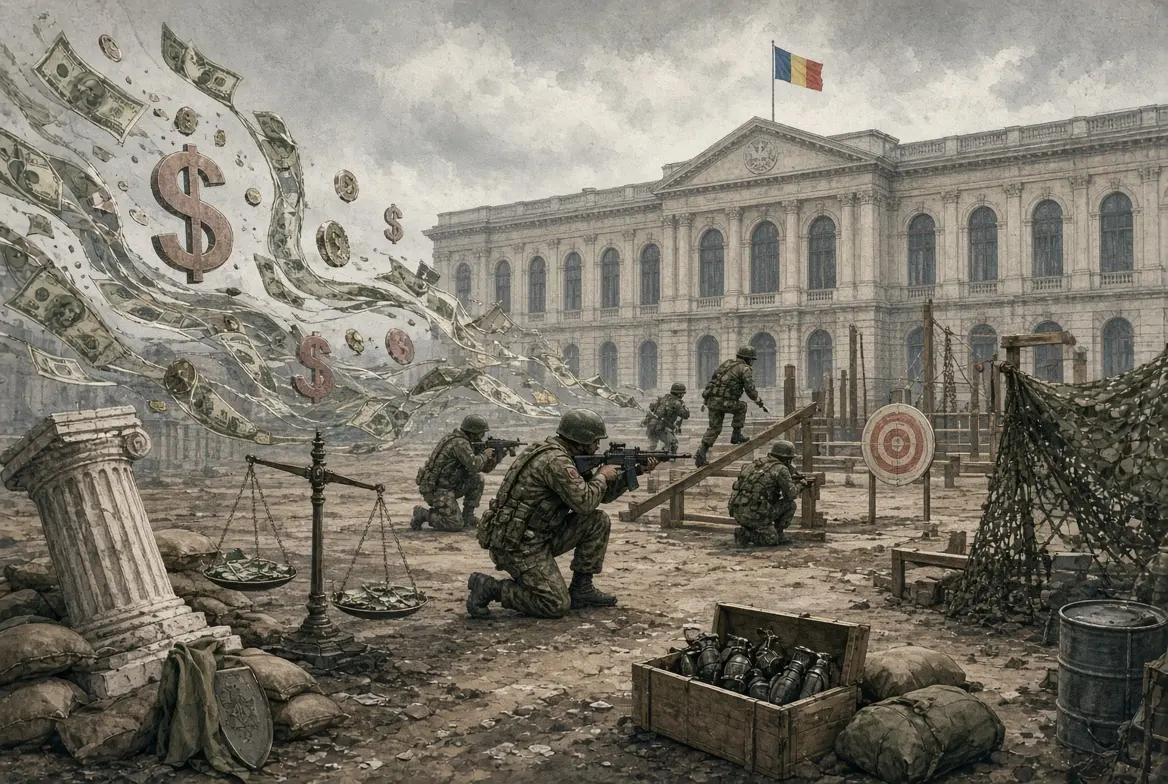
A good idea from Romania: paid military training
Voluntary basic military training could be joined by Romanian citizens — men and women over 18 who have not yet turned 35 by the start of the program and who have not previously served in the military, either as professionals or as reservists. At the end of the training, which would last up to four months, participants would be placed in the army's operational reserve, though those who wished to…