Let the Szeklerland municipalities unite voluntarily! Not a bad proposal from the EMSZ
In the debate over administrative reform in Romania — a debate that, unfortunately, exists only in traces — the Hungarian Alliance of Transylvania (EMSZ) is proposing that the municipalities of Harghita and Covasna counties, together with those of the Mureș Seat (Marosszék) that currently belong to Mureș County, voluntarily organize themselves into a joint administrative unit, and the party intends to put the idea on the agenda as a draft local council resolution as well.
In a statement issued on November 23, the EMSZ said it only supports a reorganization that takes into account the historical regions, the traditions of local communities, and the actual social and economic ties connecting the municipalities. The party's local councillors would bring the initiative before the Harghita County Council and ask the body to start consultations with the councils of Covasna and Mureș counties, as well as with the municipalities concerned, on creating a joint administrative unit. The political essence of the idea is that
The EMSZ would also initiate changes to the necessary national legislation, and would bring the demand for self-determination into the reform debate as a concrete local-government proposal — which at least sets a goal that can actually be argued over.
The party starts from the premise that the current county borders are not eternal natural formations, and that the communities concerned should decide on any change in a referendum. Citing the intention of the leaders of Ialomița and Călărași counties to voluntarily merge, it also raises the point that what is a negotiable option for Romanian-majority regions cannot simply be ruled out for Szeklerland solely because of its Hungarian population.
This does not change our criticism of the EMSZ one bit over its alignment with Viktor Orbán's politics and its echoing of narratives favorable to Moscow regarding Ukraine, and the party's entire membership could still fit in a Trabant — but this proposal cannot be dismissed solely because of who put it forward, since it at least formulates a negotiating goal and a procedure to be launched, something not even the RMDSZ can claim to this day.
Their statement is reproduced below in full:
Historical regions, voluntary association, decisions made locally!
The Hungarian Alliance of Transylvania supports an administrative reform that respects historical regions, the traditions of local communities, and the real economic and social ties connecting municipalities. Our position is clear: territorial reorganization may only take place voluntarily, with the consent of the population concerned expressed in a local referendum.
The issue is made directly topical by the latest preparations for administrative reform in Romania. On November 20, the Ministry of Development put its draft regulation on voluntary municipal mergers up for public debate, and the government has begun an institutional review of the possibilities for reorganizing communes, towns and counties. The responsible use of public funds and better public services are in our common interest. However, the success of the reform must be measured by whether people's dealings with the authorities become easier, whether local services improve, and whether communities gain a greater say in shaping their own future.
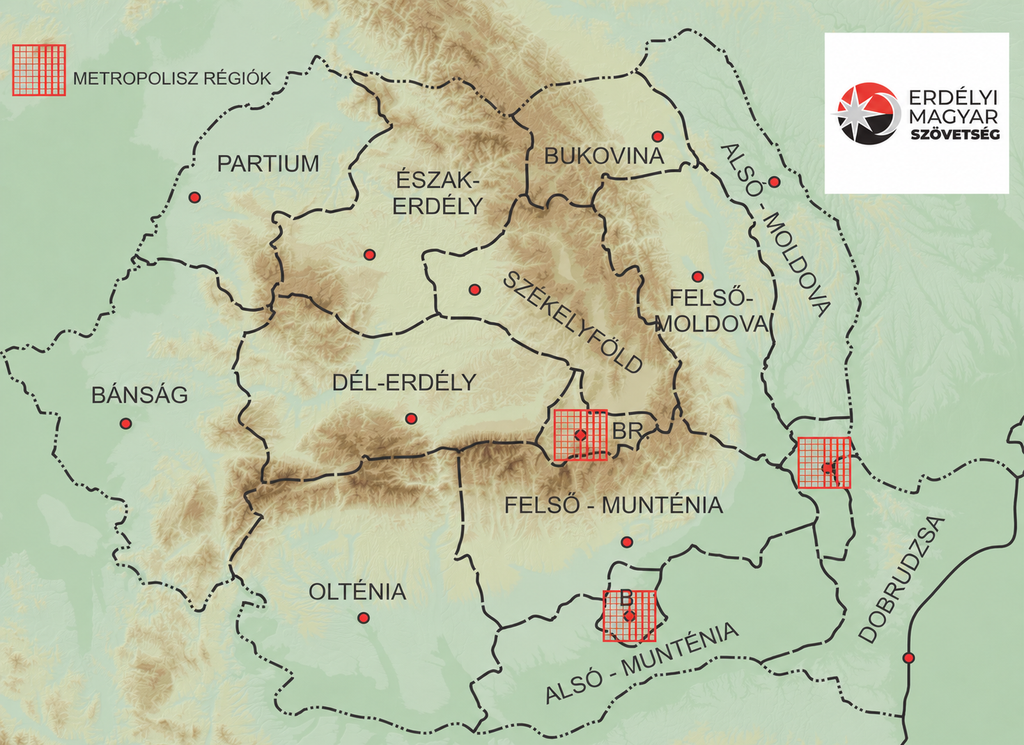
In this debate, the Hungarian Alliance of Transylvania is also building on an earlier proposal of its predecessor, the Hungarian People's Party of Transylvania (EMNP). The plan presented by the People's Party in 2013, drawn up with the involvement of experts, envisaged twelve regions nationwide plus three separate metropolitan regions. In Transylvania, Banat, Partium, Northern Transylvania, Southern Transylvania and Szeklerland would each have formed a region, while Brașov and its surroundings would have functioned as a separate metropolitan region. The proposal defined Szeklerland as an autonomous administrative region with Târgu Mureș (Marosvásárhely) as its center, while Partium was to receive a special status guaranteeing multilingualism.
The essence of the concept was genuine self-government: the regions would be given substantive decision-making powers, and as many decisions as possible affecting the communities would be made locally. Even then, the People's Party considered it necessary to review the current county borders, and would have settled the affiliation of municipalities lying along the regional boundaries through local referendums. The Transylvanian Declaration of July 20, 2013 demanded self-determination for the historical regions, a unified, autonomous Szeklerland, and a Partium with special status. The party's September position statement again emphasized the need for autonomous regions with genuine administrative powers.
These principles still guide us today. When drawing administrative borders, shared history, cultural and linguistic ties must be taken into account, as well as where people go to work, to study, to see a doctor, and with which municipalities they maintain everyday relations. The viability of the new units must be established through public professional and financial studies.
We do not regard the current county borders as unchangeable. It must be made possible for different municipalities of a present-day county to join different new administrative units, if this is warranted by their historical ties, everyday relations, and the freely expressed will of their residents. The future of a municipality cannot be determined solely by which county it currently belongs to.
Voluntariness must prevail throughout the entire reorganization process. Every community concerned must be given proper information and the opportunity to hold a local referendum; we regard the consent of the population as an essential condition for any reorganization. The reform must guarantee the preservation of acquired rights to use one's mother tongue, adequate representation of local communities, and the accessibility of public services.
Through its county councillor, the Hungarian Alliance of Transylvania is submitting a draft resolution to the Harghita County Council, proposing that the body initiate the voluntary organization of a joint administrative unit comprising Harghita and Covasna counties together with the municipalities of the Mureș Seat (Marosszék) that currently belong to Mureș County. To prepare for this, we propose consultations with the councils of Covasna and Mureș counties and with representatives of the municipalities concerned, and we are also initiating the creation of the necessary national legislative conditions.
The council initiative is meant to launch consultation and preparation. Any territorial change requires a referendum expressing the will of the population concerned and the adoption of parliamentary legislation. Our goal is for the demand for Szeklerland's administrative unity and self-determination to appear in the national reform debate as a concrete local-government proposal.
The leaders of Ialomița and Călărași counties have already announced that they will initiate preparations for the voluntary merger of their counties. The communities of Szeklerland have just as much right to formulate and democratically represent their own ideas. We call for national regulations that provide equal conditions for every region.
We call on the local authorities concerned and the Hungarian political organizations to jointly advocate for a reform based on historical regions, voluntariness and local decisions! We want an administration that brings decisions closer to the people, preserves the identity of our communities, and creates a solid foundation for the development of our homeland.
National Presidency of the Hungarian Alliance of Transylvania
Did you like this article?
Support our work with a small donation
Secure payment via Stripe • Min. 2 EUR
Gesta recommendations:
Merz: It was a mistake not to admit Ukraine to NATO in 2008, the war could probably have been avoided
German Chancellor Friedrich Merz, at a joint press conference with NATO Secretary General Mark Rutte in Berlin on Monday, November 23, statedthat it was a mistake not to take up the American proposal at the 2008 NATO summit in Bucharest for Ukraine to begin its accession to the alliance. „I think today, looking back, we are all aware of this mistake,” the chancellor said. He added that if Ukraine…
AT LAST! Péter Magyar and Volodymyr Zelensky to meet in Transcarpathia
On Tuesday, November 24, Péter Magyar is traveling to Transcarpathia, where he will hold talks with Ukrainian President Volodymyr Zelensky, meet with leaders of the Hungarian community, and, accompanied by Foreign Minister Anita Orbán, visit Hungarian institutions. Ahead of the visit, the prime minister spoke out both for the rights of Transcarpathian Hungarians and for Ukraine, which is…
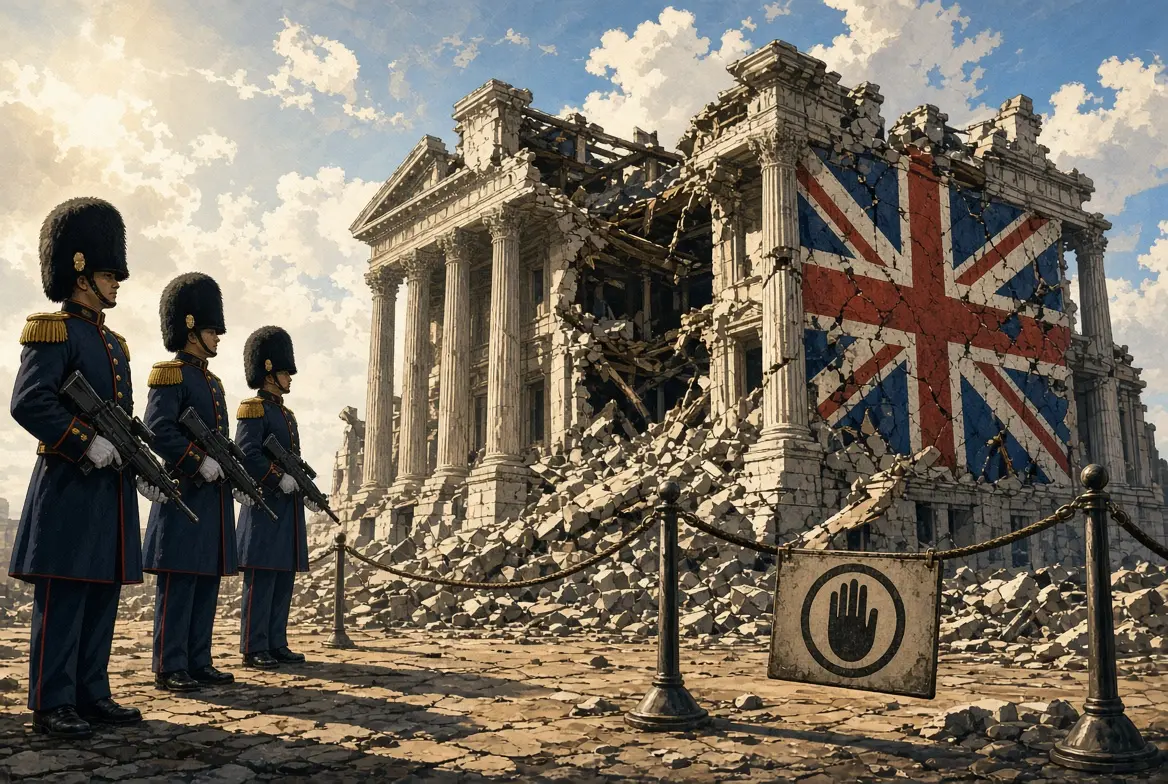
Brexit's former architects now ask that no one disturb the ruins
Five former British prime ministers warn Andy Burnham against reopening the question of returning to the European Union if at all possible — a particularly touching concern coming from people, several of whom personally worked to ensure that the United Kingdom would have anything to return from in the first place. David Cameron called the referendum, Boris Johnson campaigned relentlessly for…
Grindeanu would lower the language-use threshold! Do we seize the opportunity or let it slip away?
Sorin Grindeanu has just raised a possibility that we should seize on immediately: according to the leader of the PSD, after the merger of localities, the population threshold linked to minority language-use rights should be lowered. This is not yet a finished piece of legislation — we don't even know what percentage he has in mind — but opportunities rarely arise in Romanian politics for a…
The planet is warming, the oil business remains: the climate agreement failed in Antalya
After two weeks of negotiations and almost two days of extension, delegates from nearly two hundred countries at the Antalya climate summit reached the point of failing to adopt the conference's most important agreement, because its final draft left out precisely the shift away from fossil fuels - the talks on the climate crisis thus foundered on the fact that some of the participants were…