Moscow's next move in Europe could already cost mass casualties
Russia is resorting to increasingly dangerous methods in its sabotage campaign against European countries, while the continent's response still falls short of what might deter Moscow from continuing - this is the warning of the London-based International Institute for Strategic Studies (IISS) in its November report, which states that the possibility of attacks causing mass casualties must now be taken into account.
In the twelve months ending in September 2026, the number of sabotage operations linked to Russia rose by 16 percent, and the increasing frequency of arson attacks and attacks using explosive devices shows that it is not simply a matter of more incidents, but of incidents capable of causing ever greater destruction. According to the IISS, while the total number of recorded Russian operations has actually fallen, physical destruction has gained importance in Moscow's toolkit, especially against military, industrial and transport facilities.
The attacks come in short, intense waves and mainly affect Germany, Poland and the Baltic region, where paralyzing railway lines, airports and energy supplies can disrupt both aid to Ukraine and the everyday lives of civilians. Although many of those carrying out the attacks are still untrained, casual operatives, the institute has already detected the emergence of actors using more sophisticated, timed or remotely operated explosive devices. The emergence of this method was already described by Charlie Edwards and Nate Seidenstein in the IISS's analysis last August: after European countries expelled around four hundred Russian intelligence officers in 2022, Moscow partly outsourced the dirty work and started recruiting cheap operatives via Telegram. In this system, arson or vandalism becomes just another casual job, like parcel delivery elsewhere - except that the client is a state waging war, and the package to be delivered is sometimes an explosive device. Such people are often poorly prepared, which is why the authorities manage to uncover many operations in time; for Moscow, however, even failure doesn't necessarily mean a serious loss, since a captured operative can relatively easily be replaced by another. For Europe, by contrast, even a single successful attack can have severe consequences, especially in places where, due to years of neglected infrastructure, the loss of one key node drags down other systems with it.
At the same time, the IISS notes that the campaign has so far failed to achieve Moscow's most important strategic goal, since support for Ukraine continues and European rearmament has not stopped either. That, however, does not mean deterrence has become effective: catching individual perpetrators is not the same as creating consequences for the Russian state that would make it reconsider its next assignment. The term "gray zone" will remain a convenient label as long as its consequences can be tallied up in reports and diplomatic notes - but it is unlikely to offer much comfort to the relatives of the victims of a derailed passenger train or a burned-down factory that Europe is still working out the legal and political classification of the attack.
Ugar
Did you like this article?
Support our work with a small donation
Secure payment via Stripe • Min. 2 EUR
Gesta recommendations:

Russian method: if you can't stop Ukrainian drones, ban talking about them
Under a legislative package submitted on November 26, publishing information about the consequences of Ukrainian strikes without official authorization could carry a prison sentence of up to five years in Russia, a bill that has outraged even some military bloggers who are enthusiastic supporters of the war. The draft invokes the defense of the state, while it could also serve to reduce the…
No EU budget, no money for Ukraine either
No agreement was reached on either the European Union's next seven-year budget or the new €45 billion loan planned for Ukraine at the extraordinary summit held in Brussels, which ended early Friday morning. Twenty-four member states lined up behind the loan proposal, but Hungary, Czechia and Slovakia stayed out, while the German chancellor is increasingly openly linking the distribution of EU…

London is looking for its reservists, but it has no contact details for tens of thousands of people
For the first time since the Cold War, the British Ministry of Defence has launched a comprehensive outreach to former soldiers of the strategic reserve to clarify where they can be reached and what experience they have gained since leaving service. The state of the records immediately proved the need for this preparation, since according to reports so far, out of roughly 95,000 people affected,…
How Moscow is preparing for peace: a record sum for the army, less for hospitals
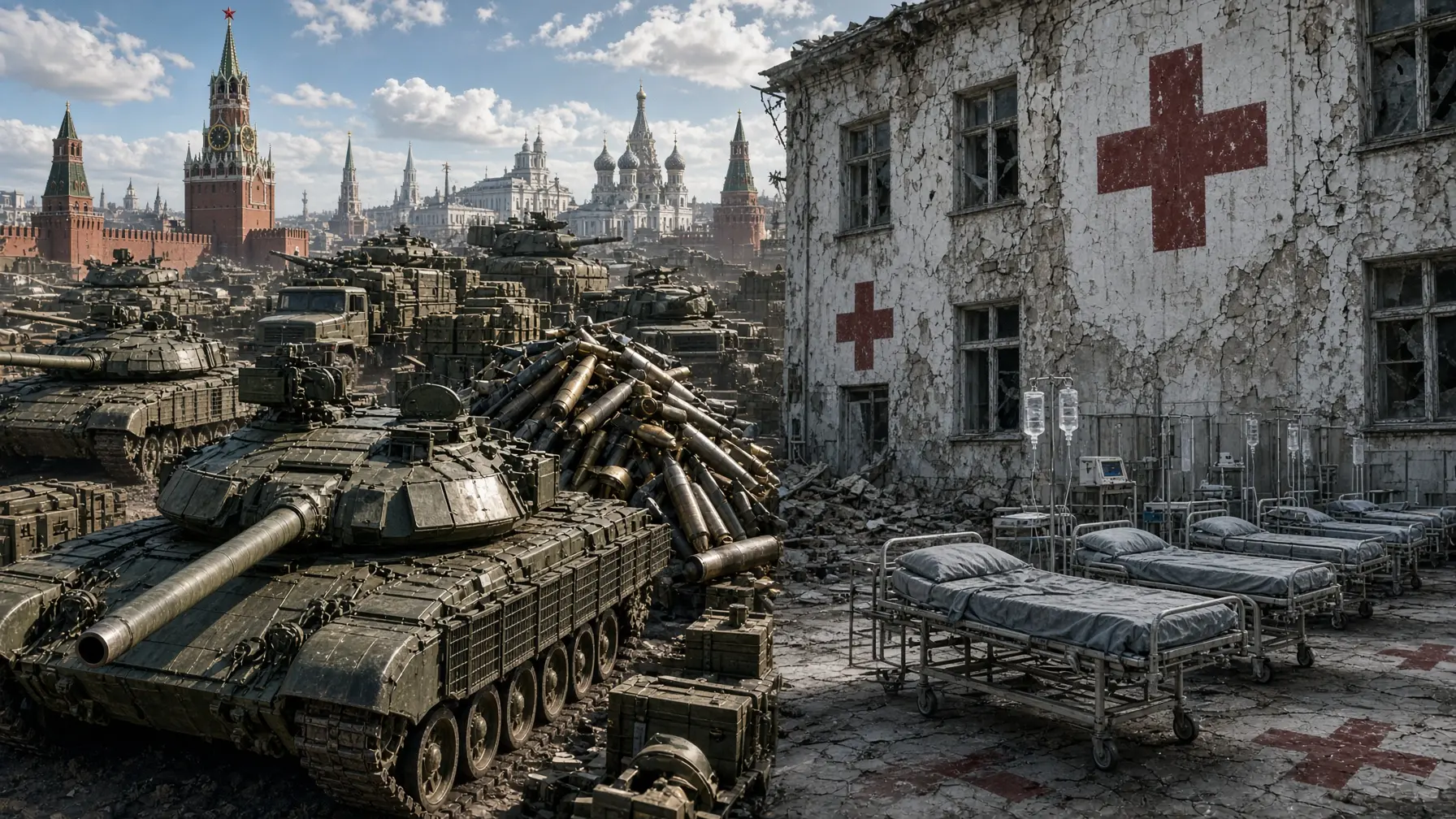
While the Kremlin talks about its desire for peace and keeps expecting further concessions from Ukraine, the Russian parliament has approved military spending for the next three years on a scale unseen since the Soviet Union. Under the 2027–2029 budget, the equivalent of some 606 billion dollars is earmarked for the army, while spending is being cut on health care, social benefits and housing.

Merz would defend Europe, the AfD would stab us in the back
German Chancellor Friedrich Merz, during the Bundestag's budget debate, warned that Russia's threat extends far beyond Ukraine, and that Germany therefore cannot treat it as a distant war when its consequences have already appeared on its own territory. While the government justified spending on defense and support for Ukraine, the AfD, unsurprisingly, once again concluded that savings should…