Mureșan is preparing tax cuts, but still lacks 64 votes
Designated Prime Minister Siegfried Mureșan would form a government with three deputy prime ministers, an unchanged number of ministries, and the participation of the PNL, USR, and the DAHR (Hungarian minority party). At his press conference on Wednesday, he said he would not raise taxes, would keep the flat tax system, and would reduce VAT from 21 to 19 percent as soon as the budget situation allows. However, the required majority for the government's parliamentary investiture is still lacking: Mureșan currently counts on 169 confirmed votes out of the required 233.
Siegfried Mureșan plans to submit the government program and the complete list of ministers to parliament by the end of the week. According to his plans, the parliamentary committee hearings of the candidates would take place on Monday and Tuesday, followed by the confidence vote in a joint parliamentary session. The designated prime minister is asking that each ministerial candidate's hearing last at least sixty minutes. He said his cabinet would include three deputy prime ministers, one each from the PNL, USR, and the DAHR. All three deputy prime ministers would also head a ministry, meaning they would not merely perform a political coordination role. He has not yet made the candidates' names public. According to Digi24, the names of PNL leader Ilie Bolojan, USR leader Dominic Fritz, and DAHR leader Hunor Kelemen have come up, though Mureșan has not confirmed this.
The number of ministries would not increase; however, the central administration would be simplified, institutions could be merged, and the number of state secretaries would be reduced. According to Mureșan, the goal is to create a smaller, more efficient state, after the burdens of last year's budget adjustment were borne mainly by the population and businesses. The designated prime minister pledged that his government would not raise taxes or fees for the entire duration of its mandate. He would maintain the flat tax system, and depending on economic and budgetary possibilities, would begin reducing the tax burden as early as the 2027 state budget. Mureșan ruled out any further VAT increase and said his goal is to reduce the current 21 percent standard VAT rate back to 19 percent as soon as possible. However, he did not set a specific deadline, tying the change to the state of public finances.
According to the designated prime minister, public sector wages and pensions have stagnated in recent years, so when drafting the 2027 budget, the possibility of raising wages and indexing pensions would be examined. He stressed, however, that they would only commit to an increase that has the necessary budgetary backing. If a government is formed, a rapid budget adjustment would be drawn up first, followed by the drafting of next year's budget. Mureșan said he would pay special attention to state-owned companies, primarily those operating in the energy and transport sectors. He claimed that a few such companies receive more than ninety percent of the subsidies paid out by the Romanian state. According to the plans, within twelve months of the government's investiture, a separate efficiency-improvement program would be drawn up for every state-owned company. Companies for which it is warranted would be listed on the stock exchange or partially or fully privatized. Mureșan promised professional corporate management and a reduction in political appointments. In the energy sector, storage capacities would be increased, and networks and cross-border energy interconnections would be developed.
Mureșan justified the storage investments by noting that Romania produces significant amounts of solar energy during the day, while there is not enough electricity available during the evening consumption peak. The government program would also support the expansion of Romanian-owned mid-sized companies, including through state subsidies and capital-raising opportunities. According to Mureșan, all public investments would be regularly monitored, and long-term spending would only be undertaken with secured funding sources. The designated prime minister supports increasing the European Union's 2028–2034 budget. He said Romania must maintain agricultural subsidies and cohesion funds at least at their current level, while also securing more EU money for security and defense purposes. According to Mureșan, as a NATO member state on the eastern flank, increasing European defense support is particularly important for Romania. He recalled that, as the European Parliament's lead negotiator for the next EU budget, he helped secure adoption of a position that would increase the seven-year framework by ten percent compared to the European Commission's original proposal.
Mureșan currently counts on a total of 169 parliamentary votes from the PNL, USR, and the DAHR. Investing the government requires 233 votes, meaning he would need to convince another 64 deputies and senators. He is still negotiating with representatives of national minorities, but even their support would not be enough for a majority, so he would intensify talks with PSD leader Sorin Grindeanu. He said he is conducting only official negotiations with the Social Democrats' leadership, and is not trying to lure individual lawmakers away or persuade them to break party discipline. According to Mureșan, the PSD must decide whether to support a pro-European government or further strengthen its cooperation with AUR. He does not wish to negotiate with AUR, though he previously said he cannot prevent some AUR lawmakers from voting for the cabinet on their own initiative. The designated prime minister did not completely rule out a rotation of the premiership with the PSD, but said he wants a cabinet that can serve out the period until the 2028 elections under an unchanged prime minister. He again ruled out a joint PNL–PSD government, though he said it is possible for the two parties to lead the country in succession.
Mureșan ruled out withdrawing his mandate before the vote. He said he would bring his program and ministers before parliament regardless, even if he fails to secure the necessary 233 votes publicly beforehand. The politician stated that he is not preparing to be a “sacrificial prime minister,” but wants to establish a stable, pro-European government. At the same time, he openly warned undecided lawmakers about the possibility of early elections. He said that if the cabinet fails to win a vote of confidence, President Nicușor Dan could have the option of dissolving parliament and calling early elections. Mureșan said he would not want to be in the shoes of a PSD lawmaker who could lose his seat in a new election, nor in the shoes of politicians from smaller parties who might struggle to return to parliament, or might not return at all. With this, the designated prime minister effectively presented lawmakers with two options: vote for his cabinet, or take the risk of early elections.
Source: G4Media
Did you like this article?
Support our work with a small donation
Secure payment via Stripe • Min. 2 EUR
Gesta recommendations:

Elon Musk has found freedom's new champion: Xi Jinping
Elon Musk, the self-appointed high priest of Western free speech, gave an interview to Chinese state television, and while he was at it, thoroughly buttered up Xi Jinping. The Tesla CEO called the Chinese president a "great leader," then stated that under his rule, China has achieved "tremendous prosperity."

When Tehran Campaigns for Trump's Republicans
Six and a half months of war, a "most ruthless economic operation of all time," a president who demanded a white flag and threatened to bomb his own ally, Oman — and now Tehran generously offers to reopen the Strait of Hormuz within a week, on one condition: that Washington first takes its foot off its throat. A senior Iranian official told Reuters on Tuesday in New York that Iran could reopen…
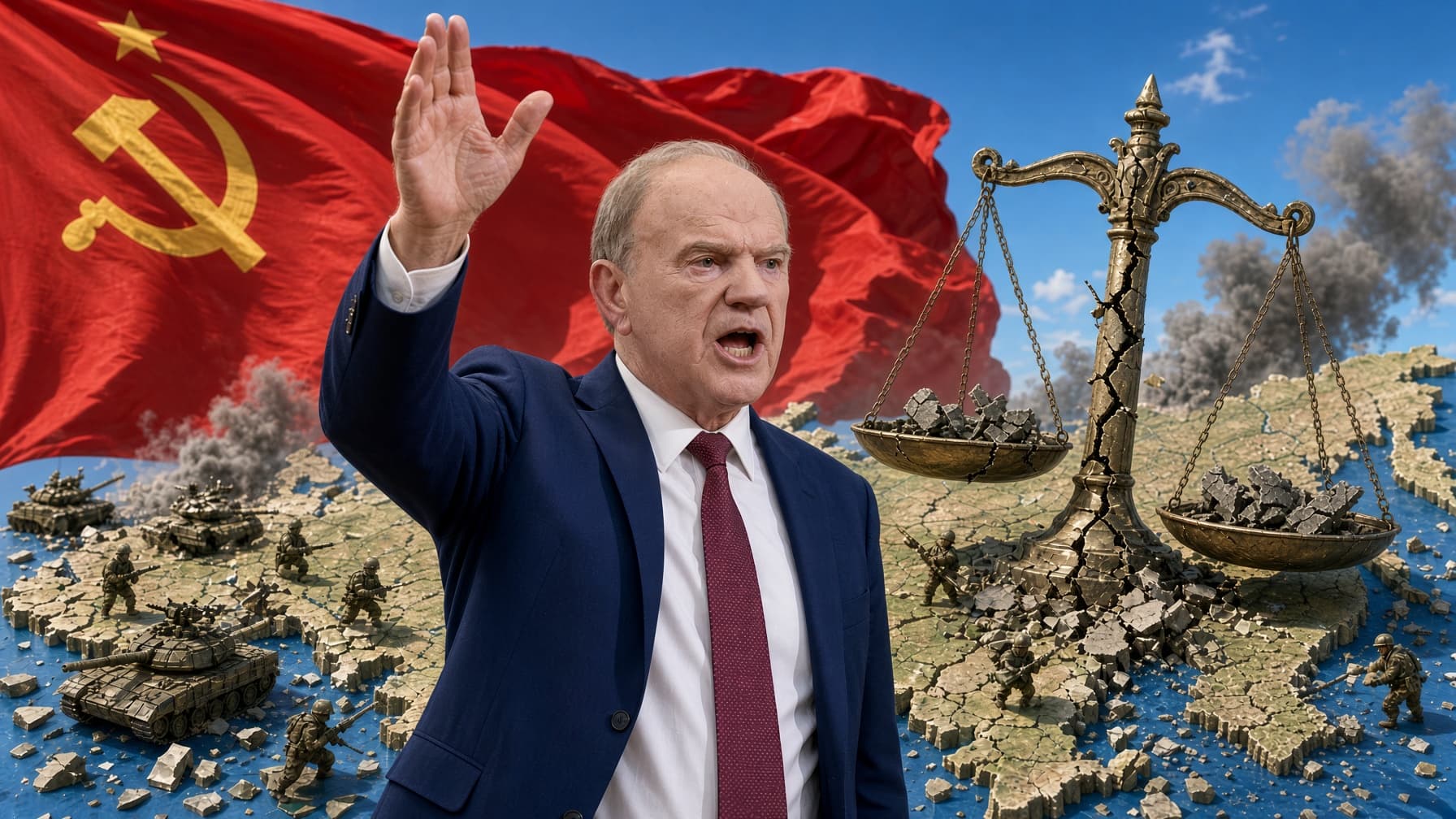
Putin's communist opposition: if the war continues, then "everyone loses"
According to Gennady Zyuganov, chairman of the Communist Party of the Russian Federation (KPRF), Russia will ultimately lose if the political course does not change and the war continues. The statement was made at the party's Sunday evening press conference, after the conclusion of the three-day parliamentary elections.
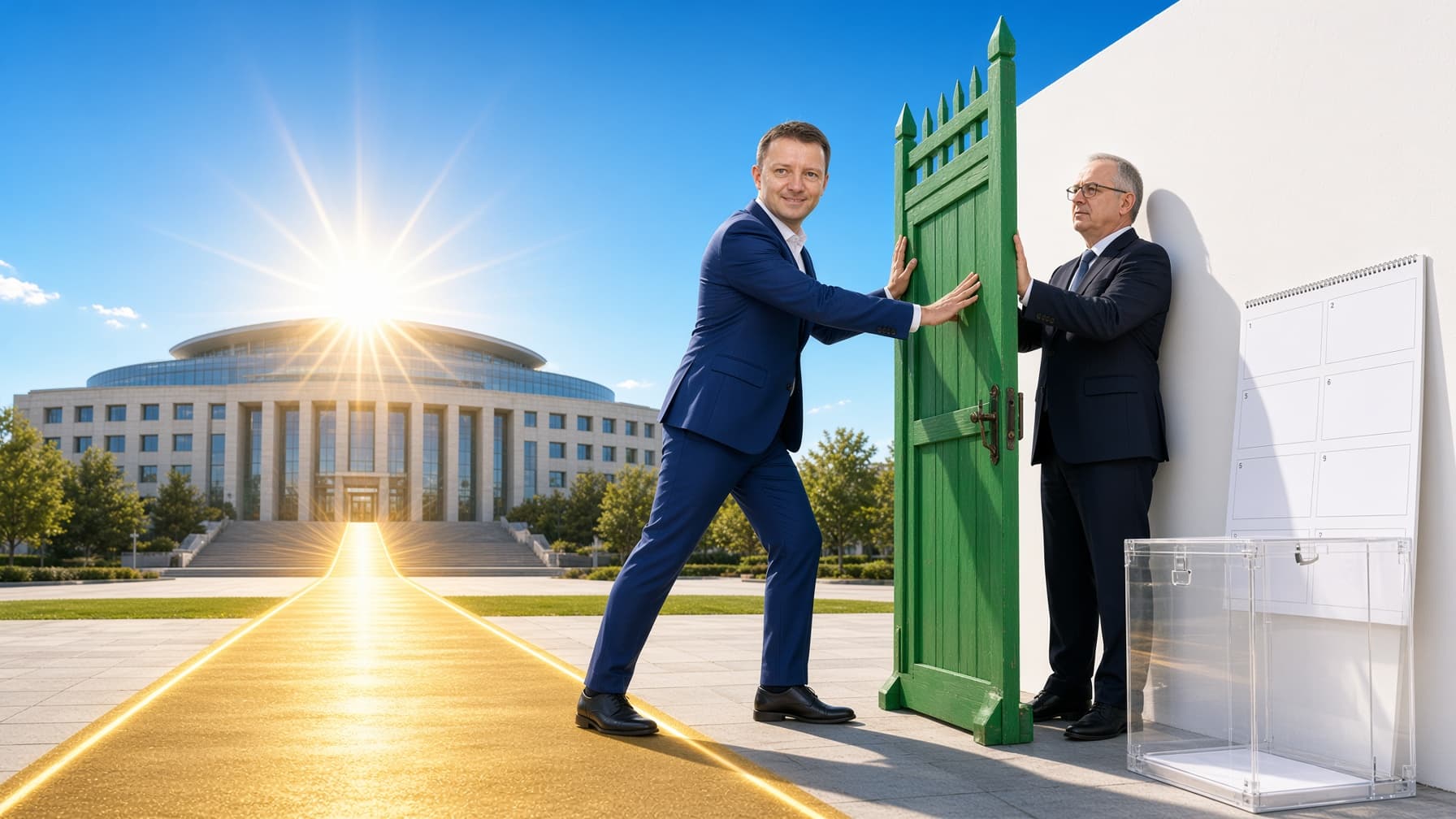
Mureșan: "Either our government, or early elections." He also pushed the RMDSZ a bit against the wall
Prime Minister-designate Siegfried Mureșan told the parliamentary factions of the National Liberal Party (PNL) on Tuesday that he would go through with the installation procedure and appear before Parliament for a vote of confidence, even though the Social Democratic Party (PSD) had announced it would not support his government.

General Ciolponea: Russia could temporarily seize territory in the Baltics, Poland or Romania to use as a bargaining chip
Russia is not preparing to conquer Europe, but to temporarily seize a piece of NATO's eastern flank and use it as a political bargaining chip with the United States, retired Major General Adrian Ciolponea said in an interview with the Romanian outlet Libertatea. Ciolponea previously served as the European representative to NATO's Allied Command Transformation and also commanded the Romanian…