
Russian bombs reached them even seven meters underground
Ukrainians are taking their schools underground to protect children, while Russia is attacking with bombs capable of destroying even fortified shelters. Ukrainian writer Andriy Kurkov starts from this unequal struggle in his Kyiv Post opinion piece published on November 15, which uses the tragedy at Komysh-Vakha to show the limits of civilian protection as long as Russian attacks continue.
People waiting for humanitarian aid had gathered near the school in Komysh-Vakha, in Zaporizhzhia region, on November 2 when Russian airstrikes began. According to a statement from the UN's humanitarian coordinator in Ukraine, both the school serving as the aid distribution point and a nearby shelter were hit, and subsequent strikes also killed two paramedics and four police officers who had arrived to help after the first attack. Among the victims were local residents as well as municipal employees. Matthias Schmale warned that civilians seeking help and those rushing to rescue them must not become targets.
The number of dead reached fifty-five by November 7, but the search continued afterward. On November 12, police reported finding two more bodies along with human remains; by then the identities of forty-eight victims had been established. According to a report by Hromadske, authorities have not clarified whether the newly found bodies had already been included in the previous count. The rescue effort was further complicated by the constant danger posed by Russian drones, which is why a police anti-drone unit secured the search at the site. Kurkov considers the collapse of faith in safety one of the gravest consequences of the tragedy. According to his account, the facility, built seven meters underground, was protected by a thick layer of concrete, which the regional authorities had reinforced by an additional twenty to forty centimeters compared with practice in other areas. This proved insufficient against repeated strikes carried out with three-ton bombs. According to the author, the existence of the shelter had previously been an argument for staying among families considering relocation; the destruction has now taken away that reassurance as well.
Still, the writer is not urging an end to underground construction, since Ukrainians continue to need every form of protection that can reduce the risk of attacks. He stresses that shelters do not offer absolute safety, and that in the wake of the tragedy, the depth and design of new facilities must be reconsidered. According to the article, the issue concerns roughly two hundred and fifty underground schools already built and another hundred under construction. Kurkov calls the attack a deliberate war crime and demands that such acts of destruction become a central issue in negotiations with Moscow. In his view, the victims' stories must not remain locked away in court databases while Russian leaders explain their demands on the international stage.
Outrage
Did you like this article?
Support our work with a small donation
Secure payment via Stripe • Min. 2 EUR
Gesta recommendations:

Cognitive Frontline, Part I/1: From the Protocols of the Elders of Zion to Today's Russian Propaganda, or the Lie That Outlived Its Own Exposure
A Russian forgery from the early twentieth century made its way across the Western world. Respected newspapers, influential businessmen and political movements lent it their names, and it kept spreading even after it had been exposed. The story of the Protocols of the Elders of Zion reveals how easily a society's existing fears can be turned into a worldview that, over time, comes to explain…

Musk Is Warned: Trump Will Leave, But the Documents Should Stay!
In a post-Trump era, which much of the world is awaiting with growing impatience, it may still matter who restricted Ukraine's satellite communications, why, and on whose orders, at a time when the country was under Russian air attacks. Political power has an expiration date, but electronic correspondence can have a backup copy. Two Democratic senators are now trying to make sure that by the time…

Two Months After Taking Command, Hamas Leader May Already Get to Check the Promises of Paradise
If the promises of seventy-two virgins can be redeemed, Samir Abu Younis may now have the chance to check the quality of service. The commander of Hamas's Rafah brigade was killed by an Israeli airstrike in the early hours of November 15 in the southern Gaza Strip; his death was confirmed by the Israeli military, the Shin Bet, and Hamas itself. No statement has been issued yet about the details…
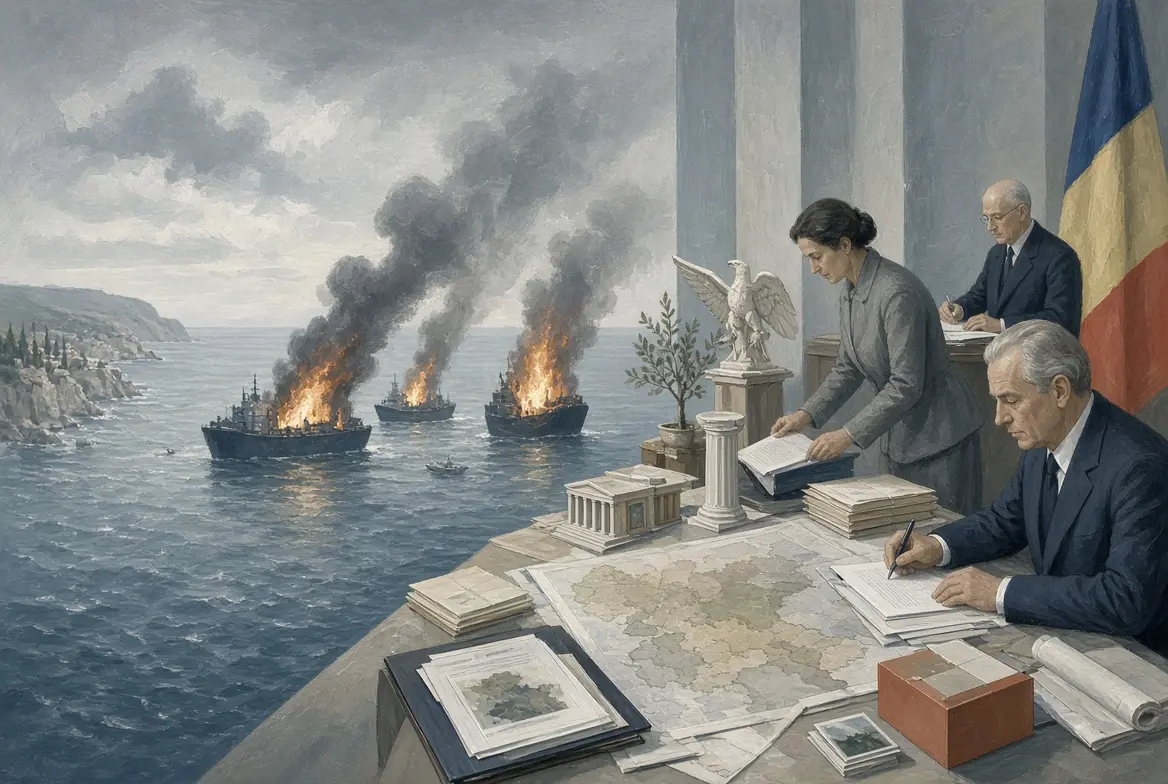
Ships burn in Romanian territorial waters, while deterrence is being prepared for the next meeting
Just the usual: drones slam into commercial ships at the mouth of the Danube, the crews put out the fires, Romania scrambles fighter jets, then announces that it will raise the matter at the next meeting in Brussels. This time three ships provided the set for yet another performance of the security-policy operetta titled “Now Something Really Should Be Done.” The sailors working on the decks…

Putin's war against America: when politicians of the attacked country work for the aggressor
Russia did not need to invent the divisions within American society: it was enough to recognize them, deepen them, and then support political actors who, for their own interests, further erode the authority of democratic institutions. Reviewing David Corn's new book, historian Laurence Saint-Gilles argues that the Russian affairs surrounding Trump are interconnected episodes of a decade-long…