
Ships burn in Romanian territorial waters, while deterrence is being prepared for the next meeting
Just the usual: drones slam into commercial ships at the mouth of the Danube, the crews put out the fires, Romania scrambles fighter jets, then announces that it will raise the matter at the next meeting in Brussels. This time three ships provided the set for yet another performance of the security-policy operetta titled “Now Something Really Should Be Done.” The sailors working on the decks would surely prefer to appear in a less interactive production.
On the evening of November 14 and the following night, the commercial vessels Evia Petrol V, Marsol and Ali Najafov were hit by drone attacks near the mouth of the Danube. According to Romanian Defence Minister Radu Oprea, there were no casualties, and the fires that broke out on board were brought under control by the crews. The coast guard and other Romanian institutions remained in constant contact with the ships, and F-16s took off and carried out their mission. The minister himself added that, despite all this, the drones still hit the ships. That one sentence sums up the entire wretchedness of the situation. What is more, at least two of the attacks took place in Romanian territorial waters. The Evia Petrol V was hit about four nautical miles from Sulina, and the Marsol about five nautical miles from the Sulina Canal. The Romanian authorities have not yet identified who launched the drones, but described the incidents as a consequence of the war launched by Russia against Ukraine. On November 17-18, Oprea will seek help in Brussels: he wants surveillance aircraft to carry out patrols and anti-drone equipment. He also announced that Thales will deliver the Gap Filler radars to Romania earlier than originally planned. Equipment, training, information exchange, cooperation and diplomacy — these were the priorities he listed. All of them are needed, except that the drones reaching the ships clearly aren't waiting around for this list to turn into a coherent, functioning defence.
Allied measures have in fact already been taken. In October, France deployed an Atlantique 2 maritime patrol aircraft to Romania, while the Romanian navy stepped up patrols with ships, helicopters and unmanned systems. The French aircraft's mission was extended in early November, yet the hits recorded in November show that, even with reinforced surveillance, serious gaps remain in the actual protection of the ships. An attacker appearing in time on a radar screen is not the same as an attacker crashing into the water. The commander of the French aircraft gave a rather cruel example of this: on October 28, the Atlantique 2 detected the three sea drones that later sank the container ship Contship Jet in Bulgaria's exclusive economic zone. The ship and the Bulgarian authorities were warned about an hour before impact, allowing the crew to be saved. The commander also made the limitation clear: they can detect these devices, but they cannot intercept or destroy them. This is why it would be worth examining the talk of allied solidarity from the deck of a ship as well. For a sailor, the value of deterrence is hardly determined by the firmness of a press release or the elegance of the next five-year procurement plan, but by whether the attacking drone actually reaches him. On the Black Sea, it keeps reaching him, again and again. The next act may begin in Brussels on Tuesday; in the meantime, the crews are trying to keep their firefighting equipment in working order.
Ugar
Did you like this article?
Support our work with a small donation
Secure payment via Stripe • Min. 2 EUR
Gesta recommendations:

Cognitive Frontline, Part I/1: From the Protocols of the Elders of Zion to Today's Russian Propaganda, or the Lie That Outlived Its Own Exposure
A Russian forgery from the early twentieth century made its way across the Western world. Respected newspapers, influential businessmen and political movements lent it their names, and it kept spreading even after it had been exposed. The story of the Protocols of the Elders of Zion reveals how easily a society's existing fears can be turned into a worldview that, over time, comes to explain…

Musk Is Warned: Trump Will Leave, But the Documents Should Stay!
In a post-Trump era, which much of the world is awaiting with growing impatience, it may still matter who restricted Ukraine's satellite communications, why, and on whose orders, at a time when the country was under Russian air attacks. Political power has an expiration date, but electronic correspondence can have a backup copy. Two Democratic senators are now trying to make sure that by the time…

Two Months After Taking Command, Hamas Leader May Already Get to Check the Promises of Paradise
If the promises of seventy-two virgins can be redeemed, Samir Abu Younis may now have the chance to check the quality of service. The commander of Hamas's Rafah brigade was killed by an Israeli airstrike in the early hours of November 15 in the southern Gaza Strip; his death was confirmed by the Israeli military, the Shin Bet, and Hamas itself. No statement has been issued yet about the details…

Putin's war against America: when politicians of the attacked country work for the aggressor
Russia did not need to invent the divisions within American society: it was enough to recognize them, deepen them, and then support political actors who, for their own interests, further erode the authority of democratic institutions. Reviewing David Corn's new book, historian Laurence Saint-Gilles argues that the Russian affairs surrounding Trump are interconnected episodes of a decade-long…
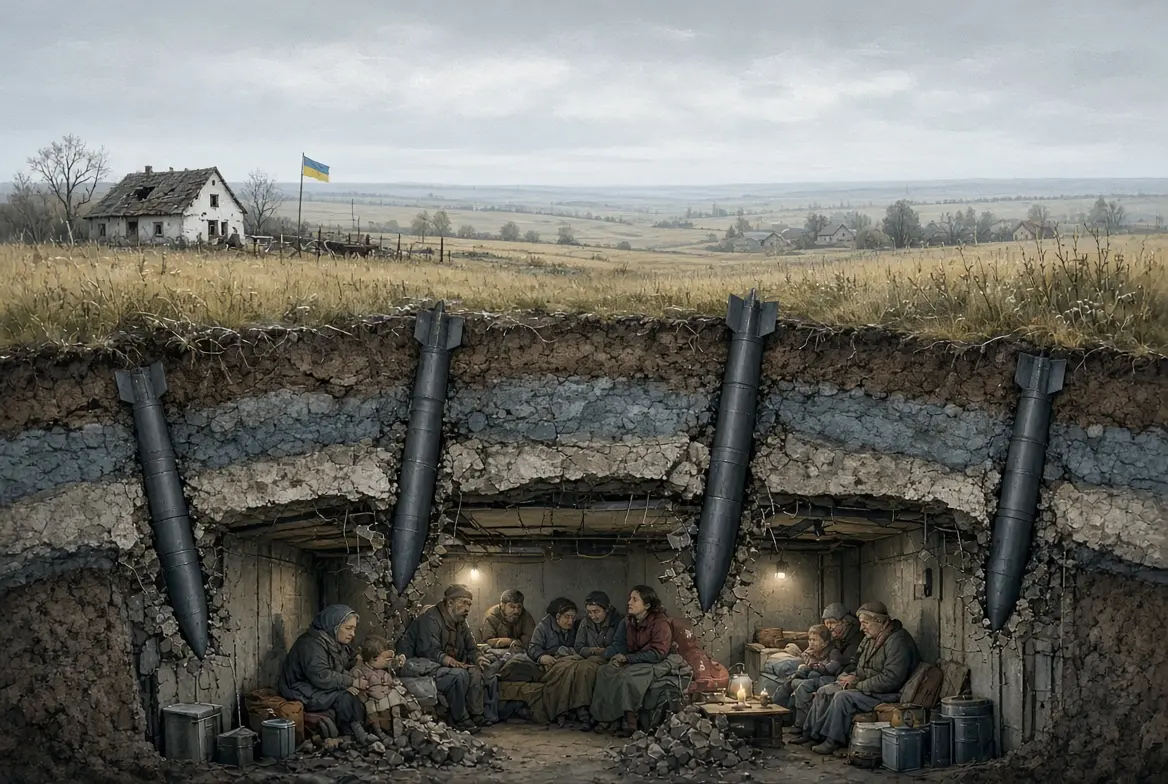
Russian bombs reached them even seven meters underground
Ukrainians are taking their schools underground to protect children, while Russia is attacking with bombs capable of destroying even fortified shelters. Ukrainian writer Andriy Kurkov starts from this unequal struggle in his Kyiv Post opinion piece published on November 15, which uses the tragedy at Komysh-Vakha to show the limits of civilian protection as long as Russian attacks continue.