
Árpád Antal is shouting on Facebook again, with a conspicuous lack of groundwork
Árpád Antal has an institute that would have come in handy right now if it had managed to produce proper illustrative materials for the communication campaign being pushed instead of adequate preparation for administrative reform. If the reader clicks through, they can see what the so-called website of Árpád Antal's Szeklerland "public policy institute" looks like now. All we could add here is that we've preserved the ruins of the SZKI website on internet archiving sites for posterity's interest. Even when the website still worked, it wasn't more useful to the public than this, but at least in its current form it's far more telling and unambiguous.
Even the Taraf de Haïdouks' cash-flow management is better than what the UDMR produces. Though it's true that management really can be hard for the UDMR when they grab everything that exists and fit none of it into any system. After all, if there's no real goal, then what's the point? And there's no accountability either, since for decades no one has ever held the UDMR to account. So how are they supposed to manage anything.
In any case, the SZKI website isn't even adequate for the communication campaign, let alone for proper information, let alone... ... sorry, I won't go on, lest the  Ugar come up with public policies
 for our monopoly party and government, so that they'd have something to use for Facebook ad campaigns! Our earlier sentences are already echoing hollowly enough as it is, being used to lure you in.But despite the website that nobody misses, the institute is alive and thriving, buzzing, clicking and running! This is also shown by the fact that they produced an image for Antal's latest Facebook post. If our eyes squint hard enough, maybe we'll make something out of it — and we'll be left with the lesson: "well, okay."
Does Antal think that if he writes nothing at greater length, it becomes more adequate, and helps more?
I doubt it. But he writes it anyway.
Because at the , the question isn't posed as: "how do we solve this", but as: "how do we communicate about this", "how do we get away with this", "how can we exploit the benefits of this as much as possible for the UDMR" — even when it's about some kind of hardship, presumably the hardship of Hungarians in Romania.
At the , at the weekly review, these are the categories, these are the statements heard: "This post generated much more interaction and reach in the target group than that one", and: "we should rather communicate this on Facebook over the next two weeks" — while these never even come up: "what's the public interest here?" or: "if we want to help solve Rimetea's problem, maybe we should start by...".
Dear Árpád Antal, do you believe that if the Ugar hastily lists a few towns that might be affected by the mergers, then two weeks later the UDMR's job will also be to list a few towns that might be affected?
Dear Árpád Antal, do you believe that if we here at the Ugar point out that for towns, identity matters, that independent decision-making matters, then the UDMR's job will also be to drone on about it in Facebook posts, instead of finally starting to actually do something, after more than twenty years of not only doing nothing but staying silent about it too?
Dear sir! Since when has Romania's development-region division existed? You and Sándor Tamás jumped into an 18-year-old fake debate with this very text. With your current text, or with the one back then, would you like us to wipe your honorable backsides?
What's more, within the UDMR it's being said about you lately that you've always loved the fact that Szeklerland is merged with large, heavily Romanian-populated counties... I see no evidence to the contrary.
Let's take a closer look then at your empty rhetoric, Mr. Antal!
It begins with a paraphrase of Albert Wass:
Székelykő will remain.
What a marvelous trick — from here on even the blind can see that you're a fine Hungarian man!
"how much say would remain over their own future"
With the merger, it may lose its independent local government. Decisions about shared funds, development and services could end up being made in another locality. The local community would then have to assert its interests within a larger unit.
It's wonderful how thoroughly the UDMR has trained every Hungarian, every group, every Hungarian village out of standing up for their interests. Even the repression under communism was better than the current situation in this respect. In the 1980s, for most localities they still managed to stop even the bulldozer, and even party comrades intervened on their behalf. And that was under a dark dictatorship.
And now we've reached the point where the merger of localities poses a real danger, because we have no idea how to stand up for ourselves. And indeed, if we look around: no one is doing anything, only you are shouting here and there. Thank you for this wonderful nearly four decades under your leadership, during which even the National Council for Discrimination was run and wrecked by the UDMR, and all you did was keep instructing us to shut our mouths and let the UDMR handle it.
The other day in Rimetea we adopted a declaration together with the leaders of Transylvanian communes with fewer than 1,500 inhabitants.
What a marvelous idea it was to bus them out there! Was that marvelous declaration the sole outcome of the whole thing?
In it we rejected the reorganization announced by the Social Democratic Party, based solely on population size, without professional or social consultation.
The Social Democratic Party's program, including the administrative reorganization, was already known to the public when you signed the agreement with them. If you're going to scold them, you might as well scold yourselves too.
At the time you said that the document would be made public after signing. By the time this article is written, 20 days have passed, and it still hasn't been published.
I don't know why you keep complaining to us here on Facebook, since the PSD keeps saying at every turn that they will consult with you. We don't know where you get the idea that consultations are falling through, since that's not what the PSD says. Have you cleared this up with them? Would you be so kind, please, as to tell us exactly which question who answered and how? :)
We'd be honored!
We stated it clearly: communes may only be merged if the affected communities agree in a referendum, and if the reorganization does not infringe on minority rights.
That is why the UDMR insists on the local referendum laid down in the Rimetea Declaration.
That's very sweet, except that the law already states both of these things here and there, but you have no idea where exactly the law states this. All we need to do is look at Hunor Kelemen's statement!
At the same time, the PSD also specifically emphasized in the government program that this is how it will happen: the reorganization will not infringe on minority rights.
From this vantage point, you look exactly like someone banging on door number thirteen from old lady Bözsi's chicken coop — loud enough for the whole village to hear, even down by the brook — except Bözsi herself doesn't hear a thing.
The proposal presented would encourage voluntary mergers with financial support.
We're glad we could bring this "new" piece of information to your attention the day before yesterday.
We still don't know which commune could merge with which, and under exactly what conditions.
Well, we really do understand that, since there hasn't been all that much time over the past at least 20 years to consider or work out various alternatives!
Hasn't those couple of decades just flown by?
At the same time, the development minister has also raised the prospect of mandatory mergers after the voluntary phase.
Once again we're glad we had the chance to bring to your attention that this too is on the table.
Beyond that: ever since the Ugar's existence, one of our colleagues has been constantly warning Hungarians in Romania and the UDMR that administrative reform is coming, and that it's extremely important for Hungarians to manage it well.
So you've only just woken up now, in November 2026? Oh no, you're shouting in your deep sleep, and with that you're lulling us to sleep too. That's how Hungarians in Romania get to sleep so well.
A community has a real choice only if it can decide freely, in possession of all the necessary information
And what information does the "community" actually have?
Mr. Antal, please. What was the name of the development and administration minister just a few weeks ago? Yes, well done, you got it right! Indeed, his name was Attila Cseke.
And there's no information?
How on earth is there none?
and that its decision is respected even if it says no
I'd rather not bring up any votes from the Old Kingdom right now, because we don't even need to go that far to see how the UDMR respects the decisions of Hungarians. The simple fact is that the UDMR hasn't held primaries in an average of 26 years. So I honestly don't even know how many times Transylvanian Hungarians have actually had a real choice, even in the voting booth, over the past hundred years. Respecting that could only have become relevant after that.
In this case, the Hungarian community might, at best, be represented by a few local councillors, while losing the ability to independently decide on its development priorities, cultural institutions and local affairs.
But autonomy, well, that's not needed, right? After all, we have the UDMR!
And the UDMR will continue to decide who runs that cultural institution or school — provided it even survives. It seems this is the direction to follow, since you (in Europe!) have (in Europe!) such things written (in Europe!) into law (in Europe!) instead of autonomy. Many thanks.
And while we're on the subject of you mentioning
might, at best, be represented by a few local councillors
it's time I draw your and your party colleagues' attention to the fact that in Szeklerland, local councillors believe their job, their mandate, is to go to council meetings, listen to what the mayor, the clerk and the deputy mayor say, and when they say "let's vote," raise one hand.
As mayor, what I expect from a reform is for people to handle their affairs more easily, get better services, and have a say in their community's life. The government must show how merging communes would serve all this. If a reorganization merely reduces the number of offices but fails to give a convincing answer to legitimate questions, we cannot call it a reform.
Sorry, Mr. Mayor, I recall that you personally abused your power grossly in a matter affecting me and my community, and in the process you weren't even as responsive as the SZKI website currently is...
It's easy that way — others always have to answer, while you only bother when you can turn it into a heartwarming video for Facebook.
And just the other day you were bragging about the bypass road. During its construction the city also seriously and needlessly abused its excessive power, while the voices of the people, of the property owners, were ignored. Or in your view, did that not happen?
For Hungarian communities, there's even more at stake in all this. A merger can change ethnic ratios, the weight of elected representation, and the conditions for conducting business in one's native language. Will we still be able to submit our applications in Hungarian where we've been able to do so until now? Will we get an answer in Hungarian? Preserving existing rights requires clear, advance guarantees!
Well, God forgive me, Mr. Mayor, but I burst out laughing at that.
By the way, SZKI.
Look, you have a tame opposition of your own, called the "Movement for a More Equal Transylvania" — also known as Tibor Toró and Tamás Kiss, you know, from the Planetarium, from ISPMN, and from Sapientia. Now this SZKI, which is your and Sándor Tamás's institute, the retirement home for your exes and so on, likes to do research together on various things with this tame opposition, give regular interviews to the tame-opposition press, and so on.
Well, this tame opposition has in recent years, with the help of Hungarian government money, measured that the rights you mention here are widely available. Unfortunately I have to inform Mr. Mayor that the aforementioned tame-opposition duo used a completely unusable methodology: they conducted phone surveys asking the institutions themselves how well they ensure these language rights — and thus, in all "innocence," systematically overestimated the actual enforcement of language rights. So Mr. Mayor really has nothing to worry about on that score, that those rights might be lost, because in reality they haven't been enforced beyond inertia, beyond the "natural course of things" anyway. And in a mixed environment, we all know, we all see, what that "natural course" amounts to.
To the tame opposition, namely Tibor Toró and Tamás Kiss, I'd like to say — please pass it on, lol — that it may well happen that, citing their results, the authorities will see no problem whatsoever if, by redrawing municipal boundaries, a previously Hungarian-majority locality's Hungarian share drops from, say, 90% to 30%, since their data show that language rights can still be enforced in public administration even then. It really wouldn't have hurt to spend the Hungarian government's money properly for its intended purpose, and to measure accurately even when the truth might be uncomfortable for the UDMR. But since you didn't, it will now fall to you and your tame opposition to speak up, whenever someone cites these results, and say that the data couldn't be more false. Thanks in advance!
In recent decades we have observed precisely that enormous energies were unleashed in small localities, especially in communities that regained their independence.
Oh, how lovely! Who are these, Mr. Mayor? Did they perhaps get back the localities that were taken from them, Coșnea, for example? Did I miss something? And here I thought even the Bicaz Gorge was gone too! Must have just been a bad dream, it seems.
For this, a public impact study, understandable information, and substantive debate are needed.
The public impact study can at least be carried out by friendly companies. As for substantive debate and the UDMR: so far Hungarians have at most gotten to decide on a Petőfi statue, and have taken part in "participatory budget" programs. Or was there something else too?
And consent alone cannot replace the protection of minority rights.
What does this sentence even mean?
Maybe it wouldn't have hurt to double-check with ChatGPT.
We made it clear in the declaration: if a bill on mandatory mergers is submitted without proper preparation, real impact studies, local consent and guarantees for minority rights, the UDMR will use every parliamentary tool at its disposal to fight it. That includes a motion of no confidence.
Wow, that sounds tough (if it were said to them and not to us) toward a government open to dialogue, but if the situation actually called for toughness — then it's all soft.
(I think here both you and I have managed to define the UDMR.)
We ask communities to stand by us on this issue.
What kind of sentence is this? Forgive me, but how did you manage to write it like that?
Is the UDMR in trouble?
Of course not, the UDMR isn't in trouble. Quite the opposite: it's precisely the UDMR that isn't in trouble that should finally get to work and help the communities.
Specifically, in what should we stand by the udemer? Dear Árpád Antal, the flood is nearly upon us, and you haven't written anything concrete. Nor do I see anything on the UDMR's website besides the "Rimetea Declaration." I don't see a single stage of problem-solving, not a single sign of standing by us.
Or are we supposed to understand it as standing by you, meaning sharing & liking the UDMR's posts??
How many times have we asked the UDMR to stand by Hungarians in Romania?
They didn't answer with a single word when we asked for their help in the Premonstratensian order's time of trouble.
Meanwhile, Romania's prime minister did respond. That would have been openness — except the UDMR decided it didn't like how the institution was being run, and that it had to go.
Did you like this article?
Support our work with a small donation
Secure payment via Stripe • Min. 2 EUR
Gesta recommendations:

Reform or Eyewash? Monday Will Reveal Whether the PSD Came to Govern or Just to Promise
Sorin Grindeanu is convening the PSD leadership on Monday morning. According to Mediafax, the meeting comes just as the debate over pensions and wages is unfolding, and for the first time the party must answer, alone, without a coalition partner, how much money the country has and what it will spend it on. What's worth watching?
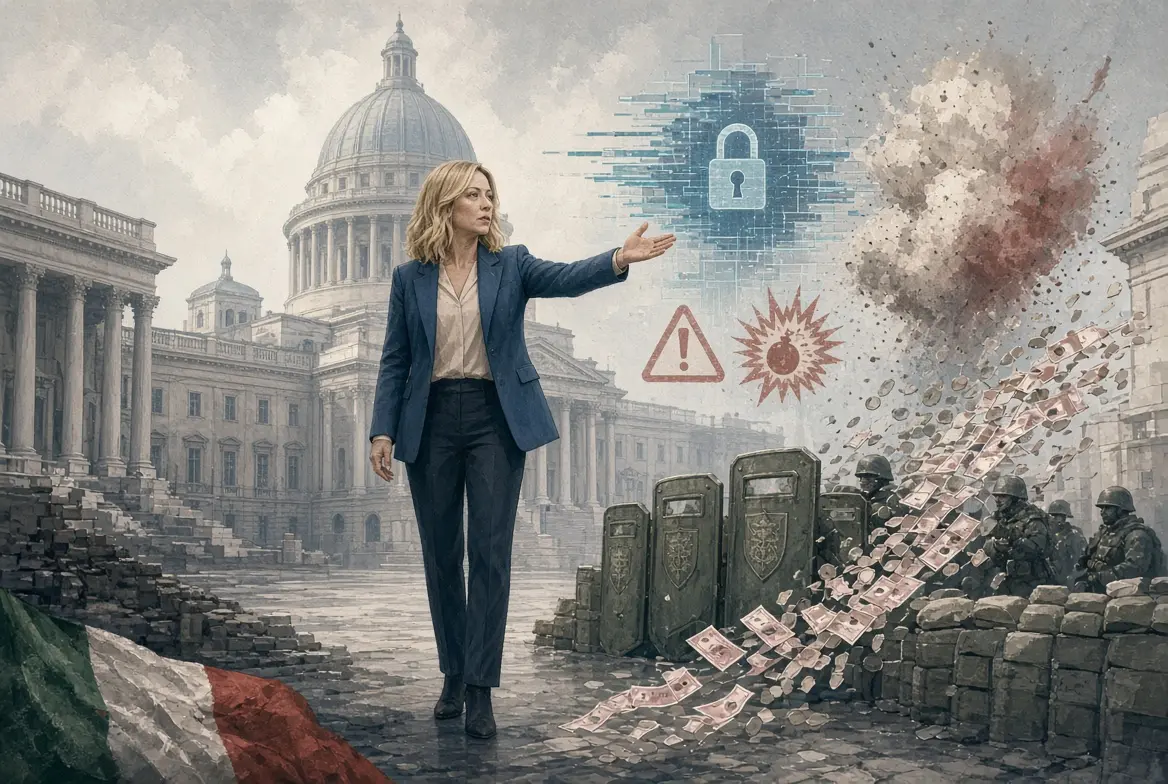
Meloni: cyberattacks and bomb threats show that more money is needed for defense
On Friday in Verona, during a break at the Fieracavalli international horse fair, Italian Prime Minister Giorgia Meloni told journalists that Europe needs to increase its defense and security spending. In her view, civilian infrastructure today is threatened not by distant dangers but by attacks that can be felt in everyday life.

Expressions Apple blocks: dictator Trump, Tibetan independence and Russian troop deployment
The iPhone keyboard blocks nearly one hundred thousand words and expressions in about thirty languages when a user tries to type them using the faster swipe-typing feature, and the list includes not only vulgar and offensive words but also political expressions.
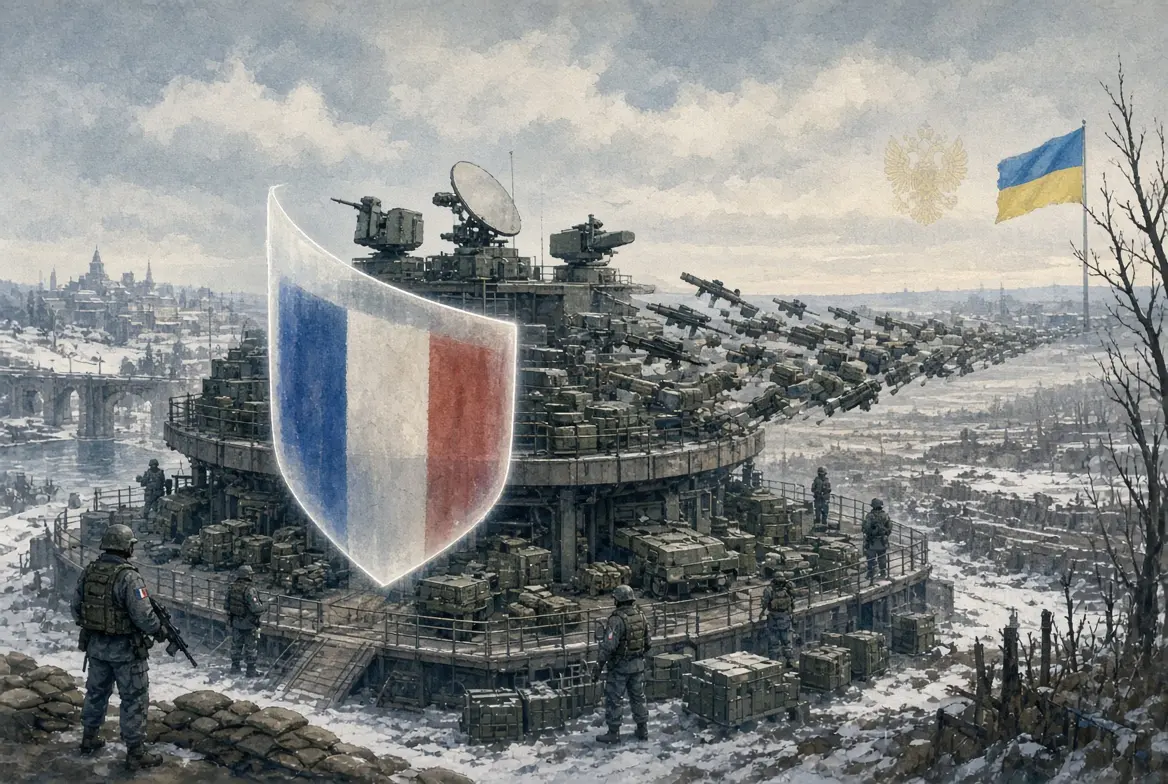
From January, the French will defend the weapons hub destined for Ukraine
From January 1, 2027, France will take over air defense of the Rzeszów area in southeastern Poland, home to the most important logistics hub for Western military aid destined for Ukraine. French ambassador to Warsaw Étienne de Poncins told journalists on Friday, November 6, that "from January 1, France will take over air defense in the Rzeszów area within the framework of NATO."
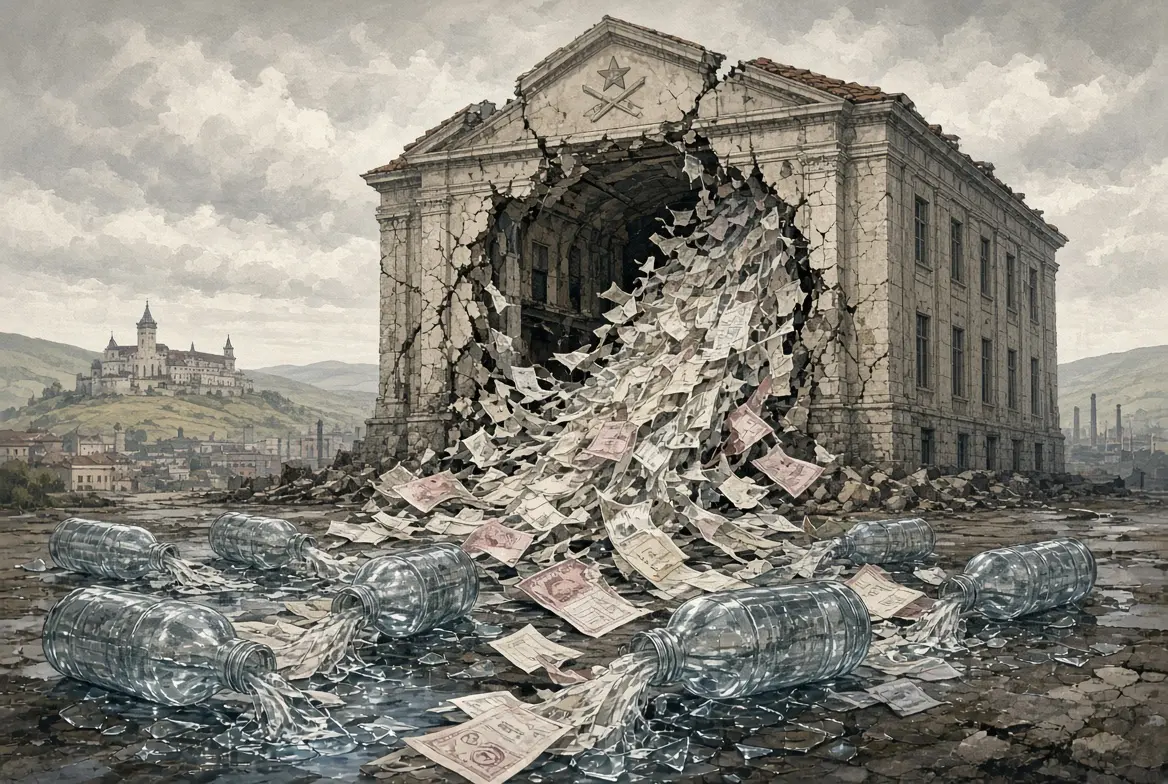
How to Bankrupt Mineral Water? The State Mineral Water Monopoly on the Brink of Insolvency
In Transylvania it is called borvíz, in Romania mineral water, and the country itself holds about 30 percent of Europe's mineral water reserves suitable for drinking, yet the state company managing this treasure has still been turned into a loss-maker. According to G4Media's investigative article of November 5, the National Mineral Waters Company (SNAM), which controls about half of the domestic…