Black Sea grain trade grinds to a halt, wheat prices rising worldwide
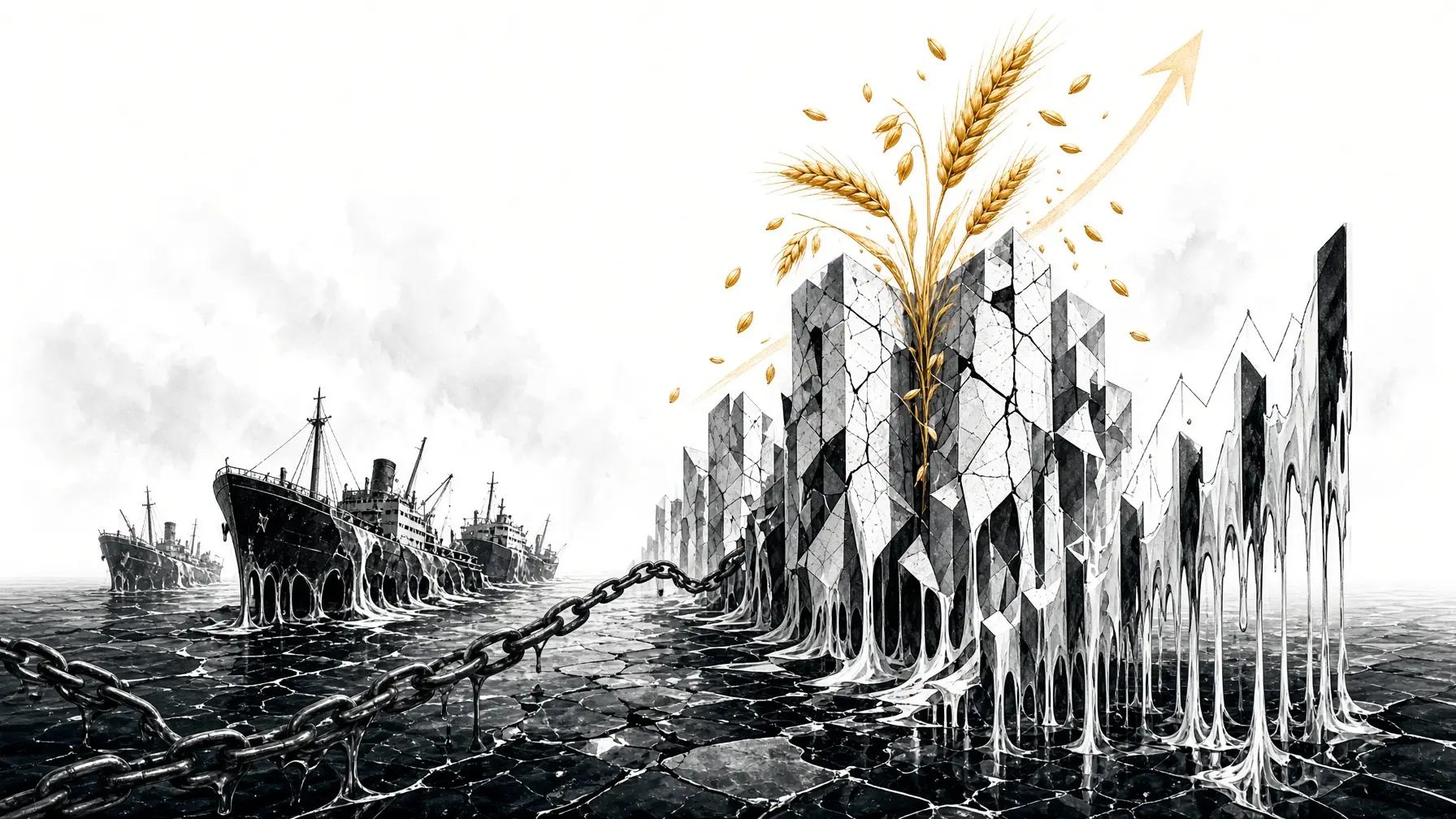
The maritime dimension of the Russia–Ukraine war has effectively paralyzed one of the world's most important grain export routes. In recent months, the Russian army has intensified its attacks on Ukrainian ports, grain terminals and transport hubs, while Ukraine has responded by targeting Russian ports, cargo ships and logistics facilities. The result: more than 97 percent of Russian and Ukrainian maritime grain exports have temporarily ceased, while the world market price of wheat has risen by about 6.5 percent in a single month, and is now roughly 30 percent higher than a year earlier.
Russia and Ukraine together account for roughly 27–31 percent of the world's wheat trade. A significant portion of the two countries' produce traditionally reaches the Middle East, North Africa and Asia via the Black Sea, and if this route remains closed for an extended period, the countries most dependent on imports will have to replace Black Sea shipments with more expensive Australian, American, Argentine or European grain. The primary cause of the collapse of Ukrainian exports is Russia's destruction of ports: Moscow has carried out repeated missile and drone attacks against Odesa, Chornomorsk, Pivdennyi and the Danube ports, while also targeting ships, rail links and warehouses. Due to the growing military risk, some shipping companies are refusing to enter Ukrainian ports, and insurers have significantly raised war-risk premiums, with London's maritime insurers having already declared the entire Black Sea area a high-risk zone.
Ukraine is trying to move its produce by road, rail and via the Danube, but these routes cannot fully replace maritime shipping. The situation is further aggravated by low water levels on the Danube, limited rail capacity, and the fact that Russia is regularly attacking logistics infrastructure near the Ukrainian-Moldovan and Ukrainian-Romanian borders. Kyiv has requested additional freight trains from Romania and Poland, but the volumes available via land routes are still only a fraction of the Black Sea ports' former capacity. Russian grain exports have also fallen sharply due to Ukrainian drone attacks — Moscow previously handled nearly 90 percent of its maritime grain shipments through the Black Sea, but is now hastily converting fertilizer and coal terminals in the Baltic Sea and the Arctic. Russian grain exports fell by 31 percent in July and August compared with the same period a year earlier, and September could see a drop of as much as 50 percent.
The greatest danger threatens the heavily import-dependent states of the Middle East and North Africa. Egypt, Turkey, Lebanon and several African countries rely heavily on cheap Black Sea grain for their food supply. Higher purchase prices could not only drive up the price of bread but also strain state subsidy systems and threaten political stability. The rise in food prices during Russia's 2010 export ban also contributed to the social tensions that preceded the Arab Spring. The current crisis, moreover, is not occurring in isolation. The war situation around the Strait of Hormuz has driven up the price of fuel and fertilizers, and the intensifying El Niño is threatening next season's harvest in several agricultural regions — all of which means the market cannot expect the Black Sea shortfall to be fully offset in the short term by grain produced elsewhere.
The Black Sea blockade is thus no longer merely a Russian tool for economically strangling Ukraine, but also threatens a global food security crisis: the longer the ports remain partially or fully closed, the higher prices could rise, while once again the countries with the least money for more expensive alternative supplies will bear the heaviest consequences.
Ugar
Tetszett a cikk?
Támogassa a munkánkat egy kis adománnyal
Biztonságos fizetés Stripe-on keresztül • Min. 2 EUR
Gesta-ajánló:

Kormányalakítási alkudozások: az RMDSZ kiharcolta az autonómiát
Alakul a román kormánykísérlet: a PNL, az USR és az RMDSZ felosztotta egymás között a minisztériumokat, Siegfried Mureșan kijelölt miniszterelnök pedig szombaton benyújtja a Parlamentnek a kormányprogramot és kabinetje névsorát. A miniszterjelöltek meghallgatását hétfőre tervezik, az izgalmak napja pedig – ha semmi nem borítja fel a menetrendet – kedd lesz, amikor a törvényhozás szavaz a kormány…

Világpremier: repülő drónok szállították az orosz vonalak mögé az ukrán harci robotokat
Az ukrán hadsereg Harmadik Hadteste közölte, hogy a Vivaldi hadművelet során 125 négyzetkilométernyi területet vont ismét ukrán ellenőrzés alá a Donyeck megye északi részén található Liman térségében. A művelet egyik legfontosabb újítása az volt, hogy nagyméretű repülő drónokkal robbanóanyaggal felszerelt szárazföldi harci robotokat szállítottak több mint tíz kilométerrel az orosz vonalak mögé.

Mesterséges intelligenciával keresik a föld alatti csőtöréseket Buzăuban
A Buzău megyei regionális vízszolgáltató mesterséges intelligenciával támogatott zajérzékelőkkel csökkentette a hálózat vízveszteségét. A rendszer a nyomás alatt álló vezetékekből kiszökő víz által keltett hangokat és rezgéseket figyeli, majd az adatok alapján kijelöli azokat a területeket, ahol valószínűleg rejtett csőtörés vagy szivárgás található.
Megakadt a fekete-tengeri gabonakereskedelem, világszerte emelkedik a búza ára
Az orosz–ukrán háború tengeri kiterjedése gyakorlatilag megbénította a világ egyik legfontosabb gabonaexport-útvonalát. Az elmúlt hónapokban az orosz hadsereg fokozta az ukrán kikötők, gabonaterminálok és közlekedési csomópontok elleni támadásokat, Ukrajna pedig válaszul orosz kikötőket, teherhajókat és logisztikai létesítményeket vett célba. Az eredmény: az orosz és ukrán tengeri gabonaexport…

Szele Tamás: A Crocus-paradoxon
Míg az orosz hatóságok szerint Kijev a bűnös – hiszen ehhez ragaszkodnak, körömszakadtáig is – remény sincs a valódi gyilkosok, felelősök és szervezők megbüntetésére.