
Relax, this isn't Yalta 2.0, because Putin doesn't have a mustache
I've been reading the reports on the Shenzhen summit of the Big Three, and the analyses too: a multitude of Hungarian analysts raised in the Western cultural sphere are talking and writing about how, oh no, this wasn't Yalta 2.0 at all. But it was! I'm sorry that I have to be the one to switch on the light in the increasingly darkening skulls of these trendy analysts, but yes, this was Yalta 2.0.
First of all: where do so many people get the idea that it wasn't? The answer is so simple that its crudeness is startling, as is the fact that intellectually trained individuals are capable of the kind of twisted logic usually seen only in anti-vaxxer comment sections. Well, it wasn't Yalta 2.0 because they don't want it to be – no other sensible argument, fact, or cause-and-effect appears anywhere in the Yalta-denying analyses, but it's easy to read between the lines that there's a kind of psychological need for things not to be the way they actually are, so the analyses get bent to fit that need — otherwise we'd have to face our own screw-up. Let's be clear: here I'm criticizing the pro-Ukrainian analysts; I won't bother with the vatniks, it's not worth it.
So, let's start at the beginning: if this really wasn't Yalta 2.0, then this meeting shouldn't even have happened. It shouldn't have been allowed to happen, because the leading figure of the Western, free world cannot sit down for drinks with all sorts of dictators. The fact that he could do it anyway, that there wasn't enough force in the pressure of public opinion, either here or across the Atlantic, to stop it, says a lot about us too. But the chain of events surrounding Yalta 2.0 is even more telling. We started out with the premise that Ukraine wouldn't even come up. Then, barely a few days before, Trump announced that it would indeed come up — and we, Europeans and Ukrainians, just watched as if it were a film. Then there's the question of nuclear disarmament: America and Russia are undoubtedly nuclear superpowers, but China? With its six hundred warheads? And Europe's two nuclear powers, France and Britain, took no part in this nuclear bargaining — together the two of them have roughly as many warheads as China.
Then these three dictators — because Trump is one too — decide that, as permanent members of the UN Security Council, they will nicely reform the UN. We don't know the opinion of the Security Council's other permanent members — presumably they weren't even asked — they are the two missing members from the equation: France and Britain. At the initiative of Trump, the free world's number one, the International Criminal Court is effectively being sealed shut — the very institution that issued an arrest warrant against Putin, but whose docket also includes Netanyahu, who, now that he's lost the elections in his own country, could find himself in an awkward position. The joint document, titled "Declaration Toward Peace," states that the International Criminal Court and similar bodies "must not abuse their jurisdiction." In plain terms: the judge shouldn't sit in judgment of those who signed the declaration. Of course, how much simpler it is to solve Putin's and Bibi's problems by getting rid of the organization that considers them problematic crooks. After all, if there's no investigative body and no courts, then there's no need to talk about crimes either — bravo, truly not Yalta 2.0, oh, of course not. And so that peace isn't just a nice word, the declaration also states that the three countries will increase the supply and production of refined petroleum products and ensure a "stable flow of energy." Whose oil and whose war chest this concerns hardly needs explaining: Russian oil, groaning under sanctions, has suddenly been promoted to a pillar of world peace.
A miniature snapshot of the chaos reigning inside Trump's head: his wife, Melania Trump, wrote a letter to Putin in August 2025 about the abducted children, and in October she reported that, through a channel set up with Moscow, eight children had been able to return to their families. Since then, together with others, she has been working to bring home the Ukrainian children abducted by the Russians and deported to Russia. The International Criminal Court launched its case against Putin precisely over the abducted Ukrainian children. So the husband is having sealed shut exactly the court that prosecutes the very crime his wife is trying to put right. Is the snake biting its own tail? Bullshit — this snake gave itself a blowjob long ago, swallowed its own load, and now proudly shows the world the scraps of tail still stuck between its teeth — that's Europe today, that's America today, and that's the West today — and that was shown more clearly than daylight in Shenzhen.
Furthermore: both Putin and Trump gave fairly clear signals that Ukraine would be discussed — Trump and Putin also spoke one-on-one before the trilateral meeting, yet we know nothing about what was said regarding Ukraine. Even though it is currently we, the Europeans, who finance the largest part of Ukraine's support, and in theory, on paper, Trump is our ally — he doesn't bother telling us what he discussed with Putin. The signs of Yalta 2.0 keep piling up, though: not long after the trilateral meeting, the countries of the "coalition of the willing" gathered in Berlin and showed themselves determined to keep supporting Ukraine, after which Trump, on his way home, called them up from Air Force One to explain what nonsense this funding was, how much money they'd save if they stopped it, and besides, Putin wants peace. Chuck Schumer, the Democratic leader of the U.S. Senate, said that Xi and Putin are playing Trump like a cheap violin — a perfect comparison. And I read the smug analyses claiming that Xi personally waited for Trump at the airport, while for Putin he only sent out one of his lackeys — the tangible result of subversive brainwashing — it doesn't even occur to such analysts that Xi played this deliberately, since he too knows what 99 percent of the world also knows: that the way to Trump runs through his ego — a bit of personal welcome, a bit of flattery about him being the greatest American president ever, and Ukraine can already go into the soup, along with NATO, Eastern Europe, Europe, everything and everyone.
And then there's the Yalta-deniers' favorite argument: we haven't seen any division, there's no map, no signed agreement, so nothing actually happened. Except that the fact we don't yet know whether the world has been carved up, and if so, how, doesn't mean it hasn't happened. Yalta itself wasn't published in the international press the next day either, and nobody sent Romania or Hungary a diplomatic notice saying "as of tomorrow you belong to the Russian sphere of influence." The agreement concerning the Far East, in which Roosevelt and Churchill promised Stalin the Kuril Islands and the southern part of Sakhalin, was only made public by the U.S. State Department in February 1946, a full year later. As for the "percentages agreement" between Churchill and Stalin, in which Romania was handed over 90 percent to the Soviets on a scrap of paper in October 1944, the world only found out years later, from Churchill's memoirs, while Moscow denied the existence of the secret protocol of the Molotov–Ribbentrop Pact all the way until 1989. The essence of great-power deals has always been that their true meaning becomes clear not in the announcement, but afterward, in the facts. Perhaps it's an exaggeration, in that sense, to call Shenzhen Yalta 2.0, but one thing we can already be sure of: the conversation that took place there is, at the very least, the antechamber of some kind of division. And in that case, better to call it Yalta 2.0 than to dream that it isn't.
The Yalta-deniers also like to say that today's division wouldn't happen on a map anyway, so the parallel doesn't hold. That's precisely why it does hold. Division today isn't about lines, but about who has veto power over someone else's security, whose courts get to function, and, above all, who gets to sit at the table. In Abu Dhabi, Moscow demanded that NATO withdraw to its 1997 configuration — in other words, precisely that the Kremlin should have the final say over the defense of Eastern Europe. In Shenzhen, the Big Three decided on reforming the UN and restricting the international court — without Europe and Ukraine — while in Berlin, Trump merely dictated his own terms over the phone. This is Yalta's logic itself. Another favorite argument is that nothing is binding, since only a declaration was signed, and Trump is unpredictable. Yalta wasn't an international treaty either, just a declaration, and nothing more was needed for it to determine Eastern Europe's fate for half a century: the Red Army stood where it stood, and the West didn't want to go to war over it. According to a third argument, the Big Three don't trust each other anyway, and Xi wouldn't share the spoils. Roosevelt, Churchill, and Stalin didn't trust each other either; the Cold War began just months after Yalta, yet the division held anyway.
Perhaps the biggest lesson is that Yalta wasn't called Yalta when it happened either. On March 1, 1945, Roosevelt told the U.S. Congress that the Crimean conference had put an end to the system of "unilateral action, exclusive alliances, spheres of influence," and every other device that had been tried for centuries and had always failed. That speech could have been quoted in Warsaw, Budapest, and Bucharest for four decades, accompanied by bitter laughter. The Yalta declaration, too, was called the Declaration on Liberated Europe, and it promised free elections, while the Shenzhen document was titled "Declaration Toward Peace." When it comes to choosing titles, the great powers have always been good at it.
There is still hope, faint as it may be. According to a Pew Research Center survey published on November 18, 67 percent of Americans disapprove of how Trump is handling the Russian-Ukrainian war, and 39 percent believe the president favors Moscow too much. That share has grown since last August, and even Trump's own voter base is growing less certain. Trump has only a little more than two years left in power: he must leave office in January 2029, and whatever he promises Putin today, he won't be the one guaranteeing it gets kept. Until then, Europe must hold out and preserve as much as possible: not backing off support for Ukraine, not signing anything over its head, and not believing that peace is peace just because someone calls it that.
Exerting pressure still works, if Europe is willing to use it — except it isn't, because Europe isn't even willing to settle accounts with its own addled, psychologically unwell Putinists; instead, in the name of democracy and freedom of speech, it has paved their way to power — see Le Pen and the AfD, to name just the two most striking examples. We are all living in Weimar; the SA is already marching in the streets, and Hitler is demanding early elections, while we, like history's ostriches, act as if there's no particular problem with any of it. Why aren't our people out protesting all across Europe, demanding that elected politicians send more weapons to Ukraine? Why aren't tens of thousands marching to the Brandenburg Gate, demanding that we finally march into Moscow and settle the bill that Russia — a country that has never given up its imperial dreams and has practically been at war nonstop — has been running up against us continuously since at least 1945? Why aren't tens of thousands marching in Budapest to Corvin köz, demanding that we finally strike back for '56, for '48, for our raped daughters, and, while we're at it, bring home the stolen Hungarian art treasures? There are no such mass movements; instead, some addle-brained leftist idiots are protesting against the cost of the war, saying the money should go to education instead — it's not reassuring to say that the spirit of Paris '68 is haunting Europe like a ghost, while over at the FSB, the successor to the KGB, they're shrieking with laughter at how incredibly well their organized attack on our cognitive abilities has worked. And now Putin is springing that communications trap dressed up as a "gesture," which Europe's Putinists, the vatniks, have been waiting for: he is inviting Europe's leaders to Moscow to negotiate the new security architecture, the peace that, in the Putinist-Russian interpretation, means capitulation — but it's not Yalta 2.0, oh, of course not.
We are idiots, and we deserve our fate, but how will we settle accounts with our conscience, since it can already be said: so many innocent Ukrainians have died partly because of our own screw-up too.
Not Yalta 2.0, oh, of course not!
After all, it really isn't: Stalin had a mustache, and Putin doesn't — quite the argument, isn't it?
Anna Karczag/Ugar
Did you like this article?
Support our work with a small donation
Secure payment via Stripe • Min. 2 EUR
Gesta recommendations:
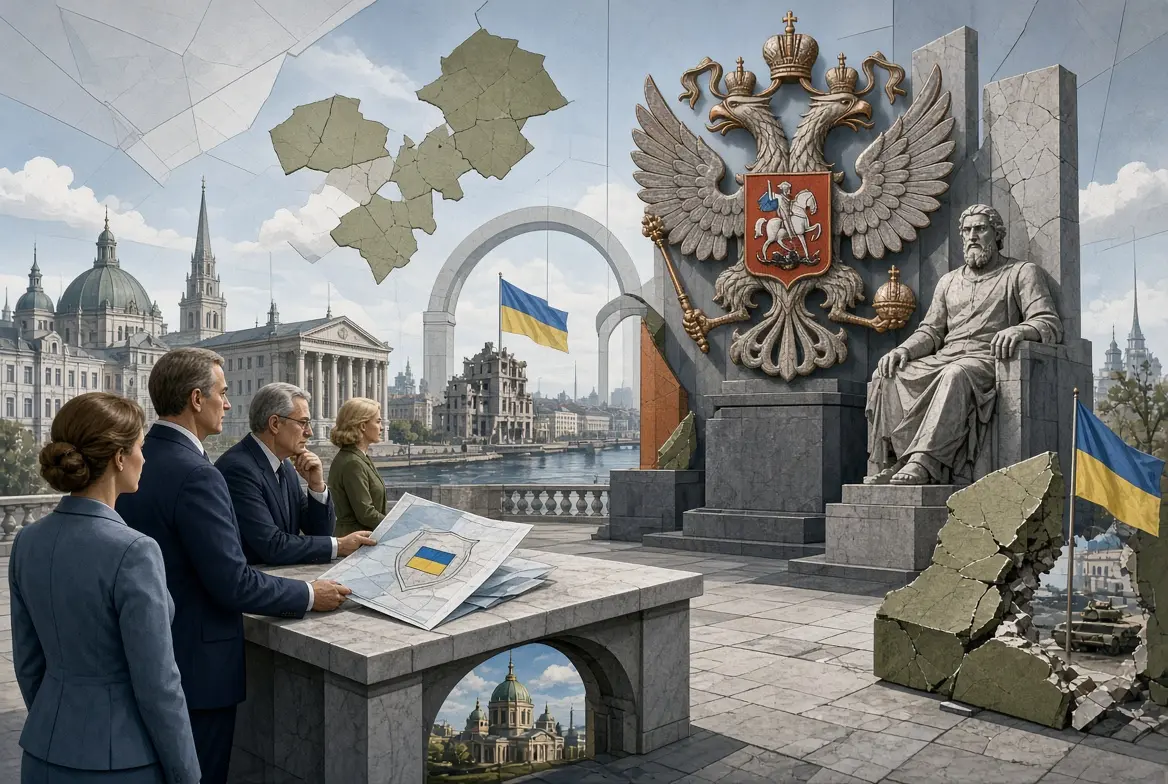
They're asking Moscow for permission to defend Ukraine from Moscow
On Thursday Jared Kushner was still boasting in Berlin that, together with Steve Witkoff, he had managed to get the Russians to accept the idea of NATO-style security guarantees for Ukraine, but on Friday Moscow announced that nothing of the sort was on the table. The most humiliating part of the story is not that Trump's envoys' diplomatic success story didn't even survive a single day, but the…
They would encourage the merging of communes with halved taxes and funding worth millions. Here is the first version of the reform
The Romanian government would persuade smaller local authorities to merge with their neighbors by halving residential property and land taxes for five years and offering investment support of at least four million lei. The draft emergency ordinance, put out for public debate on Friday, November 20, primarily targets communes with no more than 1,500 inhabitants, although larger localities could…
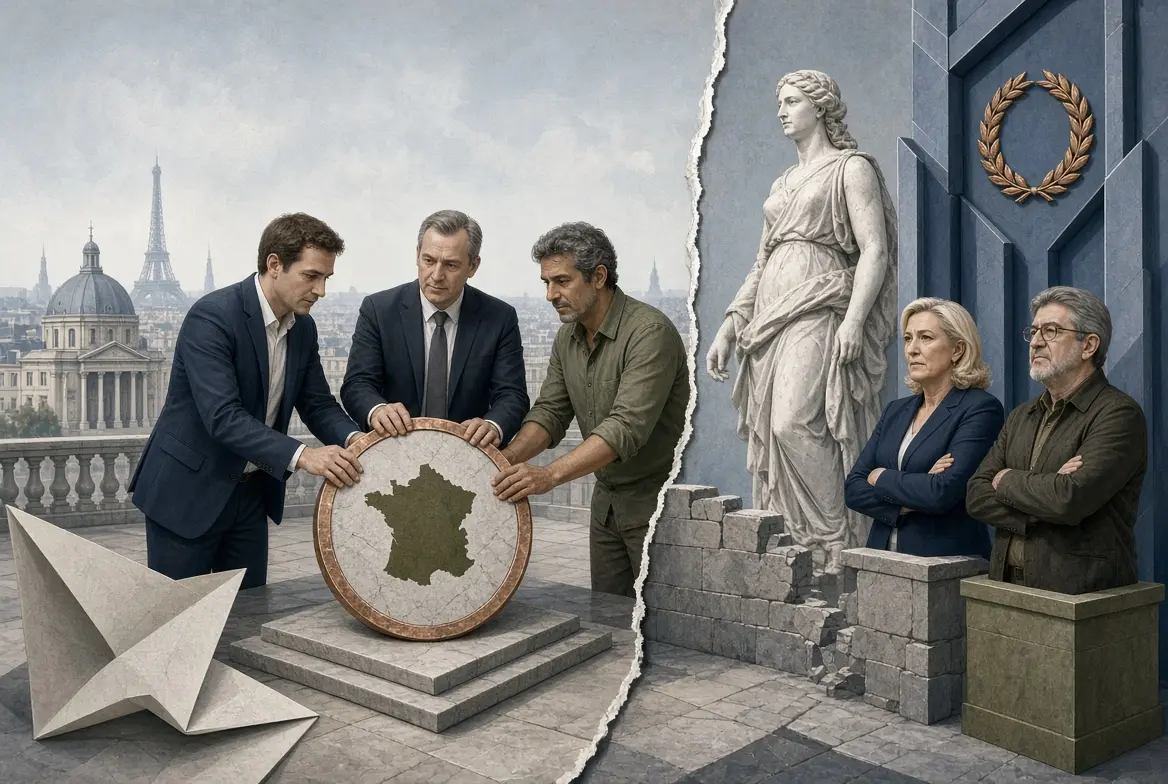
Joint primary against the extremes: Attal, Retailleau and Lisnard would field a single candidate against Le Pen and Mélenchon
In France, three presidential candidates of the centre and the centre-right have agreed in principle to decide in a joint primary which of them will be the sole candidate in the 2027 presidential election.
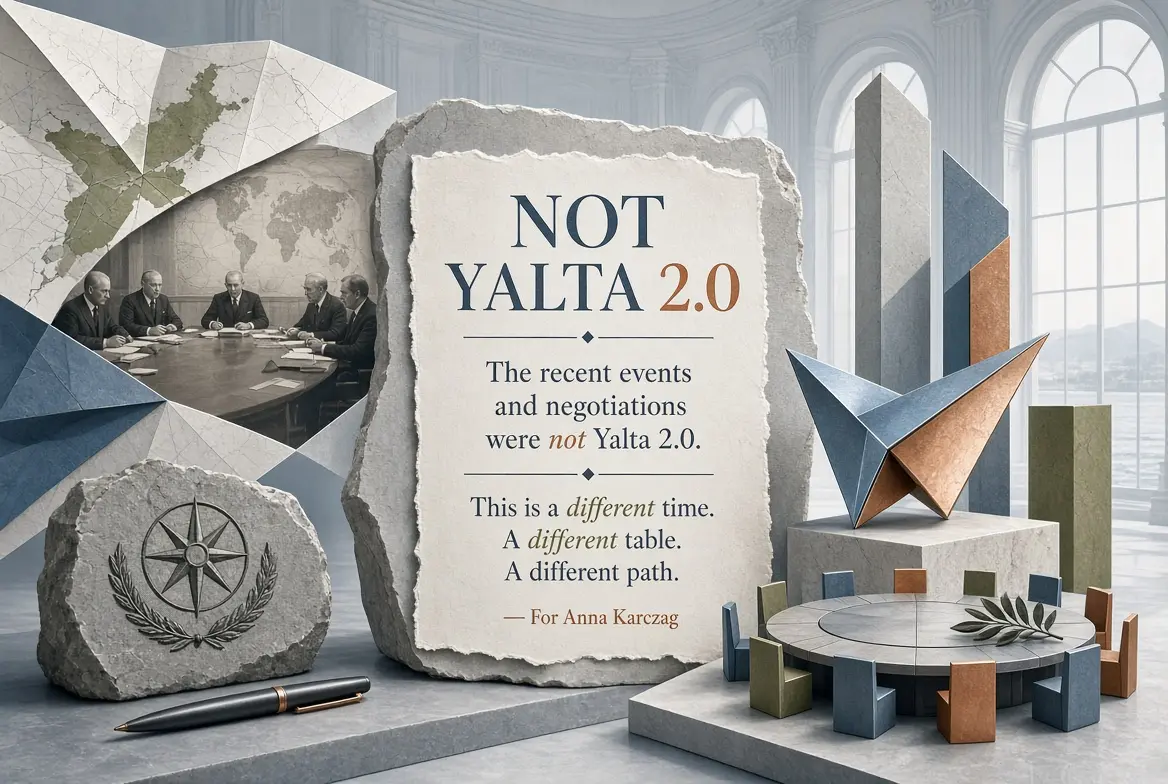
A Reply to Anna Karczag: No, This Was Not Yalta 2.0!
Let me state at the outset: I enjoy reading Anna Karczag's articles, especially when she puts in the effort and does the necessary research. The piece on the Protocols of the Elders of Zion is a thorough, information-rich example of that, as are several of her articles on cognitive warfare — all praiseworthy work. Yet there are times when she overdoes it and lets emotion take over — and that is…
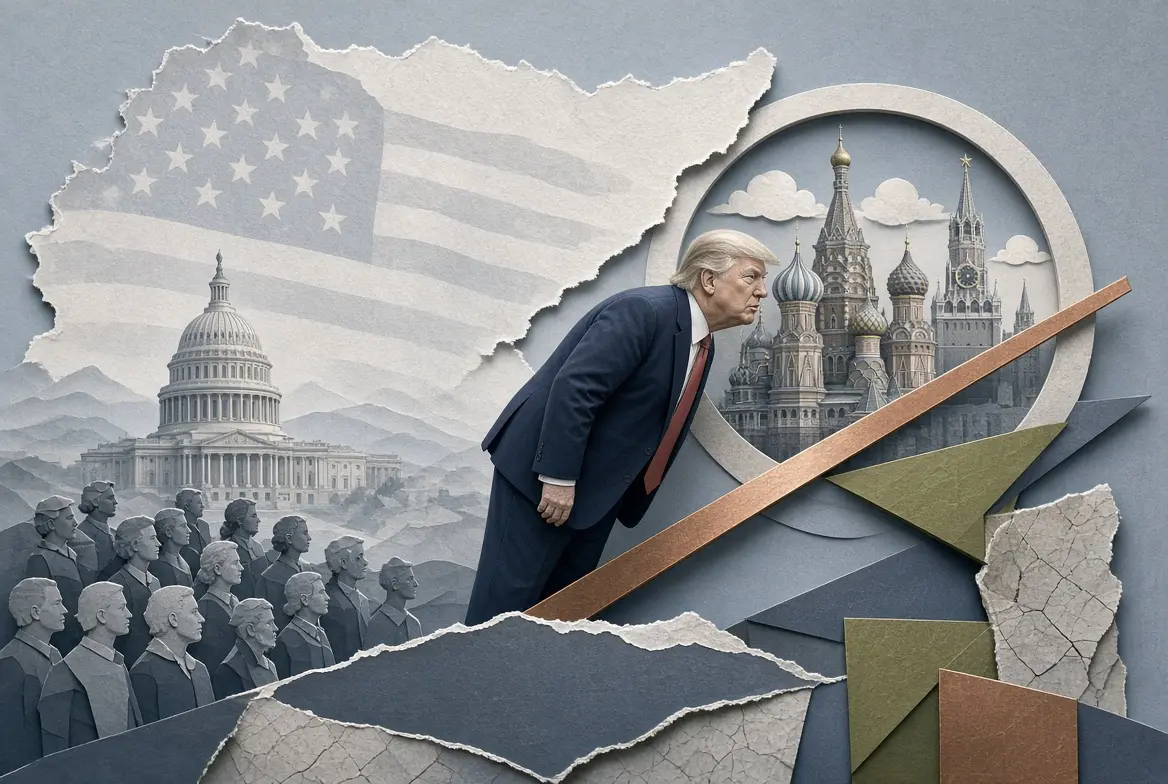
Two-thirds of Americans think Trump is leaning toward Moscow
Two-thirds of Americans, 67 percent, disapprove of the way Donald Trump is handling Russia's war against Ukraine, and only 30 percent agree with his approach. This is the finding of a Pew Research Center survey published on Wednesday, which is especially telling on Thursday, the day of the Trump–Putin–Xi summit in Shenzhen. The research institute polled 10,247 adults between November 9 and 15.…