
A Reply to Anna Karczag: No, This Was Not Yalta 2.0!
Let me state at the outset: I enjoy reading Anna Karczag's articles, especially when she puts in the effort and does the necessary research. The piece on the Protocols of the Elders of Zion is a thorough, information-rich example of that, as are several of her articles on cognitive warfare — all praiseworthy work. Yet there are times when she overdoes it and lets emotion take over — and that is what happened this time.
First of all, it's not nice to call a whole crowd of non-Putinist analysts and experts idiots just because they reject the Yalta parallel. They do so for good reason, backed by arguments, and the authors writing for Chatham House, Majalla or the Korea Herald can hardly be called mouthpieces of the Kremlin. I myself believe that the Yalta parallel is forced rather than real, and that it helps Putin more than it helps us. The label “Yalta 2.0” grants Russia a rank its capabilities do not warrant: it seats, alongside Roosevelt and Churchill, a country whose economy is a fraction of America's or China's. Paradoxically, even warnings against a “new Yalta” reinforce this image, because whoever cries “Yalta” is building up Putin's favorite historical backdrop — the image of the statesman-general who shapes the world order.
At Yalta, after all, three powers that were allies on paper — and, not insignificantly, were in the process of winning the world war — sat down to negotiate with one another. It was there that the United Nations got the green light (a topic back on the table now), and there that the foundations were laid for the world order whose fruits we have enjoyed and which we are now trying to defend. Yalta's decisions, moreover, were backed by armies: in February 1945 the Red Army was already besieging Budapest (Buda Castle fell on February 13, two days after the conference ended), so in many respects the conference merely codified facts already established on the front lines.
In Shenzhen, by contrast, no order was created, nor did victorious great powers sit down for a friendly chat. At home, Trump suffered a massive defeat in the midterm elections, his legitimacy is questionable, he cannot win in Iran, and he is increasingly bogged down in his own war. Putin has been struggling for five years now with his “special military operation,” originally planned to last three days; his economy was never a world-shaking force, and by now it is little more than a raw-material depot for China. Perhaps China is the only one that can feel somewhat victorious — the emphasis being on somewhat — because Xi's corrupt system is tearing apart from within a country built on the idea of Maoist capitalism, though its economic power is hardly in question. Looked at this way, this was a Yalta comedy, where mass-murdering losers sat down with one another, mainly because no serious person is willing to negotiate with them anymore.
Shenzhen was characterized instead by a loosening of the rules that constrain the great powers. That is worrying, but it is precisely the opposite of Yalta: there, institutions were built; here, at most they agreed to let existing ones bother them less. They can hardly do much more than that — we are no longer in 1945.
Of course, it's possible — indeed, certain — that they also talked about dividing up the world, because what else would three addled gerontocrats talk about? Xi has no interest in golf, Trump has no interest in Confucius, and Putin would find no drinking partner for his vodka in either of the other two. What remains, then, is the dictators' old favorite pastime: playing a game of Risk behind closed doors. I consider it out of the question that this did not happen — but that still doesn't make the Shenzhen meeting Yalta 2.0, if only because, unlike with Yalta, we knew about it. We knew weeks in advance that such a meeting would take place, we watched the handshakes live, and we could read the statement within hours — just as we could see what had been left out of it.
By contrast, contemporaries only learned about Yalta afterward, through a carefully worded communiqué, and the most sensitive parts emerged even later: the secret Far Eastern agreement on the Kuril Islands and South Sakhalin was made public by the U.S. State Department only on February 11, 1946, and the secret agreements on German reparations and the partition of Germany not until March 1947. In other words, in 1945 it was impossible to write a meaningful opinion piece about Yalta — at most one could comment on the official communiqué, and even that reached a far narrower audience, through newspapers and radio, than it would today, when, thanks to the internet, almost anyone can follow events in real time. This in itself limits the tragicomic possibilities of history repeating itself: a secret deal that everyone writes about in advance is no longer entirely a secret deal.
Karczag is undoubtedly right, however, that Trump's follow-up phone call — with which he tried to steer the Berlin meeting of the coalition of the willing toward abandoning support for Ukraine — is irritating. But that does not mean Ukraine was betrayed as a result of the Shenzhen meeting. Trump has been stabbing Kyiv in the back ever since he returned to power: there has already been a pause in the sharing of American intelligence data, some Russian sanctions have been eased, a deal was struck on Russian diesel, and Ukraine's access to the Starshield satellite system has been restricted. The Berlin call is a continuation of that pattern, so there is nothing new in it. Shenzhen, at most, provided the backdrop.
Ultimately, the Yalta parallel doesn't work because there would be nothing to divide up. Europe is an important target for both China and Russia, but for opposite reasons. Moscow wants a divided, weakened, intimidated Europe, while Beijing wants a functioning, solvent market that doesn't drift entirely into Washington's orbit. And there's no room for two bosses under one roof. Beijing signaled as much in Shenzhen: it left Ukraine off the trilateral agenda, and Xi did not even mention it in his opening speech. It is not in China's interest to support a U.S.–Russia deal struck at the expense of Kyiv and Europe, nor does it want to guarantee a settlement it cannot enforce. The balance of power is not Yalta-like either: the US and China are world powers economically, technologically and militarily, while Russia, beyond its nuclear arsenal and its UN Security Council seat, has few trump cards left. I repeat: in nearly five years, it hasn't even managed to defeat Ukraine.
The two dictatorships, then, have more conflicting than shared interests in any potential division of spheres. That doesn't mean Shenzhen is harmless, of course: anyone worried about Ukraine and Europe should be watching the actual agreements and the actual moves made by Trump, Putin and Xi, not an 1945-style stage set. There was no Yalta 2.0, because there couldn't be.
What did happen isn't good either, but it is bad in a different way, and it needs to be answered differently too.
Hanna Grozner
Did you like this article?
Support our work with a small donation
Secure payment via Stripe • Min. 2 EUR
Gesta recommendations:
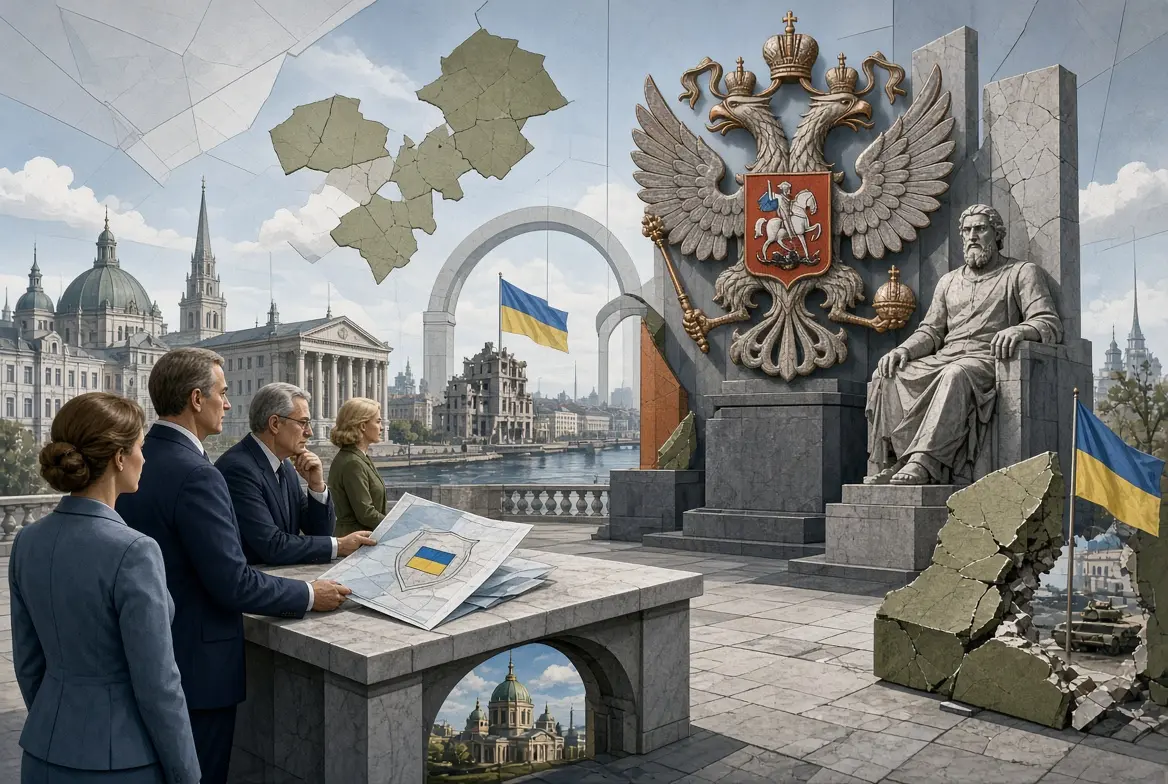
They're asking Moscow for permission to defend Ukraine from Moscow
On Thursday Jared Kushner was still boasting in Berlin that, together with Steve Witkoff, he had managed to get the Russians to accept the idea of NATO-style security guarantees for Ukraine, but on Friday Moscow announced that nothing of the sort was on the table. The most humiliating part of the story is not that Trump's envoys' diplomatic success story didn't even survive a single day, but the…

They would encourage the merging of communes with halved taxes and funding worth millions. Here is the first version of the reform
The Romanian government would persuade smaller local authorities to merge with their neighbors by halving residential property and land taxes for five years and offering investment support of at least four million lei. The draft emergency ordinance, put out for public debate on Friday, November 20, primarily targets communes with no more than 1,500 inhabitants, although larger localities could…

Joint primary against the extremes: Attal, Retailleau and Lisnard would field a single candidate against Le Pen and Mélenchon
In France, three presidential candidates of the centre and the centre-right have agreed in principle to decide in a joint primary which of them will be the sole candidate in the 2027 presidential election.
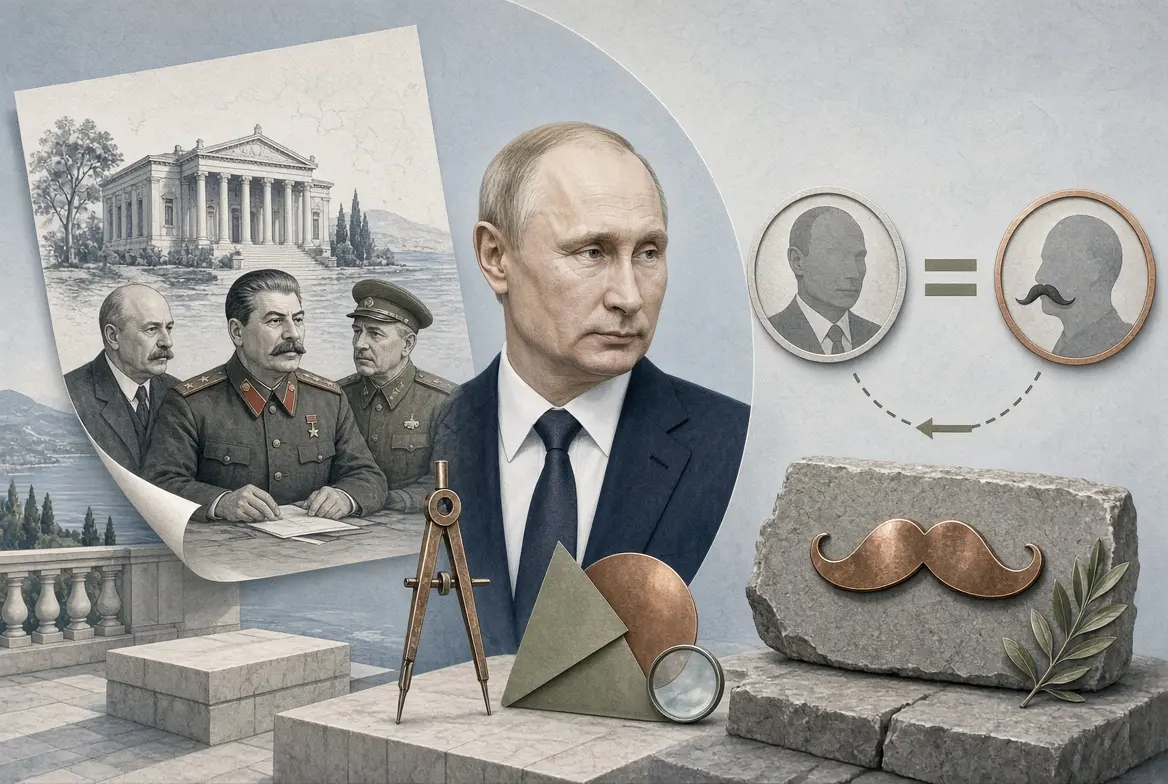
Relax, this isn't Yalta 2.0, because Putin doesn't have a mustache
I've been reading the reports on the Shenzhen summit of the Big Three, and the analyses too: a multitude of Hungarian analysts raised in the Western cultural sphere are talking and writing about how, oh no, this wasn't Yalta 2.0 at all. But it was! I'm sorry that I have to be the one to switch on the light in the increasingly darkening skulls of these trendy analysts, but yes, this was Yalta 2.0.
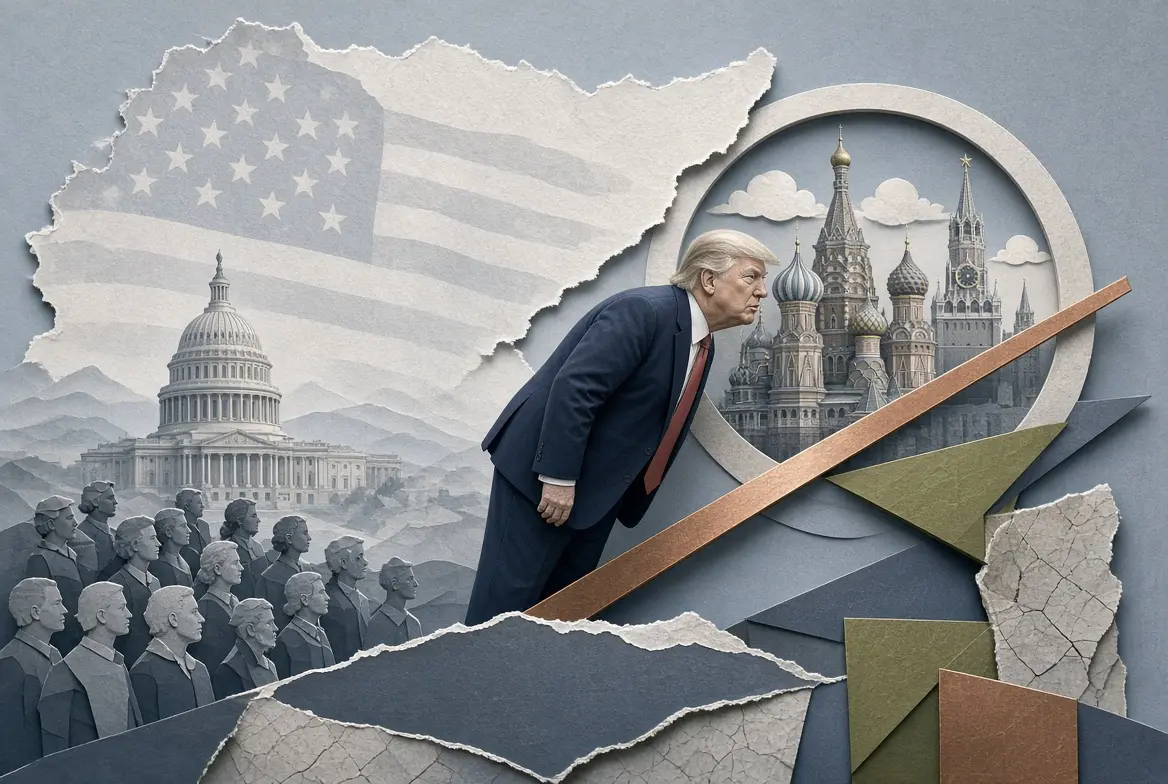
Two-thirds of Americans think Trump is leaning toward Moscow
Two-thirds of Americans, 67 percent, disapprove of the way Donald Trump is handling Russia's war against Ukraine, and only 30 percent agree with his approach. This is the finding of a Pew Research Center survey published on Wednesday, which is especially telling on Thursday, the day of the Trump–Putin–Xi summit in Shenzhen. The research institute polled 10,247 adults between November 9 and 15.…