
Three at one table – what the Trump–Putin–Xi summit in Shenzhen produced
On Thursday, US President Donald Trump, Russian President Vladimir Putin and Chinese President Xi Jinping sat down together for the first time, on the sidelines of the Asia-Pacific Economic Cooperation (APEC) summit in Shenzhen, southern China, and although all three called the meeting historic, the roughly ninety-minute closed-door talks produced only a four-point joint statement on reforming the United Nations, expanding the supply of refined petroleum products, curbing the jurisdiction of the International Criminal Court, and launching a dialogue on reducing nuclear risk — while Ukraine, which both Trump and Putin had signaled in advance would come up, was not mentioned even once.
The document contained no numerical commitments, deadlines or timelines, no one announced a breakthrough, and the statements after the meeting conveyed praise for the atmosphere rather than any substance: according to Putin, the talks went better than “anyone could have expected”, Xi called them “positive, constructive and fruitful,” and Trump, as he was leaving, referred to both his counterparts as his friends — while in Europe and Asia, American allies fear that the three leaders are starting to bargain over the fate of Ukraine and Taiwan above their heads.
The day's schedule: two bilaterals, one trilateral
The day began with a roughly forty-minute bilateral meeting between Trump and Putin, before which the American president called his Russian counterpart “my friend,” and after the handshake said that the two of them had “had an excellent relationship for many years,” that “many wonderful things” could come out of this meeting, but that at the very least they could lay the groundwork for them, and that a second meeting would follow later. The two leaders had not held direct talks since last year's Alaska summit, which produced no agreement on ending the war Russia had started, but this time, according to presidential aide Yuri Ushakov, Ukraine was “the main topic of the talks,” and Putin left in “an excellent mood.”
Trump then headed to Kylin Villa, a lakeside government residence, for a one-on-one meeting with Xi; by that point the schedule was already running roughly an hour and fifteen minutes behind, and Putin arrived at the villa while the other two were already there — at around the same time, Taiwanese authorities reported that two Russian Tupolev military aircraft had appeared in the island's airspace, hardly a reassuring backdrop for Asian diplomats worried about Taiwan's future.
The public portion of the trilateral session lasted only ten minutes, just enough time for the opening remarks before the leaders continued behind closed doors — but it was during this brief segment that perhaps the day's most-quoted question was asked: Andrei Kolesnikov, special correspondent for Kommersant, the only one among the several hundred journalists present to do so, asked Putin whether all this looked like “Yalta 2.0.” The Russian president listened to the question, thought for a moment, and nodded in agreement. Russian state television, meanwhile, provided the day's most telling footage, when its reporter asked one of the military officers accompanying Putin to Shenzhen whether the briefcase in his hand was the Cheget — Russia's “nuclear briefcase” — to which the officer simply replied, “Yes.” CNN picked up the footage as well, and it would have been hard to find a more fitting illustration for a meeting that had reducing nuclear arsenals as one of its stated goals.
According to Chinese state media and Sky News, the session lasted ninety minutes, while Politico reported one hour and twenty minutes; the reports agree, however, that it ran longer than the originally planned hour. Trump's motorcade had already left the venue seven minutes after it ended, while cameras caught Putin walking with Xi, telling him that he didn't think anyone had expected things to go this well, after which they shook hands and the Russian president drove off; Foreign Minister Sergei Lavrov likewise described the atmosphere as “very good.”
Trump shook hands with Chinese officials on the red carpet before boarding Air Force One to head home at the end of an Asian tour, with a stop in the Philippines still ahead of him; according to NBC News, journalists traveling with him on the plane had their phones temporarily confiscated, citing “security reasons,” something they had not been told about before boarding and which is highly unusual in the practice of the presidential press pool.
The opening remarks: history, responsibility, friendship
The host spoke first, and according to reports from China's Xinhua news agency and the BBC, he called the first such meeting among the leaders of the three countries “historic,” saying the world was undergoing “unprecedented, tectonic changes” and could therefore not be called calm, and that in turbulent times it becomes clear who bears how much of a sense of responsibility — so China, Russia and the United States, as major powers and permanent members of the UN Security Council, must set an example in jointly addressing global challenges and preserving peace.
Trump began by saying that the three of them were “truly making history,” and that “as the presidents of the world's three greatest countries” they had a special responsibility to hold an open, respectful and productive dialogue on issues affecting not only their own peoples but the entire planet; he then criticized his predecessors for avoiding talks with countries they had disagreements with, saying “we think exactly the opposite,” because the old school of refusing dialogue had never solved a single problem, and no one had ever made peace by passing up the chance to make contact. He announced that the war in Ukraine would be discussed, though he did not reveal what his ideas were for moving forward; he called nuclear disarmament important, while acknowledging that giving up nuclear weapons “is not easy,” adding that it was equally vital to act jointly against the further spread of nuclear weapons to other countries, “as we are doing with Iran.” In an unexpected turn, he also raised another possible area of cooperation: reforming the International Criminal Court, which he called a “rogue globalist organization” that in his view exceeds its mandate — according to Reuters, he went so far as to say the court had “spun out of control.”
Putin stressed the three countries' shared responsibility for maintaining international peace and security, saying that as the victors of the Second World War they must preserve and strengthen the system of international law — remarks made by the president of a country that occupied Crimea in 2014, launched a full-scale invasion of Ukraine in 2022, and whose leader is himself wanted by the International Criminal Court — and added that they had many shared interests in resolving regional conflicts, “including, obviously, the conflict in Ukraine,” provided that cooperation is based on mutual respect, equality and a balance of interests, and said they also needed to discuss global and regional economic ties as well as food and energy security.
The joint statement: four points, little substance
The document issued after the talks was first released in full by China's state Xinhua news agency, and later published by the Russian press as well, under the title “Statement by the Heads of State of China, Russia and the United States on Peace.” It records that the three leaders held “an in-depth exchange of views” on the international situation, committed themselves to maintaining strategic stability and international security, and that Trump and Putin thanked China for organizing the “historic” trilateral meeting.
1. UN reform. As permanent members of the Security Council, the three countries pledge to promote reform of the world body so that it can respond more effectively to global challenges and fulfill its core mission of maintaining international peace and security — the text is silent on what this would mean in concrete terms.
2. More refined petroleum products. The three countries wish to increase the production and supply of refined petroleum products “for the benefit of all nations,” and reaffirmed the importance of a stable flow of energy — which Sky News noted was pledged despite the international sanctions targeting Russian oil sales. The topic is not without precedent: at the opening session Putin had already listed energy security among the issues worth putting on the agenda, and in his talks with Xi, Trump spoke of how it was in both countries' interest to keep energy flowing unobstructed through the Strait of Hormuz.
3. The International Criminal Court. This is the most sensitive point of the statement: the three heads of state acknowledge that the principle of state consent and respect for the immunity of state officials are “of paramount importance,” and that the International Criminal Court and other similar bodies “must not abuse” their jurisdiction. The wording carries weight because the court in The Hague issued an arrest warrant for Putin in March 2023 on suspicion of the unlawful deportation and transfer of Ukrainian children from occupied territories to Russia — a warrant that remains in force — and because neither the United States nor China is party to the Rome Statute that established the court; the Trump administration had already pledged to dismantle the institution “brick by brick,” and imposed sweeping sanctions against it on October 9. The statement, however, does not announce the withdrawal of the warrant and records no legal step regarding the Russian president's situation, so for Putin it is above all a political satisfaction that a sentence criticizing the court appears in a text shared with an American president.
4. Nuclear dialogue. The three heads of state reaffirmed that “a nuclear war cannot be won and must never be fought,” and pledged to begin a dialogue on reducing nuclear risks and preventing the proliferation of nuclear weapons; the document, however, contains no specific limits on arsenals, no verification mechanism, and no targets or deadlines — in essence, they agreed to keep talking to each other. All this comes against the backdrop of New START, the last major US–Russian arms control treaty, having expired in February 2026, meaning no legal limit currently applies to the size of the three countries' strategic arsenals, while the United States and Russia each possess roughly five thousand nuclear warheads, and China, according to a 2024 Pentagon report, has around six hundred, a number that could grow to roughly a thousand by 2030; Beijing, for its part, has so far refused to join disarmament talks precisely on the grounds that its stockpile is far smaller than the other two.
Putin's press conference: compromise yes, sacrifice no
At his press conference after the meeting, Putin painted the outcome in the most favorable light possible: he described the trilateral meeting as “one chapter in the history of diplomacy,” said the dialogue needed to continue, whether in the same format or a different one, and called the “most pleasant part” of the talks the fact that Xi had created an atmosphere in which the leaders felt free to speak their minds, which he called “unexpected”; the conversation, he said, had been “completely free” and “very open,” allowing them to understand one another.
Of Trump he said there was “no doubt” that the American president was impatient to resolve all conflicts, including the one in Ukraine, and was very interested in restoring US–Russian relations, adding that Moscow, too, would like certain things to move faster, but “we are realists,” and he recalled that after Trump's 2020 election defeat the two countries “did not cooperate for a while.” He described the talks overall as a “positive sign,” saying the two sides had moved closer together on “civilizational values” and “visions.”
On Ukraine, he claimed he had not repeated his demands before Xi and Trump, but had simply reminded them of how it all began — in other words, as Sky News put it, he presented his well-known, distorted narrative of the war, the gist of which is that “Russia did not start the war,” the very war Moscow launched with its partial invasion in 2014 and full-scale invasion in 2022. On the prospects for a settlement, he said that the United States had proposed compromises that had already been agreed upon at last year's Alaska summit, but that Ukraine's “European sponsors” had “not been ready” to accept them, though “things are changing,” and they might eventually realize that it is better to accept such a compromise than to face certain realities they would sooner or later have to confront anyway. He also promised retaliation for Ukrainian attacks on the bridge linking Crimea to Russia, part of which had collapsed two days earlier following Ukrainian strikes; Putin declared that because of these attacks Russia “will not negotiate,” that there would be a response to the strikes, and that “everyone will find out,” adding that Russia's response would be “far more painful than what Kyiv did to the bridge”; the bridge itself, which he made a personal cause after the occupation of Crimea, would be rebuilt.
On the European security architecture, whose renegotiation Moscow has long sought as part of any Ukraine settlement, he said Russia would seek compromises, that there were no “insurmountable obstacles,” only a need for political will, but that Moscow would “sacrifice nothing,” and that Europe had to accept that “things are changing” — that the situation could not return to what it was in the early 1990s — and that Russia would not yield to efforts pushing it toward a position it has no intention of moving toward. He added that if Europeans wanted progress in the Ukraine peace talks, they would have to come to Moscow, and announced that Russia had invited European representatives to the Russian capital; the Kremlin, on the same day, said that the Russian-Ukrainian prisoner exchange was in its “final stage.” Journalists also returned to the Yalta comparison, and Putin, addressing Western politicians whom he said had “been scared” by the idea of a new agreement, said there had been nothing wrong with the first one either, since at Yalta “above all, the victory over Nazism was put in writing,” and he himself would not object — indeed, he would consider it right — if the victory over “neo-Nazism” were now recorded as well, eliminating its ideological roots, xenophobia, “Russophobia” and similar phobias. According to Kommersant, he also stated that in 1945 at Yalta “no one divided up the world,” but merely recorded the realities that had emerged after the Second World War, and that today's conflicts, too, would require accepting such realities. In Central and Eastern Europe, where the name Yalta tends to evoke the region's assignment to the Soviet sphere of influence, this is unlikely to be met with much reassurance.
Xi's seed-planting and Trump's friends
In his statement issued after the meeting, Xi Jinping called the summit “positive, constructive and fruitful,” and wrote that the three countries shared a common vision for safeguarding world peace: he recalled that they had “fought side by side” in the Second World War and must therefore cherish the hard-won peace, stressed that major powers must take seriously every nation's “legitimate security concerns” — a phrase that is a recurring element of China's position on the war in Ukraine — that dialogue and negotiation are the right way to resolve disputes, and that as long as dialogue continues and the door remains open, there is hope for peace; finally, in the gardening-inspired language typical of Chinese diplomacy, he promised that the seeds planted at the Shenzhen meeting would “surely take root, sprout, blossom and bear fruit.”
During the closed-door talks, according to NBC News, Xi compared nuclear weapons to a Sword of Damocles hanging over humanity, and according to Chinese press reports, declared that the world's three largest nuclear powers bore special responsibility for world peace, reiterated China's long-term goal of the “complete prohibition and thorough destruction” of nuclear weapons, and called on the other two leaders to prevent nuclear war and uphold the Non-Proliferation Treaty; Putin, who has repeatedly threatened to use nuclear weapons since 2022, according to the Kremlin's transcript likewise spoke of the three countries bearing “joint responsibility” for international peace and security. According to the Kyiv Post, Xi also called on his partners to coordinate their energy security measures, expand trade, and avoid confrontation over Taiwan.
Leaving China, Trump said he was charting “a different direction” in foreign policy, and called the host, Xi, his friend, just as he had called Putin; in an interview with Fox News from Shenzhen, on the subject of espionage, he made the not particularly diplomatic but undeniably frank remark that “we spy on China, they spy on us.” Even at the start of his bilateral talks with Xi, he spoke warmly of their “very special relationship,” saying that as long as the two of them were in charge, “they would never have a problem,” and claimed they had fixed the “lopsided” US–China trade relationship; he also brought up tackling the fentanyl crisis, helping American farmers, the security of energy shipments through the Strait of Hormuz, and the need to keep Iran from obtaining nuclear weapons, while on nuclear disarmament he had already acknowledged before the meeting that it would be difficult even for him if he were asked to cut US nuclear forces by two thousand.
Allied anxiety: “God save us from such friends”
The European reaction to the summit was summed up most succinctly by Polish Prime Minister Donald Tusk, who, just as Ukraine's allies were gathering in Berlin, responded to Trump's declaration of friendship by writing on social media that “God save us from such friends.” Ukrainian President Volodymyr Zelensky had already warned in advance that no decisions about Ukraine could be made without Ukraine, and that on this point Kyiv and the European governments were in agreement; Democratic members of the US House of Representatives' select committee on China stated in a statement on Wednesday that Taiwan's security could not be a bargaining chip under any circumstances, just as Ukraine's future could not be negotiated without Ukrainians at the table.
European and Asian diplomats interviewed by Politico fear that Trump's propensity for unilateral foreign policy moves — from the abduction of Venezuelan President Nicolás Maduro, through the war against Iran, to threatening Cuba with regime change — increases the risk that he will back initiatives favoring Putin's territorial ambitions in Ukraine and Xi's claims on Taiwan, especially now that he regularly praises the two authoritarian leaders — calling Putin a "genius" and Xi a "brilliant man" — while at home his position has weakened following the Republicans' midterm election defeat. According to one European diplomat, EU member states fear the zeal of a president willing to strike any deal just to compensate for his election defeat, while an Asian diplomat in Washington called it "an absolute nightmare" if Xi were to sell Trump his vision of "Taiwan's future," since, in the diplomat's view, the three leaders are creating the impression that they are deciding the future of the world order, almost as if they were the leaders of the world.
The anxiety is also fueled by Trump's moves so far, as he has repeatedly blamed Zelensky for Russian aggression, has threatened to halt arms shipments to Kyiv, and in May, breaking with decades of American practice, postponed a $14 billion arms sale to Taiwan; according to Ker Gibbs, former president of the American Chamber of Commerce in Shanghai, Xi will push to make the moratorium on Taiwanese arms sales permanent. David Sacks, a former political-military officer at the U.S. mission in Taiwan, expected that Beijing — also counting on Putin's sympathy — would try to portray Japanese Prime Minister Sanae Takaichi as a provocateur, whose "containment" the three parties should work on together, since Beijing accuses Tokyo of "neo-militarism."
Among American analysts, Zack Cooper, a former national security official in the George W. Bush administration, considers allies' fears justified that Trump will sacrifice their interests in deals with Russia and China, because in his view the president believes in the "great man" theory of history — that he, Putin and Xi are the world's three great leaders who together can solve the world's problems. John Erath, who served as deputy director for European affairs at the National Security Council in Trump's first administration, believes Trump brought with him from the New York real estate market the reflex that one should strike deals with the market's big players, while telling the small ones that they must accept what he has negotiated. Thomas Countryman, deputy secretary of state for international security and nonproliferation in the Obama administration, warned that the prior enthusiasm shown by the Chinese and Russian sides — Chinese foreign ministry spokesperson Mao Ning called the summit "of epochal significance," while Yuri Ushakov, according to TASS, promised a "sensation" — may serve precisely to get Trump to swallow what they want to force down his throat. Daniel Fried, deputy assistant secretary of state for European and Eurasian affairs under the Bush and Obama administrations, said Trump negotiated from a position of disadvantage from the outset, since he sat across from two adversaries without any allies, and the meeting helps Putin by elevating him to an equal partner of China and the United States — something Fried believes neither he nor Russia deserves. Robert Daly, a former American diplomat in Beijing, believes the summit presents Xi primarily to his own people, but also to the Global South, as a great figure of history, a statesman equal to any leader on Earth.
Background and takeaways
According to the Kyiv Post, the trilateral format was proposed by Putin during his October 9 phone call with Trump — the same day Washington imposed sweeping sanctions on the International Criminal Court — while the White House had originally said the war in Ukraine would not be on the agenda, naming nuclear arms reduction and the war against Iran as priorities, and as late as the week before the meeting described possible reductions in arsenals as the main topic of discussion. Trump, however, said on Monday, before his trip to Asia, that besides nuclear weapons and Iran, his "favorite topic," Ukraine, would also come up, while Moscow had wanted from the outset to use the summit to discuss a possible settlement of the war. Politico had already predicted what could be expected on arms reduction and Iran, since Moscow and Beijing have so far shown no willingness to give up part of their strategic stockpiles or to use their influence to rein in Tehran, so even if some kind of deal was struck, it likely came about in other areas.
For Trump, the Shenzhen meeting was the high point of an Asian tour that had until then produced few tangible results: on the sidelines of the special Manila ASEAN–U.S. summit, he signed a long-pending trade agreement with Thailand, and on Truth Social he announced a "new and completely different" trade agreement with the Philippines, but beyond that he had no new diplomatic achievement to show, which, according to Politico, only increased his need for a spectacular breakthrough he could sell as a victory. The trilateral meeting took place on the sidelines of the 33rd APEC Economic Leaders' Meeting, hosted by Xi on November 18–19 — the forum, founded in 1989, brings together 21 Asia-Pacific economies, including the United States, China, Russia, Japan, South Korea, Australia and Canada — and Trump and Putin had already shaken hands on Wednesday, before the opening gala dinner, in full view of Xi.
Against this backdrop, the day's outcome is rather modest: the joint statement is sparse on details, contains few concrete commitments and no timetable for how the general promises might be translated into action, and no diplomatic breakthrough was announced; still, Xi and Putin may well regard the meeting as their greatest success so far in their effort to turn the world order multipolar and favorable to their own interests. What is tangible is a handful of photographs, a bundle of "historic" labels and a joint criticism of the International Criminal Court, which has issued an arrest warrant against one of the three heads of state who signed the statement; Ukraine, however, about which the leaders say they spoke at length, does not appear on paper, and Kyiv was not at the table either.
Anna Karczag/Ugar
Did you like this article?
Support our work with a small donation
Secure payment via Stripe • Min. 2 EUR
Gesta recommendations:
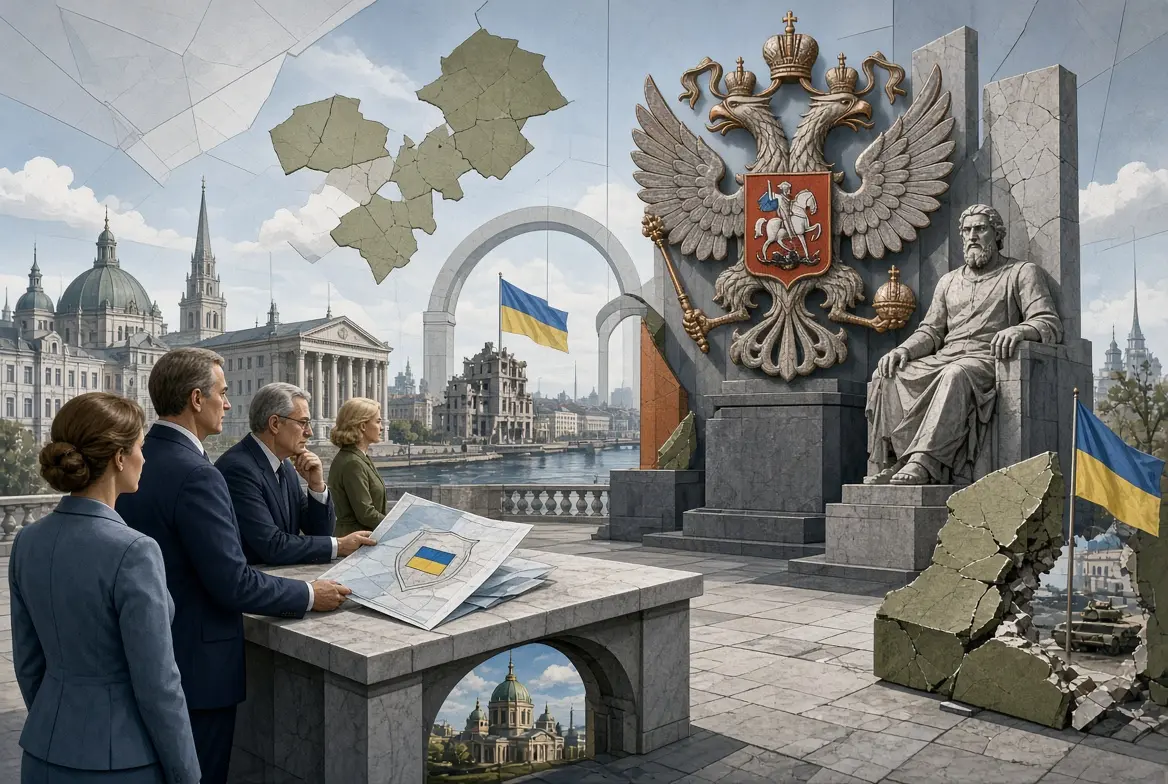
They're asking Moscow for permission to defend Ukraine from Moscow
On Thursday Jared Kushner was still boasting in Berlin that, together with Steve Witkoff, he had managed to get the Russians to accept the idea of NATO-style security guarantees for Ukraine, but on Friday Moscow announced that nothing of the sort was on the table. The most humiliating part of the story is not that Trump's envoys' diplomatic success story didn't even survive a single day, but the…
They would encourage the merging of communes with halved taxes and funding worth millions. Here is the first version of the reform
The Romanian government would persuade smaller local authorities to merge with their neighbors by halving residential property and land taxes for five years and offering investment support of at least four million lei. The draft emergency ordinance, put out for public debate on Friday, November 20, primarily targets communes with no more than 1,500 inhabitants, although larger localities could…
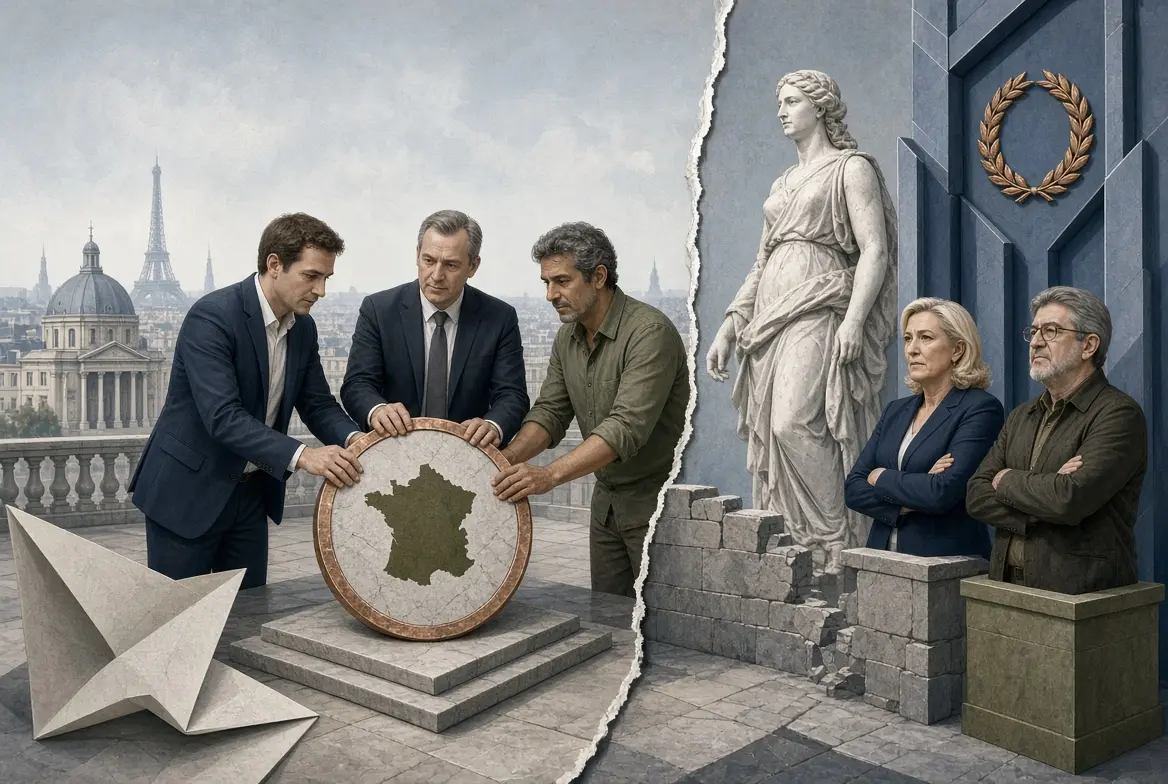
Joint primary against the extremes: Attal, Retailleau and Lisnard would field a single candidate against Le Pen and Mélenchon
In France, three presidential candidates of the centre and the centre-right have agreed in principle to decide in a joint primary which of them will be the sole candidate in the 2027 presidential election.
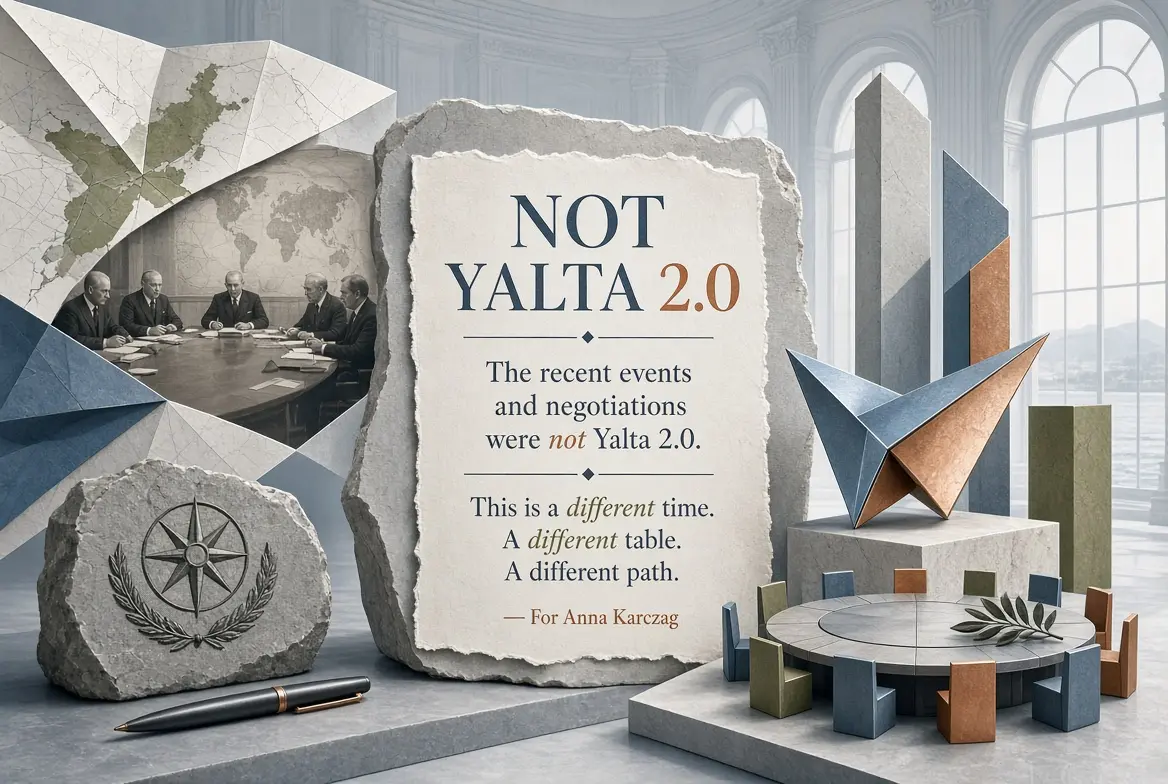
A Reply to Anna Karczag: No, This Was Not Yalta 2.0!
Let me state at the outset: I enjoy reading Anna Karczag's articles, especially when she puts in the effort and does the necessary research. The piece on the Protocols of the Elders of Zion is a thorough, information-rich example of that, as are several of her articles on cognitive warfare — all praiseworthy work. Yet there are times when she overdoes it and lets emotion take over — and that is…
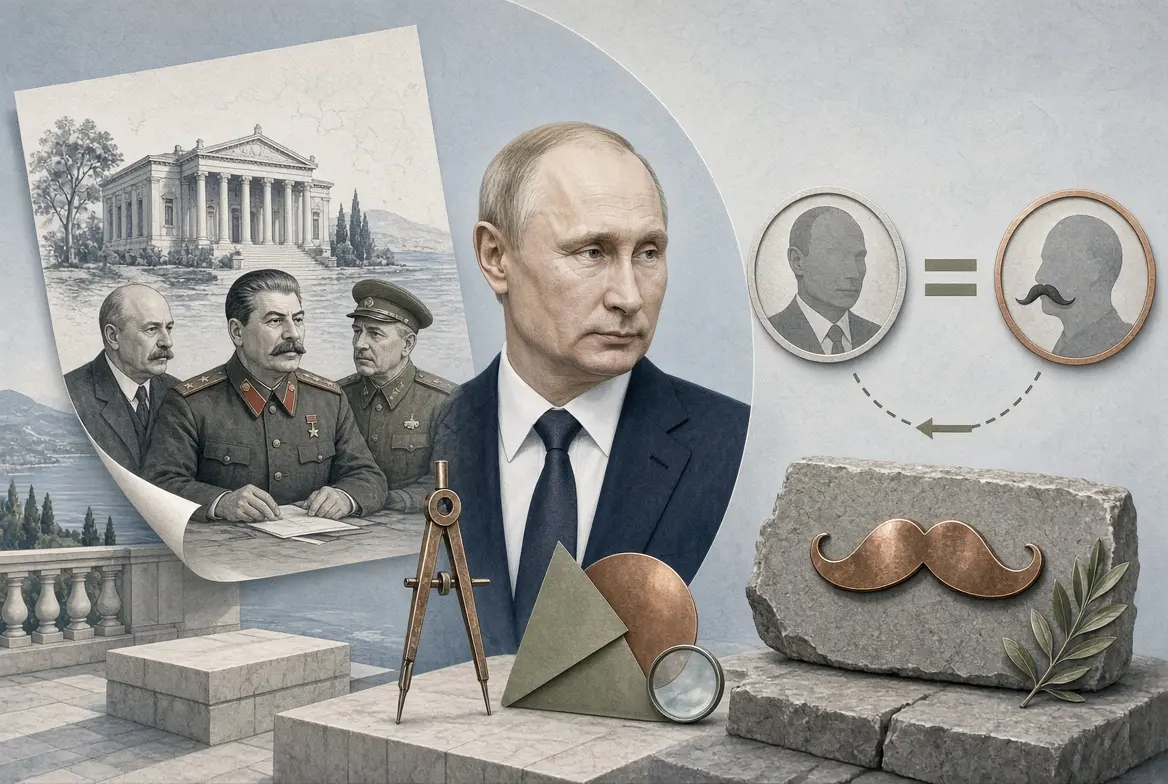
Relax, this isn't Yalta 2.0, because Putin doesn't have a mustache
I've been reading the reports on the Shenzhen summit of the Big Three, and the analyses too: a multitude of Hungarian analysts raised in the Western cultural sphere are talking and writing about how, oh no, this wasn't Yalta 2.0 at all. But it was! I'm sorry that I have to be the one to switch on the light in the increasingly darkening skulls of these trendy analysts, but yes, this was Yalta 2.0.