Government formation negotiations: RMDSZ has secured autonomy
A Romanian government attempt is taking shape: PNL, USR and RMDSZ have divided the ministries among themselves, and prime-minister-designate Siegfried Mureșan will submit the government programme and his cabinet list to Parliament on Saturday. Hearings of the ministerial candidates are planned for Monday, and the day of real tension – if nothing upsets the schedule – will be Tuesday, when the legislature votes on installing the government.
By the way: we were only joking in the title – he's secured something far more important than autonomy, but that's coming up in the article!
Mureșan needs 233 votes. The three parties backing him have a combined 170 deputies and senators, meaning at least 63 votes are currently missing. That might sound like a minor inconvenience compared to the fact that the ministries have already been carved up, but the Romanian constitution stubbornly insists that a government not only be assembled but also approved by Parliament. The PSD has officially announced that it will not support the Mureșan cabinet, and most of AUR and the smaller far-right groups have also said no. Mureșan claims he is not negotiating with AUR, but he has also said that if some AUR deputies vote for him anyway, he cannot stop them. In other words: they're not asking for far-right votes, but if a few happen to land in the ballot box, no one will be pulling them out with rubber gloves. The national minorities' group has 17 votes, and independent, unaffiliated lawmakers have 23. Even if every single one of them lined up behind Mureșan, he would still be short by 23 votes. Those could only be scraped together from deputies breaking away from the PSD, politicians splintering off from AUR, SOS Romania and POT, or from the parliamentary splinter groups formed out of those parties.
This is particularly rich, because RMDSZ had previously stated that it would not support a government whose installation depended on votes from AUR, SOS or POT – yet according to the current parliamentary arithmetic, that is precisely the kind of government it is about to vote for. The reverse situation isn't much better either: if Mureșan fails and the PSD tries to form a government, it too will need either PNL's support or votes from the far right. In other words, we've reached the point where everyone excludes everyone, yet a government can only be formed with those whom everyone has excluded. Well, aren't we in a fine spot – a proper Mexican standoff.
Sixteen ministries, three deputy prime ministers
The cabinet will have 16 ministries. PNL gets seven, USR five, RMDSZ three, and the Justice Ministry would go to an independent nominee. All three parties will also have a deputy prime minister: Mircea Abrudean for the Liberals, Radu Miruță for USR, and Barna Tánczos for RMDSZ.
PNL's nominees:
Mircea Abrudean – Minister of the Interior and Deputy Prime Minister;
Oana Gheorghiu – Minister of Health;
Dragoș Pîslaru – Minister for European Funds;
Alexandru Nazare – Minister of Finance;
Sebastian Burduja – Minister of Energy;
Mihai Dimian – Minister of Education;
Raluca Turcan – Minister of Labour.
USR's nominees:
Radu Miruță – Minister of Defence and Deputy Prime Minister;
Oana Țoiu – Minister of Foreign Affairs;
Irineu Darău – Minister of the Economy;
Diana Buzoianu – Minister of Environment;
Cătălin Drulă – Minister of Transport.
RMDSZ's nominees:
Attila Cseke – Minister of Development;
Barna Tánczos – Minister of Agriculture and Deputy Prime Minister;
Koppány Ötvös – Minister of Culture.
The cabinet's only officially independent member would be justice minister candidate Andrea Chiș. Cătălin Predoiu, who as interior minister and interim justice minister had all but become a fixture of the governmental furniture, missed out on the list this time, having gone against the party leadership's decision earlier and backed Adrian Veștea in the parliamentary vote for the position of prime minister.
RMDSZ's biggest headache: who gets justice
During the government-formation haggling, RMDSZ has so far not flashed a single serious Hungarian issue in public. The autonomy of Szeklerland? The extension of Hungarian-language rights? Guarantees that the Hungarian-majority territories won't be carved up during territorial-administrative reform? An independent Hungarian state university? Not a chance, mama, to quote a classic. Hunor Kelemen's biggest publicly known problem was that USR also wanted to put its own person at the head of the Justice Ministry, while Kelemen wanted the portfolio too. In the end, USR and RMDSZ didn't slug it out over the issue but agreed on an independent candidate, which is how Andrea Chiș's name came up – probably a better solution than simply having one of the parties plant its own politician at the top of the judiciary. If RMDSZ's own candidate had gotten the portfolio, that would have looked like personnel caution by comparison, but at least the Hungarian representation can say it really stuck it to USR, and if it cost the neighbour's cow its life too, so be it – let's hear it, these guys writing in Hungarian, who'd have thought…
It's worth noting the choice of words too: the Romanian press consistently calls the process negocieri, that is, haggling. RMDSZ and its press prefer to speak of "negotiations," since that sounds a lot more statesmanlike than admitting that parties are simply dividing up ministries, state secretary posts and institutional leadership positions among themselves. One can negotiate over the rights of the Hungarian community; the justice portfolio and three ministries, on the other hand, are usually something you haggle over.
Who is Andrea Chiș?
Andrea Chiș is 56 years old and worked as a judge in Cluj-Napoca for more than 28 years; between 2017 and 2023 she was a member of the Superior Council of Magistracy (CSM). She was counted among the body's reformist wing, and after retiring she taught at Babeș-Bolyai University.
The wider public got to know her name from the Recorder documentary Justiție Capturată – Captured Justice – released at the end of 2025. Chiș spoke about having raised questions to clarify why the CSM had pushed to change the composition of certain criminal panels – in other words, to replace judges who already had specific criminal cases before them. She later wrote on a judicial forum that the problems of the justice system cannot be limited to a few cases and a few colleagues. According to her, the system's actors are expected to sit alone, quietly, at most keeping a diary – like anti-communist dissident Gheorghe Ursu, who was ultimately killed for doing just that. On the last day of 2025, Chiș also resigned from Babeș-Bolyai University. At the time, she said she had once again found herself in a position where she could no longer develop, and where she could represent neither her professional nor her personal values.
None of this is, of course, a guarantee that she will make a good minister. But it does suggest that she at least knows how the justice system works from the inside, has spoken publicly about its systemic problems, and was not simply sent over from some party office with a freshly printed CV. Chiș herself said that Mureșan asked her to take the post, and that the three parties accepted her precisely because she belongs to none of them.
The Latin-Balkan opera could hardly be missing
While the parties were divvying up ministerial seats, Ioana Grosaru, the parliamentary representative of the Italian minority, and the Association of Italians in Romania challenged in court the presidential decree by which Nicușor Dan appointed Siegfried Mureșan as prime-minister-designate. The lawsuit was registered on September 22 at the administrative and fiscal litigation division of the Bucharest Court of Appeal, with the first hearing set for Monday, September 28 – meaning the court will deal with the legality of Mureșan's appointment exactly one day before Parliament is scheduled to vote on his government. That's rather generous of the Romanian judiciary. After all, they could have waited until Parliament approved the cabinet, the ministers put on their good suits, Nicușor Dan prepared the swearing-in ceremony – and only then announced, well, actually, sorry, it doesn't count. Legal experts, however, say that a presidential decree cannot simply be challenged in an ordinary administrative lawsuit the way a building permit or a parking fine can. The appointment of a prime-minister-designate is part of the constitutional relationship between the head of state and Parliament; any dispute over it could at most be brought before the Constitutional Court as a constitutional conflict, and only by an institutional actor entitled to do so. Grosaru's claim therefore has little chance as things stand, though it does make excellent scenery for the political circus.
The Mureșan government's programme consists of 28 chapters and 381 measures. It would reduce the budget deficit without raising taxes, would introduce no new taxes in 2027 and 2028, would later cut VAT back from 21 to 19 percent, would reduce the number of members of Parliament, would merge some state agencies, would overhaul the justice system, and would privatize TAROM. So the paperwork is done, the ministries have been divided, and the list of ministerial candidates is complete. All that's still missing is the government itself.
Mureșan submits the documents on Saturday, the parliamentary hearings could follow on Monday, and the vote on Tuesday. If he really can only count on the guaranteed votes of PNL, USR and RMDSZ, then he won't simply need to convince a handful of deputies – he'll need to conjure up a small parliamentary faction out of thin air. Either help comes from within the PSD, or from the far right and its splinter parties. For now, no third, politically plausible path is in sight.
The ministries, in any case, have already been divided up – and in Romania, that has traditionally been the most important part of forming a government.
We've gotten through it, let's rejoice!
Ugar
Did you like this article?
Support our work with a small donation
Secure payment via Stripe • Min. 2 EUR
Gesta recommendations:
Mureșan is trying, while shooting at the PSD with early elections
Prime minister-designate Siegfried Mureșan submitted his government program and the list of his ministers to Parliament on Saturday, officially launching the parliamentary procedure for the cabinet's investiture. The ministerial candidates are expected to be heard by the specialized committees on Monday, and the confidence vote could take place on Tuesday. So the ministers are set, the program is…
World first: flying drones deliver Ukrainian combat robots behind Russian lines
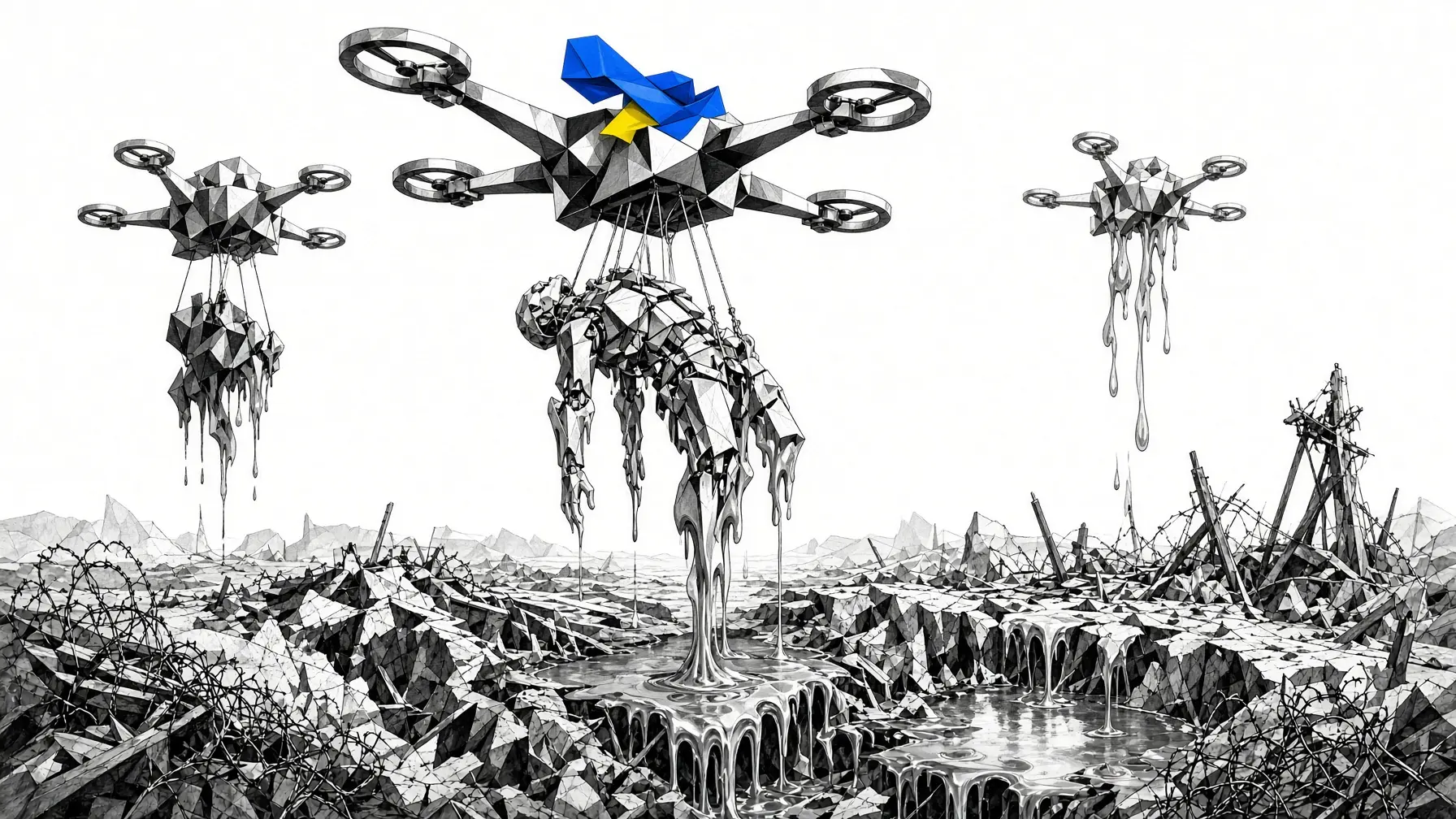
Ukraine's Third Army Corps announced that during Operation Vivaldi, 125 square kilometers of territory were brought back under Ukrainian control in the Lyman area, in the northern part of Donetsk region. One of the operation's most important innovations was that large flying drones carried explosive-laden ground combat robots more than ten kilometers behind Russian lines.
Artificial intelligence used to detect underground pipe leaks in Buzău
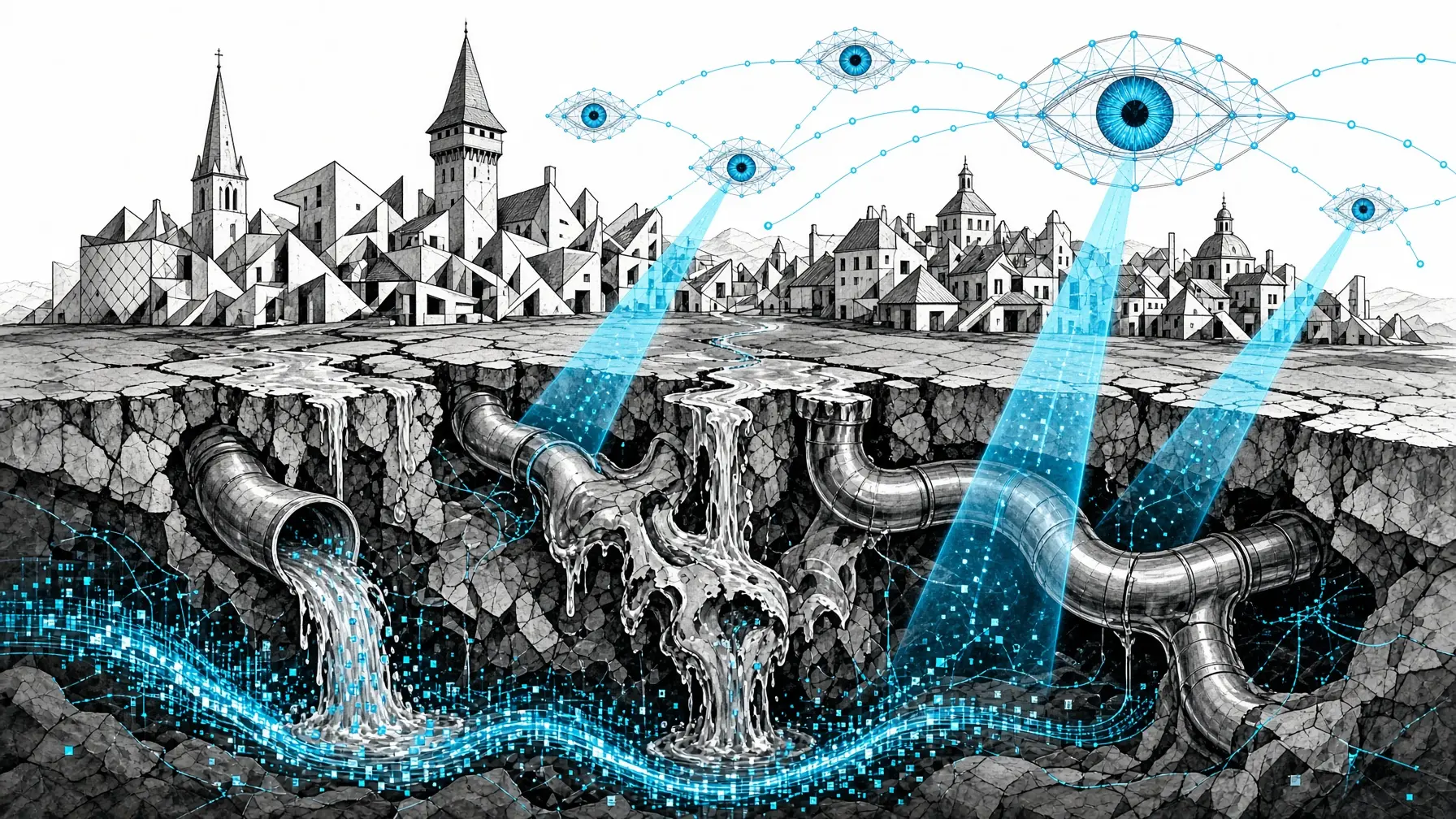
The regional water utility in Buzău County has reduced network water loss using AI-supported noise sensors. The system monitors the sounds and vibrations produced by water escaping from pressurized pipes, then uses the data to identify areas where a hidden pipe break or leak is likely located.
Black Sea grain trade grinds to a halt, wheat prices rising worldwide
The maritime dimension of the Russia–Ukraine war has effectively paralyzed one of the world's most important grain export routes. In recent months, the Russian army has intensified its attacks on Ukrainian ports, grain terminals and transport hubs, while Ukraine has responded by targeting Russian ports, cargo ships and logistics facilities. The result: more than 97 percent of Russian and…
A Russian test attack on NATO could come within months
More and more European intelligence services and political leaders are warning that Russia could extend its military and sabotage operations beyond Ukraine in the coming months. For now, the most likely scenario is not a full-scale invasion of a NATO member state, but a limited attack designed to test the alliance's unity and whether member states are truly willing to invoke Article 5 on…