Petition to Keep Szeklerland United
Ahead of Romania's administrative reorganization, the Szekler National Council and the Szeklerland Regional Council of Local Authorities of the Democratic Alliance of Hungarians in Romania (RMDSZ) are submitting a joint petition to the parliament and government, requesting that the 149 municipalities making up Szeklerland be placed into a single administrative region. The initiative was agreed on November 24 by Balázs Izsák and Attila Zoltán Csibi, the presidents of the two bodies; the document will be sent to the local authorities concerned, asking the mayors to sign it under their own names.
According to the initiators, administrative reform is needed, but the country's map may only be redrawn by consulting the communities living there and taking historical and cultural particularities into account. They base their position on the European Charter of Local Self-Government, which Romania has also ratified, and stress that creating an administrative unit for Szeklerland is not directed against other communities and must not infringe on anyone else's rights.
The petition is a continuation of an earlier initiative, under which 62 Szeklerland local authorities adopted a similar resolution between 2014 and 2016; this time, however, the signatures of individual local leaders are being requested. The organizers also intend to inform the relevant forums of the European Union, the Council of Europe and the United Nations about the initiative, the full text of which is published below.
Resolution on the petition of the communities belonging to the 149 Szeklerland local authorities
Resolution on the petition of the communities belonging to the 149 Szeklerland local authorities. Petition of the communities of the 149 local authorities making up the historical and cultural region of Szeklerland to the Government and Parliament of Romania.
- Whereas, since the change of regime, the need for an administrative-territorial reorganization of the country has arisen on several occasions in Romania;
- considering that such a reform could fundamentally affect the administrative, social, economic and cultural relations, as well as the long-term future, of the local communities concerned;
- considering that proposals have also been made in Romania regarding administrative-territorial reform that emphasize taking into account the will of the communities concerned, their historical and cultural particularities, and the rights of national minorities;
- whereas the intention of the communities of the 149 local authorities making up Szeklerland regarding their administrative affiliation constitutes, in the event of a possible administrative reform, the will of the directly affected community;
- taking into account the provisions of the petition annexed to this resolution and its legal justification;
The Standing Committee of the Szekler National Council hereby resolves:
It supports and initiates that the petition annexed to this resolution be endorsed by the signatures of the elected leaders and/or members of the communities belonging to the 149 local authorities located in Szeklerland, and that the petition express their will that the 149 local authorities belong to a single administrative region. In the petition, the communities ask the Parliament of Romania and the Government of Romania to take this will into account and, during a future administrative reform, to place the 149 local authorities into a single administrative region consisting exclusively of these 149 local authorities. It publishes the text of the petition and the legal justification forming an integral part thereof, and sends the complete documentation to the 149 local authorities located in Szeklerland, requesting that it be made accessible to the local communities and that the possibility of joining the petition be facilitated. By this resolution, the Standing Committee of the Szekler National Council adopts the text of the petition and its legal justification as documents of the Szekler National Council's initiative, and on this basis launches the implementation of the initiative set out in this resolution. It instructs the president of the Szekler National Council to take the measures necessary for the implementation of this resolution, and calls on the officials and delegates of the Szekler National Council to assist in its implementation.
Ghindari (Makfalva), August 28, 2026.
The Standing Committee of the Szekler National Council
PETITION OF THE COMMUNITIES OF THE 149 LOCAL AUTHORITIES MAKING UP THE HISTORICAL AND CULTURAL REGION OF SZEKLERLAND TO THE GOVERNMENT AND PARLIAMENT OF ROMANIA.
To the Parliament of Romania and the Government of Romania, concerning the future administrative affiliation of the 149 Romanian local authorities making up the historical and cultural region of Szeklerland
We, the undersigned of this petition — citizens, locally elected representatives and public figures of the local authorities located in the territory of the historical and cultural region of Szeklerland (hereinafter: Szeklerland) — address the Parliament of Romania and the Government of Romania with the request that they take into consideration the clear will of the above-mentioned communities represented by the signatories.
We ask the Parliament of Romania and the Government of Romania to take into account that the communities of the 149 local authorities listed in the annex to this petition wish to belong to a single administrative region, and that, during a future administrative reform, these local authorities be placed into a single administrative region consisting exclusively of the local authorities listed in the annex to this petition.
Our petition is not directed against any other community, nor does it seek to infringe on the rights of any citizen or community of Romania. Its sole purpose is to express that the communities of the 149 local authorities making up Szeklerland wish to belong together, during the administrative reform, to the same single administrative region.
The 149 local authorities, currently belonging to five counties — Mureș, Harghita, Covasna, Brașov and Bacău — form an area linked by historical, geographical, economic and cultural ties, the unity of which is not reflected in the current administrative division. The list was not drawn up on an exclusively ethnic basis: among the 149 local authorities there are also settlements where the Romanian population forms the majority. The petition is therefore not aimed at the exclusivity of any ethnic community, but at preserving the territorial unity of a historically and culturally formed region.
We are convinced that a democratic administrative reform cannot be carried out while disregarding the will of the communities concerned. When shaping administrative units, the will of the population concerned must be taken into account, as well as the historical, cultural, social, geographical and economic ties that connect the settlements of the region in question.
Our request is also in line with the enduring democratic principles formulated by the Presidential Commission for the Analysis of Romania's Political and Constitutional Regime (Comisia Prezidențială de Analiză a Regimului Politic și Constituțional din România, hereinafter: the Stanomir Commission) in its report presented at Cotroceni Palace on January 14, 2009. We refer to this document because it was the only one that, based on public-law experience, put forward a reform proposal for the 1991 Constitution.
In connection with the administrative-territorial reform, the report proposed the creation of cooperation mechanisms based on the voluntary association of the administrative units concerned and on the expression of citizens' will. This principle is particularly important in the case of an administrative reform in which the boundaries and composition of new territorial units must be determined.
The detailed legal justification of our petition is set out in the JUSTIFICATION, which forms an integral part of this document. Among other things, the Justification presents the principles found in Romanian law and in the European legal framework concerning the formation of administrative units, the consideration of historical and cultural particularities, and the will of the communities concerned.
This petition is a continuation of the initiative carried out between 2014 and 2016. At that time, 62 local authorities of Szeklerland turned to the Parliament and Government of Romania with a request set out in a local council resolution, expressing the wish that the settlements of Szeklerland remain within a single administrative unit. Those resolutions expressed the will of local authorities representing more than half of Szeklerland's population.
The present initiative is a direct, voluntary expression and reaffirmation of the same community will, based on personal signatures. Joining the petition is open to all residents and/or locally elected representatives of the local authorities listed in the annex to this petition.
We ask the Parliament of Romania and the Government of Romania, in preparing and implementing a future administrative reform, to regard this petition as a document expressing the will of the communities of the 149 settlements, and to take the request formulated therein into account when making their decision.
We further ask that, should new regional administrative units be created as part of an administrative reform, the 149 local authorities be placed, on the basis of the community will expressed in this petition, into a single administrative region consisting exclusively of these local authorities.
We trust that Romania's future administrative reform will be carried out with respect for democracy, subsidiarity, local self-government, and the will of the communities concerned.
The annex to the petition contains the list of the 149 local authorities, as well as the list of signatories by commune/town.
The Petition, its Justification, and the annexes together constitute the complete document of this initiative.
JUSTIFICATION
FOR THE PETITION in which members of the communities of 149 Romanian local authorities express their will to belong to a single administrative region
1. SUBJECT AND LEGAL NATURE OF THE PETITION
This petition is a specific request addressed to the Parliament of Romania and the Government of Romania for the case of a possible future administrative reform: that the 149 local authorities making up the historical region of Szeklerland, listed in the annex to the petition, be placed into a single administrative region, and that this region consist exclusively of these local authorities. The petition does not claim that Szeklerland is currently an administrative unit. Szeklerland is a historical and cultural region; the petition asks that, during a future administrative reform, the local authorities of this historical and territorial unit remain together within a single administrative region. The request is made in the form of a petition submitted by natural persons. Romanian law regulates citizens' right to petition the central and local authorities in their own name. This justification forms an integral part of the petition.
2. SZEKLERLAND AS A HISTORICAL REGION
A distinction must be made between the concept of an administrative unit and that of a historical-cultural region. The existence of a historical region does not depend on whether the given territory constitutes a separate administrative unit at a given moment. In Romania, too, the names of numerous historical, cultural or ethnographic regions are used in academic literature and in public discourse that do not correspond to any unit of the current administrative division.
The name "Szeklerland" is therefore not a reference to a currently non-existent administrative unit, but the name of a historically and culturally formed region. The purpose of the petition is precisely that, in the course of a possible reform of the current administrative division, this historical and cultural region should also appear as a single region on the administrative map.
3. ROMANIAN LAW: TAKING INTO ACCOUNT GEOGRAPHICAL, SOCIAL, ETHNIC, CULTURAL AND TRADITIONAL TIES
Romanian administrative law explicitly recognizes that among the criteria for forming administrative-territorial units are the population's cultural and traditional ties. According to Article 101 of Government Emergency Ordinance No. 57/2019 on the Administrative Code, the county is an administrative-territorial unit composed, under the law, of communes, towns and, where applicable, municipalities, and is determined, among other things, by taking into account geographical, economic, social and ethnic conditions, as well as the population's cultural and traditional ties.
This provision is particularly important for the purposes of this petition.
Taking cultural and traditional ties into account is not a special rule granted to a minority, but a criterion formulated generally in Romanian administrative law. The rule does not limit this criterion to any particular ethnic community, but refers to the population's cultural and traditional ties.
This petition therefore does not request a special exception applicable only to a single community, but asks for the application, in the case of Szeklerland, of a generally formulated criterion of Romanian law.
At the same time, determining the boundaries of administrative-territorial units falls within the competence of the legislature. This petition therefore does not seek to take over the competence of any local government body, but asks the legislature and the government to take into account, during a future reform, the will expressed by the communities concerned and the territorial, cultural and traditional criteria recognized by law.
4. CONSULTING LOCAL COMMUNITIES – THE EUROPEAN CHARTER OF LOCAL SELF-GOVERNMENT
Romania ratified the European Charter of Local Self-Government in 1997 by Law No. 199/1997. Article 5 of the Charter provides for the protection of local authority boundaries, stating that: “Changes in local authority boundaries shall not be made without prior consultation of the local communities concerned...”
In other words, local authority boundaries may not be changed without prior consultation of the local communities concerned.
This provision does not grant the communities concerned a right of veto, nor does it state that a community's decision in itself creates the new administrative unit.
Its significance lies in the fact that prior consideration of the opinion of the community concerned is a European principle of local self-government that Romania has undertaken as an international obligation.
From this point of view, the present petition is not a protest made after the fact, but a prior community position taken ahead of a possible administrative reform.
5. ROMANIA'S ADMINISTRATIVE REFORM AND THE REPORT OF THE STANOMIR COMMISSION
The question of administrative reform was also addressed by the Presidential Commission for the Analysis of Romania's Political and Constitutional Regime (Comisia Prezidențială de Analiză a Regimului Politic și Constituțional din România), set up by President Traian Băsescu. The Commission's report was presented at Cotroceni Palace on January 14, 2009. The report is titled: Raportul Comisiei Prezidențiale de Analiză a Regimului Politic și Constituțional din România – Pentru consolidarea statului de drept (Report of the Presidential Commission for the Analysis of Romania's Political and Constitutional Regime – For the Consolidation of the Rule of Law). The Commission was chaired by Ioan Stanomir. Chapter 14 of the report deals with the political and administrative structure of the state, including the rationalization of the administrative-territorial organization. Section 14.2 of the report discusses, in separate subsections, the constitutional entrenchment of subsidiarity, cooperation among local government units, decentralization, the question of regions, and territorial reform.
5.1. The role of community will
Section 14.2.2 of the report, "Instituirea de mecanisme de cooperare între unităţile administrativ-teritoriale" ("Establishing cooperation mechanisms between administrative-territorial units"), proposes flexible cooperation among local government territorial units as one of the tools for putting subsidiarity into practice.
According to the report, such cooperation could lead to the creation of new entities with legal personality. These entities would differ from existing public-law administrative units, since they would be created as a result of voluntary association, as an expression of citizens' will.
The report then states that the proper functioning of such a mechanism over an adequate period, together with the work of an independent body tasked with drawing up a new territorial division, could create the conditions for Romania's administrative-territorial reform to express the will of the citizens, based on objective criteria ensuring a high degree of sustainability. The report thus sees the expression of citizens' will as one of the important elements of the democratic legitimacy of administrative reform. In line with this principle, the present petition aims to allow the communities concerned to express their will clearly and in a documented manner ahead of a possible administrative reform.
5.2. Criteria for establishing administrative boundaries
Among the criteria to be taken into account during the administrative-territorial reform, the report mentions, among others, geography, tradition, administrative capacity and differences in political culture. At the same time, the Commission stresses that every administrative reorganization must take into account the protection of national minorities, in particular ensuring that the reorganization does not have a negative effect on their identity. The report further links the question of administrative boundaries to respect for the geographical area of regional or minority languages, and refers to the provision of the European Charter of Local Self-Government on prior consultation with the communities concerned. The Stanomir report is not in itself a piece of legislation, and its provisions therefore cannot be regarded as a legal norm directly binding on Romania. Its significance lies in the fact that an official reform document, drawn up by an expert commission set up on the mandate of the Romanian president, expresses the view that administrative reform must also take into account the will of communities, historical and cultural particularities, and territorial and social circumstances.
6. THE EUROPEAN UNION'S NUTS SYSTEM AND THE CONSIDERATION OF HISTORICAL AND CULTURAL CIRCUMSTANCES
Regulation (EC) No 1059/2003 of the European Parliament and of the Council established the common classification of territorial units for statistics, the NUTS system. According to Article 3(5) of the Regulation, if there is no administrative unit of an appropriate size to establish a given NUTS level, neighboring smaller administrative units must be merged taking into account, among other things, geographical, socio-economic, historical, cultural and environmental circumstances. This provision thus explicitly recognizes that historical and cultural circumstances are relevant criteria when merging territorial units. The Regulation does not govern the creation of Romania's internal administrative regions, but establishes a territorial classification for statistical purposes. The present petition therefore does not claim that the Regulation in itself obliges Romania to create an administrative region for Szeklerland. Its significance lies in the fact that, in European Union law, historical and cultural circumstances explicitly appear as relevant criteria when merging territorial units.
7. RESOLUTION 1985 (2014) OF THE PARLIAMENTARY ASSEMBLY OF THE COUNCIL OF EUROPE – THE KALMÁR REPORT
The Parliamentary Assembly of the Council of Europe adopted Resolution 1985 (2014) on April 8, 2014, entitled "The situation and rights of national minorities in Europe." The rapporteur of the report was Ferenc Kalmár. Point 10.3.2 of the resolution asks member states, regardless of economic considerations, to take into account the added value of historical regions in terms of culture, language, traditions and religions when defining or reforming the administrative and/or territorial structure or units of the country or of the relevant state institutions. This is of particular significance for the present petition. The petition formulates the communities' request precisely for the case of a possible administrative reform. In this context, the resolution of the Parliamentary Assembly of the Council of Europe explicitly treats the cultural, linguistic and traditional particularities of historical regions as a relevant criterion. The resolution is not a binding piece of legislation, and it cannot therefore be claimed that it in itself imposes a legal obligation on Romania. Its normative and political significance is nonetheless considerable, particularly because it expresses the position of the Parliamentary Assembly of the Council of Europe on the administrative and territorial reforms of member states.
8. THE CONVERGING DIRECTION OF ROMANIAN LAW, EUROPEAN LAW AND EUROPEAN NORMS
The legal norms and European documents presented above exist at different levels of the hierarchy of legal sources and do not carry the same legal force, yet they all point in the same direction.
Romanian law recognizes the population's cultural and traditional ties as a factor to be taken into account when forming administrative-territorial units.
The European Charter of Local Self-Government requires prior consultation with the local communities concerned before any change to local self-government boundaries; Romania has ratified this charter.
The European Union's NUTS Regulation expressly names historical and cultural circumstances as a relevant factor when merging smaller administrative units that border one another.
Resolution 1985 (2014) of the Parliamentary Assembly of the Council of Europe recommends taking into account the cultural, linguistic and traditional added value of historical regions when defining or reforming administrative and territorial structures.
The report of the Stanomir Commission, for its part, identifies the expression of citizens' will as an important element of the democratic legitimacy of administrative reform, and emphasizes that historical, cultural, social and territorial factors must be taken into account in the course of administrative-territorial reform. On this basis, the request made in this petition does not arise in a legal vacuum.
9. THE LOCAL GOVERNMENT INITIATIVE OF 2014–2016
This petition has an antecedent in the local government initiative carried out in Szeklerland between 2014 and 2016. At that time, a number of the local governments making up Szeklerland formalized, by official council resolution, a request that in the course of a Romanian administrative reform the localities of Szeklerland be placed into a single administrative unit. The local governments addressed this request to the Romanian Parliament and Government, and the documentation was also sent to European institutions. In the course of that initiative, 62 local governments ultimately adopted such a resolution, representing more than half of Szeklerland's population. The significance of that earlier initiative lies in the fact that the community's will was expressed not merely through a political statement but through the official act of the local governments concerned. The present petition builds on the experience of that earlier process, while choosing a different legal form.
10. THE DISTINCTIVE FEATURE OF THE PRESENT INITIATIVE
The earlier initiative was based on local council resolutions. The present initiative chooses a different legal form. The petition is signed by natural persons: the citizens of the localities, their elected local representatives and other public figures. The initiative is open to the community of every locality concerned.
This form allows the expression of the community's will to involve not only those localities whose local council is ready to adopt a council resolution, but the citizens and elected representatives of every community concerned. The initiative therefore does not seek to exercise the powers of any local government body, but seeks to express the will of the communities concerned directly, within the framework of the right to petition.
11. THE PRINCIPLE OF TERRITORIAL DEFINITION
The petition does not request the creation of an arbitrarily designated area. The request concerns the 149 present-day administrative units, listed individually in the annex, that make up the historical and cultural region of Szeklerland.
The territorial definition therefore rests on two elements:
the territorial continuity of the historical and cultural region;
the specific, itemized list of the present-day administrative local governments.
The local governments listed in the annex together make up the area to which the petition's request applies.
The petition does not seek to include localities belonging to other historical regions, nor does it seek to infringe upon the territorial or administrative interests of other communities. Among the localities included in the initiative are some where the majority of the population is Romanian. This also shows that the proposed region is not defined solely on ethnic grounds. The request seeks administrative recognition of the territorial unity of a historical, geographical, cultural and social region.
12. ARTICLE 15(9) OF THE BASIC TREATY BETWEEN THE REPUBLIC OF HUNGARY AND ROMANIA
The treaty on understanding, cooperation and good-neighbourliness signed between the Republic of Hungary and Romania on 16 September 1996 also contains provisions on the protection of the rights of persons belonging to national minorities.
In Article 15(9), the Contracting Parties undertook to refrain from any policy or practice aimed at the assimilation of persons belonging to national minorities against their will, and from any measures that, by altering the proportions of the population in regions inhabited by persons belonging to national minorities, are aimed at restricting the rights and freedoms of those persons under the international standards and norms listed in the treaty.
This provision cannot be interpreted as determining, on its own, Romania's administrative-territorial division, or as prescribing the creation of any specific administrative region. Its significance for a possible administrative reform, however, lies in the fact that territorial-administrative restructuring may not be used as a tool aimed at restricting the rights of national minorities by altering the population proportions of regions inhabited by a minority.
The present petition does not initiate such a measure; on the contrary, it asks that in the course of a possible administrative reform, the will of the communities concerned be taken into account, and that the 149 localities making up the historical region of Szeklerland not be divided among different administrative regions.
Article 15(9) of the treaty therefore constitutes a circumstance providing an international legal guarantee that must be taken into account when assessing the administrative-territorial reorganization of a region inhabited by national minorities.
13. SUMMARY
This petition calls for the observance of a clearly defined principle in the course of a possible administrative reform in Romania:
that the will of the communities concerned, their historical and cultural characteristics, and their territorial and traditional ties be taken into account.
This principle is supported, in a mutually reinforcing manner, at various levels of legal sources and institutions:
Romanian administrative law, which recognizes, among other things, the population's cultural and traditional ties as a factor to be taken into account when forming administrative-territorial units;
the European Charter of Local Self-Government, which requires prior consultation with the local communities concerned in the event of any change to local self-government boundaries;
the European Union's regulation governing the NUTS system, which expressly names historical and cultural circumstances as a relevant factor when merging smaller administrative units that border one another;
Resolution 1985 (2014) of the Parliamentary Assembly of the Council of Europe, which recommends taking into account the cultural, linguistic and traditional characteristics of historical regions when defining or reforming administrative and territorial structures;
the report of the Presidential Commission for the Analysis of Romania's Political and Constitutional System (the Stanomir Commission), which identifies the expression of citizens' will as an important element of the democratic legitimacy of administrative reform, and emphasizes voluntary cooperation as well as the consideration of historical, cultural and territorial characteristics;
Article 15(9) of the treaty on understanding, cooperation and good-neighbourliness between the Republic of Hungary and Romania, which lays down as an international obligation that the Contracting Parties shall refrain from measures that, by altering the population proportions of regions inhabited by persons belonging to national minorities, are aimed at restricting the rights and freedoms guaranteed to them under that article.
None of the above means that any single document cited determines, on its own, Romania's administrative-territorial division, or directly prescribes the creation of a specific administrative region.
Taken together, however, these provisions and principles support the conclusion that, in the course of an administrative reform, the will of the communities concerned, their historical and cultural characteristics, their territorial and traditional ties, and the protection of the rights of national minorities cannot be disregarded.
This petition requests the practical application of these principles: that, based on the expressed will of the communities of the 149 local governments making up the historical region of Szeklerland, these localities remain together in a single administrative region, and that this region consist exclusively of these 149 local governments.
Did you like this article?
Support our work with a small donation
Secure payment via Stripe • Min. 2 EUR
Gesta recommendations:

Russian method: if you can't stop Ukrainian drones, ban talking about them
Under a legislative package submitted on November 26, publishing information about the consequences of Ukrainian strikes without official authorization could carry a prison sentence of up to five years in Russia, a bill that has outraged even some military bloggers who are enthusiastic supporters of the war. The draft invokes the defense of the state, while it could also serve to reduce the…

No EU budget, no money for Ukraine either
No agreement was reached on either the European Union's next seven-year budget or the new €45 billion loan planned for Ukraine at the extraordinary summit held in Brussels, which ended early Friday morning. Twenty-four member states lined up behind the loan proposal, but Hungary, Czechia and Slovakia stayed out, while the German chancellor is increasingly openly linking the distribution of EU…

London is looking for its reservists, but it has no contact details for tens of thousands of people
For the first time since the Cold War, the British Ministry of Defence has launched a comprehensive outreach to former soldiers of the strategic reserve to clarify where they can be reached and what experience they have gained since leaving service. The state of the records immediately proved the need for this preparation, since according to reports so far, out of roughly 95,000 people affected,…
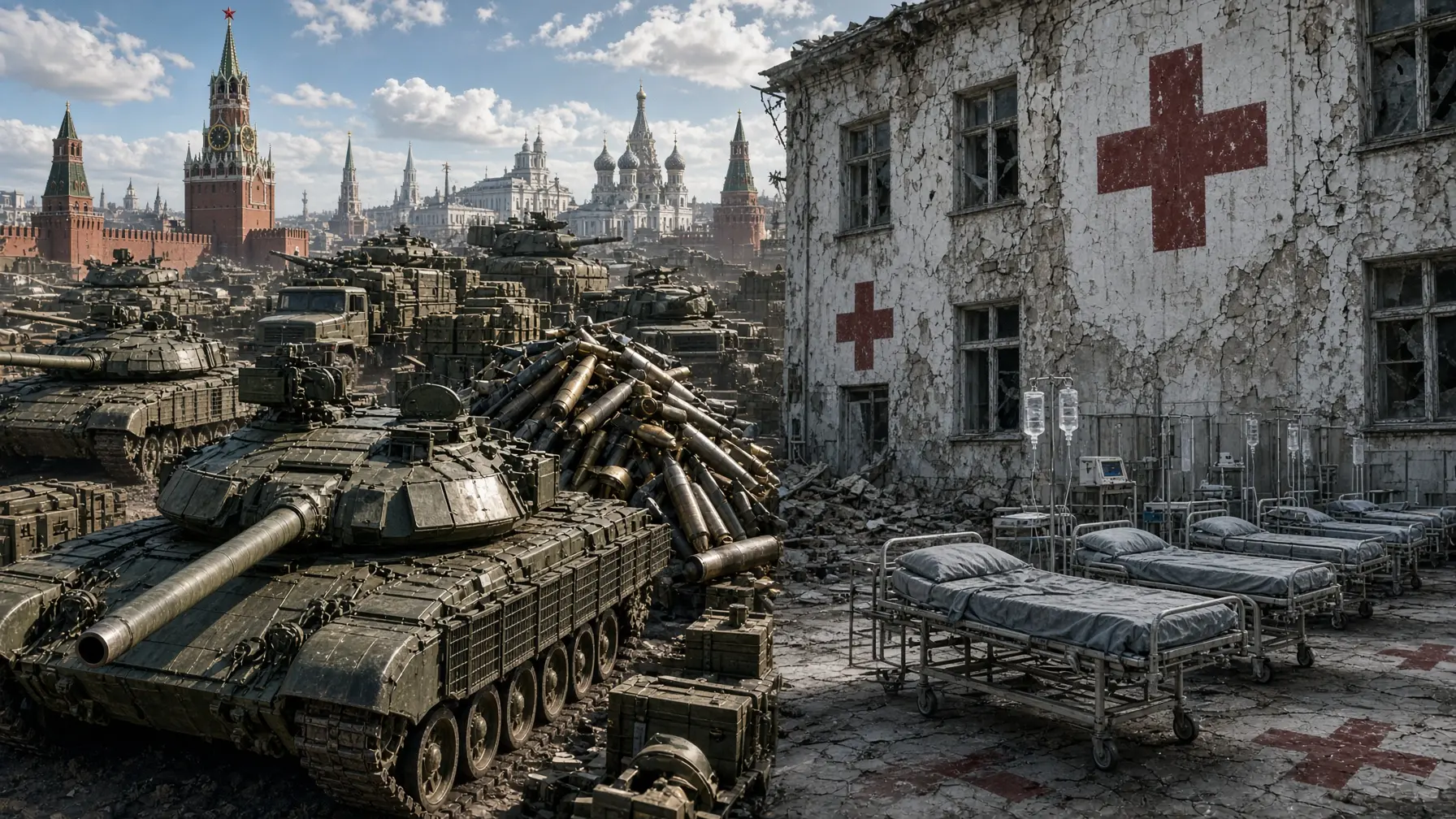
How Moscow is preparing for peace: a record sum for the army, less for hospitals
While the Kremlin talks about its desire for peace and keeps expecting further concessions from Ukraine, the Russian parliament has approved military spending for the next three years on a scale unseen since the Soviet Union. Under the 2027–2029 budget, the equivalent of some 606 billion dollars is earmarked for the army, while spending is being cut on health care, social benefits and housing.

Merz would defend Europe, the AfD would stab us in the back
German Chancellor Friedrich Merz, during the Bundestag's budget debate, warned that Russia's threat extends far beyond Ukraine, and that Germany therefore cannot treat it as a distant war when its consequences have already appeared on its own territory. While the government justified spending on defense and support for Ukraine, the AfD, unsurprisingly, once again concluded that savings should…