National minorities won't vote for the Mureșan government
It is something of a minor miracle that the national minorities' group in the Romanian Chamber of Deputies does not want to support the investiture of the government led by Siegfried Mureșan. This group includes representatives of national minorities other than Hungarians, since the RMDSZ (Democratic Alliance of Hungarians in Romania) has its own separate parliamentary faction.
According to the customary practice of Romanian politics so far, minority representatives usually vote in favor of whatever government is being formed, almost regardless of its political composition, while during the bargaining leading up to it they typically try to secure support, institutional advantages, or other concessions important to the communities they represent. It is therefore particularly striking that the majority of the seventeen members of the group now do not want to support the Mureșan government put together by the PNL, USR and RMDSZ. The reason, however, is not at all some threat of disenfranchisement facing a national minority, the elimination of education in the mother tongue, or the closing of cultural institutions. The Mureșan government's program promises to cut the size of parliament by 13 percent, which would mean that instead of the current 465 deputies and senators, about 405 would remain, since the number of mandates would be adjusted to match the results of the 2021 census. According to the program, the current electoral system would meanwhile be preserved.
This is not a particularly radical reform — even after the planned reduction, more than four hundred parliamentary mandates would remain, meaning Romania's democracy would almost certainly survive if a few dozen politicians had to look for other work. However, most members of the minority group are reportedly afraid that their own representative seats might be at risk during the slimming-down process. The Armenian ethnic representative Varujan Pambuccian, who leads the group, for example, has sat in the Romanian parliament for thirty years, so it is understandable if by now the velvet seat feels to him not like a job but like a piece of family furniture.
How do minorities get into parliament?
The Romanian constitution guarantees parliamentary representation for national minorities, but not in such a way that every minority automatically receives a mandate. The right belongs to officially recognized organizations representing the minorities. These organizations do not have to pass the five-percent national threshold required of political parties. They can obtain a mandate if they receive nationally at least ten percent of the votes needed for an average deputy's mandate. If they meet this preferential condition, they can send one representative to the Chamber of Deputies. At the same time, the constitution applies the principle of "one minority, one organization": the same national minority can only be represented in parliament by a single organization. If several organizations run in the name of the same community, the one that gathers more votes receives the mandate. Because of this constitutional guarantee, minority mandates would not automatically evaporate simply because the size of parliament is reduced from 465 to 405.
If the representatives believe that the Mureșan government's plan nevertheless endangers their representation, then it would be time for them to state precisely which provision, in what way, and which community it would deprive of a parliamentary presence. Instead, what we currently see is that the promise to reduce the number of mandates appeared in the government program, and the majority of the minority group would immediately withdraw support for the entire cabinet. It is thus hard to shake the impression that what is really at stake here is not primarily the rights of minority communities, but parliamentary salaries, staff budgets, secretariats, and representative seats that have grown comfortably warm over the decades — and on top of that, the RMDSZ paved the way for this kind of argument. But the tension does not stop at withholding parliamentary support for the government, because Ioana Grosaru, the representative of the Italian minority, has challenged at the Bucharest Court of Appeal the decree by which President Nicușor Dan nominated Siegfried Mureșan as prime ministerial candidate. The court scheduled the hearing of the case for the day before the parliamentary vote on the government's investiture. Grosaru called Mureșan "an actor who arrived with outside support" and claimed that he does not understand the country's problems. According to one legal expert, a decree that forms part of the constitutional relationship between the president and parliament cannot be reviewed by an administrative court in the first place.
405 is not the same as 300
The Mureșan government's plan should not be confused with the 2009 referendum, when, in a vote initiated by President Traian Băsescu, voters decided on two questions: whether they wanted a unicameral parliament, and whether they supported limiting the number of parliament members to a maximum of three hundred. Turnout exceeded the threshold required for validity, and 77.78 percent of voters supported a unicameral parliament, while 88.84 percent supported capping the number of representatives at three hundred. Every Romanian government and parliamentary majority since then has consistently ignored this result. Mureșan's current plan is far more modest: it would not abolish the bicameral system, would not bring the number of mandates down to three hundred, but would merely trim the legislature by about sixty seats. The RMDSZ is still willing to swallow this smaller reduction, but it fiercely opposes a three-hundred-member parliament, arguing that it would then have fewer representatives — the political narrative behind this being that hundreds of thousands of Hungarians would be left without representation.
A dangerous game over their own seats
One doesn't need to be a brain surgeon to see what a dangerous game the minority group, and to some extent the RMDSZ as well, is playing. An ever-larger part of Romanian society is turning away from the traditional political elite. Voters see that while taxes are being raised, public services are faltering, governments keep replacing one another, and politicians are unable to form a stable cabinet, a modest reduction in parliament's own size instantly triggers a holy war. What's more, these same voters, in a valid referendum seventeen years ago, clearly stated that they wanted a maximum of three hundred members of parliament; compared to that, we are now talking not about three hundred but about 405, and even this has already made a few velvet seats tremble as if the constitutional order itself were about to be overthrown. In this political climate, it is a particularly foolish move to act in a way that the majority society can only interpret as minority representatives obstructing the formation of a government to protect their own jobs. By doing so, they themselves are contributing to the emergence of an anti-minority sentiment that will later no longer distinguish between genuine community rights and political privileges.
For years, the RMDSZ has enthusiastically worked to blur the line between defending Hungarian interests and maintaining its own leaders, officials, and institutional network. It is not certain that the other national minorities should follow in the footsteps of Hunor Kelemen and his colleagues, but it would indeed be appropriate to discuss what kind of electoral system could be introduced instead of the current one — if one is needed at all, and in my view it is — in order to keep minority representation proportional. Yet this is precisely what none of the representatives is talking about...
Ugar
Tetszett a cikk?
Támogassa a munkánkat egy kis adománnyal
Biztonságos fizetés Stripe-on keresztül • Min. 2 EUR
Gesta-ajánló:

Al Gore: 2026 a klímaváltozás elleni küzdelem fordulópontja lehet
Al Gore volt amerikai alelnök szerint 2026 akár a klímaváltozás elleni küzdelem pozitív fordulópontjaként is bevonulhat a történelembe, ám ehhez a világnak nagyon gyorsan ki kellene használnia a megújuló energia terjedésében rejlő lehetőséget, mert a bolygó felmelegedése közben egyre gyorsul: az idei augusztus a mérések kezdete óta a legmelegebb augusztus, egyben a 2023-as júliussal…

Majdnem minden harmadik új autó elektromos volt Európában augusztusban
Az akkumulátoros elektromos autók augusztusban már az európai új autó-eladások 29 százalékát adták, szemben az egy évvel korábbi 20,2 százalékkal, vagyis a kontinensen egyetlen év alatt közel kilenc százalékponttal nőtt a tisztán elektromos modellek részesedése. A Nemzetközi Tiszta Közlekedési Tanács, az ICCT számítása az Európai Uniót, Norvégiát és Izlandot foglalja magában; ebben az…
Peter Thiel szerint XIV. Leó pápa Kína „hasznos idiótája”
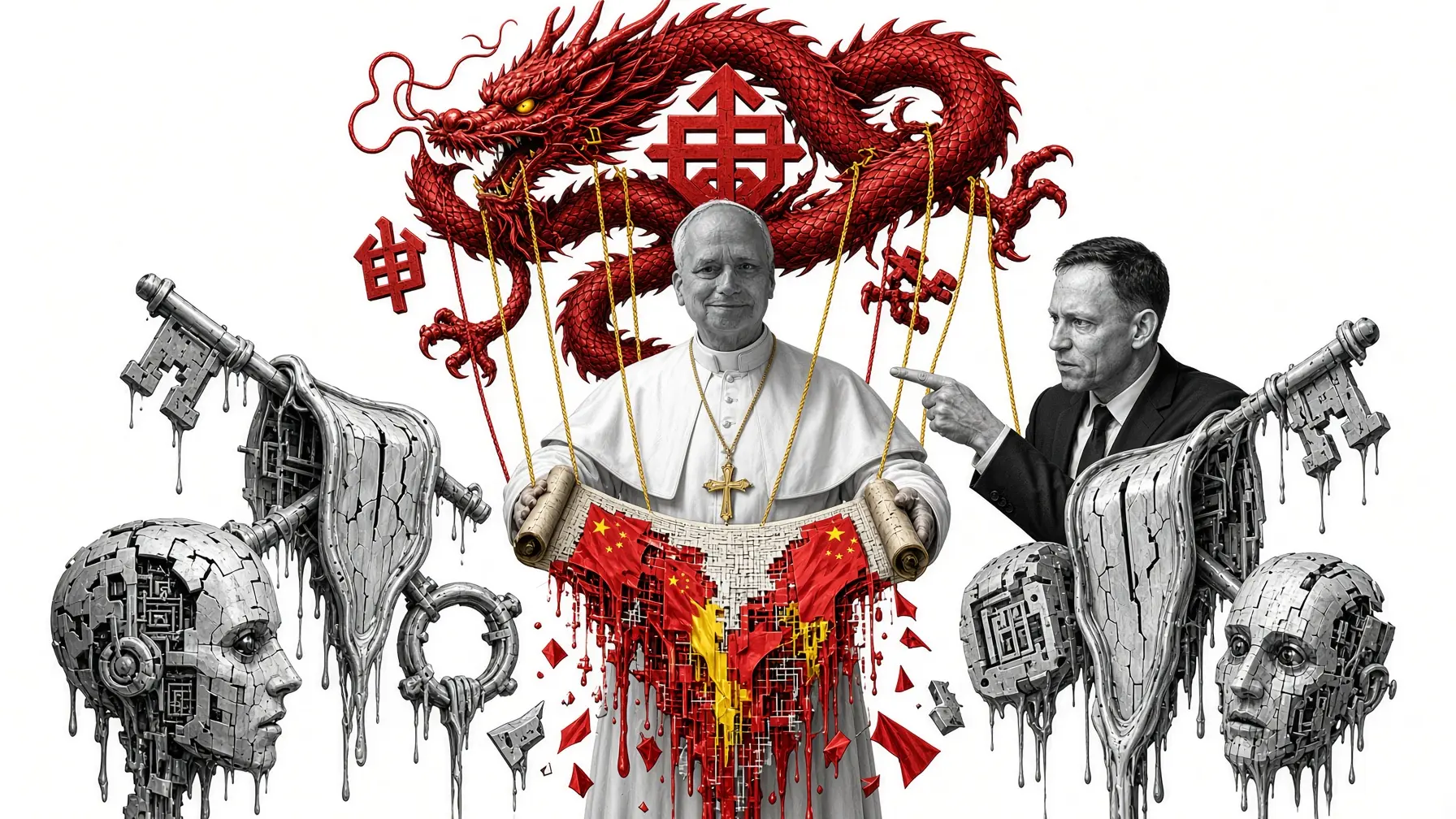
Peter Thiel technológiai milliárdos a Kínai Kommunista Párt „hasznos idiótájának” nevezte XIV. Leó pápát, amiért a katolikus egyházfő nemzetközi szabályozást sürgetett a mesterséges intelligencia fejlesztésére és felhasználására. Thiel szerint a korlátozások elsősorban az Egyesült Államokat és szövetségeseit fékeznék, miközben Kína zavartalanul folytatná saját technológiai programját.

Trump nemet mondott a tűzszünetre, a választások után folytatná Irán bombázását
Donald Trump elutasította Irán hétnapos tűzszüneti javaslatát, és tanácsadóinak arról beszélt, hogy a novemberi félidős választások után ismét légicsapásokat indíthat az Iszlám Köztársaság ellen – jelentette amerikai tisztségviselőkre hivatkozva a The Wall Street Journal.

Kiberhírek: gyerekeket és kamaszokat céloz a ClickFix
A román Országos Kiberbiztonsági Igazgatóság, a DNSC egyre terjedő internetes csalási módszerre figyelmezteti a gyerekeket és a kamaszokat. A ClickFix néven ismert támadás különlegessége, hogy az elkövetők nem közvetlenül törik fel az áldozat számítógépét, hanem ráveszik a felhasználót arra, hogy saját maga futtassa le a készülékét megfertőző parancsot.