The PSD has totally made a fool of the entire government-formation process, but the RMDSZ can't complain either
The world has turned completely around in three days — or as they say, the weathercock atop the church tower is creaking, and for Dan Tanasă, in Romanian: erțcocoșul face cârț-cârț. Three days ago, after all, Botond Csoma stood before his wider (Digi24) and narrower (Transtelex) audience and said that the RMDSZ would not be part of the next government, arguing that it simply wouldn't do for them to want to shack up with the PNL–USR one week and the PSD the next.
Let me point out here to Csoma — who kept his position as House Quaestor of the RMDSZ through cooperating with the AUR and sees that as nothing more than a technical procedure — that the unit of measurement for whorishness isn't units of time. Before I could even give birth to this profound thought of mine, Hunor “size matters” Kelemen trumped Csoma, and wound the libido back a notch into caution, declaring that the RMDSZ's participation in government is a secondary question — which at the same time also means it's not categorically ruled out.
That's how we started today, with the designated prime minister, Luca Niculescu, setting out to “négocia” with the parties — or I could say “negotiate,” but that's too lofty a word, it doesn't capture what these beasts of God whom we elected are actually doing, just as the Hungarian political “elite” is misleading too, whereas in this case the Romanian political “class” is closer to the mark — but that's enough of today's Romanian–Hungarian semantics lesson. Then at noon Sorin Grindeanu glowed like a hawthorn bush: he gave a statement after his négociation with Niculescu. He said all sorts of things, a lot of it nonsense, but there are two things we need to pay attention to now, because they're worth it:
They will not vote for a technocratic government.
He invited the PNL and the RMDSZ to form a government together.
Well, he's thrown the reins out there — Csoma's just fumbling around for them, but the guy's in luck, a pigeon crapped on his shoulder today, so he's optimistic about the future — no joke, G4Media reported on it too — but let's see what the PNL had to say about this. According to Bolojan, it's important for the country to have a legitimate government, but the PNL won't take part in a government that includes the PSD — though for the sake of stability, they might vote for it. So he left the door open, but he was quite clear that the Liberals are heading into opposition.
Luca Niculescu also négociated a round with the RMDSZ, and according to his own words, he found “openness” on the part of Tulip Ltd., blah blah. The RMDSZ didn't say anything beyond this babble either, but as an interesting detail I'd point out that the press conference was held by Árpád Antal, the mayor of Sfântu Gheorghe (Sepsiszentgyörgy) — who, as far as I know, is neither an MP nor a senator, so this is quite an interesting intermezzo; we'll find out its significance later, if it even has any. I'm inclined to attribute significance to it, if only because I've seen plenty of stakes in my time, and so far every single one has had a crow on it. According to Árpád Antal, they haven't discussed the RMDSZ's participation in government, they're waiting to see where the PSD and the PNL stand, and they'd like to reweave the old coalition — that is, the PSD–PNL–RMDSZ–USR team, the very one that the PSD itself brought down — but let's not get into details, and let's not condemn anyone's wishes. They're not insisting on governing, but they're not ruling it out either — whoops, Csoma, keep an eye on Árpi! — and pay attention to this question-and-answer exchange:
But let's see what scenarios are unfolding:
Scenario 1:
Luca Niculescu decides after all to take on the adventure that is governing Romania with his own ministers, and so he presents a technocratic government to parliament. If Nicușor Dan hadn't already fired off his ammunition during the Mureșan government-formation attempt — namely, that foreign investors don't want early elections, so there's no need to worry if the government doesn't pass — the head of state could now declare: if Luca fails too, then early elections will follow. Then we'd see who's just talk and who isn't, since these days even the PSD is talking about facing elections head-on, and at the RMDSZ they've also checked whether they still have the hit thriller “How to Find Hungarian Votes in Teleorman”. (They do. It was right under the VHS tape called “How to Drive Families Out of Transylvania”!)
But this whole showdown would look quite different if Nicușor announced: if the Luca cabinet doesn't come together either, he'll dissolve parliament and call early elections. Even if it doesn't influence the mentality of the political class, it would certainly influence that of the public that in Spain — a favorite destination for Romanians — far smaller political difficulties led Sánchez to call early elections, which are already set to be held in November. Of course, it's also possible that the parties will end up voting for Luca's technocratic government, in which case neither the prime minister nor the ministers would have any party backing, so parliament would turn into an arena of bloody horse-trading — for instance when it comes to passing the much-needed budget — meaning such a government would last about as long as the square root of two, which, as everyone knows, isn't very long.
Scenario 2:
Luca decides that whichever party wants to come along can come along — and only the PSD takes him up on it, so a PSD government is formed, headed by an independent, Luca Niculescu. In all likelihood, neither the PNL nor the USR would vote for this, though I wouldn't bet on it. Bolojan and his people would say that it was thanks to them, and solely due to their self-sacrifice, that the political blockade ended, and with that they'd head into opposition. A somewhat expanded version of this scenario is a government based on the PSD–RMDSZ duo. The two parties together don't have the 233 votes needed for a majority, but with the aforementioned external, one-time support from the PNL and the USR, even such a government could be formed. In this case, the PNL and the USR would at some point in the near future unite, merge, or whatever you want to call it, forming a strong opposition bloc — currently only the AUR is in opposition. At the same time, since this government wouldn't have a majority, it would be forced into the same kind of horse-trading as the technocratic variant mentioned above, and let's face it: it would be easy to topple. It would hardly last two years.
Scenario 3:
The PNL changes its mind and decides that being in government is better than being in opposition after all. They'll find that minimal common denominator on which they can agree with the PSD, and go into government, and since the two of them together still don't have the 233 votes, they bring in the RMDSZ too. This would promise to be a stable formation, at least mathematically. Politically? Doubtful — and this is where the USR would win the most, since, as a non-extremist party, it would practically be the sole opposition, and it would draw in a lot of disillusioned PNL voters as well. Still, this scenario is plausible, and in that case we need to think about what we should demand of the RMDSZ, because Hunor and company's leverage would grow considerably — without them there's no governing majority, so they could ask for anything. From this it follows directly that they won't demand anything, and they'll achieve even less than that.
Scenario 4:
The last, equally plausible scenario: Luca Niculescu gets fed up with all the dicking around, and before the parliamentary vote even takes place, he hands his mandate back to the head of state. The AUR — and a significant part of the public! — then puts even more pressure on Nicușor to finally call early elections, but he's torn, unable to decide whether to go for another nomination or call early elections, so he flips a coin: heads means another nomination, tails means early elections.
Except both sides of the coin have a weathercock on them. And it creaks.
Anna Karczag
Did you like this article?
Support our work with a small donation
Secure payment via Stripe • Min. 2 EUR
Gesta recommendations:
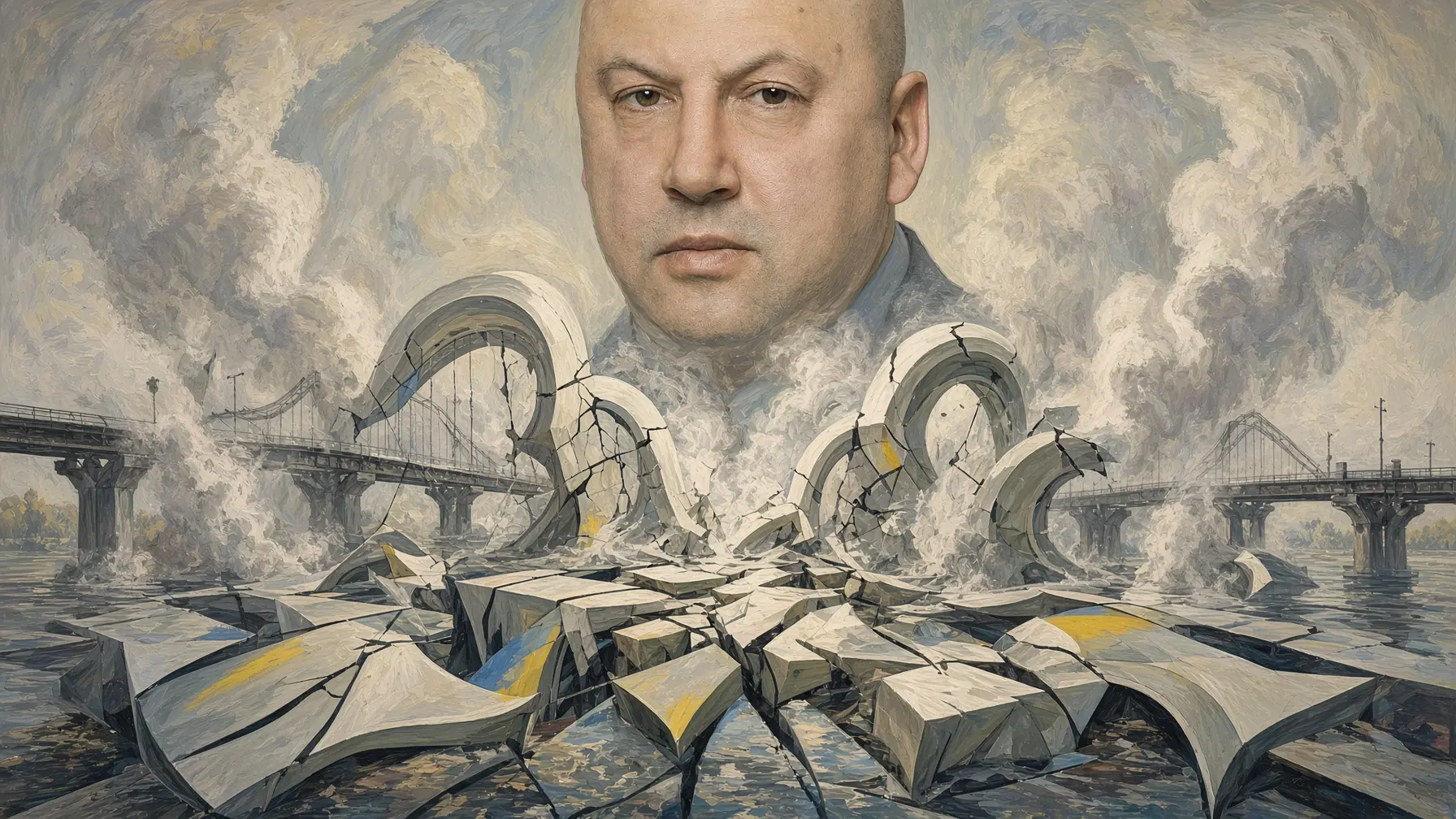
Surovikin is back, shelling Kyiv's bridges
Vladimir Putin may have put General Sergei Surovikin in charge of directing the attacks on Kyiv's bridges, British military expert Hamish de Bretton-Gordon claimed in an article published in the Telegraph, which several Ukrainian- and Russian-language outlets reported on on October 8. Surovikin, known as “General Armageddon”, previously directed Russian operations in Ukraine, including attacks on…

Ukrainian negotiating delegation to travel to the United States
A Ukrainian negotiating delegation will arrive in the United States on October 9 to discuss the continuation of diplomatic consultations and the preparation of a possible Ukrainian-American-Russian meeting – Interfax-Ukraine reported, citing a source close to the negotiating team and confirmation from the presidential office. According to RBC-Ukraine, the delegation will include David Arakhamia,…
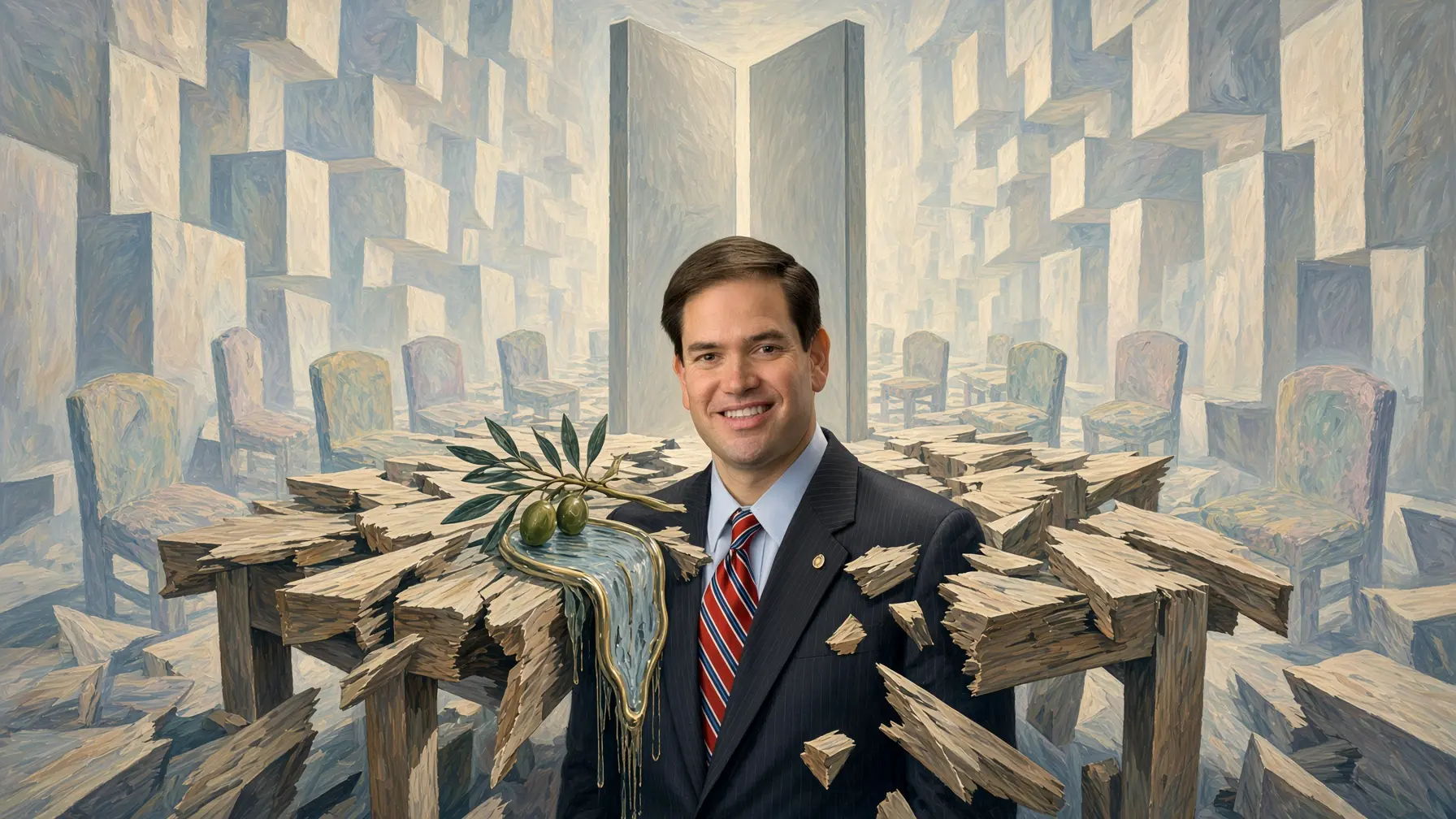
Rubio: No Chance for a Negotiated Peace
According to U.S. Secretary of State Marco Rubio, there is currently no visible chance of a negotiated end to the war launched by Russia against Ukraine, because Moscow is making territorial demands that Kyiv considers unacceptable. In an interview with the Greek newspaper Kathimerini, published on October 8, Rubio said the war has reached a strategic stalemate that could be resolved either…

Surprise: Moscow found Nazis in the Baltics
At the initiative of the Russian Prosecutor General's Office, a Russian court declared several Latvian, Lithuanian and Estonian historical figures and organizations to be accomplices in Nazi Germany's war crimes and crimes against humanity – reported the Russian State Archive on October 6. The decision concerns acts committed during World War II, and lists those named in it by name.

Turkish Korkut air defense systems tested in Ukraine
In early 2026 Turkey delivered a small quantity of Korkut air defense systems to Ukraine, where they were used against Russian attack drones and cruise missiles, Middle East Eye reported, citing several sources familiar with the matter. Those who spoke to the publication did not reveal the exact size of the shipment; the report was also covered by the Ukrainian outlet Babel and the Czech Britské…