Trump's threats have already become a military contingency scenario in Canada
Canadian Prime Minister Mark Carney has admitted that his government has considered the extreme risk of U.S. military action, after Donald Trump repeatedly spoke of annexing Canada and turning it into the 51st American state. The U.S. president's seemingly outlandish threats are thus no longer confined to social media, but have now appeared in the official risk assessment of a country that is supposedly an ally.
In an interview with The New York Times, Carney was asked whether he had examined the possibility of a U.S. military operation against Canada. The prime minister did not reveal what conclusion the Canadian government had reached, but made clear that the scenario had not been dismissed outright. "I think part of the responsibility in a position like this is to consider extreme risks," Carney said, adding that a U.S. attack is not the base-case scenario, but that it would have been irresponsible not to consider it.
The mere fact that Ottawa saw fit to examine the possibility of U.S. military action at all shows just how far Trump has degraded relations between the two countries. For more than a century, Canada and the United States were among the closest cooperating neighbors in the world, operating within a shared air defense system, a military alliance and a deeply intertwined economy. Now Canada's prime minister must also weigh what his country would do if its most important ally attacked it, given that Trump has repeatedly said Canada should become the 51st state of the United States, has questioned the country's sovereignty, called its leaders and armed forces weak, and posted maps of Canada covered in the American flag — in another post, he depicted himself as a hockey player checking Carney onto the ice. According to a Canada expert cited by The New York Times, no American president has ever before made the annexation of Canada a political goal.
All of this can no longer be explained away as Trump's usual barroom humor: if the commander-in-chief of the world's strongest military talks for months about annexing a neighboring allied state, then that state has a duty to prepare for the possibility that the old man may one day want to do more than just entertain his own audience. Alongside the political threats, economic attacks have followed as well. Washington and Ottawa have imposed mutual tariffs, and on August 21 Canada broke off negotiations with the White House, with Carney saying that the United States was trying to force an unfair deal on his country. Trump had previously punished Canada's steel, aluminum and auto industries with tariffs, and has since threatened further trade restrictions. The Canadian government's response has not been limited to retaliatory tariffs. Carney has openly begun steering Canada's economy and security policy away from the United States, building closer ties with the European Union in energy, defense, critical minerals, artificial intelligence and digital trade. The prime minister has previously said that Canada's close relationship with the United States was once its strength, but under Trump it has become a vulnerability.
It is hard to overstate the absurdity of the situation. While Russia wages war against Ukraine, China ramps up its military and economic pressure, and Iran has set the Middle East ablaze, the president of the United States is threatening to annex his own ally. In doing so, Washington is not only pushing Canada toward Europe, but is systematically dismantling the alliance system that has long been one of the most important foundations of American power. Putin and Xi Jinping would probably be popping champagne over this, if they weren't busy trying to slaughter as many people as possible in Ukraine before this Trump the Chump gets brought down...
Rant
Did you like this article?
Support our work with a small donation
Secure payment via Stripe • Min. 2 EUR
Gesta recommendations:
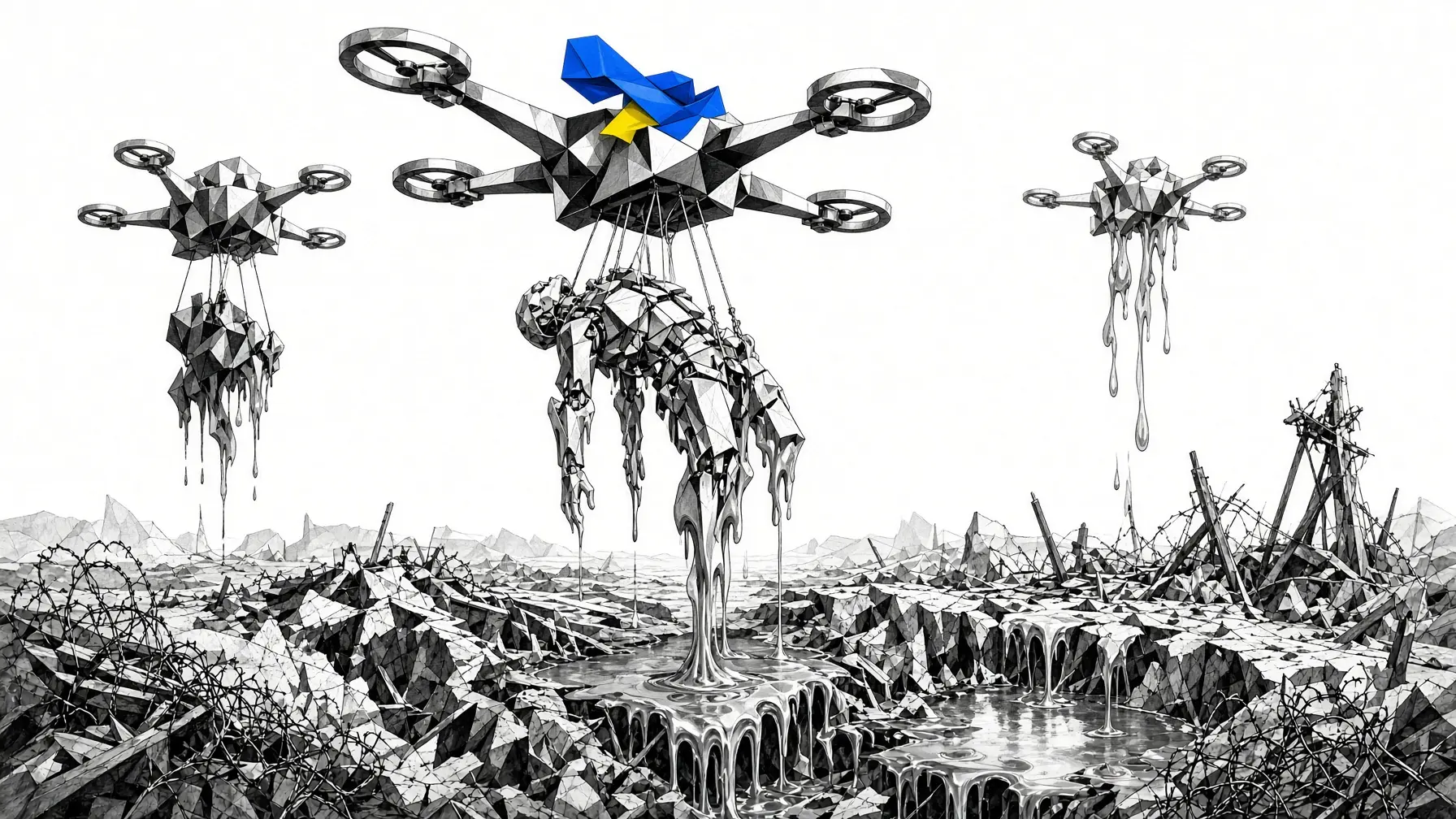
World first: flying drones deliver Ukrainian combat robots behind Russian lines
Ukraine's Third Army Corps announced that during Operation Vivaldi, 125 square kilometers of territory were brought back under Ukrainian control in the Lyman area, in the northern part of Donetsk region. One of the operation's most important innovations was that large flying drones carried explosive-laden ground combat robots more than ten kilometers behind Russian lines.
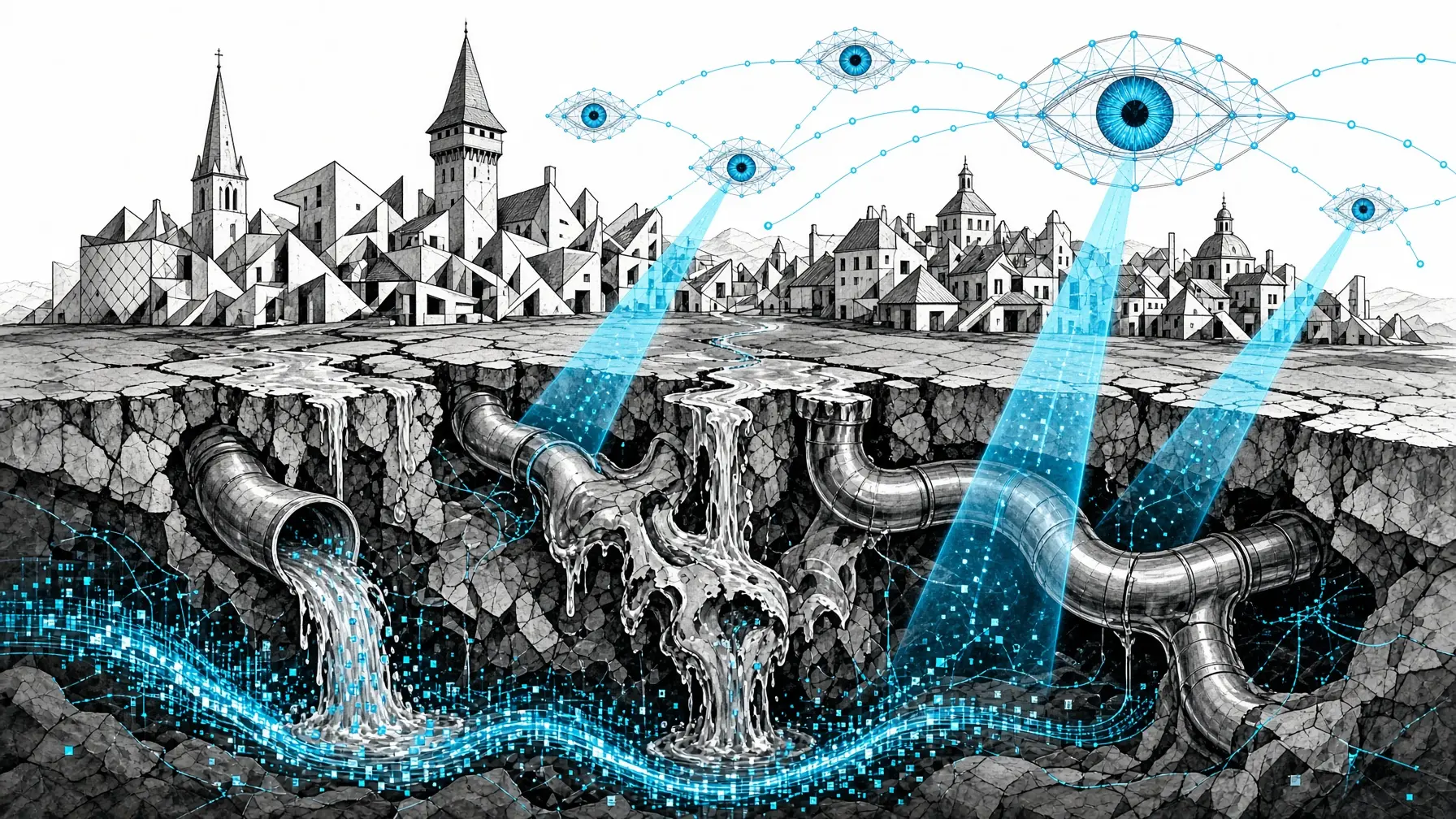
Artificial intelligence used to detect underground pipe leaks in Buzău
The regional water utility in Buzău County has reduced network water loss using AI-supported noise sensors. The system monitors the sounds and vibrations produced by water escaping from pressurized pipes, then uses the data to identify areas where a hidden pipe break or leak is likely located.
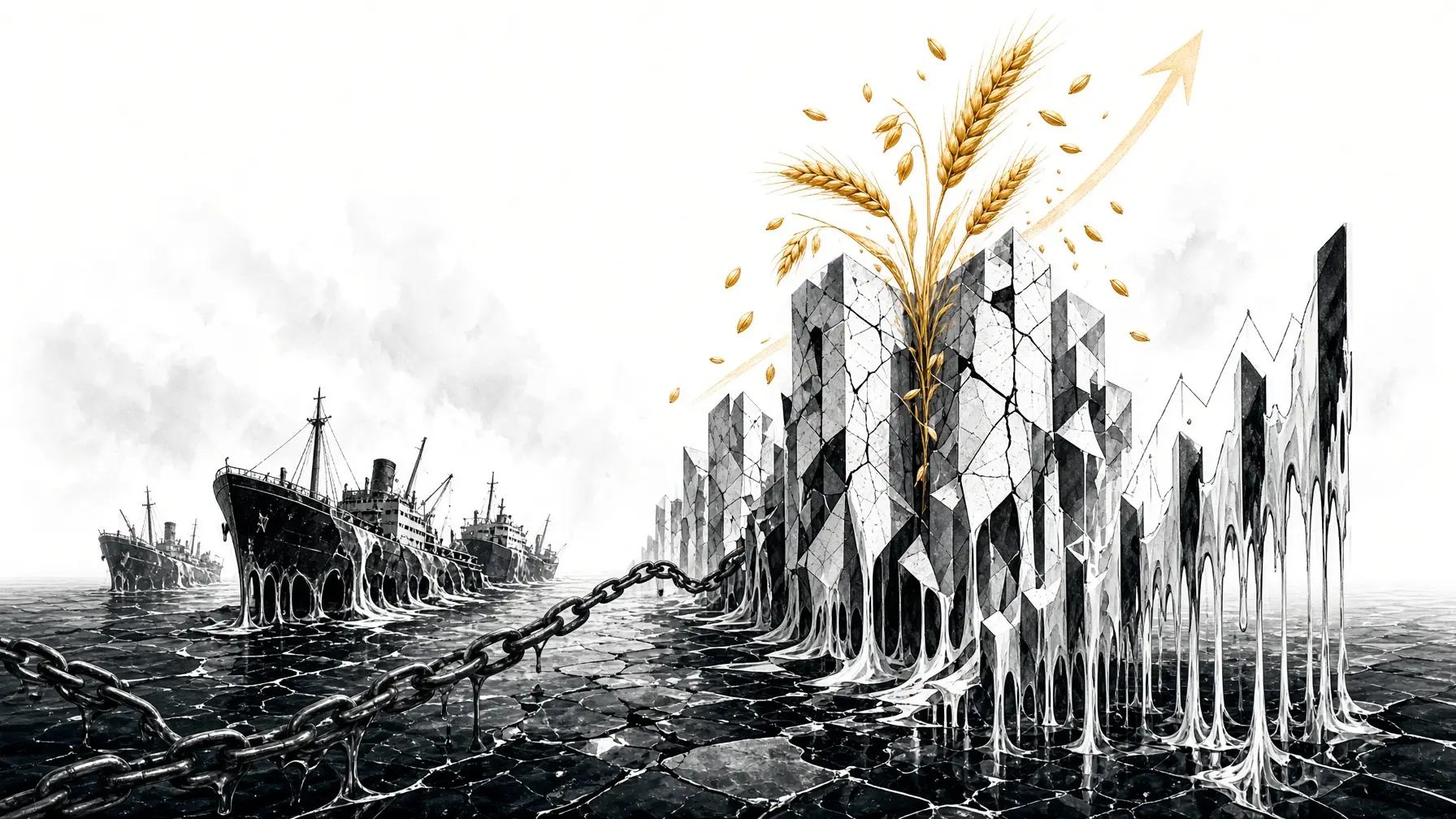
Black Sea grain trade grinds to a halt, wheat prices rising worldwide
The maritime dimension of the Russia–Ukraine war has effectively paralyzed one of the world's most important grain export routes. In recent months, the Russian army has intensified its attacks on Ukrainian ports, grain terminals and transport hubs, while Ukraine has responded by targeting Russian ports, cargo ships and logistics facilities. The result: more than 97 percent of Russian and…
A Russian test attack on NATO could come within months
More and more European intelligence services and political leaders are warning that Russia could extend its military and sabotage operations beyond Ukraine in the coming months. For now, the most likely scenario is not a full-scale invasion of a NATO member state, but a limited attack designed to test the alliance's unity and whether member states are truly willing to invoke Article 5 on…
No matter what other name we give it, we are, in fact, at war!
Information war, cyberwar, hybrid war, shadow war, sub-threshold operation: Europe is finding ever more linguistic ingenuity to describe what Russia is simply waging against it as war. Sylvie Kauffmann, foreign affairs columnist at Le Monde, argues that this verbal magic must end, because as long as the attacks are called "incidents", "provocations" and "hybrid threats", we never even get to the…